Original, source-backed articles about running small systems, static sites, HTTP, DNS, TLS, and operations.
Posts are original articles written for this site. Each one is script-free, source-backed, and tied to the same operational reality the rest of the site records: how a small, static, publicly served system is built, secured, and kept honest.
Protobuf evolution preserves meaning only within a defined contract
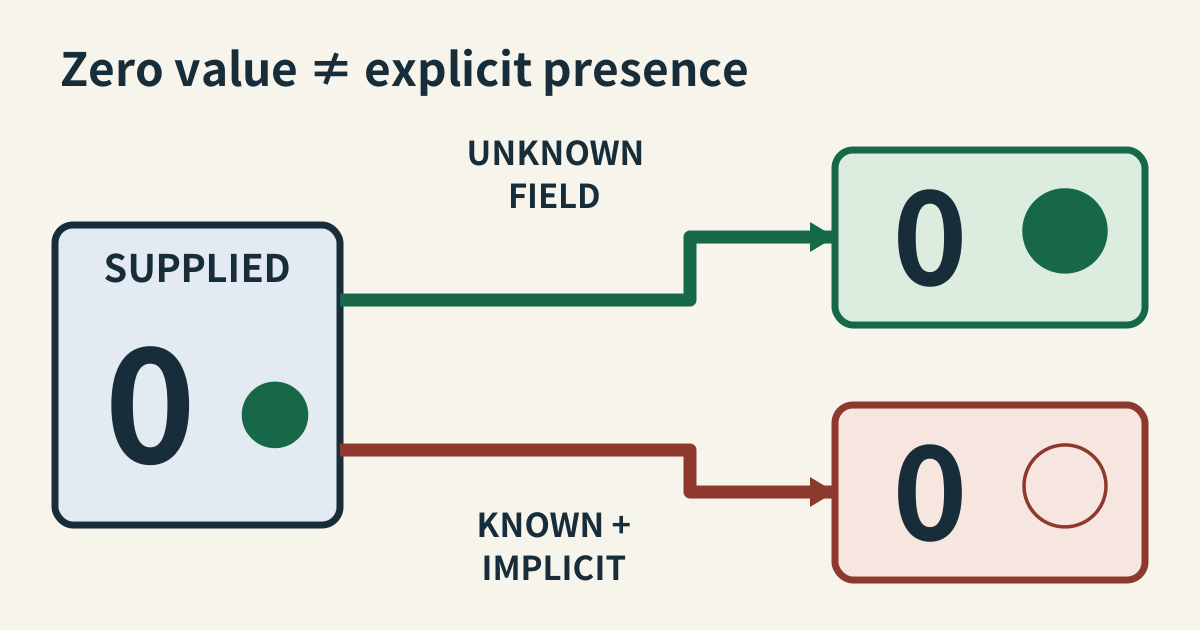
A gRPC rollout can leave old producers, new consumers, and intermediate services running together. Protobuf helps them exchange binary messages by identifying fields with numbers and wire types. That tolerance is narrower than application compatibility: a message can parse successfully while a consumer misunderstands its values, ignores a new instruction, or loses the distinction between absent and explicitly zero.
...
Kubernetes CronJobs need a history policy
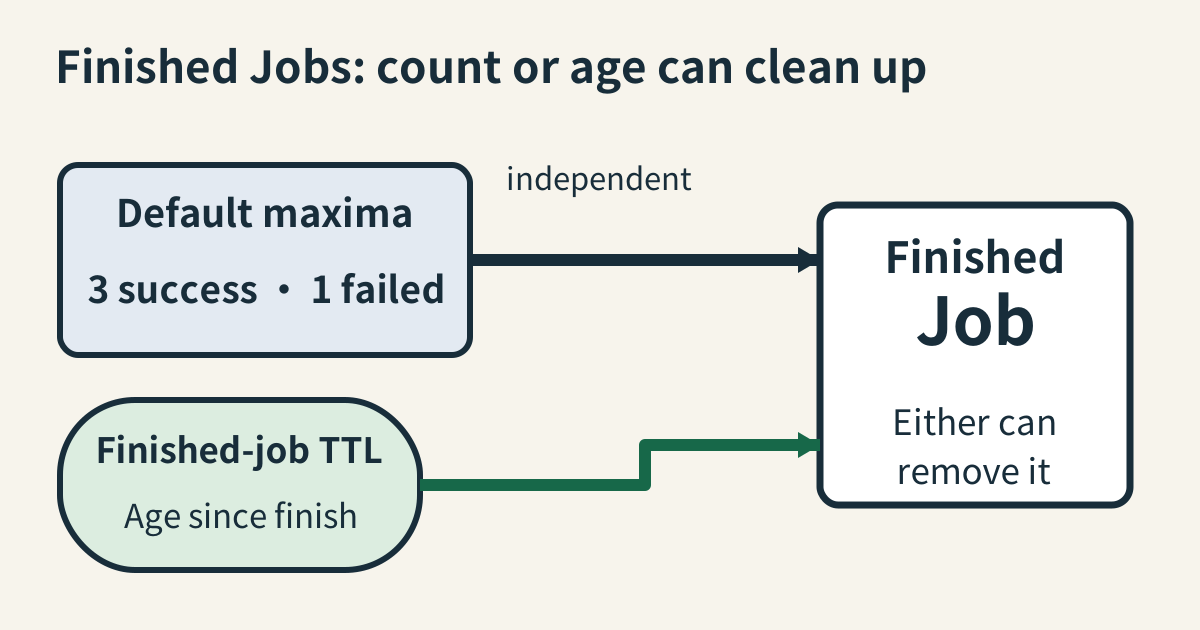
A CronJob creates Jobs on a schedule, and each Job manages the Pods that perform the work. Finished objects can preserve useful status, but retention is bounded by several independent mechanisms. In particular, CronJobs already have default history limits. Omitting explicit history settings does not make ordinary completed runs accumulate forever.
...
A Redis hash stores many fields in one key
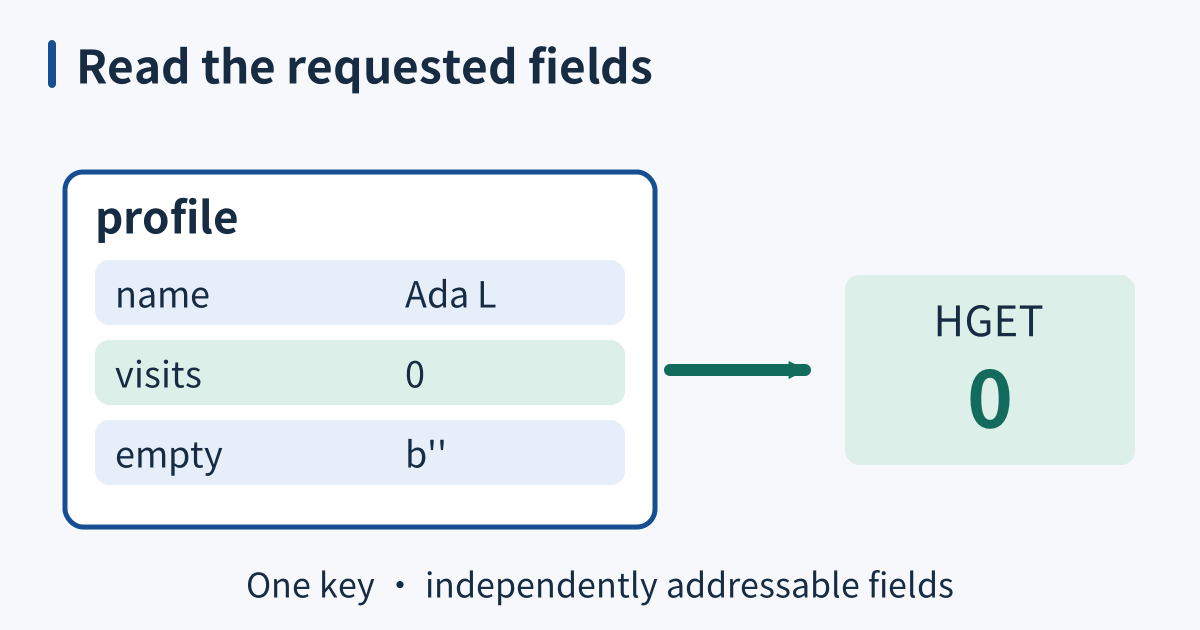
A Redis hash is a field-addressable record under one key, not a schema-checked object or an automatically nested document. It is useful when callers need a few attributes without replacing the whole record. That advantage depends on access patterns, field sizes, and the meaning of replies, not merely on choosing the hash type.
...
Grafana variables need the query language to agree
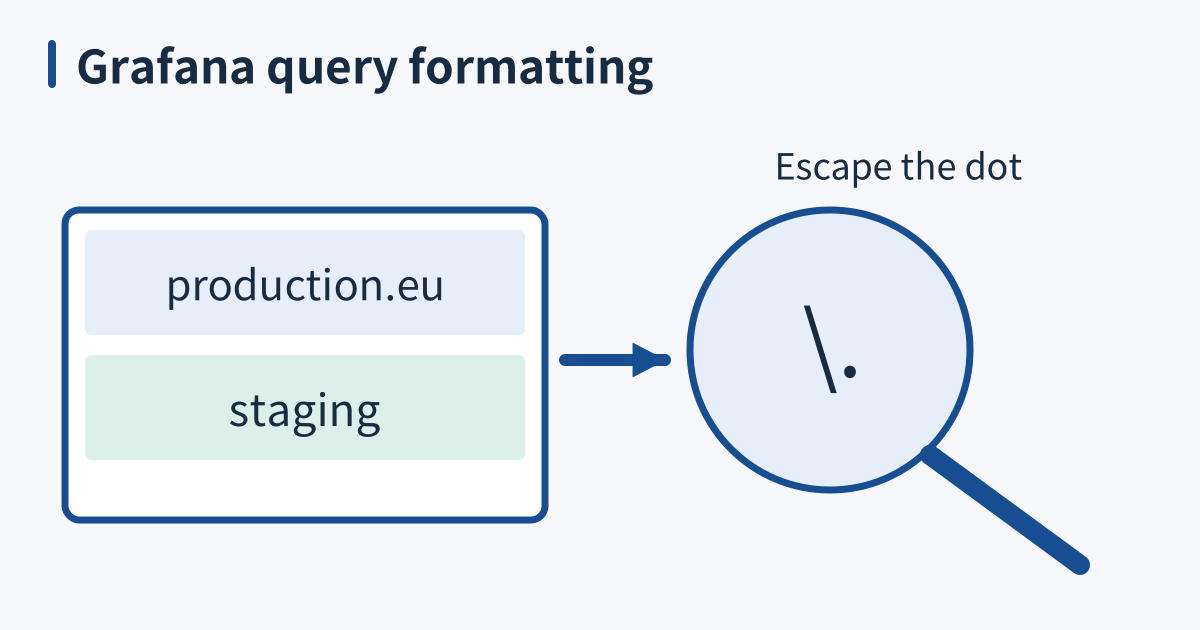
Grafana dashboard variables let one dashboard select an environment, service, or instance without duplicating every panel. A query variable obtains options from a data source; a custom variable can hold a deliberately fixed list. Neither choice is universally better. Use query-backed options when discovery should follow the source, and a maintained static list when the allowed choices are intentionally stable and small.
...
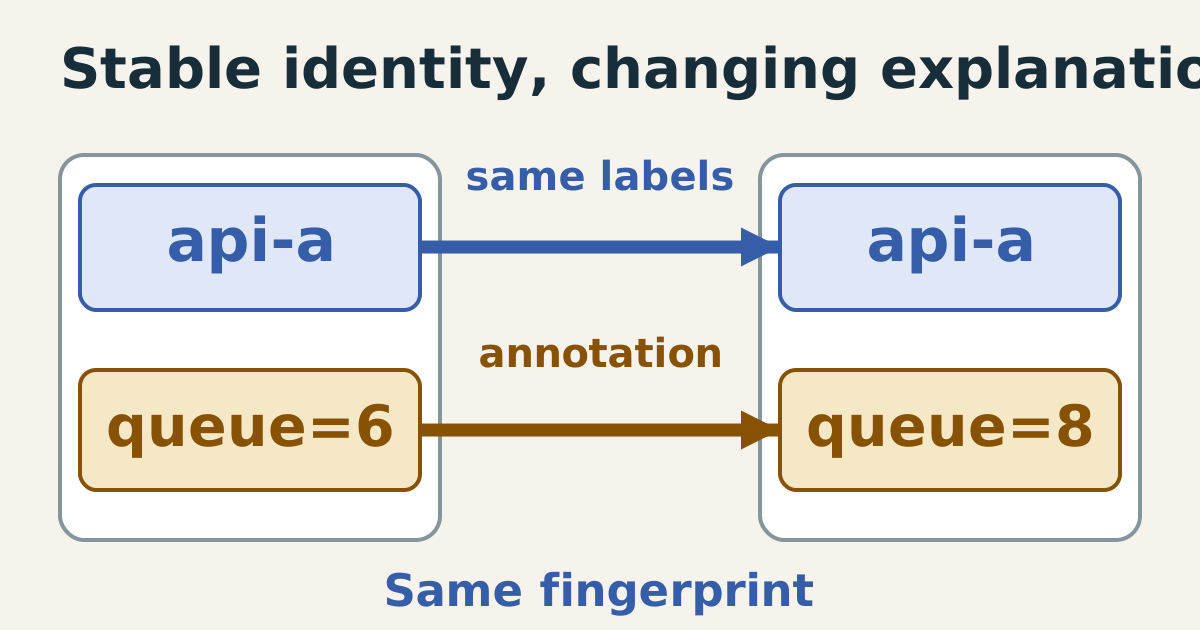
Annotations explain an alert without changing its identity
Alert labels identify which condition is being tracked and provide fields for routing and grouping. Annotations explain that condition: a current value, a concise summary, or a runbook link. Putting changing prose in labels can split one ongoing problem into many identities. Putting routing fields only in annotations can leave a route unable to recognize the alert’s intended owner.
...
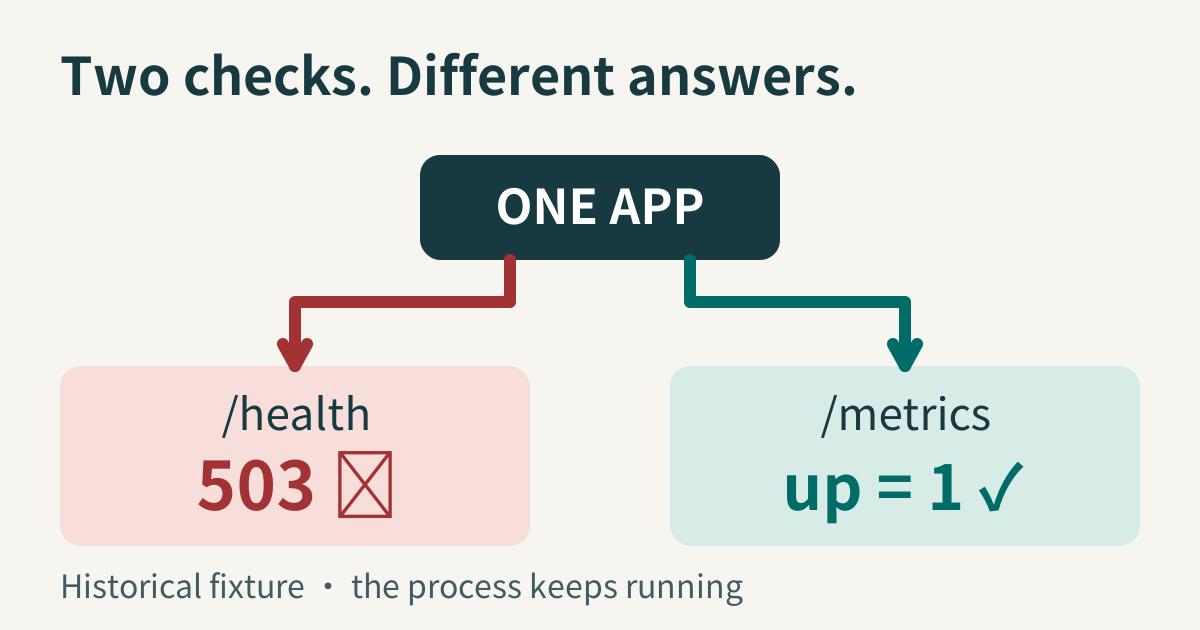
Docker health and Prometheus up answer different questions
Docker health state and Prometheus’s up series are observations from different checks. A Compose healthcheck runs a command inside the application container. Prometheus independently scrapes a configured metrics endpoint and records whether that scrape succeeded. The two observations can legitimately disagree because an application may refuse useful work while still serving its metrics, or may serve work while its metrics endpoint is broken.
...
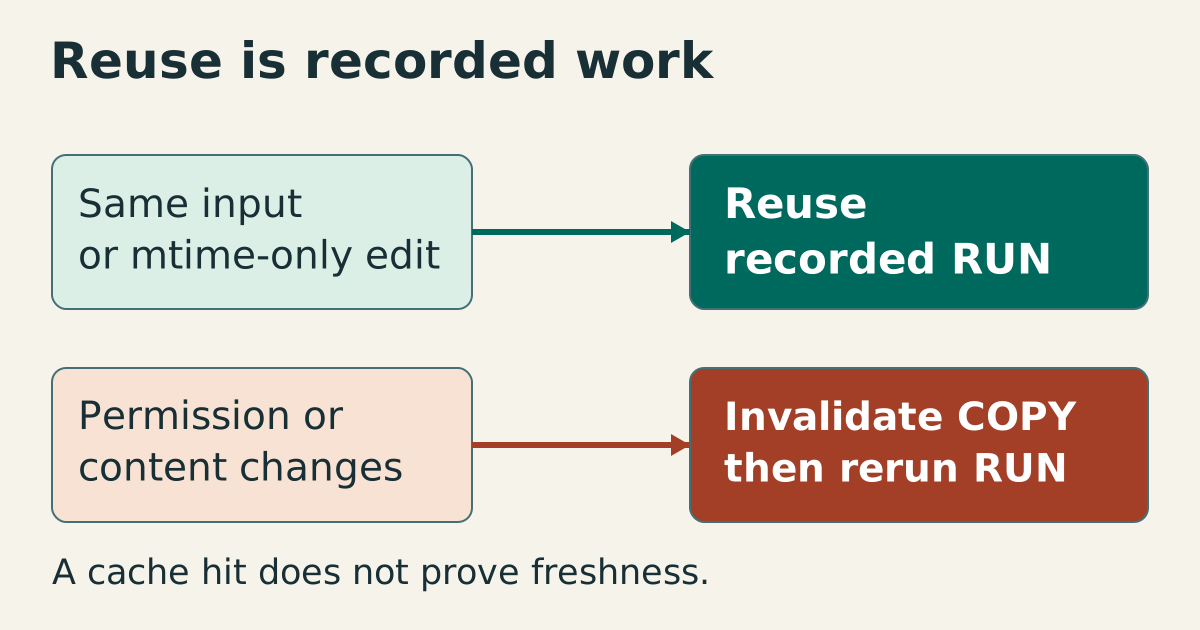
Docker rebuilds reuse recorded work, including stale work
Docker’s build cache stores results of build operations so a later build can reuse work whose relevant inputs still match. A cache hit does not mean the command ran again and produced identical output. It means the builder accepted an existing result. That distinction matters for package installation, generated timestamps, remote downloads, and any operation whose output could change without a corresponding change to its declared inputs.
...
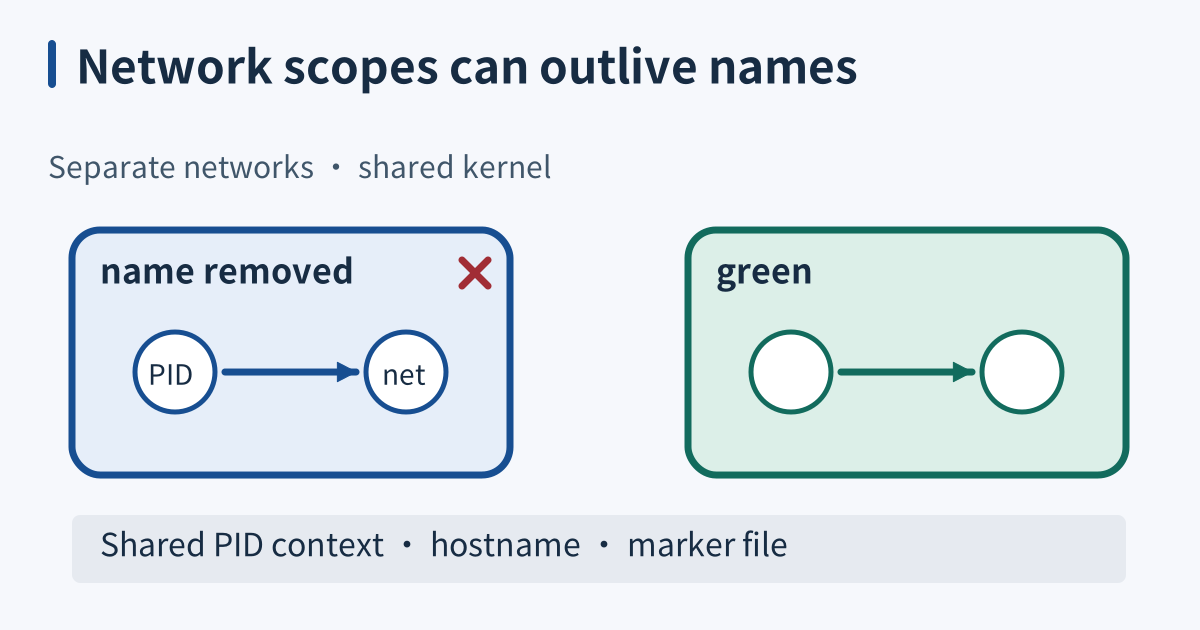
Network namespaces isolate networking; their names do not own every process
A Linux network namespace separates networking resources such as interfaces, routes, neighbor tables, socket ports, and packet-filter rules. It shares the kernel with other namespaces; it is not a separate operating system. A process normally inherits its parent’s network namespace, and tools can execute a process in another one. The resulting isolation covers networking resources, not every aspect of process identity or filesystem access.
...