A socket unit can keep a listening endpoint available while its compatible application is stopped. This can reduce the resident memory and periodic work of rarely used services. The socket, kernel queues and manager still consume resources, and installed software still needs security updates. Availability of the listener also depends on successful binding, permissions and the socket unit remaining active. A listening port is an opportunity to request work, not evidence that the application is ready.
The handoff depends on the configured mode. With Accept=no, systemd passes listening descriptors and the daemon accepts connections. With Accept=yes, it accepts a connection and starts a suitable service instance for that connection. Clients may connect before initialization finishes, then wait for an application response or time out. Measure that delay rather than assuming the handoff makes on-demand startup indistinguishable from a warm service.
The listener waits first
systemd opens the configured ListenStream endpoint when the socket unit starts. With Accept=no, foo.socket normally activates foo.service and passes the listener; Service= can choose another service. With Accept=yes, the matching template is normally foo@.service and each accepted stream connection gets an instance. Datagram sockets do not use this per-connection model. The program must match the selected descriptor contract, rather than simply sharing a familiar unit basename.
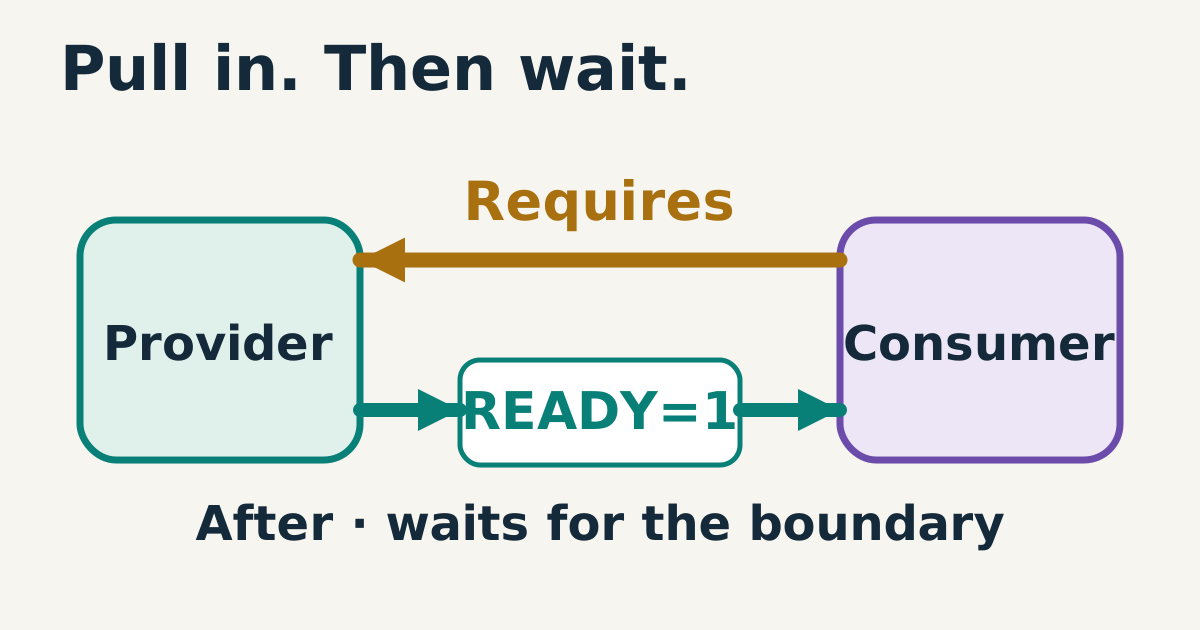
This split can reduce startup-order coupling, but it does not remove dependencies. The socket unit must be active and listening before clients can use it, and required service, mount, device, and ordering dependencies still apply. Connections can wait in a finite kernel backlog while a compatible service starts, but clients can still fail or time out before the application is ready. The backlog size still deserves sizing: a flood of early clients against a slow-starting service overflows the same as any listen queue.
Service wakes on demand
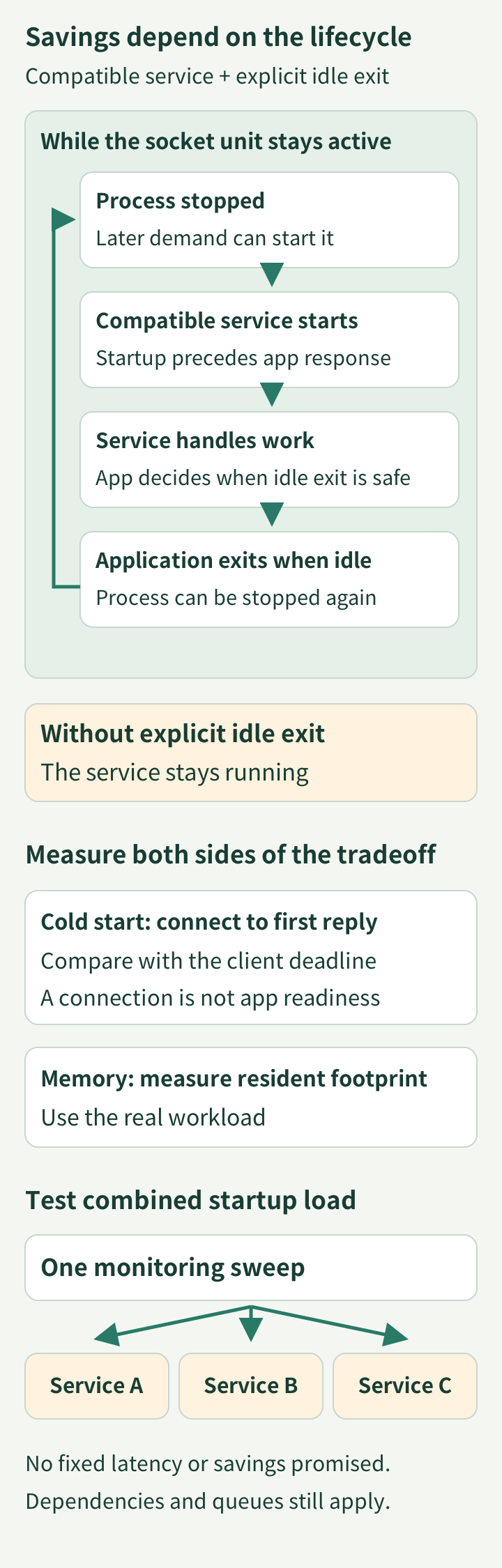
On-demand activation defers the initial application launch while the socket is active. It does not put a running daemon to sleep or automatically stop one that becomes idle. Administrative services and infrequently used protocol handlers are plausible candidates when their activation interface, request deadlines and resource profile fit this lifecycle. Other dependencies or manual starts can still activate the service.
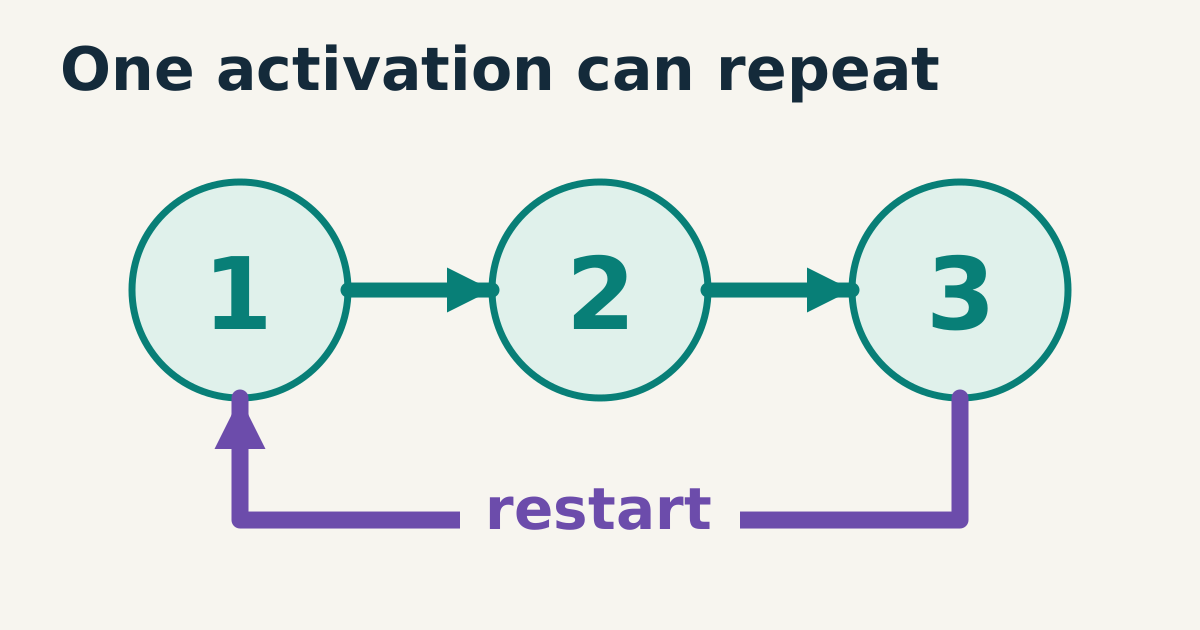
Idle exit completes a recurring savings cycle only when the application implements it safely. It must finish or transfer in-flight work before exiting and leave the manager-owned listener usable. With the socket unit still active, later demand can request another start. Without idle exit, the daemon may remain resident after its first activation. Neither case is a zero-cost state or a promise that the socket can never close.
Trade speed for memory
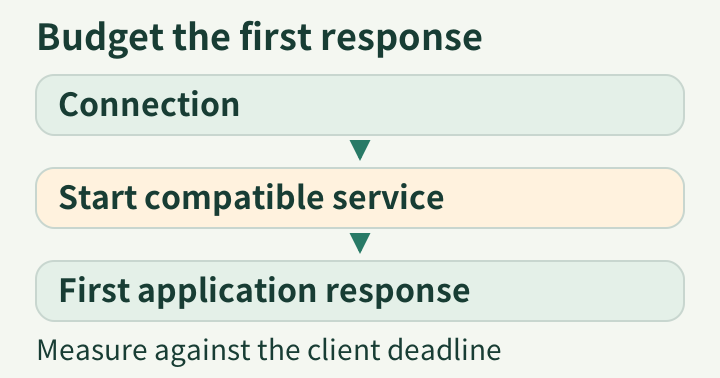
Budget cold-start time from connection through the first valid application response, and compare resident memory under representative load. A hypothetical 300 ms start saving 800 MB may fit one workload and violate another workload’s deadline. A 20-second warm-up might be acceptable for an asynchronous task but unsuitable for an interactive request. These are illustrative tradeoffs, not measurements or universal thresholds.
Some workloads cannot tolerate the gap. Health checks can activate a service themselves, or classify it as unavailable while it initializes. Client deadlines and load-balancer policy must fit the observed startup behavior. Keeping the daemon running may be simpler when predictable response time matters more than idle memory; warming it at boot does not itself implement later idle exit.
When it breaks
A monitoring sweep can wake many services together and create an aggregate CPU or memory spike. Staggering checks may reduce simultaneous demand. Per-service start-rate limits constrain repeated starts of each unit, but do not cap host-wide concurrency or memory use. Very short idle timeouts can increase churn. Test combined startup load and use suitable resource controls instead of treating these knobs as a global capacity guarantee.
A daemon that binds the occupied endpoint itself may fail with address-in-use errors. It must consume inherited descriptors through its native activation interface or a supported inetd-style interface. Merely inheriting a descriptor and executing an unaware daemon does not rewrite its bind logic. A protocol-aware adapter needs its own verified integration; there is no universal inherit-and-exec fix.
Check it quickly
The following inspection sketch assumes a separately configured, authorized foo.socket/foo.service pair serving the loopback health endpoint on port 8080. No such configuration is supplied here; this review did not execute the commands:
systemctl status foo.socket foo.service
ss -ltnp | grep ':8080'
curl -m 10 localhost:8080/health; systemctl show foo.service -p ActiveState,ExecMainStartTimestamp
Confirm the service is initially inactive, the intended socket is listening, and the request receives the expected application response. Compare invocation or start information before and after. Inspect each command’s result: the semicolon allows show to run even if curl fails, and status output alone does not prove health or activation causality.
Sources
- systemd.socket manual, Official socket unit reference, checked 2026-06-01.
- systemd.service manual, service activation, termination, and restart behavior, checked 2026-09-05.