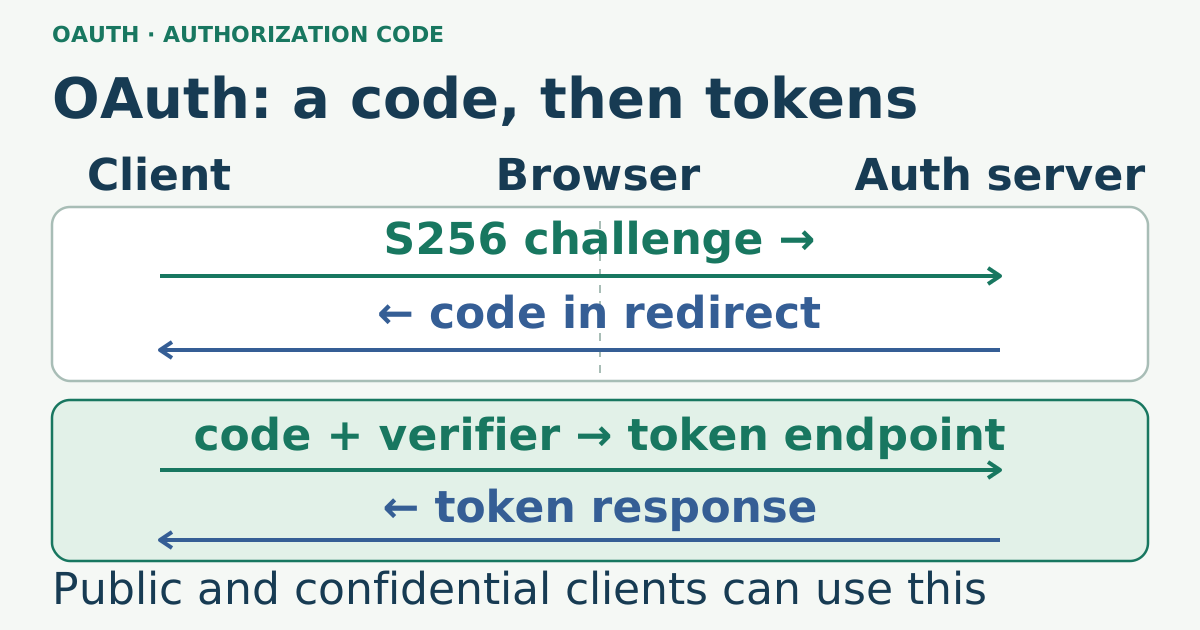
Client and authorization server exchange an S256 challenge and browser-facing callback code through the browser. A separate token-endpoint lane exchanges code plus verifier for tokens. The client can be public or confidential.

OAuth code flow trades a code for a token

Authorization-code flow moves access-token delivery to the token endpoint rather than returning an access token in the browser-facing authorization redirect. That distinction reduces exposure in URLs, but does not mean a browser can never hold a token. The client architecture determines who exchanges the code and where the resulting credentials live. ...
October 20, 2027 · 5 min · XB Field Notes
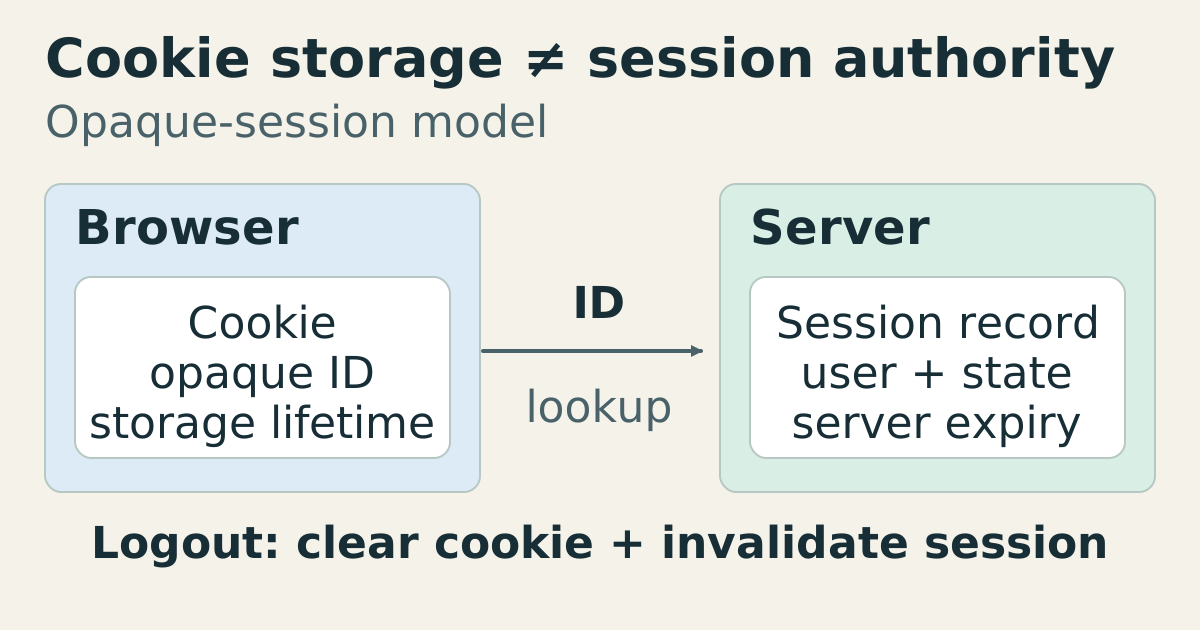
In an opaque-session model, the browser stores a cookie with an opaque identifier and storage lifetime. The identifier locates a server-side session record with user state and server expiry. Logout must both clear the cookie and invalidate the session.

Cookies and sessions hold boundaries

A cookie is a browser storage and transport mechanism. A server-side session is one application design that uses a cookie value to locate stored state. Keeping those responsibilities separate makes login, expiry, and logout testable. This article follows an opaque session identifier, rather than repeating the host, path, or SameSite matching rules. ...

January 12, 2027 · 5 min · XB Field Notes
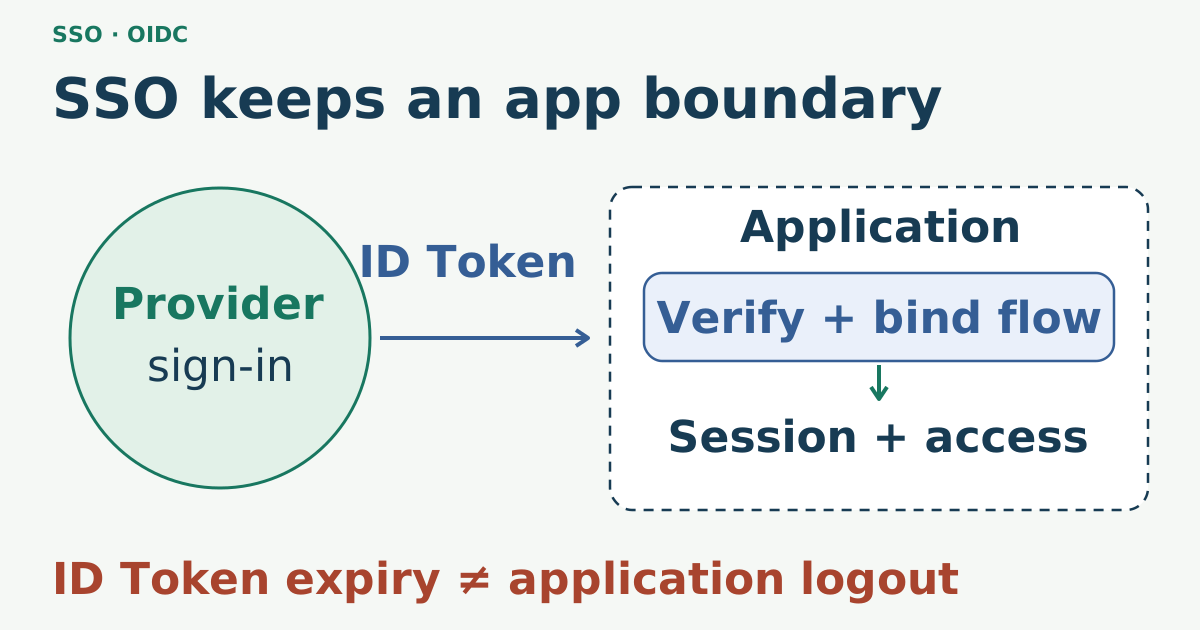
An identity provider authenticates and relays an ID Token to an application boundary. Inside, the application verifies the token and binds the login flow, then owns its session and access decisions. ID Token expiry does not automatically log out the application.

SSO delegates authentication; the app still verifies

Single sign-on lets an application rely on an identity provider’s authentication result. The user does not need to hand that provider password to each application. The application still owns its authorization decisions, local sessions, and integration configuration; confidential clients may also hold client credentials. Delegating authentication does not remove the application’s security boundary or guarantee that every future login can skip user interaction. ...

November 17, 2026 · 5 min · XB Field Notes
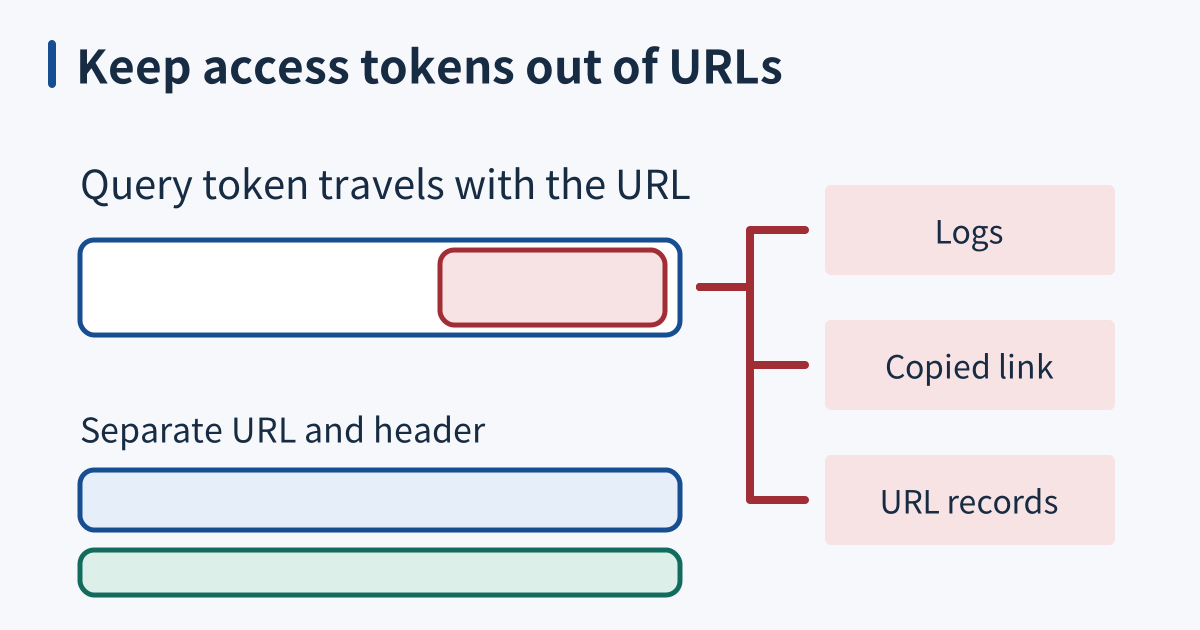
A highlighted query-token segment fans out from a URL into logs, copied links and URL records; separate lower URL and header bands show field separation.

Keep reusable access tokens out of request URLs

A reusable bearer access token grants its holder defined access; sender-constrained tokens additionally require proof tied to the sender. Putting it in a URL exposes that capability to systems that routinely copy URLs: access logs, monitoring records, browser navigation history, bookmarks, and shared links. The exact exposure depends on the request and policy, but a secret-looking query parameter is not automatically protected by its name. Treat transport placement as part of the credential’s disclosure boundary. ...

November 1, 2026 · 7 min · XB Field Notes