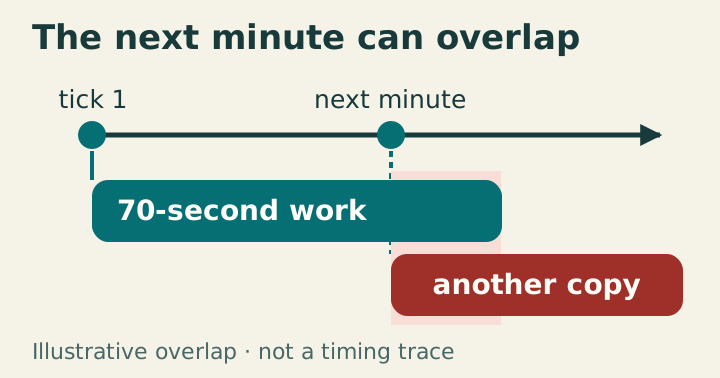
Two calendar ticks start overlapping copies of seventy-second work.

Cron repeats on the calendar

Cron launches commands at matching calendar times without inherently waiting for earlier invocations. Seventy-second work scheduled every minute can therefore overlap. Treat triggering, concurrency, and successful completion as separate responsibilities. The illustrative lanes show the next calendar trigger arriving before a seventy-second invocation ends. A shared nonblocking lock makes the later invocation record a skip; it does not provide exactly-once effects. The source’s prior measurements were not rerun. Read fields as calendar selections A user crontab entry contains minute, hour, day of month, month, day of week, then command. Asterisks select all field values. A minute step such as */15 selects values within each hour, not fifteen minutes since completion. Steps that unevenly divide a field’s range can produce unequal boundary gaps. ...
September 30, 2027 · 7 min · XB Field Notes
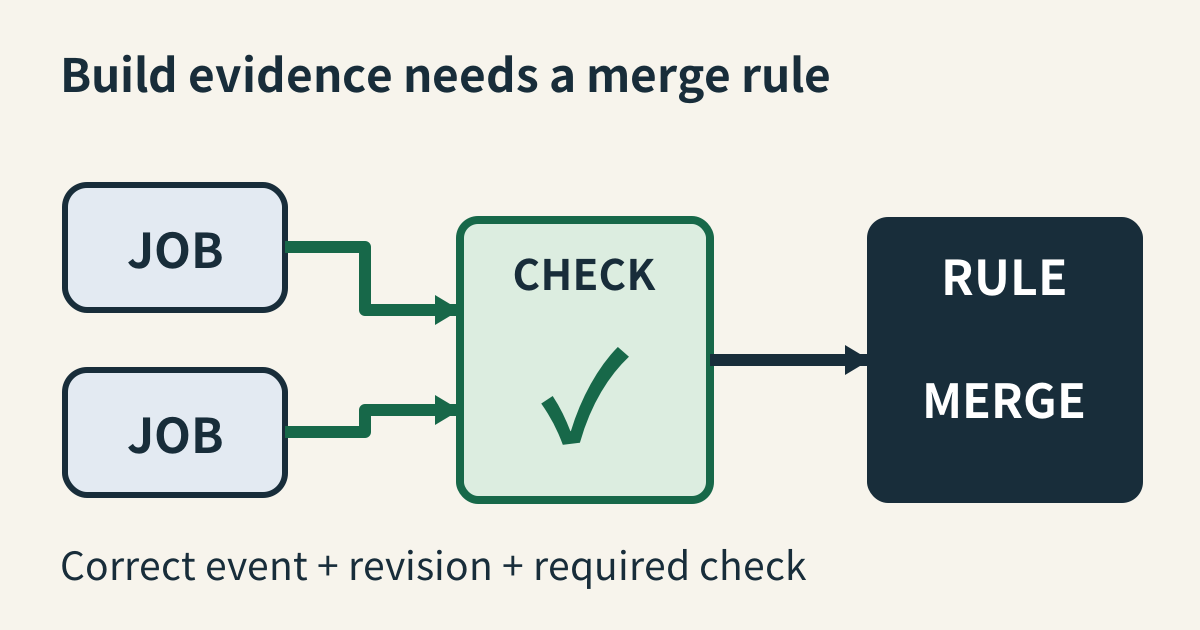
Mandatory job results converge on an aggregate check. A separate repository rule must require the correct check for the intended event and revision; workflow YAML alone does not enforce merging.

GitHub Actions workflows gate the build

A workflow can produce evidence for a merge decision, but YAML alone does not make that evidence mandatory. A dependable build gate connects the intended event, the exact revision being tested, meaningful test results, and a repository rule requiring the correct check. Review those connections together. A green badge on some earlier run is not proof that the proposed merge has satisfied today’s requirements. ...

September 2, 2027 · 5 min · XB Field Notes
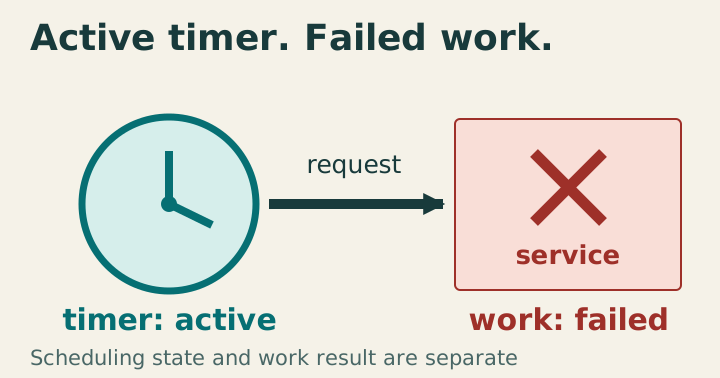
An active timer sends an activation request to a service that can fail.

A systemd timer schedules a service, not its success

A systemd timer separates the scheduling rule from the service that performs the work. The timer decides when to request activation; the service supplies the command, execution identity, environment, timeout, and result. This separation makes a maintenance job inspectable using normal unit tools. It does not turn a scheduled attempt into proof that a backup, cleanup, or report completed correctly. ...

June 21, 2027 · 5 min · XB Field Notes
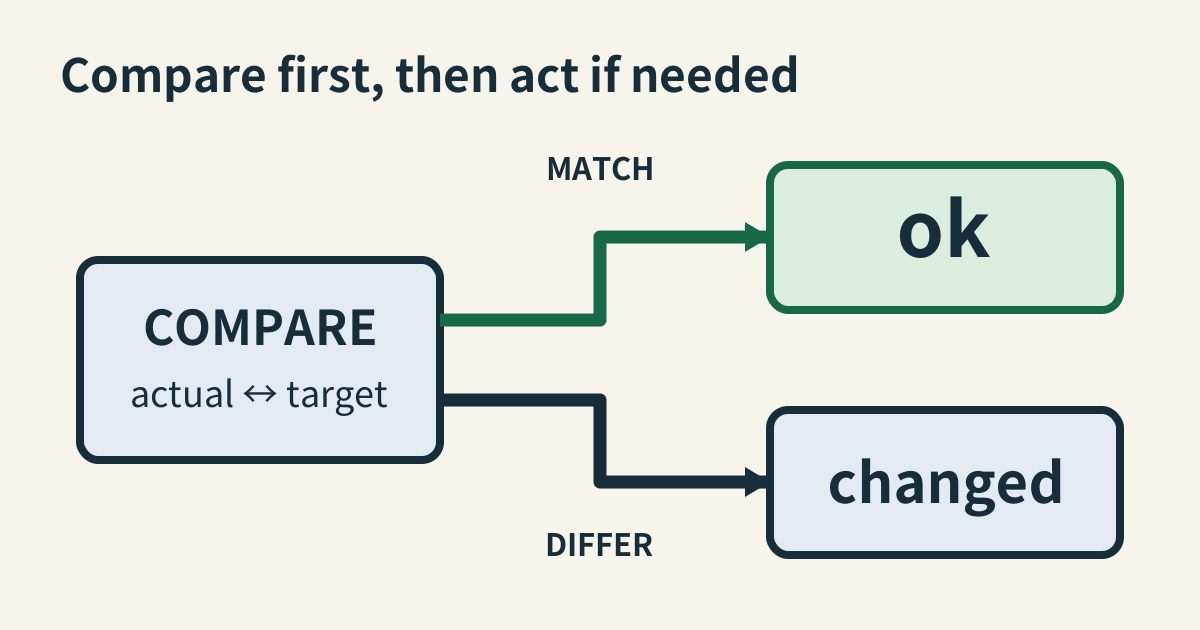
A state-aware Ansible module compares actual state with the declared target. A matching target reports ok; a mismatch can be changed toward the target. This depends on the chosen module and arguments rather than a guarantee for every task.

Ansible tasks can declare repeatable target states

An Ansible playbook is an ordered orchestration of tasks. State-aware modules can record what a machine should have and repair missing pieces after a partial deploy. Convergence comes from the selected modules and arguments, not an engine-wide guarantee that every task safely repeats. A playbook is an executable contract between the inventory, the modules, and the operator who reviews the change. ...

January 17, 2027 · 6 min · XB Field Notes
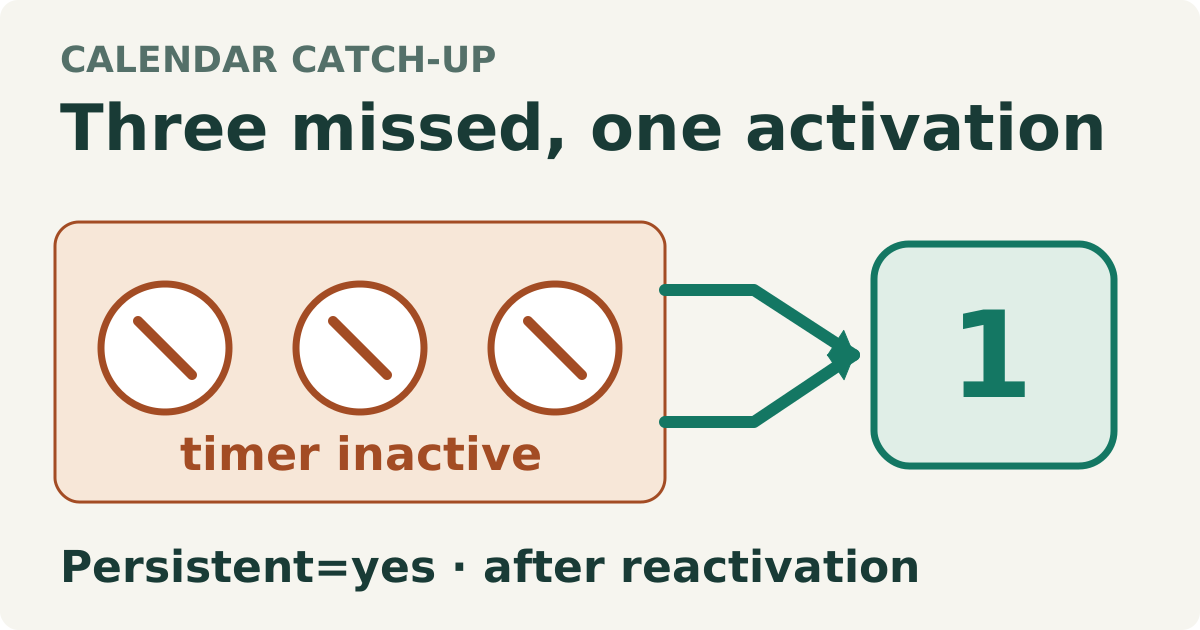
Three missed calendar events merge into one catch-up activation after a persistent timer is reactivated.

Choose the clock and catch-up rule for a systemd timer

A schedule must specify what time means. “At nine each morning in New York” refers to a civil-time calendar. “A quarter hour after this job finishes” refers to an elapsed interval and an event. systemd timers support both, but the two clocks and reference points have different behavior around time-zone changes, suspension, and periods when the timer is inactive. ...

November 20, 2026 · 5 min · XB Field Notes
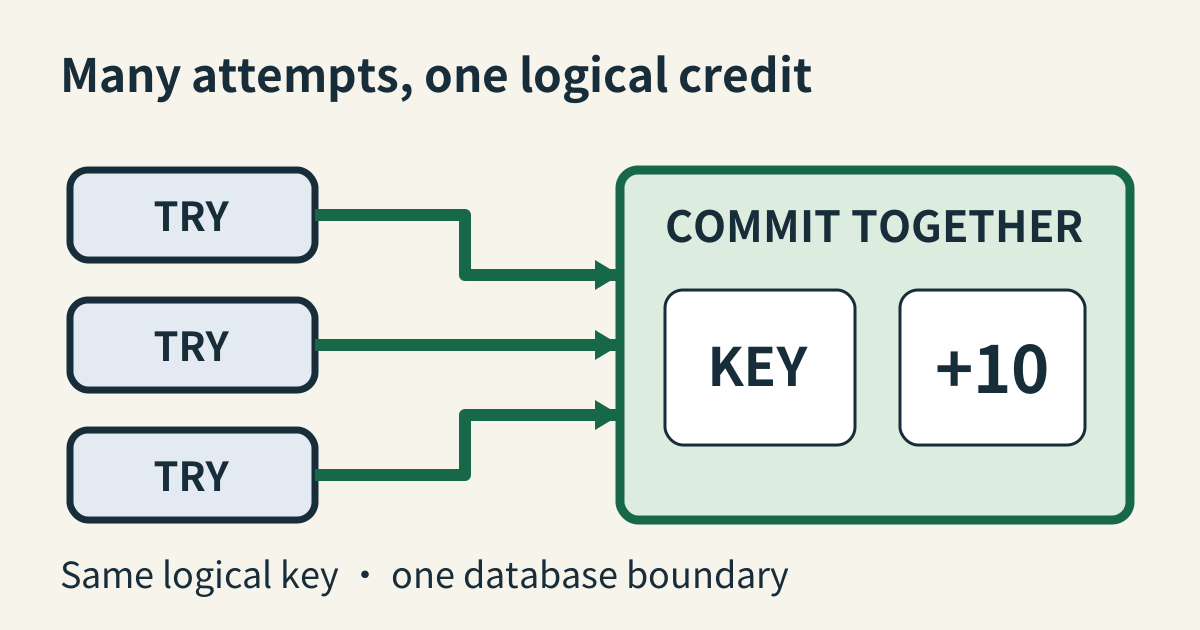
For a logical key, one applying attempt commits its completion key and fixed ten-unit credit together. Every attempt uses its own transaction; duplicate attempts commit without adding credit. The boundary is one SQLite database, excluding external effects.

Scheduled jobs need to be safe to rerun

A scheduler starts attempts, while the business usually cares about completing a logical task. One daily credit may be attempted several times after an error, a restart, or an operator retry. Giving every attempt a new identifier makes those duplicates indistinguishable from new work. Use a key that identifies the intended task, such as its name and nominal scheduled time, and define what a repeated key means before changing business state. ...

August 15, 2026 · 5 min · XB Field Notes