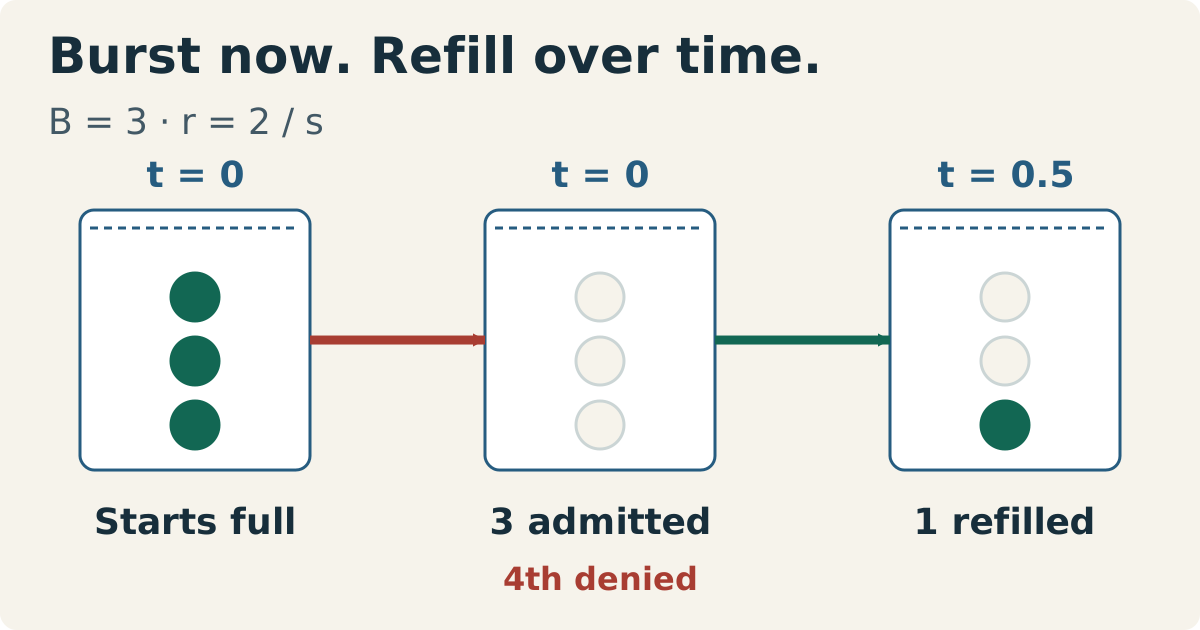
A bucket of capacity three begins full. Three unit-cost admissions at time zero empty it immediately; a fourth is denied. At half a second, refill at two tokens per second provides one token. Three states show burst spending followed by elapsed-time refill, without promising paced departures.

A token bucket bounds admission and allows bursts

A token bucket bounds admitted work while allowing accumulated credit to be spent in a burst. It does not automatically space requests evenly, guarantee completed throughput, or cap the number of operations still running. Those are separate scheduling and capacity questions. The bucket’s two parameters describe a budget, not a promise that the service can perform it. ...
December 1, 2027 · 6 min · XB Field Notes
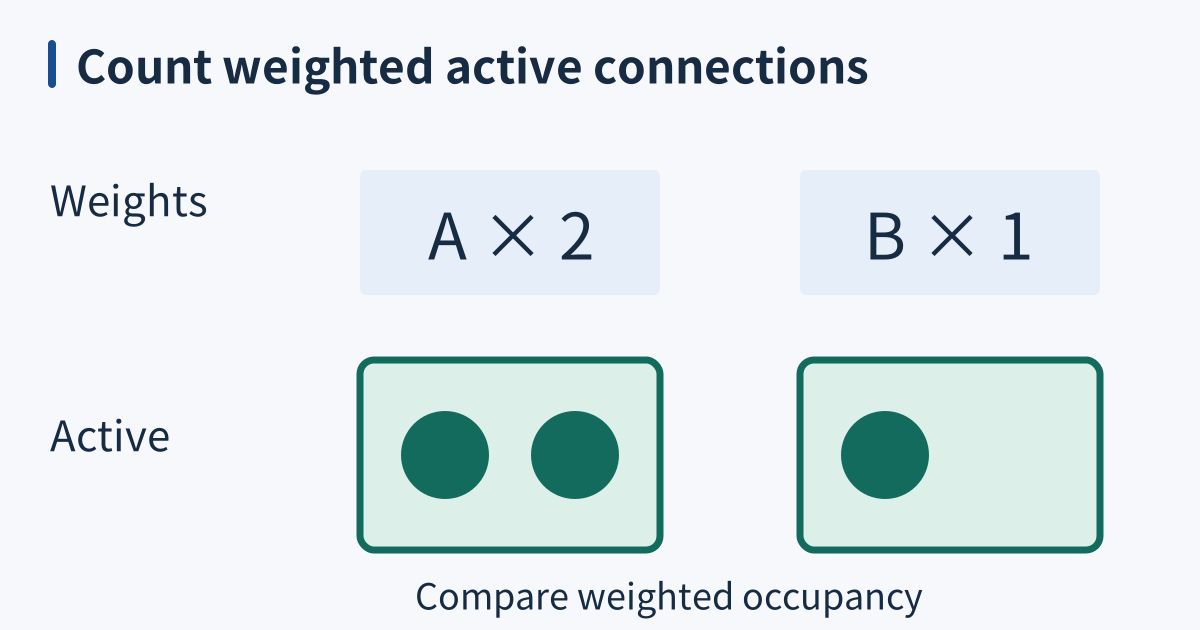
A weight-two peer holds two active-connection circles and a weight-one peer holds one; equal card sizes avoid implying hardware or CPU capacity.

Least connections measures occupied connections, not every kind of load

Least-connections balancing chooses a peer using active connection counts, with the implementation’s weighting and tie rules. In nginx, least_conn accounts for server weights and uses weighted round robin among equally suitable peers. This can help when requests occupy connections for different durations. It is still a connection-based measurement, not direct knowledge of CPU, memory pressure, queued jobs, or database contention. ...

November 11, 2027 · 6 min · XB Field Notes
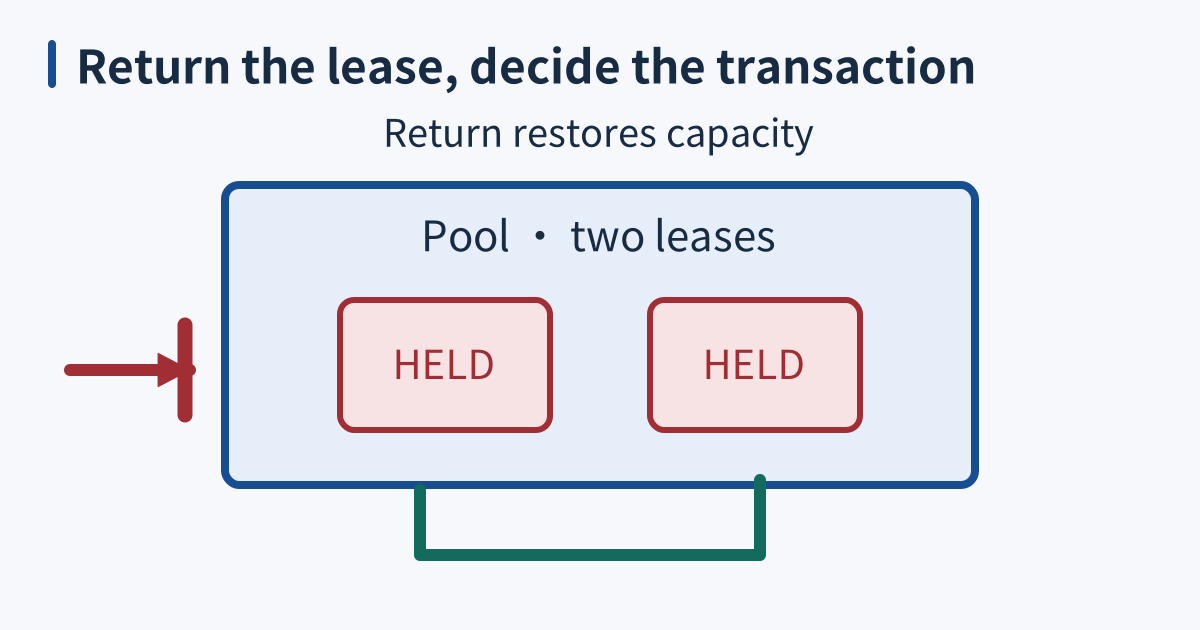
Two retained lease slots fill a finite pool and stop a third checkout; a return path restores a slot without enlarging the pool.

A leaked connection drains the pool

A pool leak is an ownership failure: application work finishes, but its borrowed connection remains checked out. The database may still answer other clients normally while this application has no leases left. Treat release as part of the operation’s contract, including exceptions and early returns, rather than a cleanup courtesy after success. ...

November 5, 2027 · 5 min · XB Field Notes
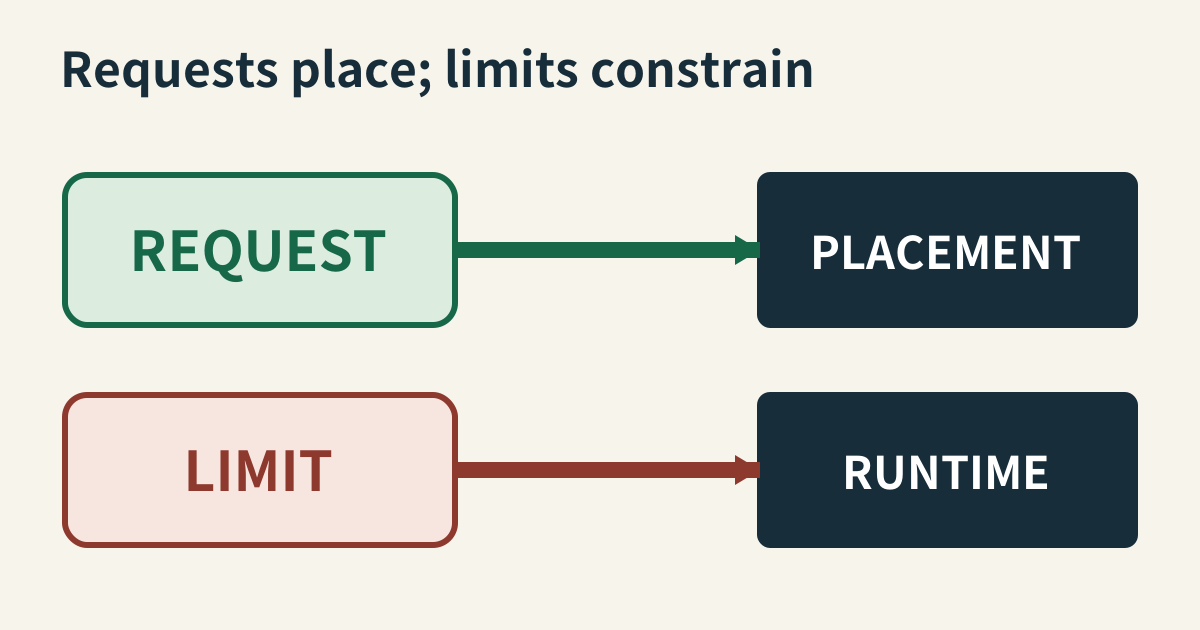
Separate arrows connect resource requests to placement and resource limits to runtime enforcement. Limits are not scheduler reservations.

Resource limits constrain execution; requests guide placement

A Kubernetes resource request and a resource limit belong to different decisions. Requests participate in scheduling and resource sharing; limits configure execution constraints supported by the runtime and operating system. Treating a limit as the scheduler’s reservation obscures both mechanisms. A useful resource policy identifies placement needs, acceptable contention and the failure behavior when a running workload reaches its boundary. ...

June 14, 2027 · 6 min · XB Field Notes
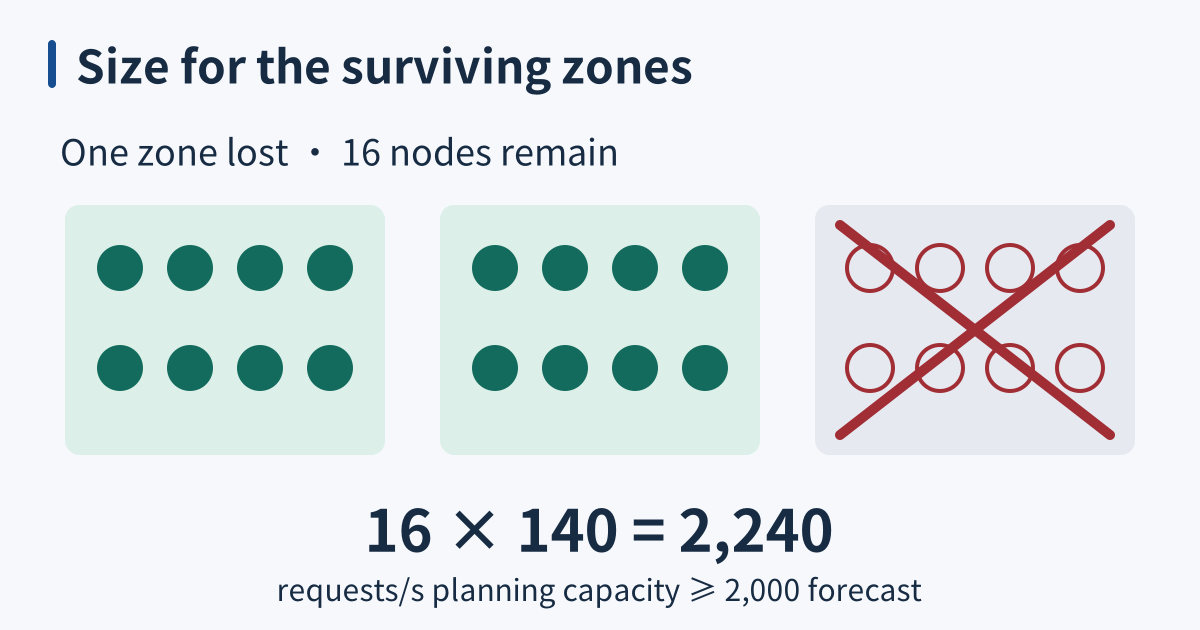
Three zones each contain eight nodes; one zone is crossed out. Sixteen survivors at the example planning rate of 140 requests/s provide 2240 requests/s, above the 2000 forecast.

Capacity planning is a number, not a guess

Capacity planning turns a demand forecast into a provisioned operating envelope. The useful question is not how many requests a machine can accept before crashing, but what workload the service can sustain while meeting its latency and correctness requirements. That answer depends on request cost, dependencies, and failure assumptions. A spreadsheet becomes useful when each of those assumptions has a source and an owner. ...

February 21, 2027 · 5 min · XB Field Notes
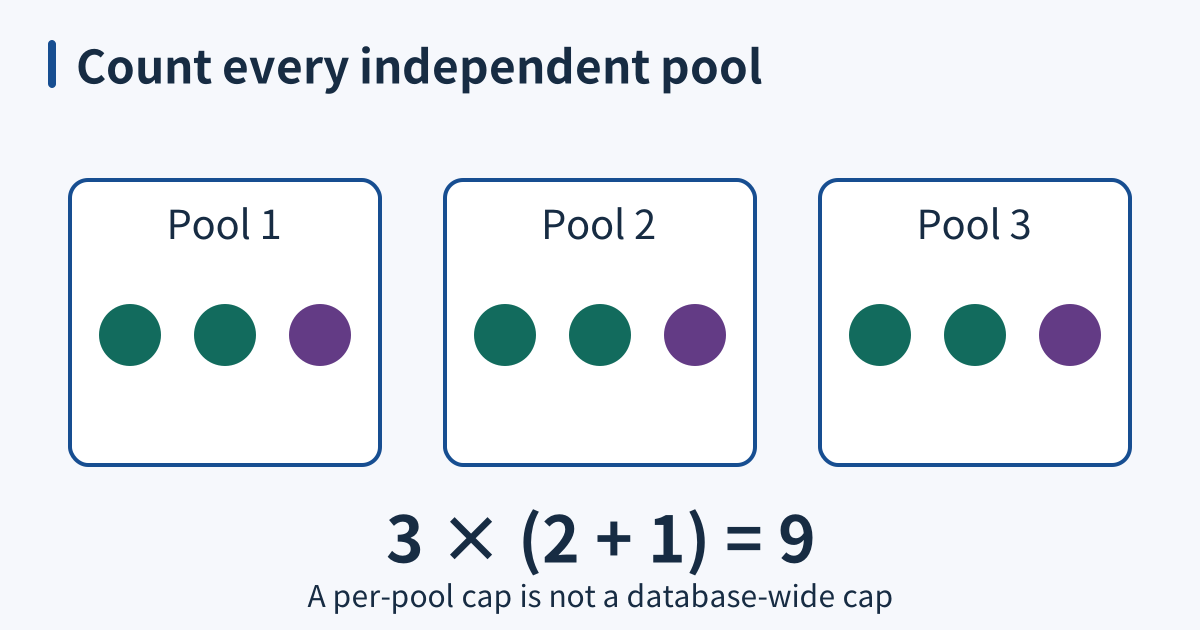
Three independent pool boxes each hold two retained-connection circles and one overflow circle: three times two plus one equals nine physical connections. Source pool fixture, not rerun.

Connection caps guard a shared database

A connection cap limits one owner’s demand; it does not automatically cap every application sharing a database. The useful budget is the sum of physical connections that can reach each backend, including idle pooled connections. Begin with the backend’s usable slots, then allocate them across all callers and deployment states. ...

September 5, 2026 · 6 min · XB Field Notes