Vector clocks distinguish causal order from concurrency
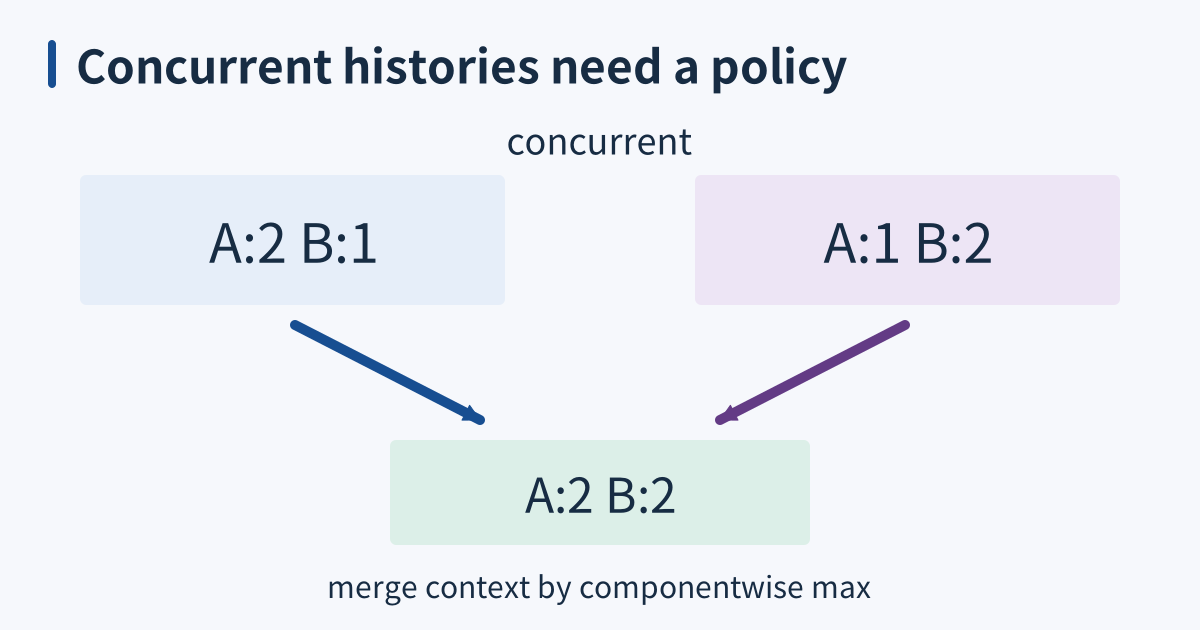
A vector records progress for each tracked participant. Comparing these counters distinguishes causal order from concurrency; the application still decides how to reconcile concurrent values. One timestamp is not enough A scalar timestamp can impose an order, but that order alone cannot prove causality. With stable participant identities and the usual event-clock rules, each process increments its own component for a local event. Receiving a message merges components by maximum and then increments the receiver’s component. These rules record information flow. They do not measure elapsed time or establish a physical-time ordering between machines that exchanged no information. ...