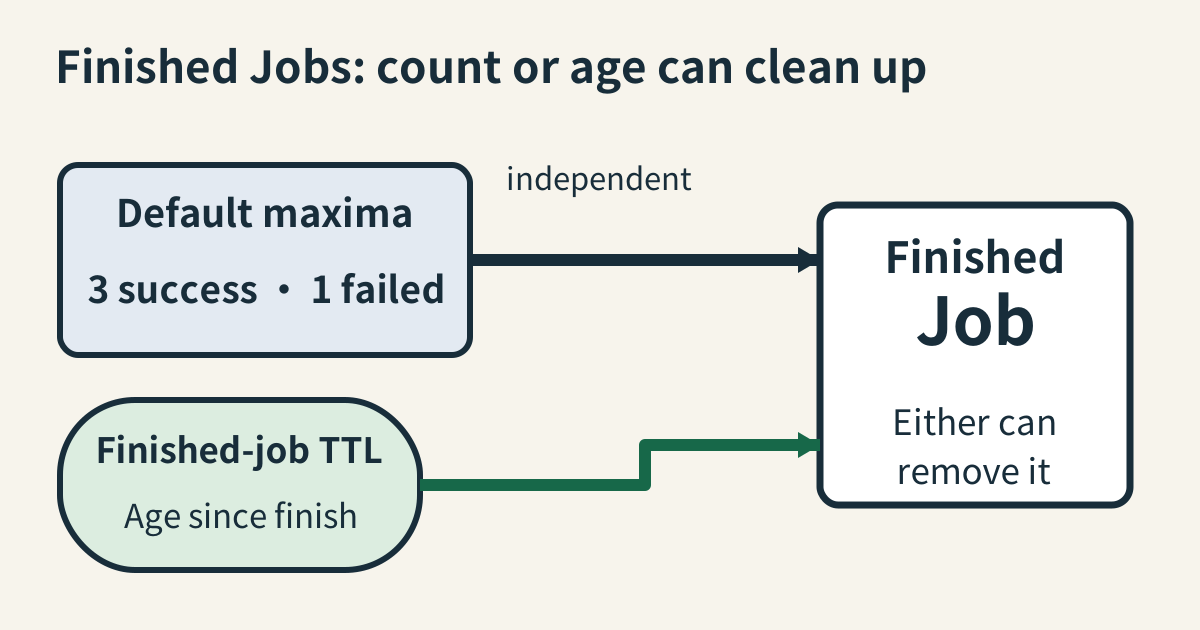
Default CronJob history keeps up to three successful Jobs and one failed Job; Job TTL is an independent age control. Either mechanism can remove a finished Job.

Kubernetes CronJobs need a history policy

A CronJob creates Jobs on a schedule, and each Job manages the Pods that perform the work. Finished objects can preserve useful status, but retention is bounded by several independent mechanisms. In particular, CronJobs already have default history limits. Omitting explicit history settings does not make ordinary completed runs accumulate forever. ...
February 25, 2028 · 5 min · XB Field Notes
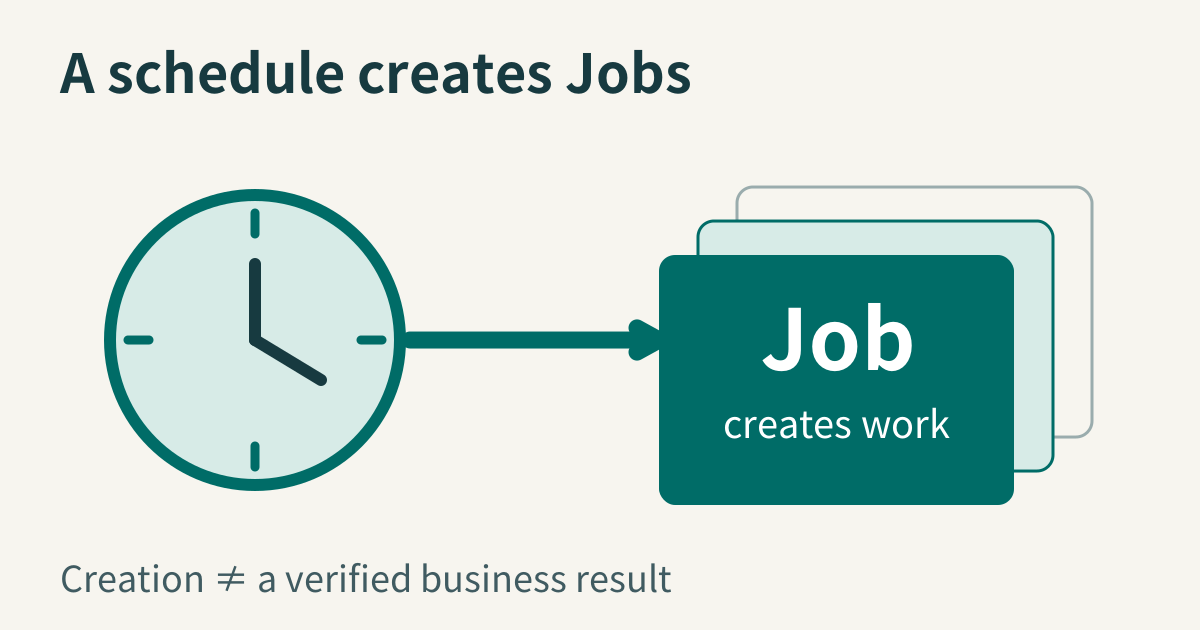
A schedule clock creates repeated Job objects; creation is separate from a verified business result.

A CronJob turns a schedule into Jobs

A CronJob combines a Job template with a recurring schedule. The CronJob controller creates Jobs; each Job manages the Pods that perform the work. A run can involve retries, replacement Pods, or parallel workers, depending on the Job specification. There need not be a dedicated application process waiting between runs, although completed Jobs and Pods may remain for inspection. ...

December 17, 2027 · 5 min · XB Field Notes