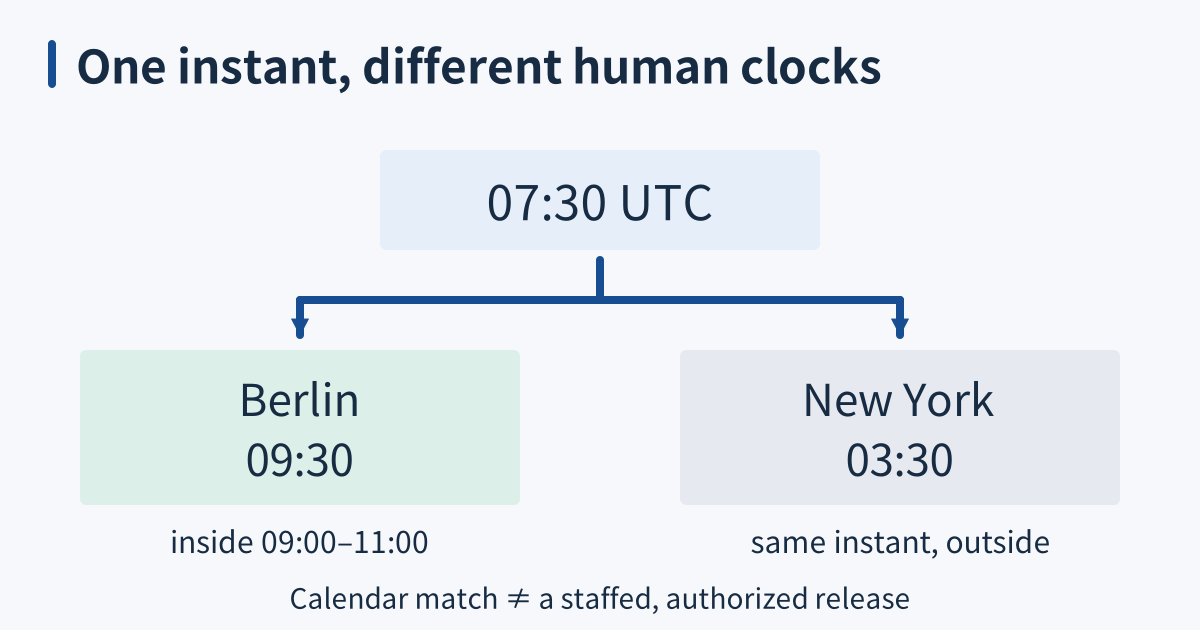
A shared 07:30 UTC instant branches to Berlin 09:30 inside its window and New York 03:30 outside its window. A schedule match does not establish staffing or authorization.

Change windows fit people, not servers

A change that races to zero traffic but lands when nobody is watching trades one risk for another. The best window is one where the operators responsible can actually attend. Traffic is only part of the math Deploying at the absolute quietest hour minimizes how many users feel the change, but it collides with the people problem: the operator is most likely asleep, unreachable, or already covering another incident. If the rollout breaks at 3 a.m. and nobody is watching, a silent failure can run for hours before a human reads it. Least-traffic is a good starting estimate, but it is a traffic answer, not a risk answer. Balance reduced exposure against the ability to react, and prefer a window where you can actually observe the result. ...
July 29, 2027 · 6 min · XB Field Notes
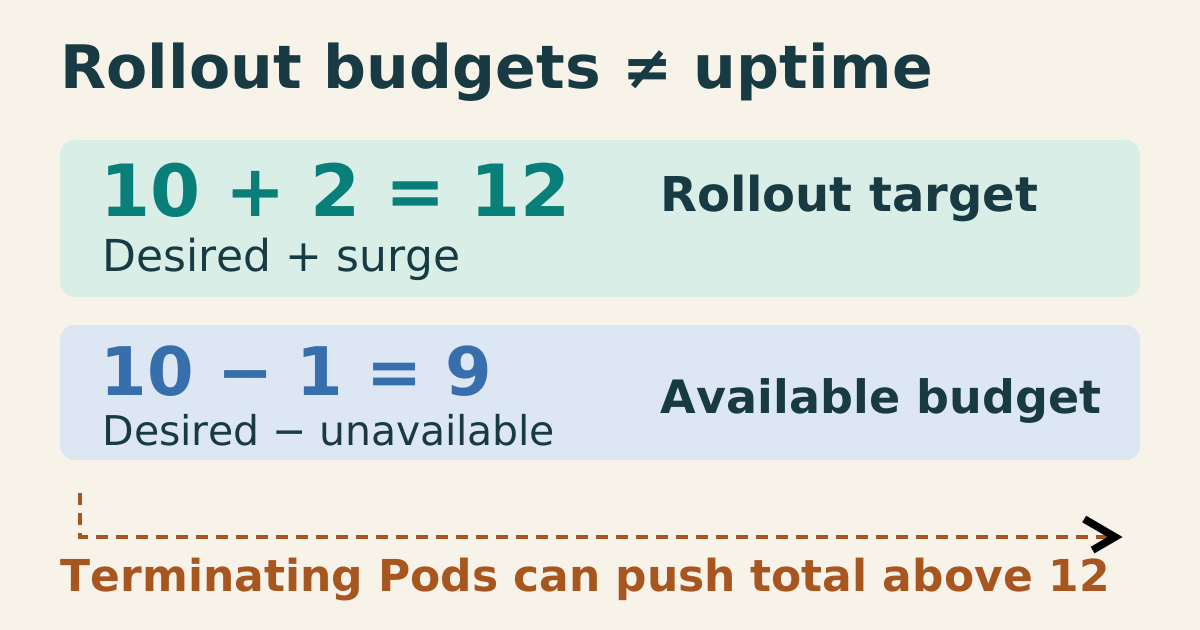
Ten desired replicas plus two surge gives a rollout target of twelve. Ten minus one unavailable gives a planning budget of nine available replicas. A separate terminating tail may extend beyond twelve. These budgets do not guarantee uptime.

Rolling updates replace pods in small waves

A rolling update is a controlled replacement, not a promise of uninterrupted service. Its useful property is that the controller can retain old replicas while introducing new ones. Whether users notice the change also depends on spare capacity, meaningful health checks, and shutdown behavior. This article tunes that process; the companion strategy article asks whether versions should overlap at all. ...

June 7, 2027 · 5 min · XB Field Notes
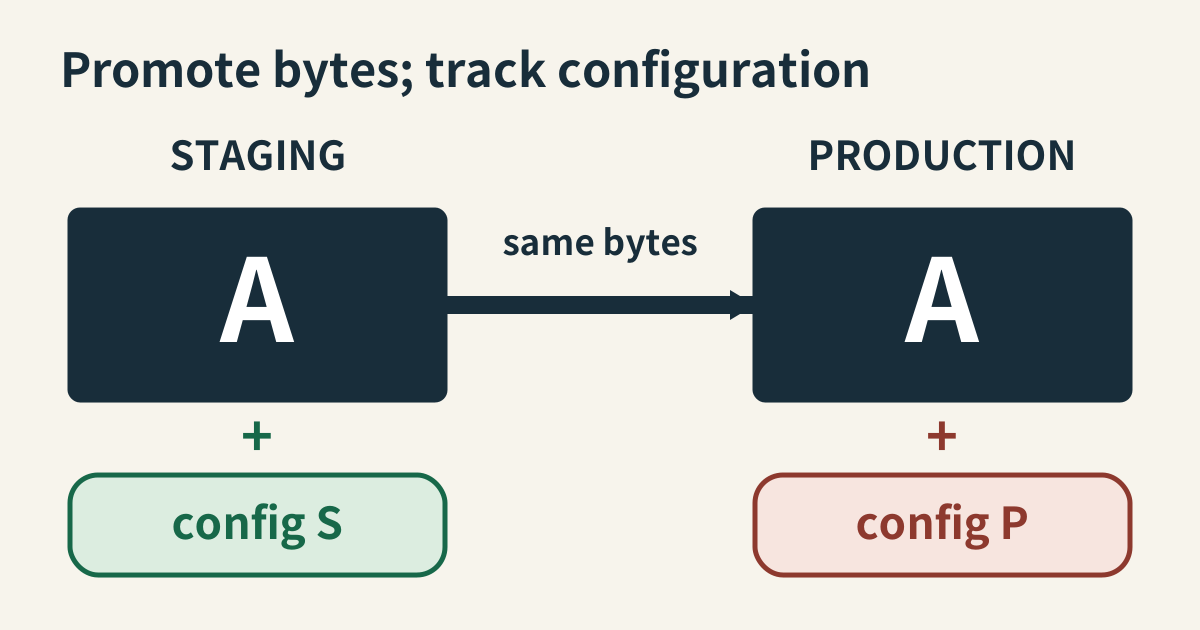
Artifact A moves unchanged from staging to production. Each environment supplies separate configuration; equal bytes do not establish equal behavior.

Promote a verified artifact through environments

A staging test establishes facts about the artifact and environment that actually ran. Building again before production creates another output whose identity must be checked or whose behavior must be revalidated. Promotion carries an already verified artifact to the next environment and records that decision. It removes one source of uncertainty, but it does not make staging and production equivalent or eliminate the need to verify the resulting deployment. ...

February 17, 2027 · 6 min · XB Field Notes
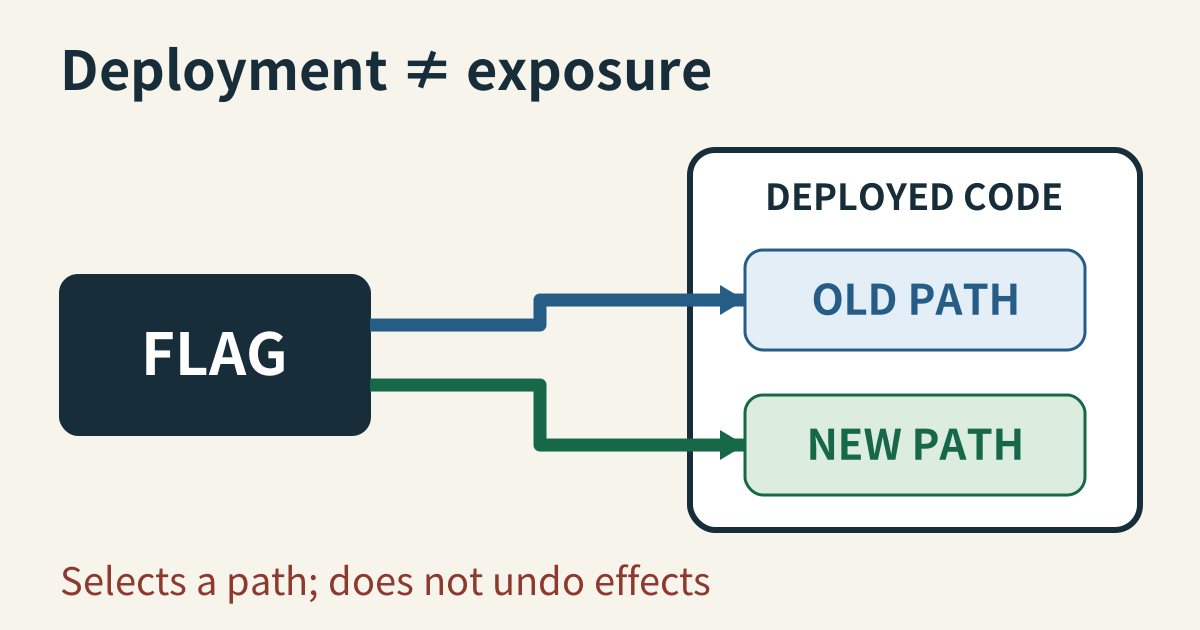
A runtime flag chooses the old or new path inside already deployed code. It does not undo existing effects.

Feature flags decouple release from exposure

Deploying code and exposing it are different acts. A feature flag can select a runtime path after the code is deployed. This supports gradual exposure and fast disablement, provided the old path remains compatible and the configuration reaches the processes that evaluate it. The flag controls a decision; it does not reverse everything the deployment or the new behavior has already done. ...

February 9, 2027 · 6 min · XB Field Notes
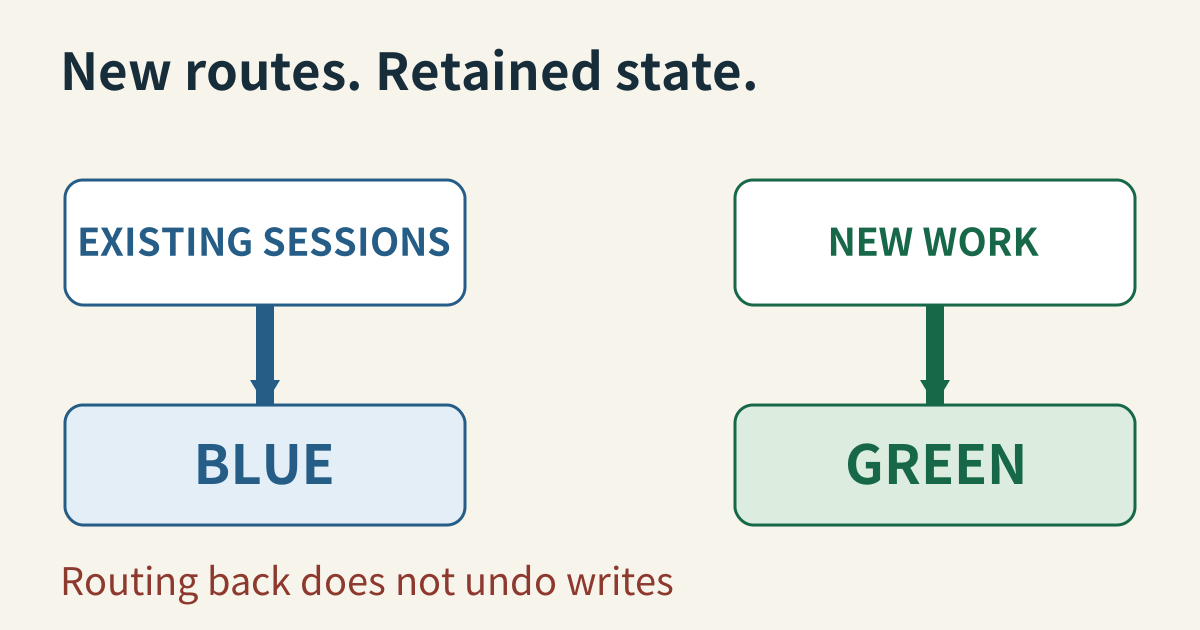
New work can enter green while existing sessions remain on blue. Routing back does not undo accepted writes.

Blue-green deployment keeps two environments ready

Blue-green deployment prepares a new application version in a separate environment while the previous version serves traffic. After readiness checks, routing directs new work toward the new environment. Keeping the old environment available can shorten rollback, because recovery need not wait for another build. The pattern does not make every dependency duplicated, every switch instantaneous, or every data change reversible. ...

November 2, 2026 · 5 min · XB Field Notes
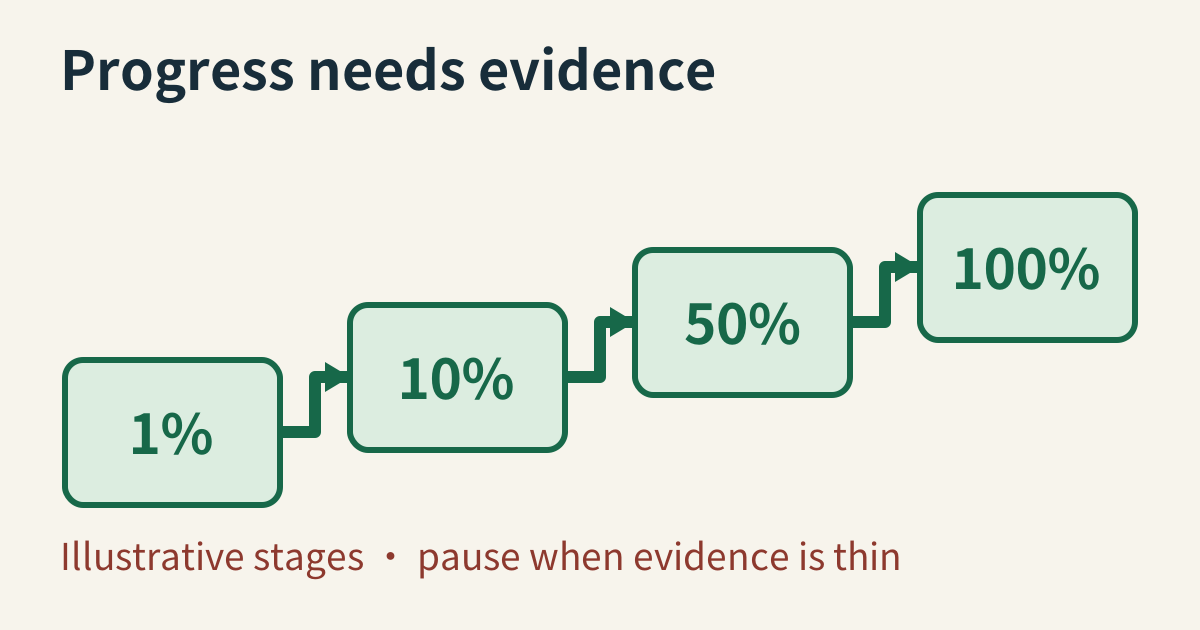
Illustrative stages rise through 1, 10, 50 and 100 percent. Evidence is required to continue; insufficient evidence pauses progression.

Progressive rollouts need evidence and a recovery path

A progressive rollout increases exposure while checking whether the new version behaves acceptably. It can discover a regression before every request uses that version. It does not make a change reversible by itself, guarantee that only the selected percentage is affected, or require a feature flag. Traffic routing, instance replacement, and feature exposure are different controls that can participate in the same release plan. ...

September 18, 2026 · 5 min · XB Field Notes
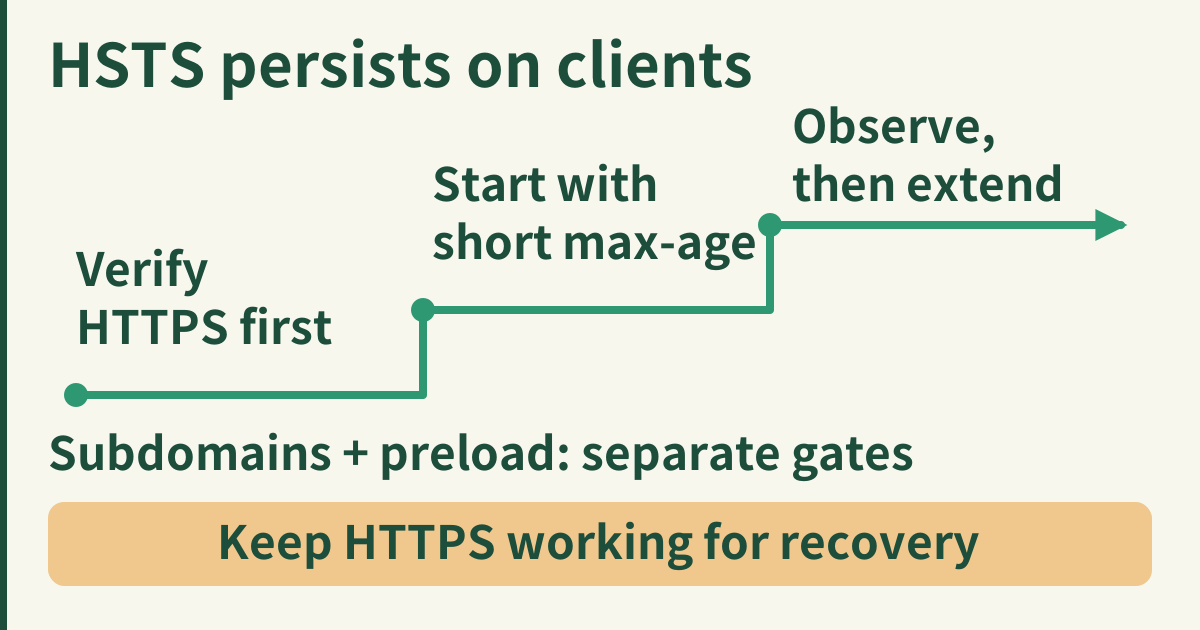
Verify HTTPS, begin with a short HSTS lifetime, then observe before extending it. Subdomain scope and preload need separate decisions; recovery requires working HTTPS.

HSTS should be rolled out with a recovery plan

HSTS is cached browser policy, so a configuration mistake can outlive the server change that created it.

June 23, 2026 · 3 min · XB Field Notes
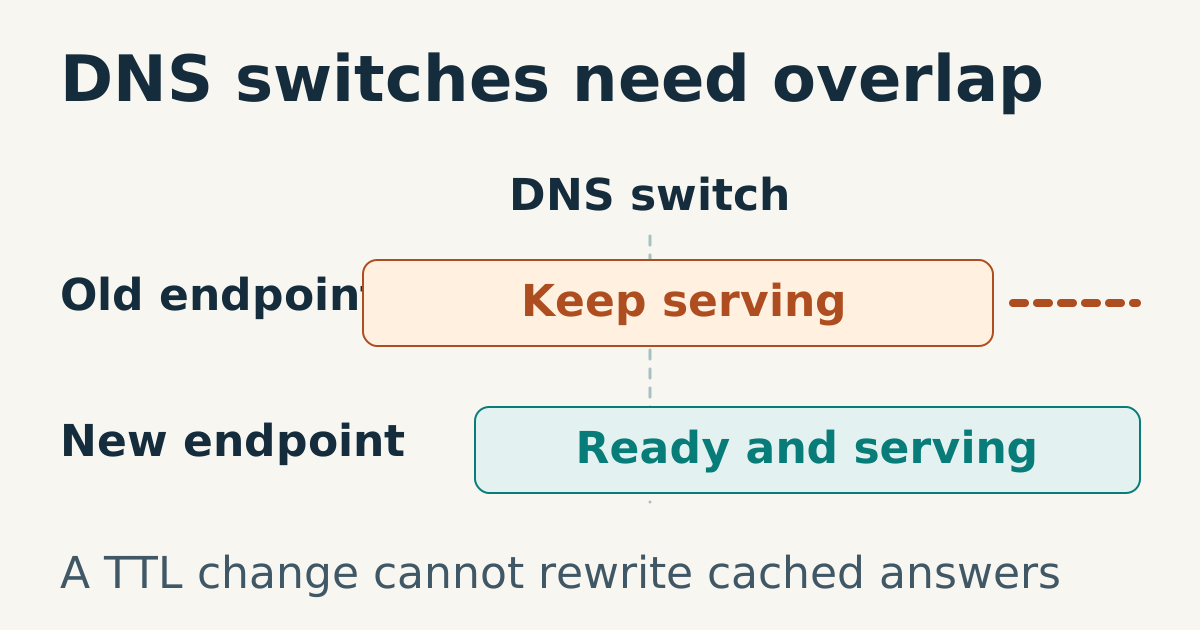
The old endpoint keeps serving across the DNS switch while the new endpoint is already ready. The overlap continues into observation; changing TTL cannot rewrite cached answers.

DNS changes need a cache-aware rollback window

Prepare the TTL ahead of time, observe authoritative and recursive answers, and keep both endpoints valid through the cache window.

June 18, 2026 · 3 min · XB Field Notes