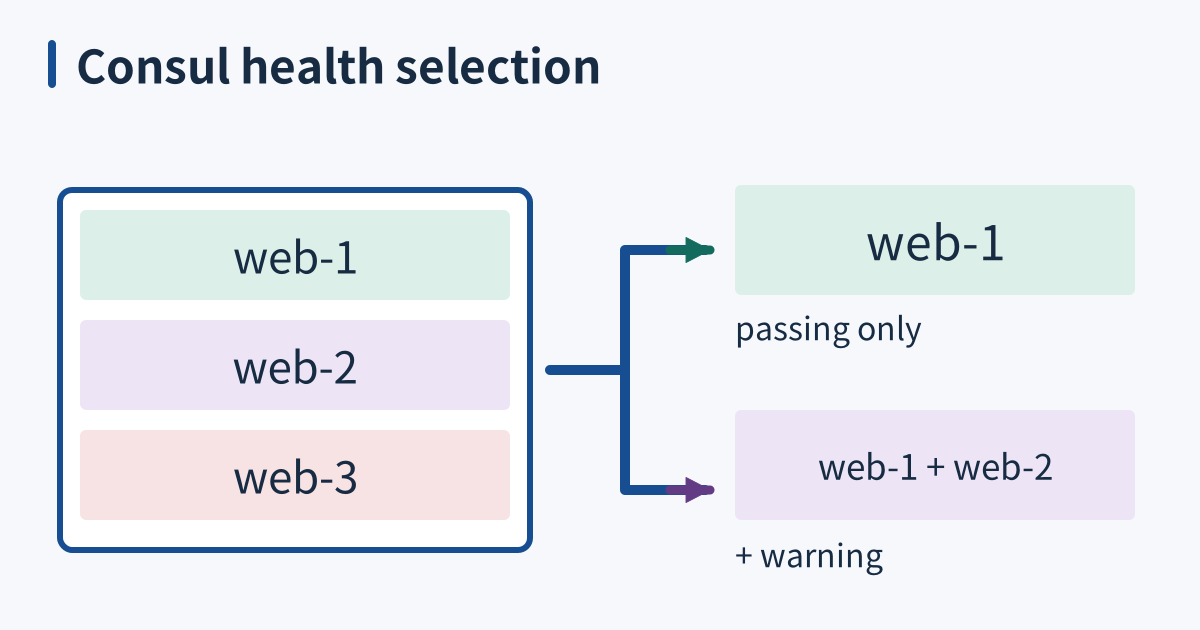
Three registered web endpoints split into passing-only web-1 and warning-inclusive web-1 plus web-2 sets.

Consul discovery reflects health policy and freshness

Consul discovery reports registered endpoints and recorded health observations. It cannot promise that every returned endpoint will answer the caller’s next request. A useful operating model separates four things: what is registered, which checks apply, which states the query accepts, and how old those observations may be. A successful lookup establishes none of those guarantees by itself. ...
April 6, 2028 · 6 min · XB Field Notes
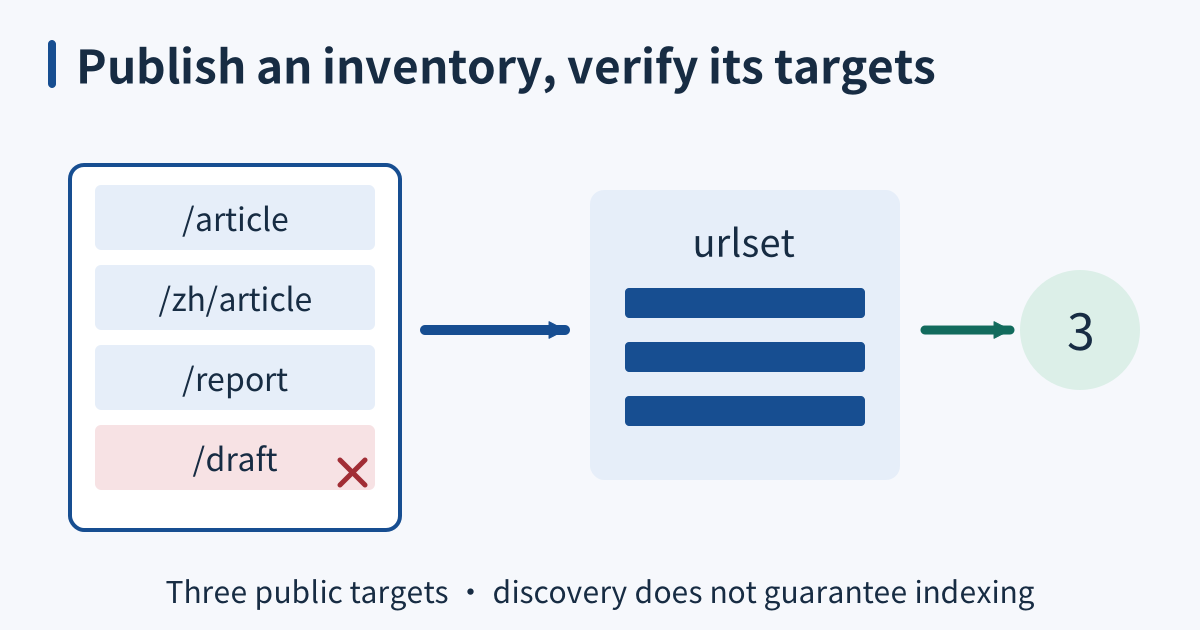
An inventory of three public paths and one crossed-out draft yields a urlset with three entries and three public targets. Discovery does not guarantee indexing.

Sitemaps guide crawler discovery

A sitemap gives a crawler an explicit list of URLs to consider. It is useful when new or deeply linked documents are difficult to discover through ordinary navigation. The list does not bypass authentication, grant crawl permission, guarantee indexing, or promise a revisit date. Treat it as a published inventory of intended public documents, and keep that inventory aligned with the site’s canonical URLs and actual release state. ...

June 30, 2027 · 5 min · XB Field Notes
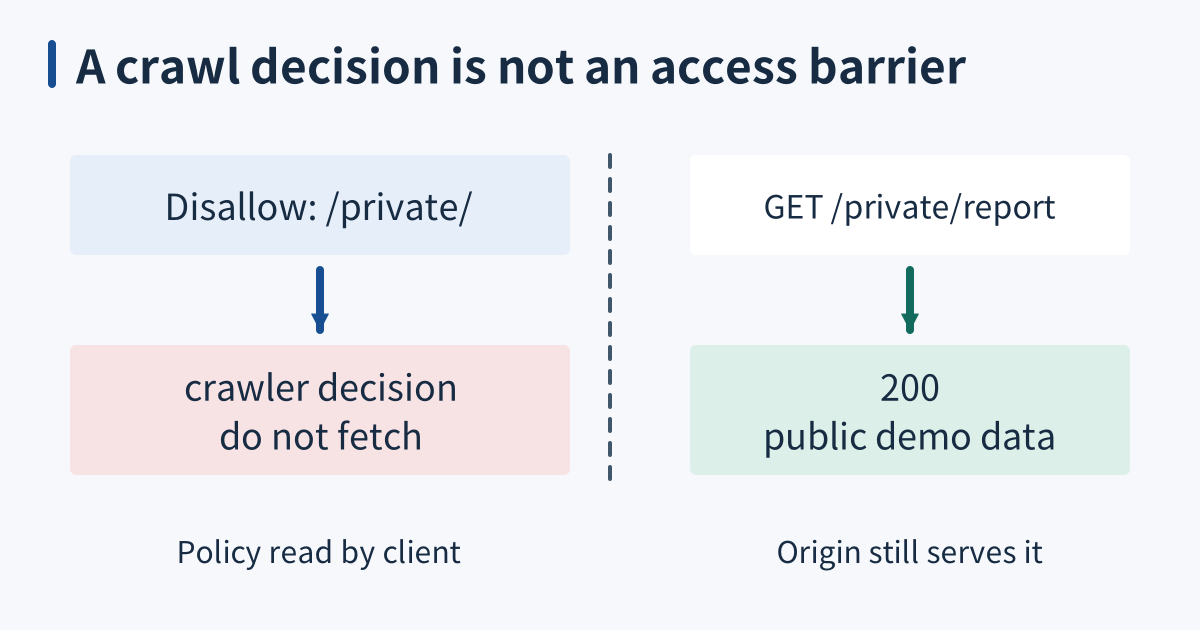
Two independent columns contrast the crawler decision not to fetch /private/ with a direct GET /private/report that still receives 200 and public demonstration data.

robots.txt guides crawlers but does not authorize access

A robots.txt file communicates crawling rules to automated clients that implement the Robots Exclusion Protocol. It can reduce unwanted traversal of expensive or unhelpful paths, but the server does not automatically enforce its contents against incoming requests. RFC 9309 explicitly separates these rules from access authorization. Treat robots.txt as a public interface for cooperating crawlers, while authentication and authorization decide who may actually retrieve protected resources. ...

October 2, 2026 · 5 min · XB Field Notes
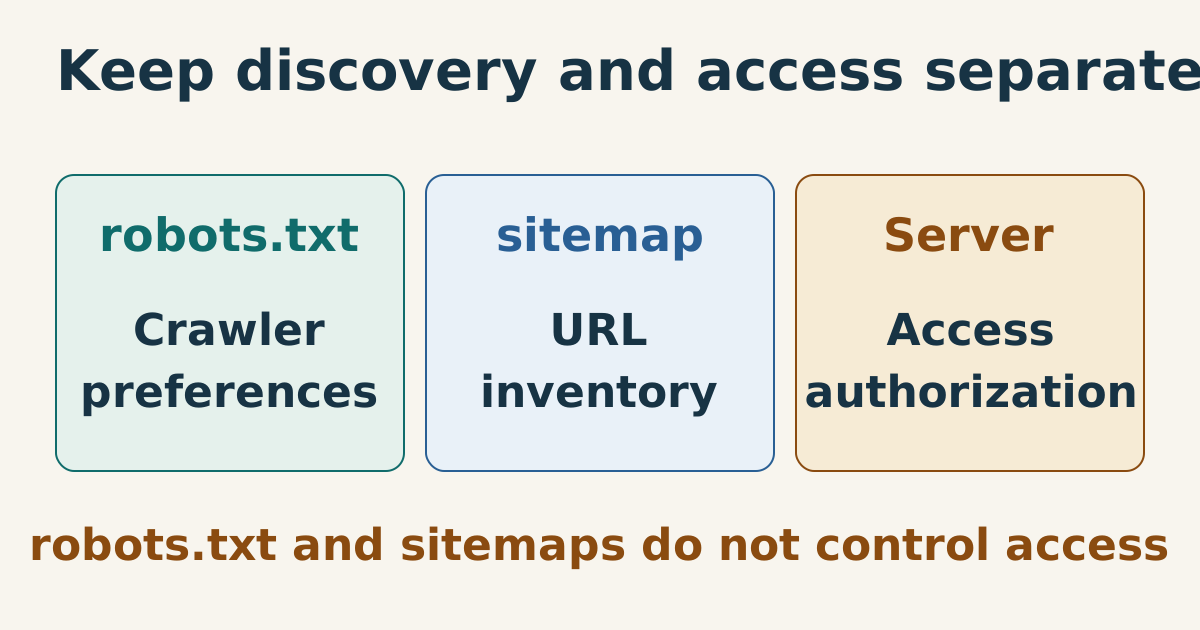
Three separate roles: robots.txt gives cooperating crawler preferences, sitemap gives a URL inventory, and the server provides access authorization. Neither file controls access.

robots.txt and sitemaps answer different questions

robots.txt is a crawler-facing preference; a sitemap is a URL inventory; neither is an authorization layer.

July 21, 2026 · 3 min · XB Field Notes