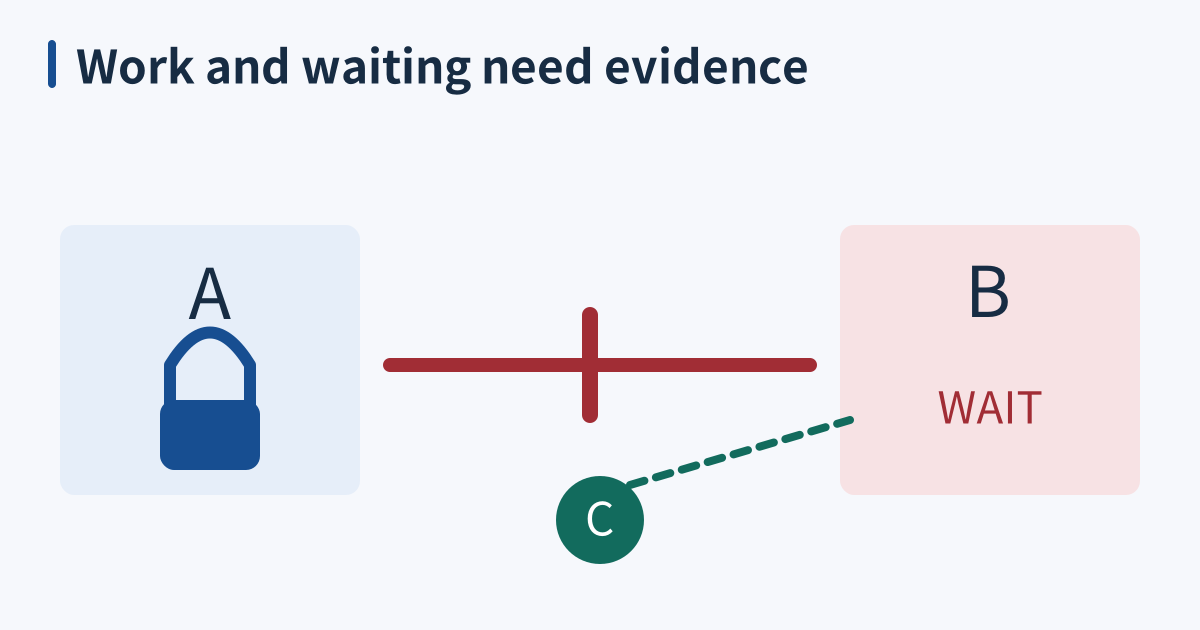
Session A holds a lock across a blocked connection to waiting session B; observer C points toward the waiting side.

A slower query needs both a plan and a wait check

A formerly fast query can become slow with the same data, statistics, and access plan. Another transaction may hold a lock, the storage cache may be colder, or the application may wait before PostgreSQL even receives the statement. Rechecking the plan is useful, but it belongs inside a broader comparison of where the elapsed time went. Begin by distinguishing time spent doing work from time spent waiting to do it. ...
January 31, 2028 · 5 min · XB Field Notes
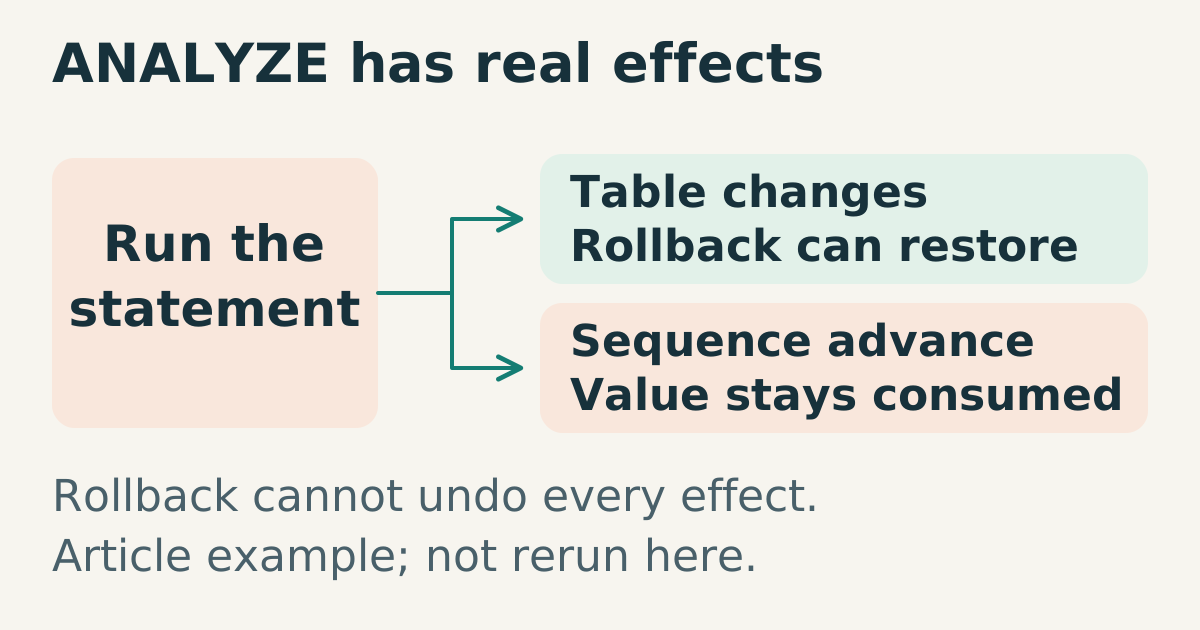
EXPLAIN ANALYZE performs real work. After savepoint rollback, table changes are restored, but a consumed sequence value remains consumed. The article example is illustrated, not rerun.

EXPLAIN ANALYZE runs the query to show real cost

EXPLAIN describes a PostgreSQL execution plan; EXPLAIN ANALYZE also executes the statement and measures its work. The useful comparison is between estimated rows and observed rows at the same node. Neither number is a verdict by itself: an estimate is a model, while a measurement describes one execution under particular data, cache, concurrency, and instrumentation conditions. ...

December 16, 2027 · 5 min · XB Field Notes
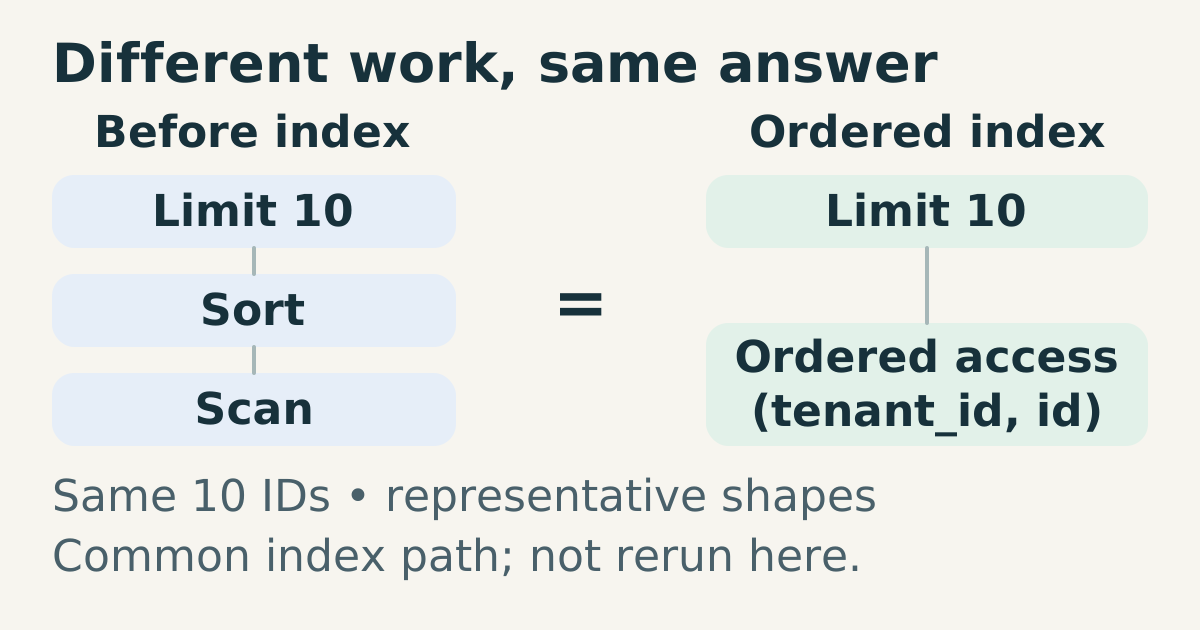
Representative plans compare Limit over Sort over Scan with Limit over ordered index access. Both preserve the same ten tenant-17 IDs. The index is commonly used, but exact plan shape varies; the illustration was not rerun.

EXPLAIN shows how Postgres will do the work

EXPLAIN prints the planner’s proposed execution plan; EXPLAIN ANALYZE executes the statement and adds measured rows and times. A slow query needs both a hypothesis and a measurement. Save the query parameters, PostgreSQL version, and original plan before changing an index or rewriting a join. Those details make the next plan comparable and prevent an improvement on one input from hiding a regression on another. ...

July 8, 2027 · 5 min · XB Field Notes