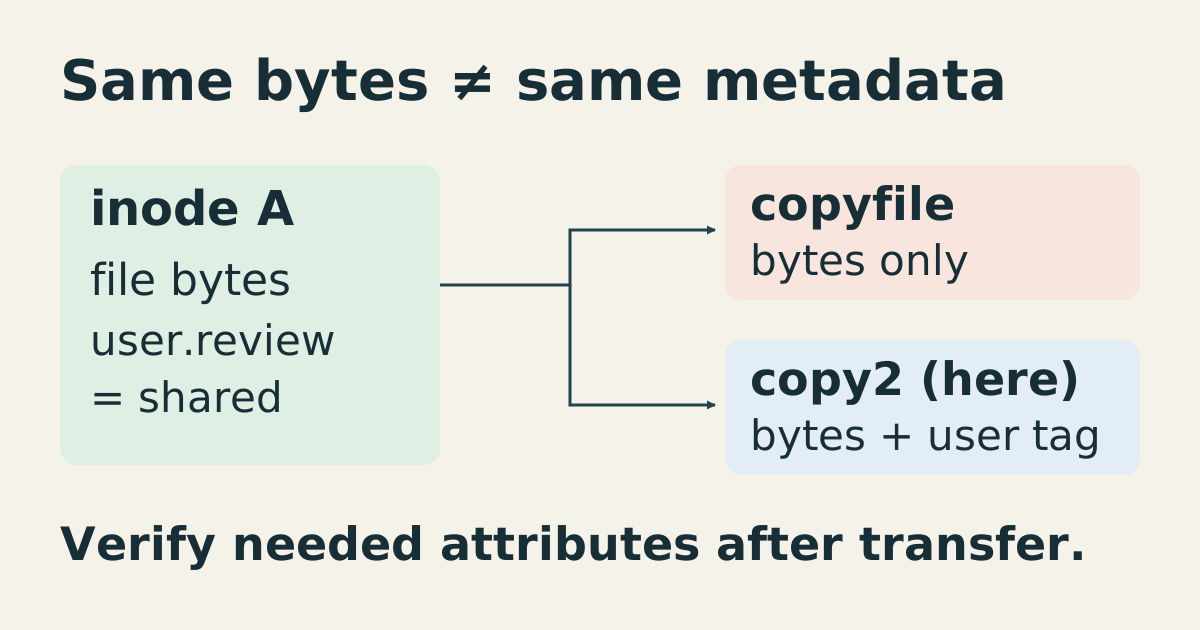
A source inode carries bytes and user.review. copyfile copies bytes without that attribute; copy2 preserves this supported attribute in the article fixture. Equal content does not imply equal metadata.

Extended attributes belong to the inode and to a namespace

Extended attributes attach named byte values to filesystem objects outside the ordinary file-content stream. Applications can use the user namespace for small metadata, while other namespaces have kernel, security-module, or privileged semantics. Their usefulness depends on the filesystem, access rules, and transfer tools. A metadata tag is reliable only when the workflow preserves and interprets it according to an explicit contract. ...
December 14, 2027 · 5 min · XB Field Notes
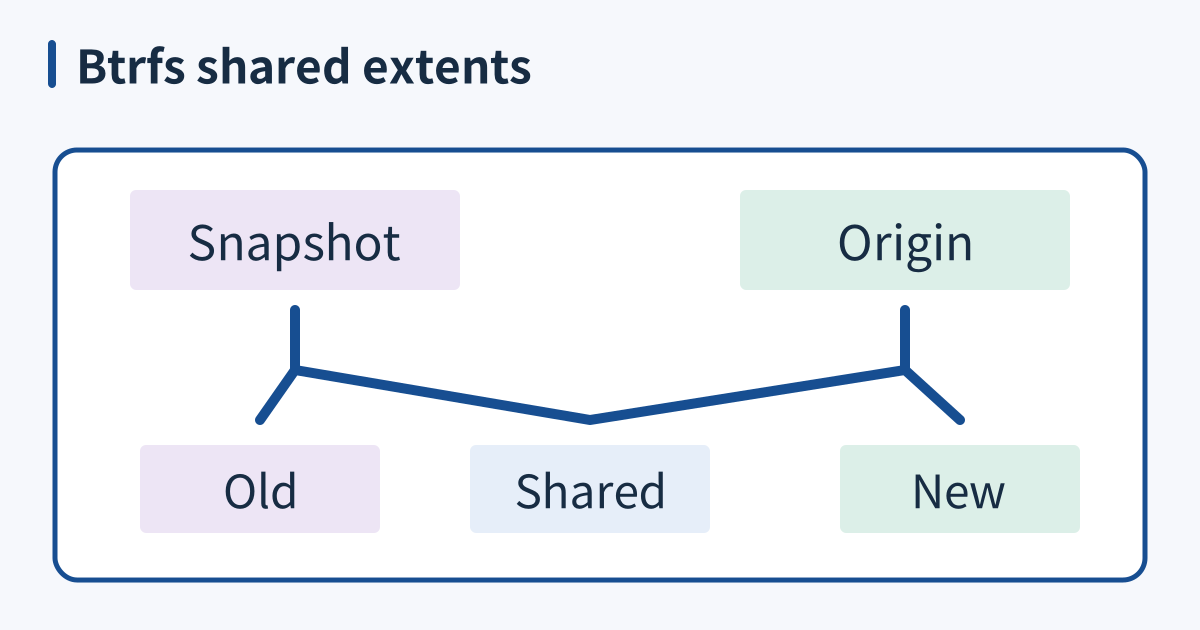
Snapshot and origin roots inside one filesystem point to shared unchanged extents and separate old and new data after divergence.

Btrfs snapshots are copy-on-write, not copies

A Btrfs snapshot is a new subvolume with the source’s initial contents, sharing existing file extents rather than duplicating every data block. Creation copies root metadata and may flush dirty source data, so it is not guaranteed to finish in milliseconds. More than two subvolumes or reflinks can reference the same extent; there is no fixed two-reference limit. ...

November 14, 2027 · 5 min · XB Field Notes
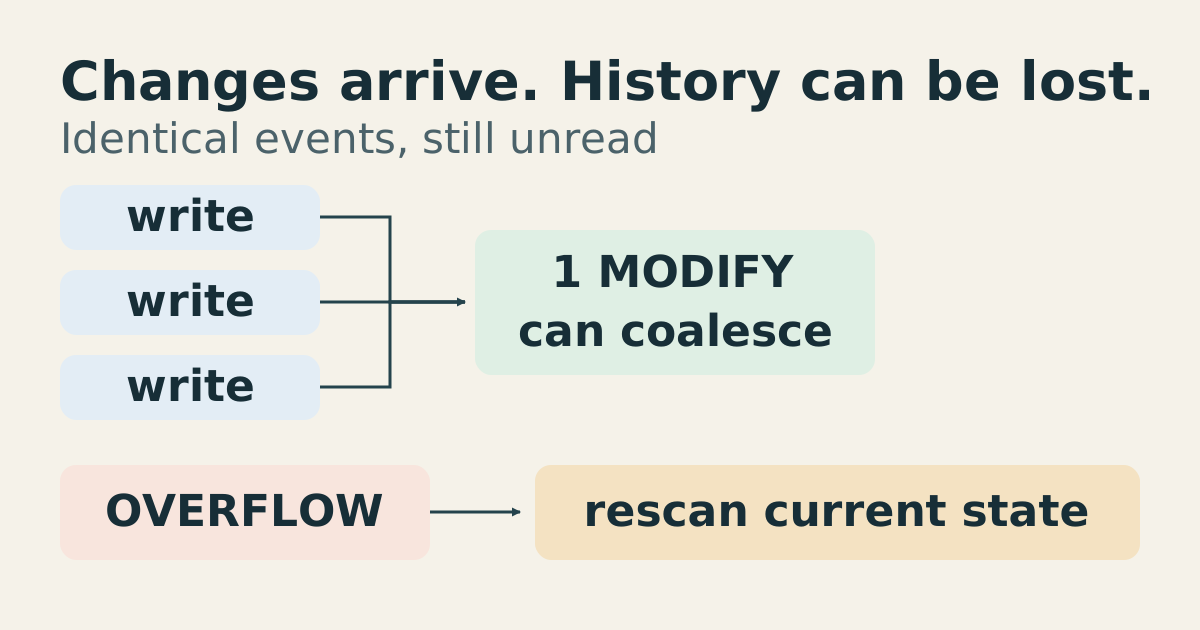
Three identical unread writes can yield one modify notification. An overflow signal means event history was dropped; a rescan recovers current state, not the missing sequence.

Inotify reports changes, but it is not a complete history

Inotify delivers Linux filesystem notifications through an instance with registered watches and a readable event queue. Each record identifies a watch, event mask, and possibly a name and move cookie. This can avoid repeatedly checking unchanged paths, but the stream is not an unlimited audit log. Correct consumers interpret notifications as evidence that relevant state may need to be inspected again. ...

October 13, 2027 · 5 min · XB Field Notes
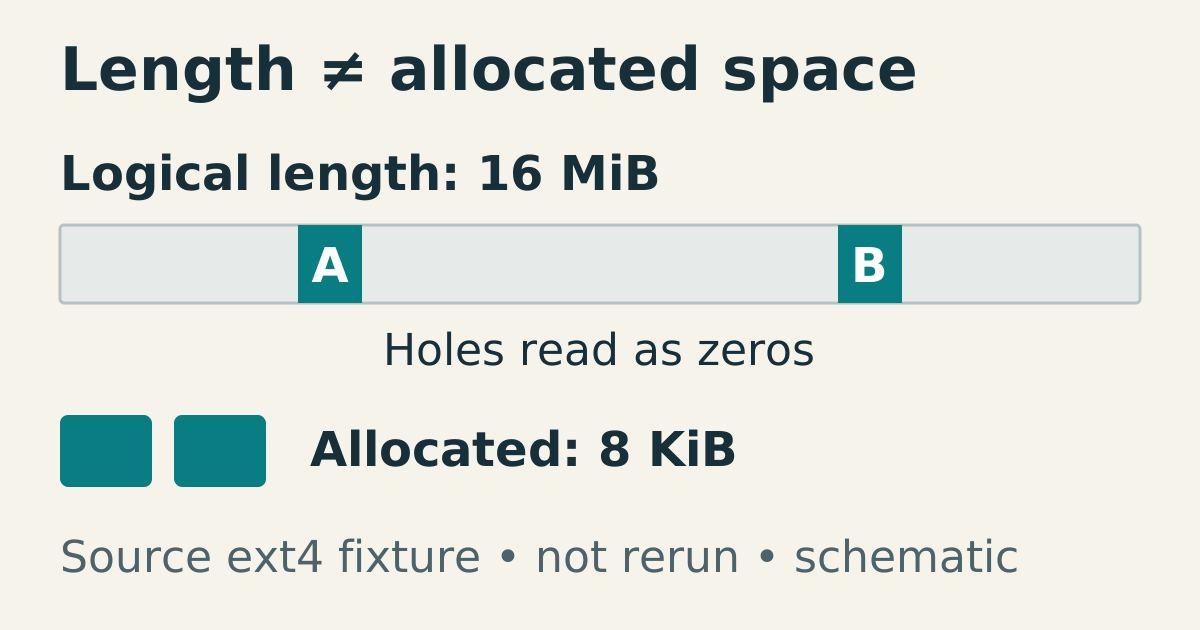
A source ext4 fixture has sixteen MiB of logical length with A and B at four and twelve MiB, while only two small regions totaling eight KiB are allocated. Hole reads return zeros. These are historical article values, not a new execution.

A sparse file separates logical length from allocated blocks

A sparse regular file can have a large logical length while allocating storage for only part of its address range. Reads from holes within that length return zero bytes. File length, byte content, and filesystem allocation are therefore different measurements. Understanding their relationship matters when budgeting virtual disks, copying backups, or deciding whether a zero-filled region actually reserves space for future writes. ...

October 11, 2027 · 5 min · XB Field Notes
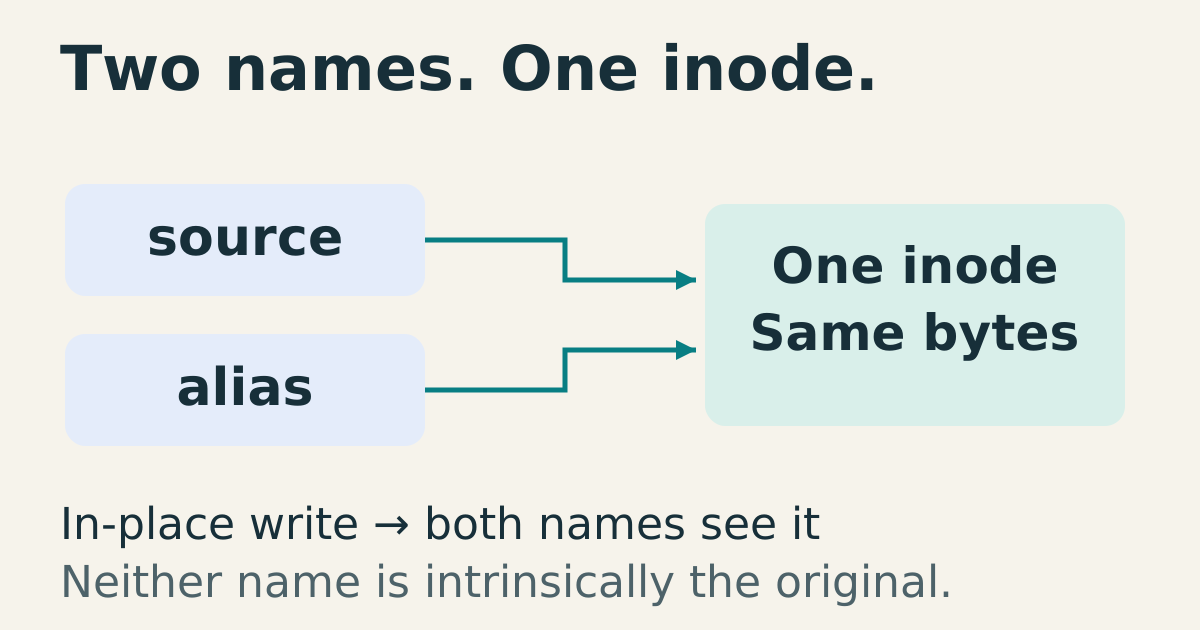
Directory entries source and alias both point to one inode. An in-place write through either name changes the shared bytes; neither name is intrinsically the original.

Hard links share an inode until a name is replaced

A hard link adds another directory entry referring to an existing file. Neither name is intrinsically the original: both identify the same inode within its filesystem. File content, ownership, permissions, and link count belong to that shared object. A filename is a way to reach it, so changes to directory entries must be distinguished from changes to the file itself. ...

October 10, 2027 · 5 min · XB Field Notes
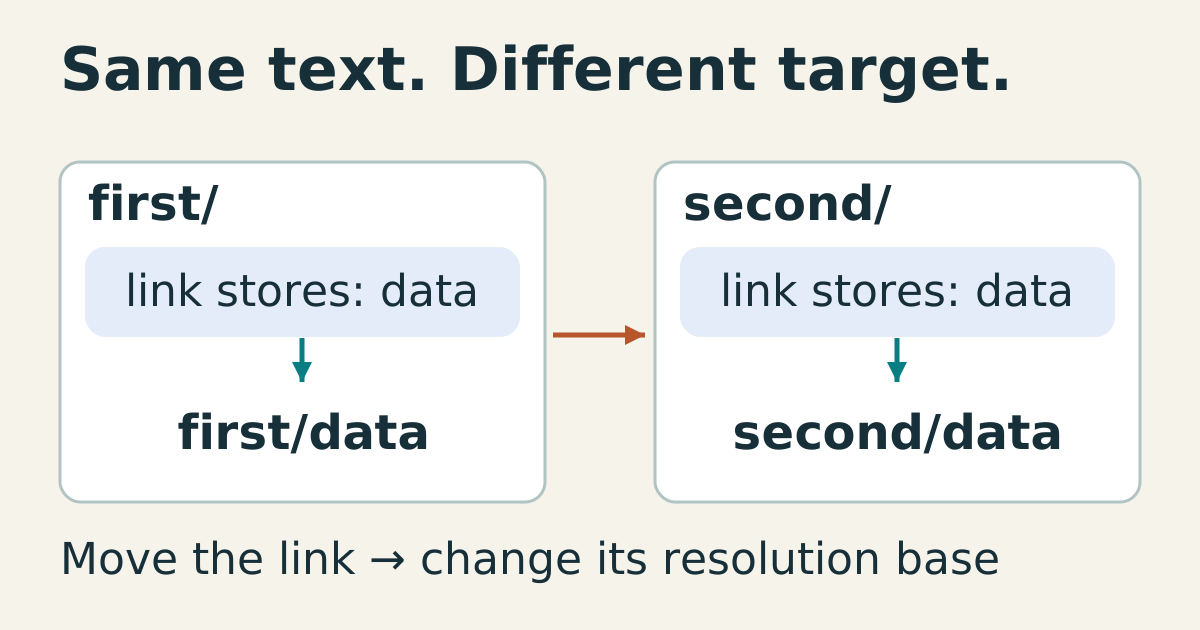
A link containing the relative text data resolves to first/data while in first, then to second/data when moved to second. The containing directory supplies the resolution base.

A symbolic link stores a path, not a permanent target identity

A symbolic link is a filesystem object containing a target pathname. Following the link resolves that pathname at the time of the operation; it does not bind the link permanently to the target’s inode. This distinction explains why links can cross filesystem boundaries, become dangling, or start reaching a different object even though their stored target text has not changed. ...

August 3, 2027 · 5 min · XB Field Notes
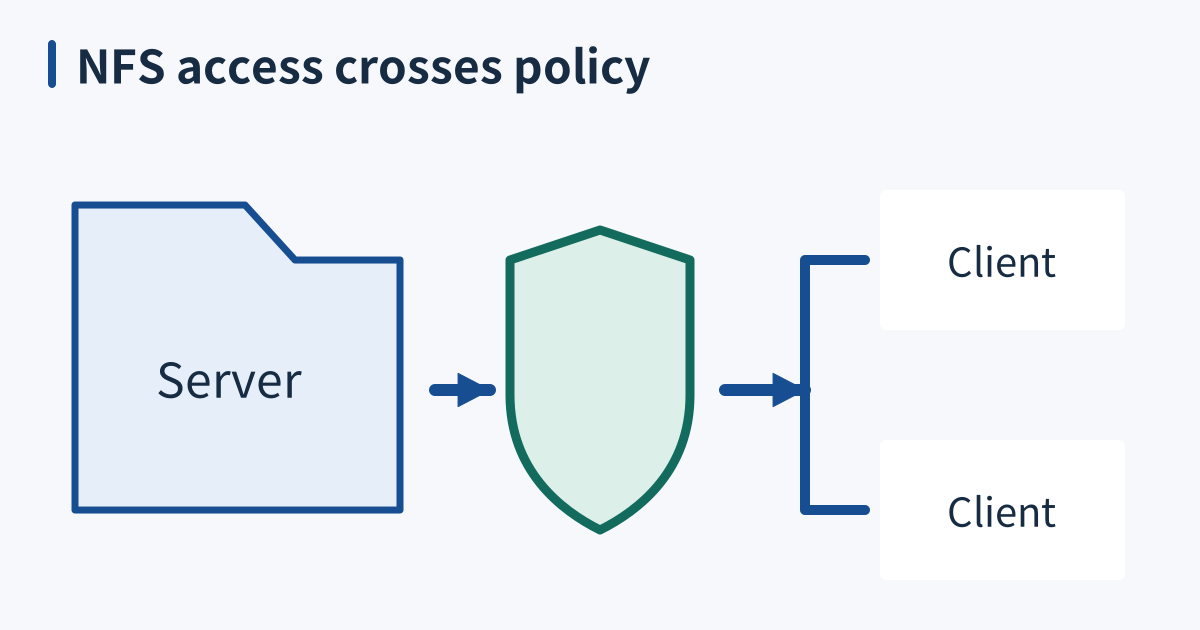
A server folder connects through an access-policy gate to two client machines.

NFS shares a remote directory over the network

An NFS export combines a server-side filesystem path with client and access policy. On Linux, exportfs maintains /var/lib/nfs/etab from /etc/exports, eligible files under /etc/exports.d, or command-line updates. rpc.mountd is a daemon, not a third configuration file. Its MOUNT service matters to older protocol workflows; NFSv4 does not require that separate service for mounting. ...

June 23, 2027 · 6 min · XB Field Notes
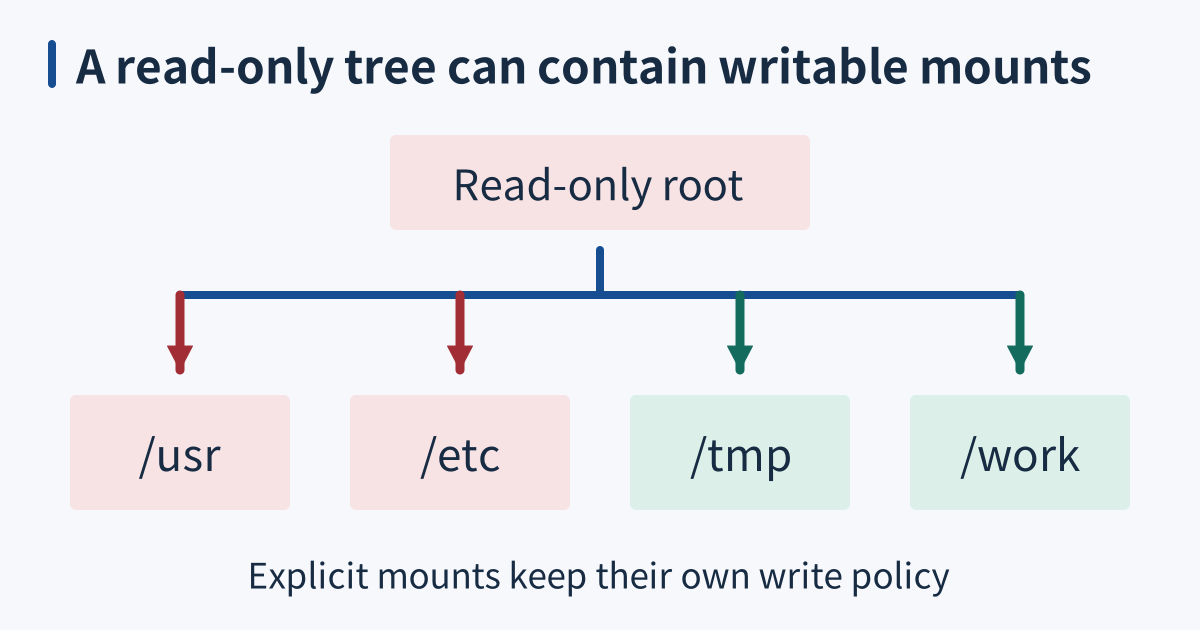
A read-only root tree branches to /usr and /etc and to explicitly writable /tmp and /work mounts.

A read-only root restricts filesystem mutation within its scope

A read-only root filesystem prevents ordinary writes to the filesystem layer containing a service’s packaged code and configuration. Explicit mounts can still provide writable locations for runtime data. Its boundary is filesystem mutation. It does not by itself remove process privileges, prevent reading available data, or block communication with other services. ...

December 23, 2026 · 6 min · XB Field Notes