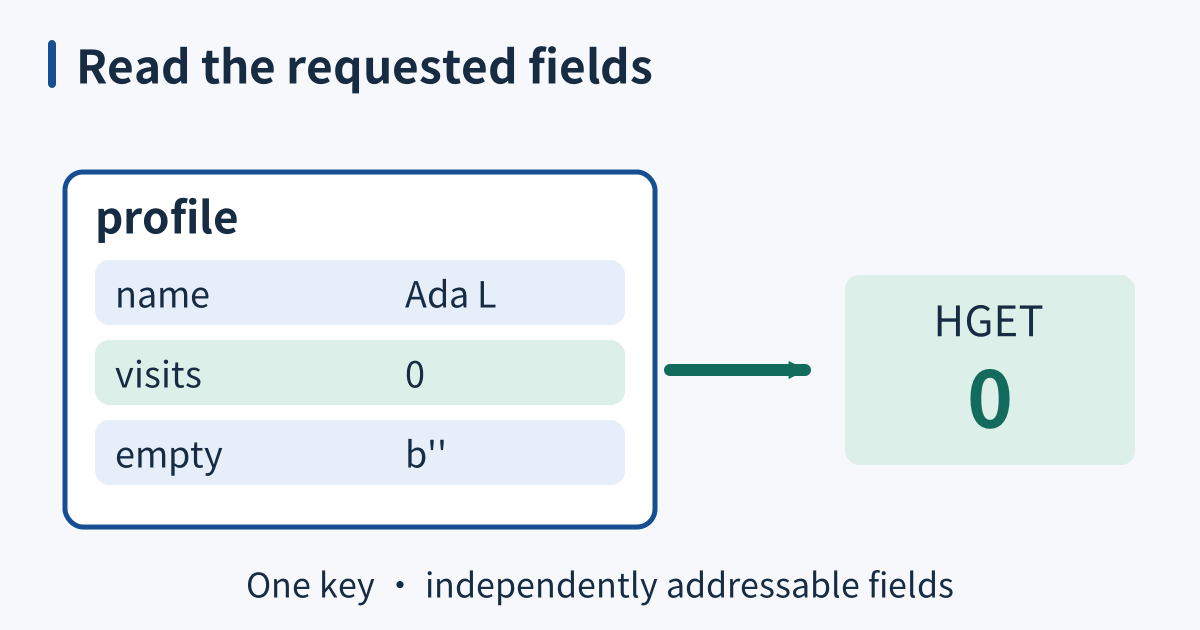
The profile hash contains name Ada L, visits 0, and empty bytes. An arrow selects visits with HGET, leaving the other fields in the record.

A Redis hash stores many fields in one key

A Redis hash is a field-addressable record under one key, not a schema-checked object or an automatically nested document. It is useful when callers need a few attributes without replacing the whole record. That advantage depends on access patterns, field sizes, and the meaning of replies, not merely on choosing the hash type. ...
February 24, 2028 · 7 min · XB Field Notes
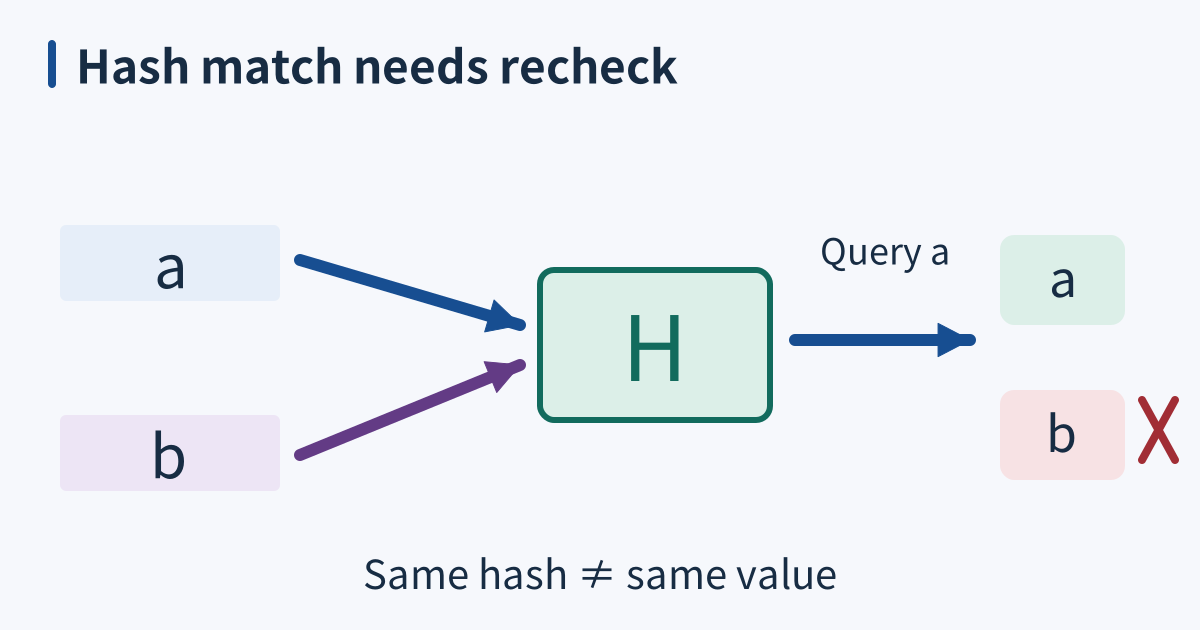
Different values a and b converge into the same hash H; the original-value check keeps a and marks b rejected.

Hash indexes recheck collisions and maintain changed keys

PostgreSQL hash indexes narrow an equality search using a hash code, then verify the original value in the table. A hash match is a candidate, not proof of equality. Two different values can have the same code, and different codes can also map to the same bucket. Neither collisions nor shared buckets imply incorrect query results when the normal recheck is performed. ...

January 24, 2028 · 5 min · XB Field Notes
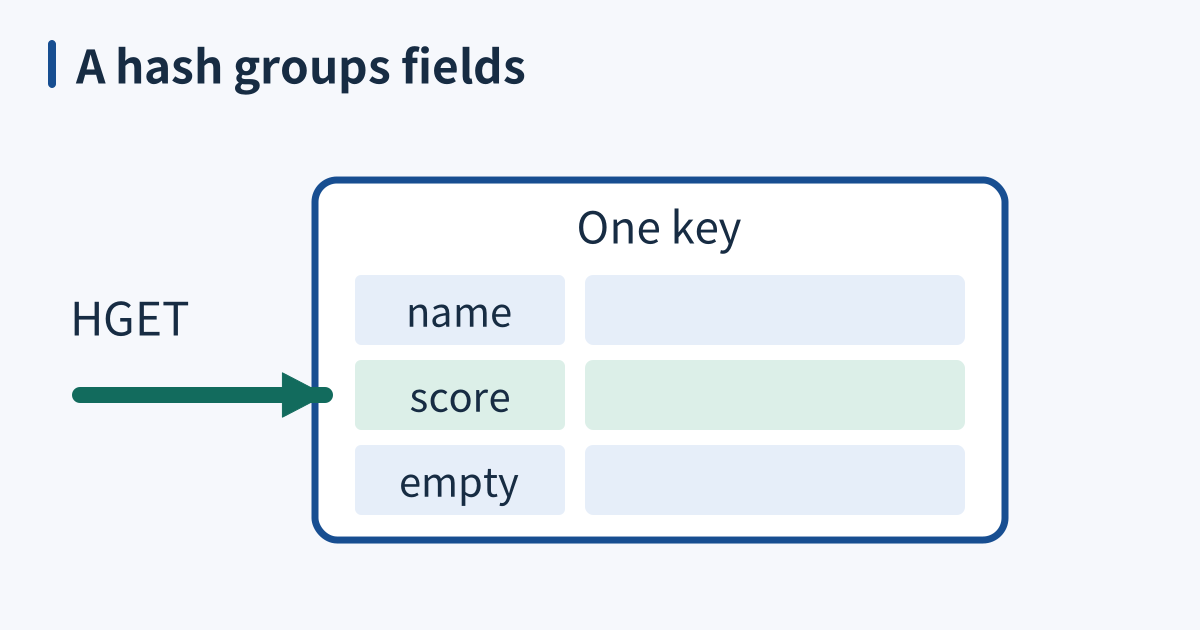
One Redis key encloses three fields; an HGET arrow selects one field.

A hash groups fields: schematic.

A Redis hash keeps related fields under one key

A Redis hash maps field names to byte values under one key. It fits an entity whose attributes are read or changed independently, such as a profile with a name and score. HGET and HSET each operate in one command; using a hash does not inherently add a second network hop compared with a string. ...

March 13, 2027 · 6 min · XB Field Notes