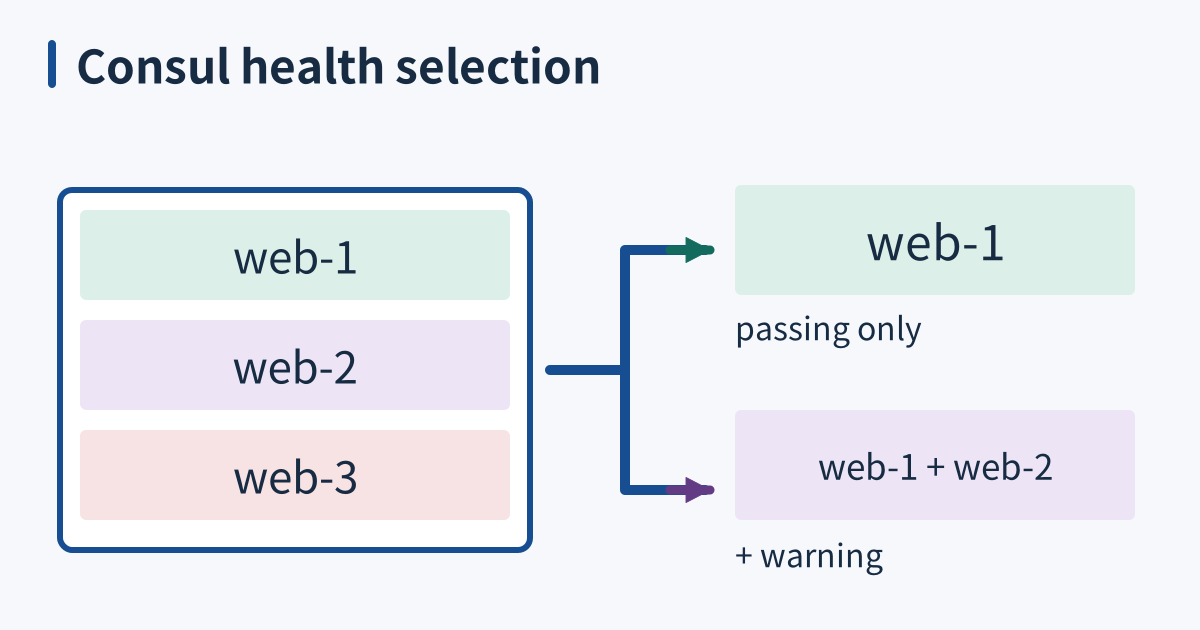
Three registered web endpoints split into passing-only web-1 and warning-inclusive web-1 plus web-2 sets.

Consul discovery reflects health policy and freshness

Consul discovery reports registered endpoints and recorded health observations. It cannot promise that every returned endpoint will answer the caller’s next request. A useful operating model separates four things: what is registered, which checks apply, which states the query accepts, and how old those observations may be. A successful lookup establishes none of those guarantees by itself. ...
April 6, 2028 · 6 min · XB Field Notes
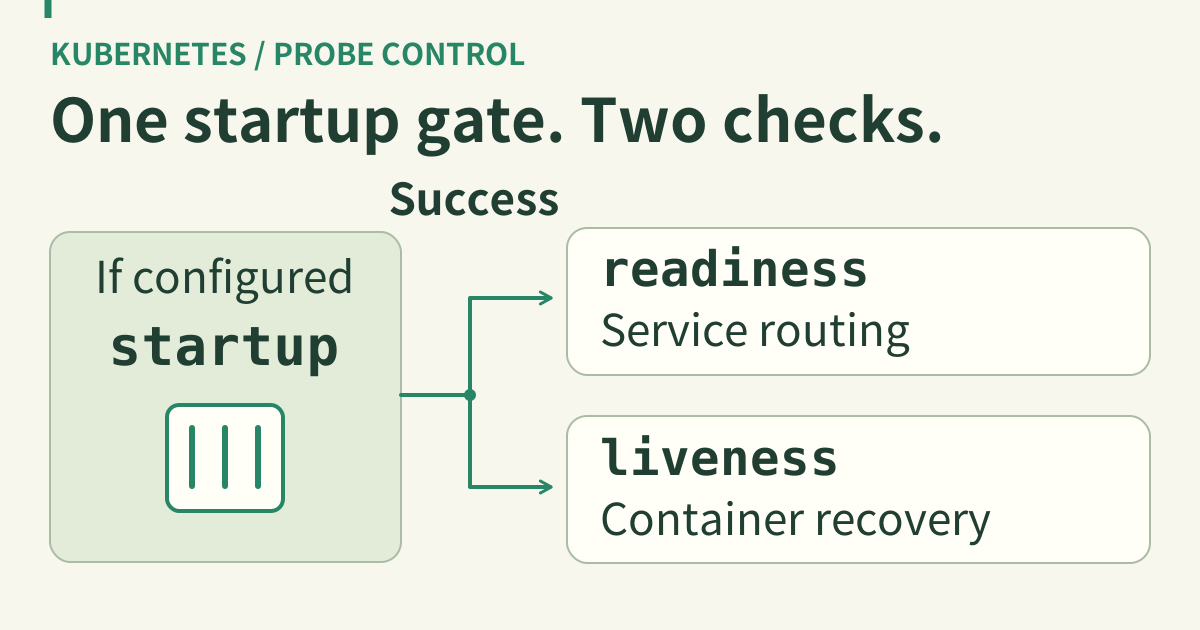
If configured, the startup probe gates two independent branches: readiness for Service routing eligibility and liveness for container recovery.

Liveness and readiness tell Kubernetes how the Pod feels

A slow start is not a dead process. Readiness and liveness make independent decisions: whether ordinary Service traffic should reach this Pod, and whether terminating this container can help it recover. Readiness failure does not suspend liveness. A startup probe provides that startup protection when configured. ...

July 14, 2027 · 4 min · XB Field Notes
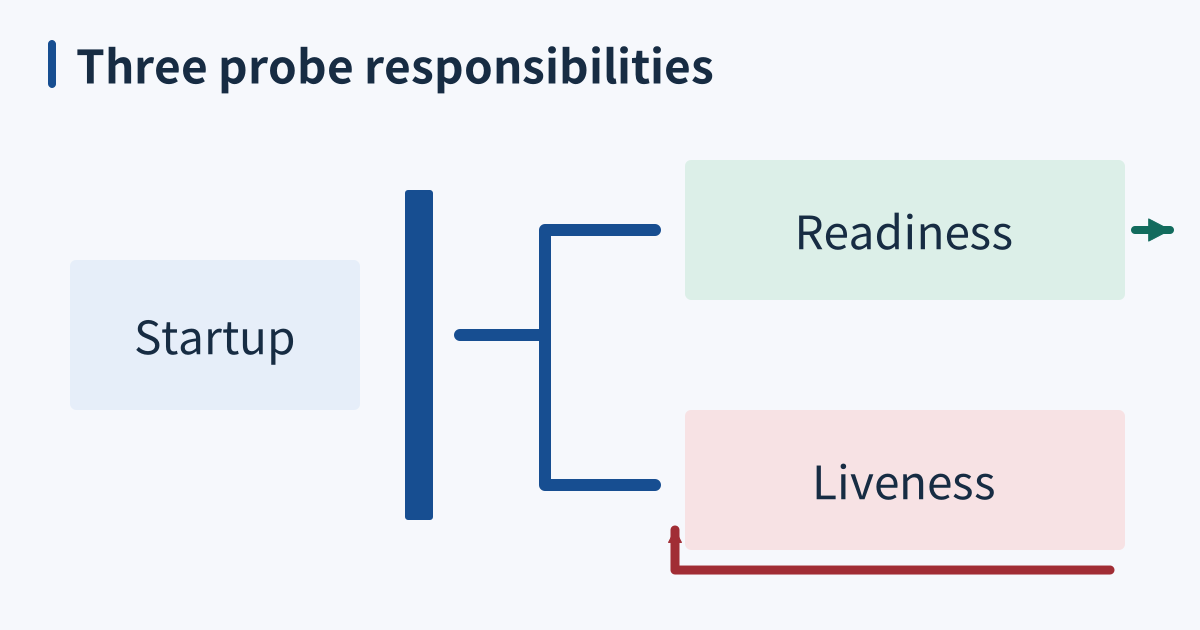
A startup latch gates readiness traffic eligibility and liveness restart handling as separate branches.

Probes tell the platform when to act

A probe result is evidence consumed by a control loop. Kubernetes does not infer your application’s recovery strategy from a route named healthz. The probe type, result, configured thresholds, and container lifecycle determine what happens next. Treating every failure as “restart the Pod” erases distinctions that directly affect availability. ...

June 18, 2027 · 6 min · XB Field Notes