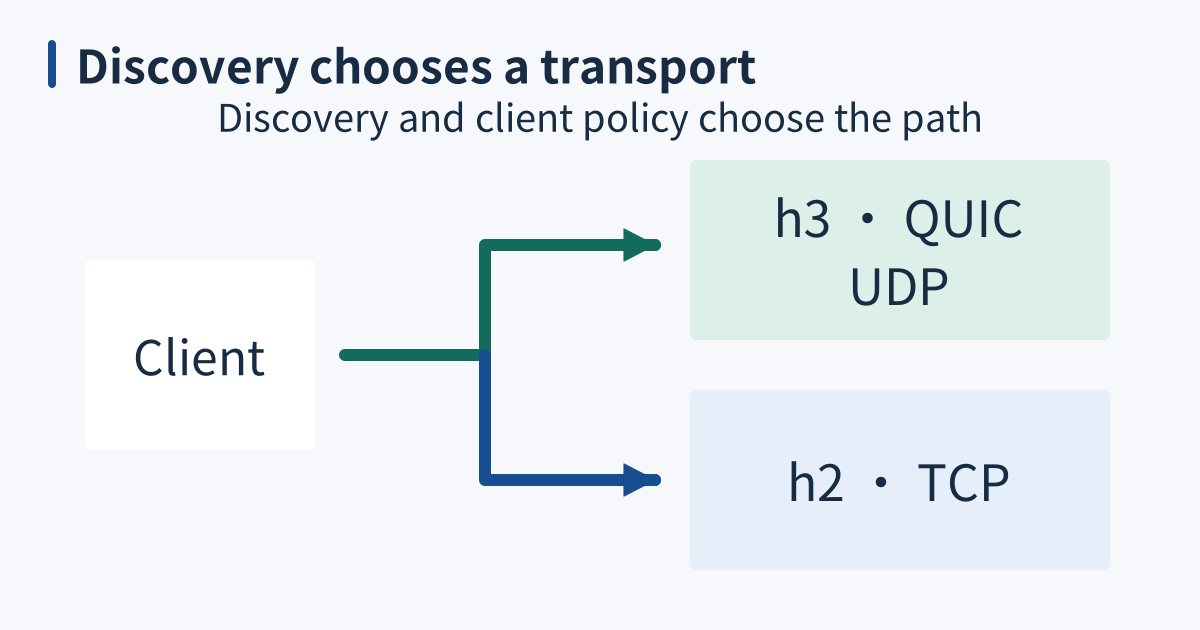
A client branches independently toward h3 over QUIC and UDP or h2 over TCP; the branches do not require an initial h2 connection.

HTTP3 rides UDP while HTTP2 stays safe over TCP

HTTP/3 runs over QUIC and UDP, commonly on port 443. HTTP/2 streams on a TCP connection share an ordered byte stream, so a missing segment can stall delivery for unrelated requests. QUIC provides ordered delivery per stream: losing data on one stream need not block delivery on another. Connection-wide congestion control and HTTP dependencies can still affect several streams; this is not independent congestion control for every stream. ...
February 12, 2028 · 7 min · XB Field Notes
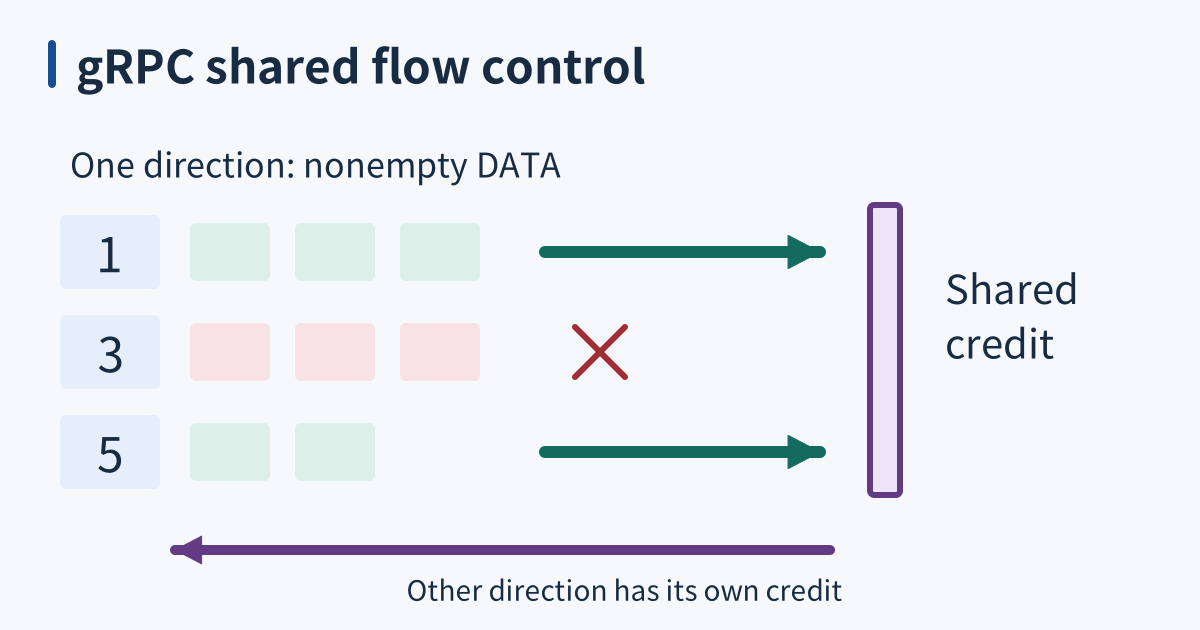
Ordered lanes 1 and 5 advance while lane 3 is paused; all share a connection-credit gate, with a separate reverse direction.

gRPC multiplexes many streams over one HTTP/2 connection

gRPC’s HTTP/2 transport lets multiple RPC attempts share a connection while keeping each stream’s messages ordered. That is useful for both short calls and long-lived exchanges. It does not make the connection an unlimited independent transport for every call: bandwidth, TCP delivery, connection flow control, and implementation resources remain shared. ...

January 16, 2027 · 5 min · XB Field Notes
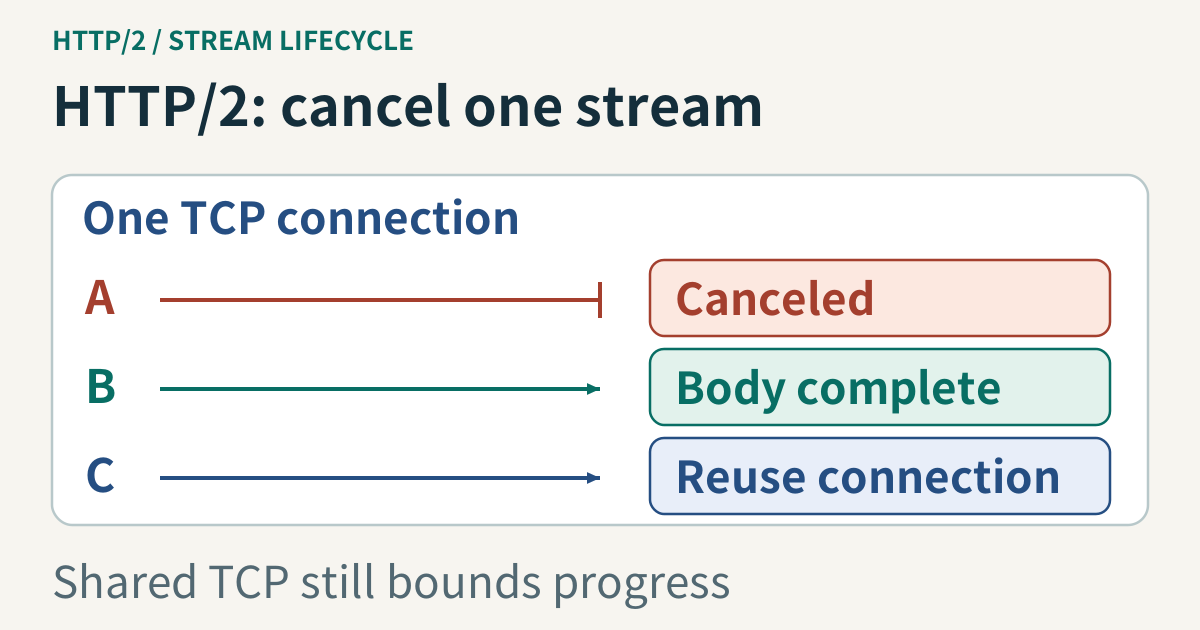
One TCP connection contains three HTTP/2 stream lanes. A is canceled, sibling B completes its body, and a later C reuses the connection. Shared TCP constraints still bound progress.

HTTP/2 multiplexing fixes a queue

HTTP/2 removes HTTP response-order constraints by multiplexing streams, but those streams still share a TCP connection and its failure modes. One useful boundary is cancellation: terminating a request need not destroy its sibling requests or the reusable connection. That is a scoped capability, not a guarantee that streams never affect each other. ...

January 16, 2027 · 6 min · XB Field Notes