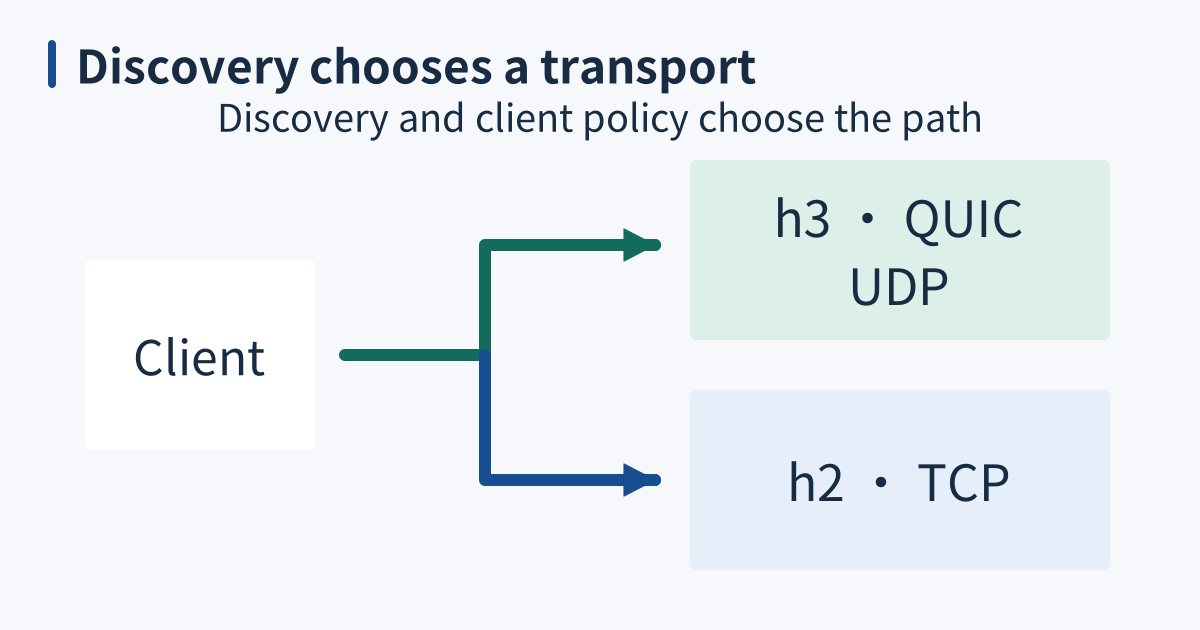
A client branches independently toward h3 over QUIC and UDP or h2 over TCP; the branches do not require an initial h2 connection.

HTTP3 rides UDP while HTTP2 stays safe over TCP

HTTP/3 runs over QUIC and UDP, commonly on port 443. HTTP/2 streams on a TCP connection share an ordered byte stream, so a missing segment can stall delivery for unrelated requests. QUIC provides ordered delivery per stream: losing data on one stream need not block delivery on another. Connection-wide congestion control and HTTP dependencies can still affect several streams; this is not independent congestion control for every stream. ...
February 12, 2028 · 7 min · XB Field Notes
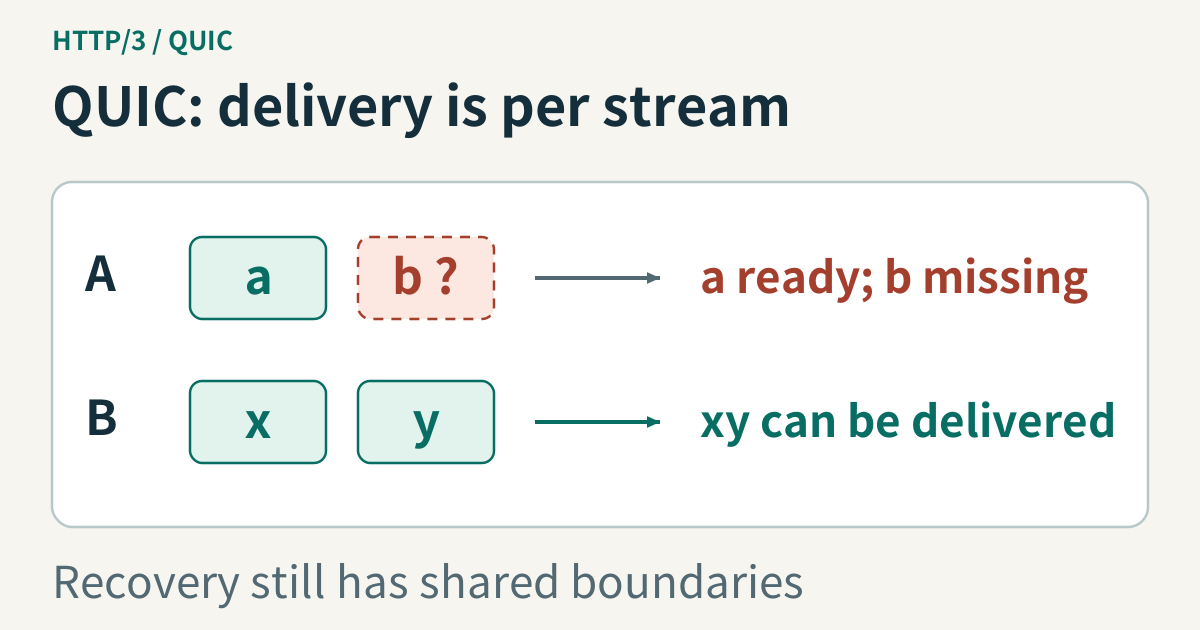
QUIC stream A has already delivered a but is missing b. Stream B has complete xy and can deliver it while A waits. Recovery still has shared boundaries.

HTTP/3 separates stream delivery, not all recovery

HTTP/3 carries HTTP over QUIC instead of TCP. QUIC offers independently ordered streams, so a missing range in one stream need not prevent delivery of already received data on another. This removes a particular transport ordering dependency. It does not give each request a separate congestion controller, loss detector, or guaranteed completion time. ...

March 21, 2027 · 6 min · XB Field Notes