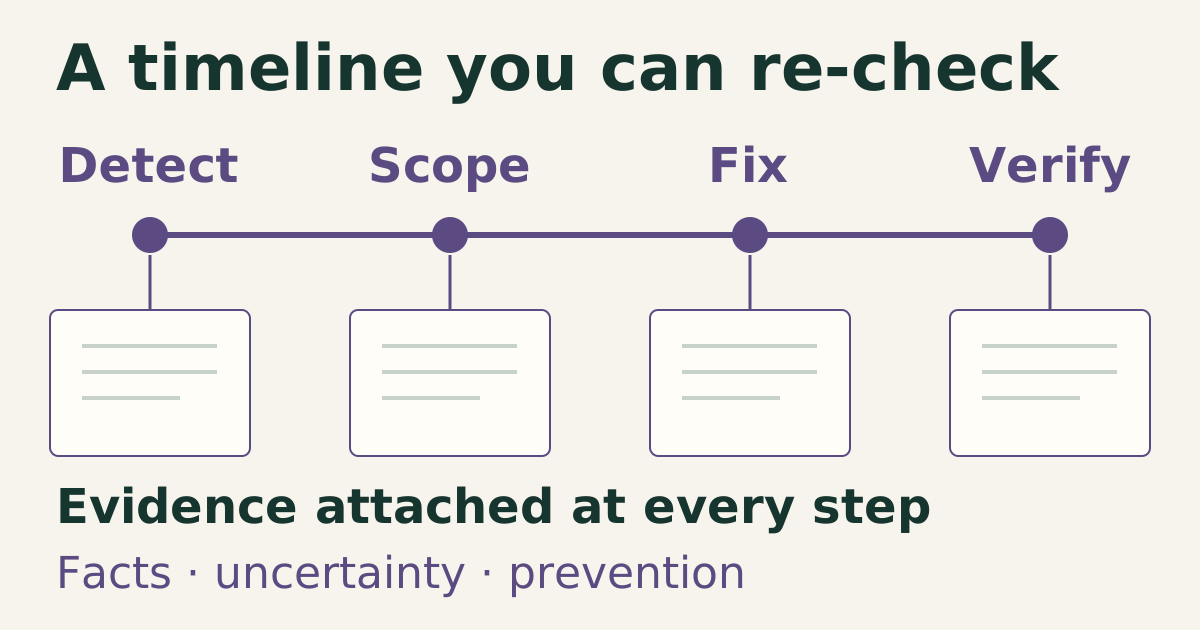
During an incident, memory is unreliable, and clocks can disagree too. A timeline — who was paged, what was observed, what was tried, when the change landed — is what makes a response recordable and later reviewable.
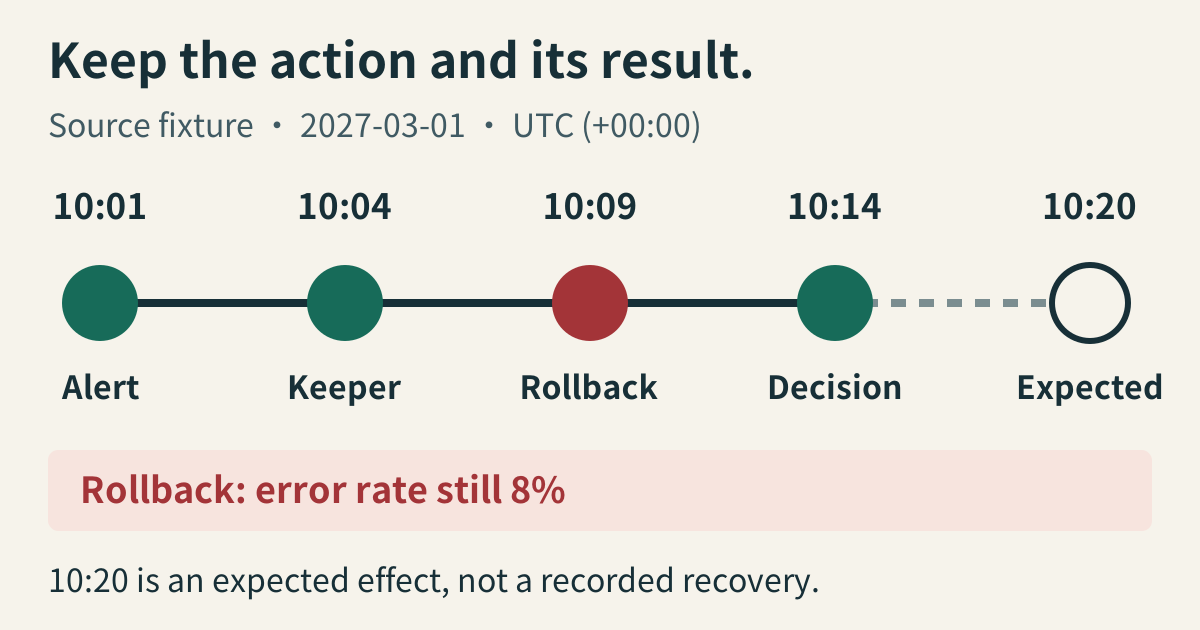
Times and actors are transcribed from the inert source fixture. The shared date and UTC offset are display shorthand; underlying entries require full timestamps. Vertical spacing is schematic, not elapsed-time scale. A planned effect is not shown as a confirmed fix; no validator or incident system was run. Write as it happens Memory is the least reliable instrument in an incident, so record while the alert is fresh. Capture the timestamp of the first alert, the initial symptoms, each action tried and its observable result, and the moment the fix actually took effect. That running record is what keeps a team from repeating a failed fix during the response, and what later makes an honest postmortem possible instead of a plausible story. Make the timeline a live document from the minute the page fires: note the tool that alerted, the metric, the suspected and the confirmed cause, and record ‘same as before, did not help’ rather than silently re-trying.
...