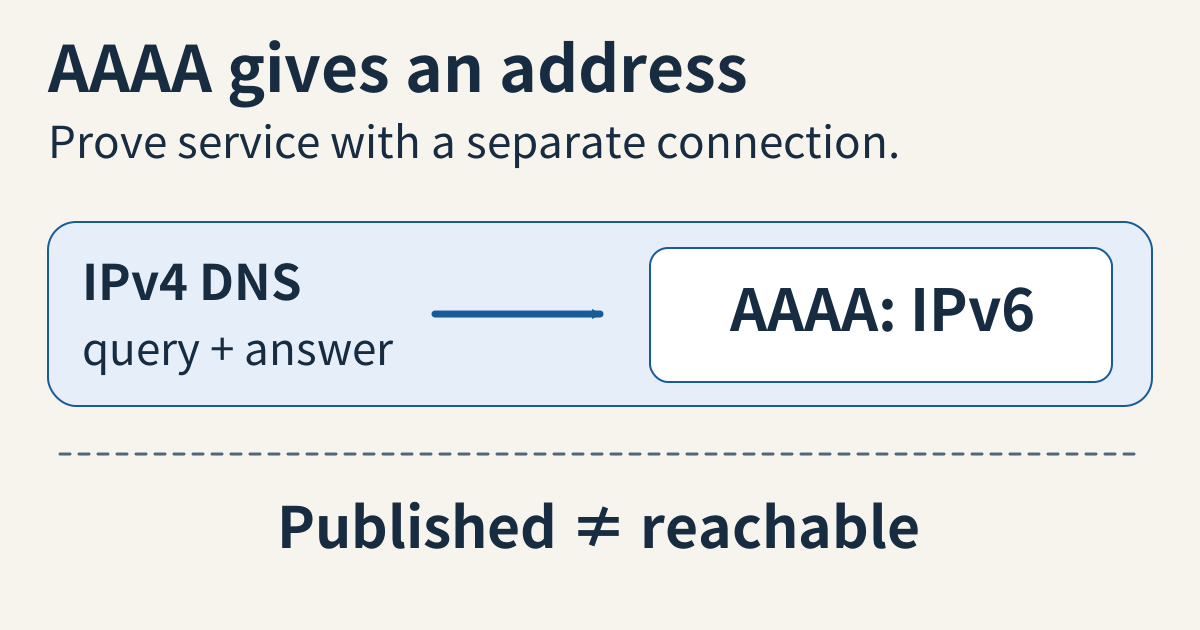
An IPv4 DNS transport carries an AAAA IPv6 address. A separate connection is needed to test the service.

AAAA records publish IPv6 addresses without proving reachability

An AAAA resource record contains one 128-bit IPv6 address. An A record contains an IPv4 address. A name may have either type, both types, or several addresses within each type. These are separate RRsets, so A and AAAA can have different TTLs. Publishing AAAA makes an address discoverable through DNS; it does not create an interface, route, listener, or working application. ...
December 30, 2027 · 6 min · XB Field Notes
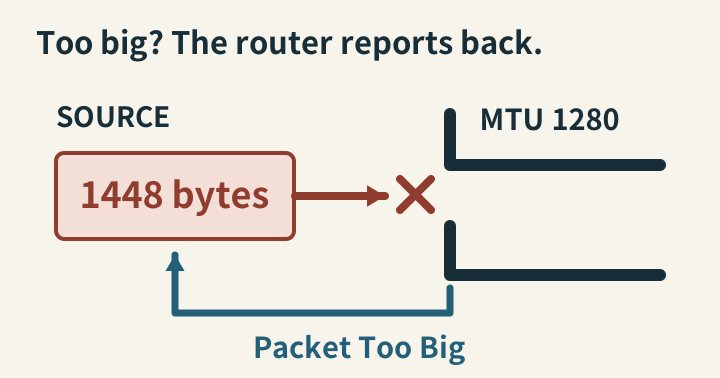
A 1448-byte IPv6 packet reaches a link with MTU 1280. The forwarding router drops it and reports Packet Too Big to the source; the router does not fragment transit packets.

IPv6 routers report oversized packets; sources decide how to fit the path

An IPv6 router does not fragment a packet while forwarding it toward its destination. If the packet is too large for the next link, the router discards it and sends ICMPv6 Packet Too Big feedback. The source can then adjust its packet size or, where appropriate, send fragments using the IPv6 Fragment header. Reassembly of those fragments takes place at the destination. ...

October 6, 2027 · 6 min · XB Field Notes
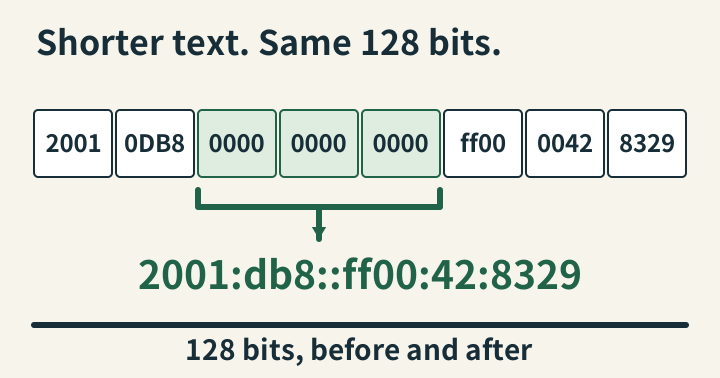
Eight hexadecimal groups depict the article’s example address. Three consecutive zero groups fold into a single double-colon, while leading zeros and uppercase spelling normalize. The represented address still contains the same 128 bits.

IPv6 text normalization preserves addresses, but endpoint context still matters

An IPv6 address contains 128 bits, usually written as eight hexadecimal groups. Text may omit leading zeros and replace one consecutive run of zero groups with ::. These rules preserve the address while shortening its spelling. RFC 4291 defines valid forms; RFC 5952 recommends a consistent representation for display and exchange. Valid syntax and the preferred spelling are related but different questions. ...

November 30, 2026 · 5 min · XB Field Notes
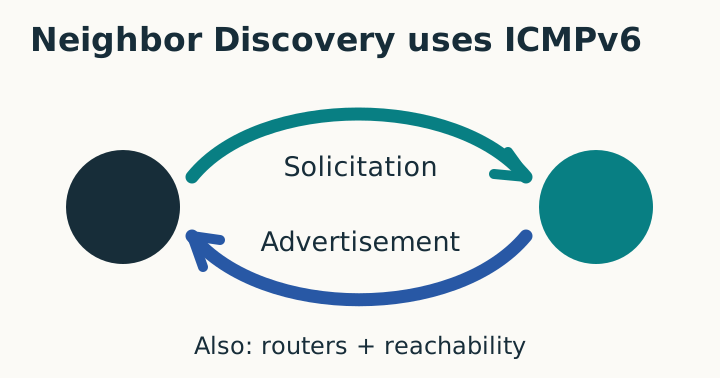
ICMPv6 solicitation and advertisement resolve a local neighbor. Neighbor Discovery also includes router discovery and reachability detection.

IPv6 resolves neighbors with ICMPv6 before the TCP connection can work

An IPv6 host on an Ethernet link needs a link-layer destination before it can send a frame to a neighbor. Neighbor Discovery performs that address-resolution work using ICMPv6 Neighbor Solicitation and Neighbor Advertisement messages. It also covers functions beyond IPv4 ARP, including router discovery and neighbor reachability detection. Calling it merely “ARP with longer addresses” hides dependencies that matter when configuring an IPv6 network. ...

November 16, 2026 · 6 min · XB Field Notes
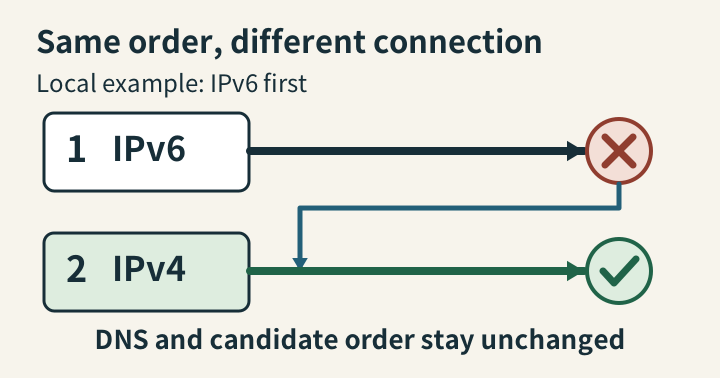
In the article’s local example, IPv6 remains first in the candidate list but its stopped listener refuses the connection; the sequential client then succeeds through IPv4.

Dual-stack address ordering and successful connection choice are separate

Discovering A and AAAA records provides possible destinations. It does not select a successful connection by itself. Address ordering, source-address selection, routing, and the application’s connection algorithm all contribute. RFC 6724 describes default source and destination selection rules, while applications can impose their own choices. A program requesting only IPv4 has already narrowed the result before any dual-stack connection strategy can act. ...

November 4, 2026 · 6 min · XB Field Notes