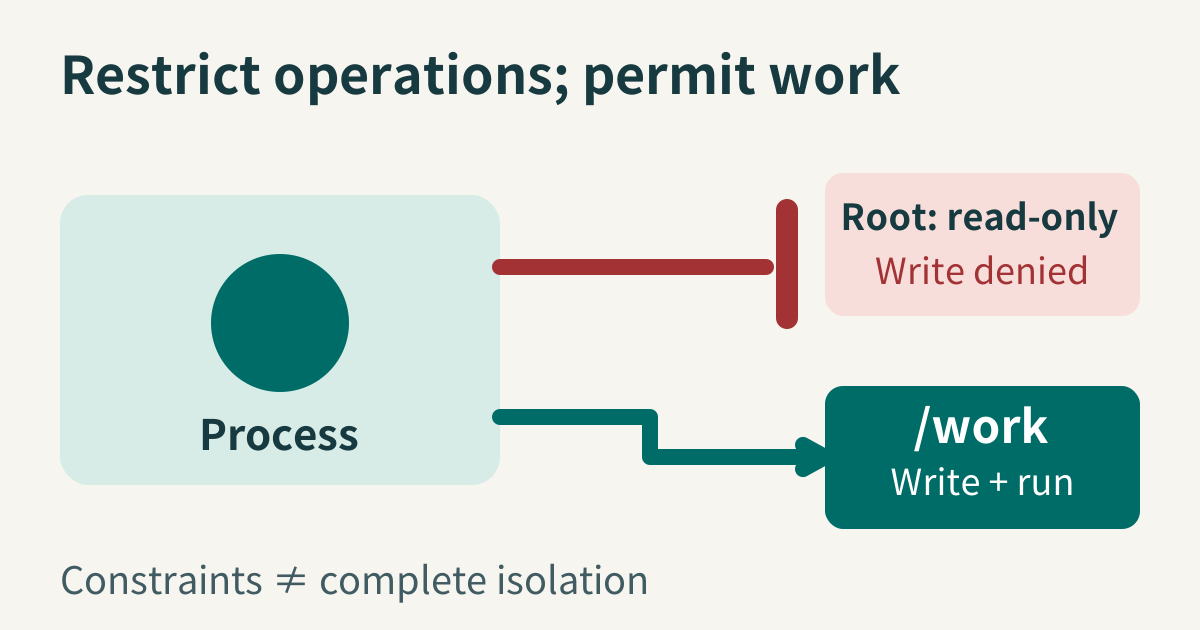
A constrained process cannot write to the read-only root but can use its designated writable working volume.

Security context defines constraints that need runtime evidence

A Kubernetes securityContext configures process identity and selected operating-system constraints. It can reduce what a compromised application is permitted to do, but it does not establish a complete security boundary by itself. Start with the operations the application actually needs, configure the appropriate fields, and test both a permitted operation and a forbidden one in the resulting container. ...
November 20, 2027 · 6 min · XB Field Notes
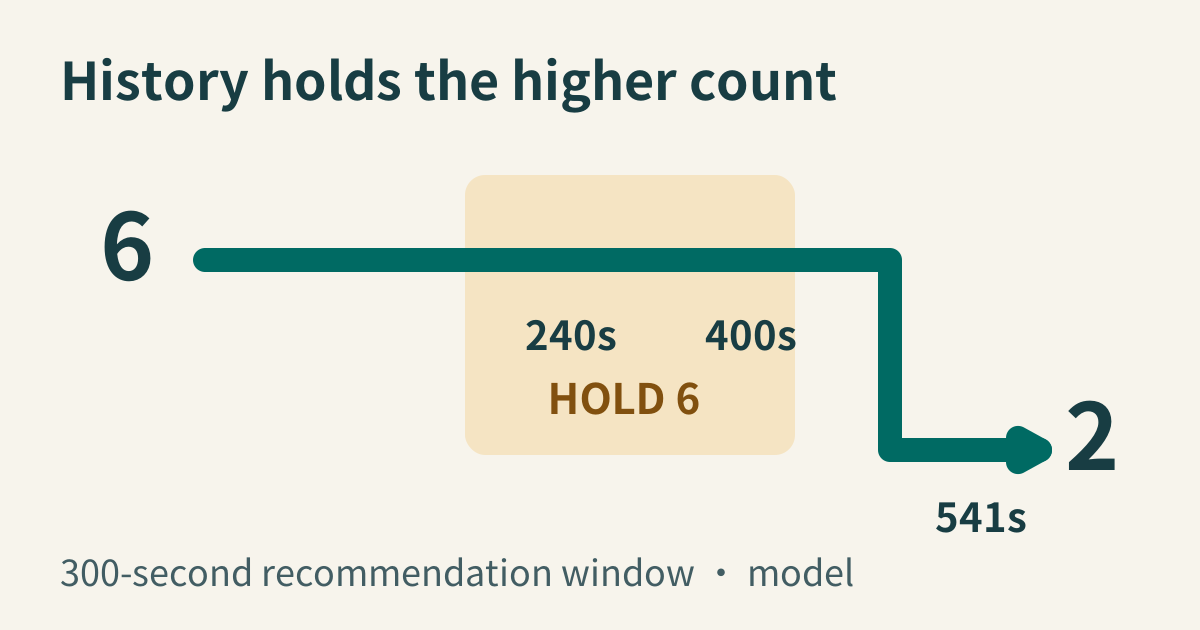
A high recommendation at 240 seconds holds six replicas through a lower recommendation at 400 seconds; after that recommendation expires, the model drops to two at 541 seconds.

The horizontal autoscaler scales on demand

The HorizontalPodAutoscaler adjusts a scalable workload toward configured metric targets. Its output is a desired replica count, not a guarantee that additional Pods are already serving traffic. Scheduling, image startup, initialization, readiness, and available node capacity determine how quickly that recommendation becomes useful capacity. Design the control loop together with those delays. ...

November 4, 2027 · 5 min · XB Field Notes
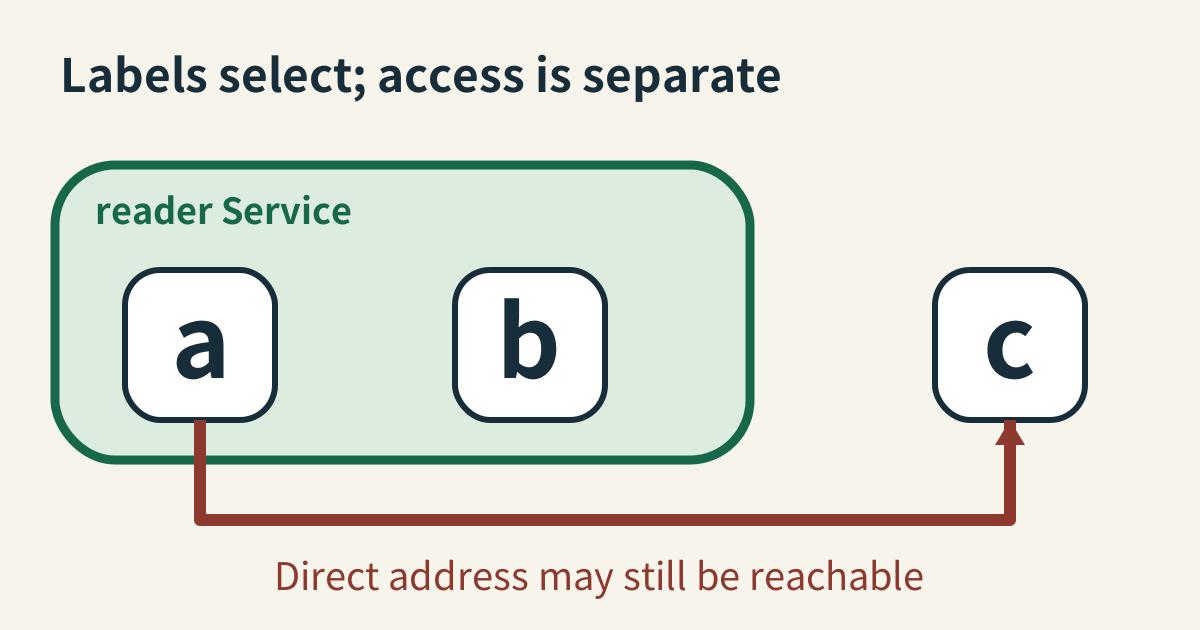
The reader Service selects a and b, while c sits outside its set. A direct a-to-c path remains possible because selection is not network authorization.

Kubernetes labels define selection, not authorization

Labels are key-value metadata used to select Kubernetes objects. A Service selector, an operational query, and a workload controller can all rely on them, but each consumer has its own API and behavior. A label change can therefore alter group membership while leaving the underlying process healthy. Review labels as inputs to actual consumers rather than as purely descriptive stickers. ...

September 9, 2027 · 6 min · XB Field Notes
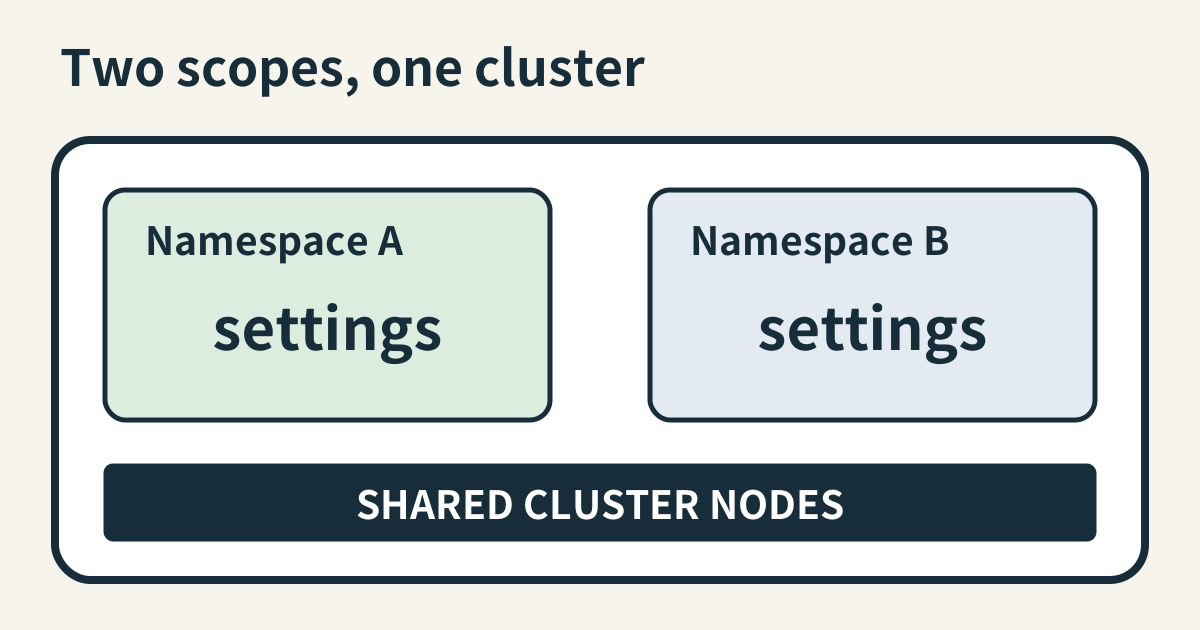
One cluster contains two namespace scopes, each with a settings ConfigMap, above a shared cluster-node layer. Scope does not create separate node capacity.

Namespaces scope objects; policies establish other boundaries

A namespace scopes many Kubernetes objects within one cluster. Two teams can each create a ConfigMap named settings because those objects have different namespace-qualified identities. This organizational boundary is useful, but it does not automatically provide network isolation, a dedicated kernel, reserved node capacity, or complete tenant separation. Identify which additional policies enforce the boundaries your workload actually requires. ...

August 25, 2027 · 7 min · XB Field Notes
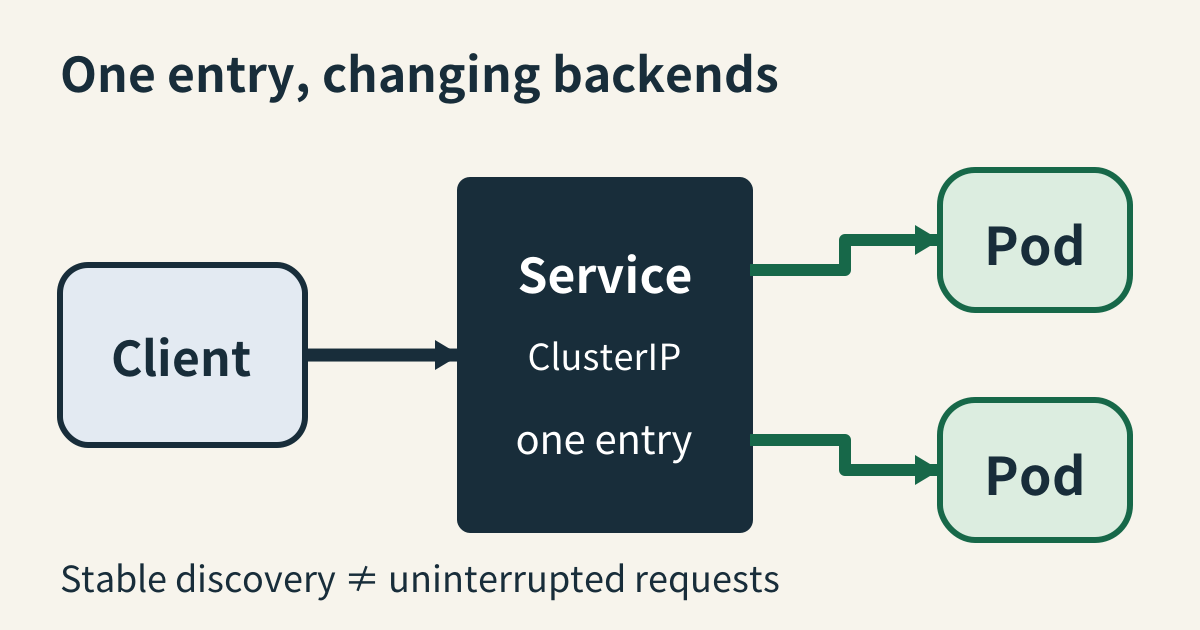
A client uses one ordinary ClusterIP Service entry that branches toward eligible Pods. Stable discovery does not guarantee uninterrupted requests.

Kubernetes Services give pods a stable home

A Service separates a stable discovery interface from replaceable backends. The before/after sets are model results, not a transport test. Stable discovery does not prove every request succeeds. Endpoint conditions, ports and datapaths need separate checks. The exact local model passed again; no Kubernetes or transport test was run. One address in front of many An ordinary ClusterIP Service keeps a virtual address during that object’s lifetime, and cluster DNS provides a discovery name. Callers can depend on that name while interchangeable Pods are replaced. This separates a stable client-facing contract from the lifecycle of individual backends, without requiring a config push for every replacement. ...

August 23, 2027 · 6 min · XB Field Notes
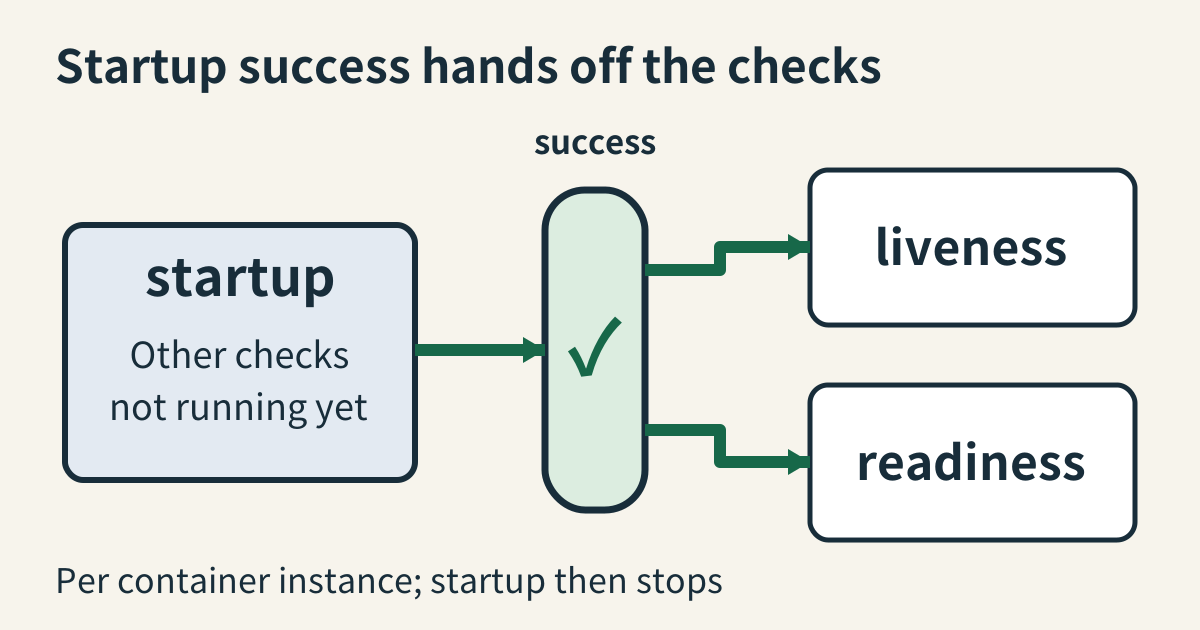
Configured startup suppresses liveness and readiness until startup succeeds. It then stops for that container instance and hands off to the separately configured checks.

Startup probes delay other probes until initialization succeeds

A startup probe gives a container a separate initialization contract. While that configured probe has not succeeded, Kubernetes does not execute the container’s liveness or readiness probes. This is stronger and more specific than ignoring some liveness failures during a grace period: those other checks have not begun. Once startup succeeds, ordinary ongoing health and readiness behavior takes over. ...

August 22, 2027 · 6 min · XB Field Notes
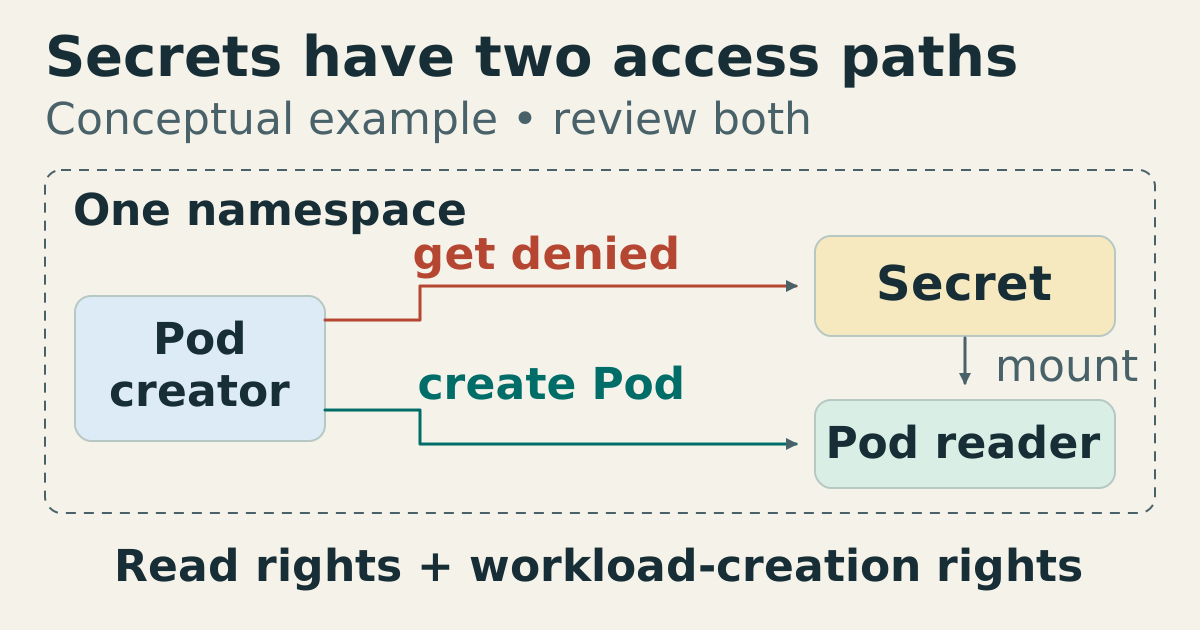
Inside a conceptual namespace, a Pod creator has direct get denied but can create a consuming Pod. A separate mount arrow carries data from the Secret to that Pod. Review read and workload-creation rights together.

Kubernetes Secrets require explicit access boundaries

A Kubernetes Secret is an API object for confidential values that workloads need. It gives operators a dedicated object type, consumption paths, and access-control targets. It does not make data unreadable to every other actor. Design the boundary around who can retrieve the object, create consumers, inspect their output, and administer the nodes that run them. ...

August 21, 2027 · 6 min · XB Field Notes
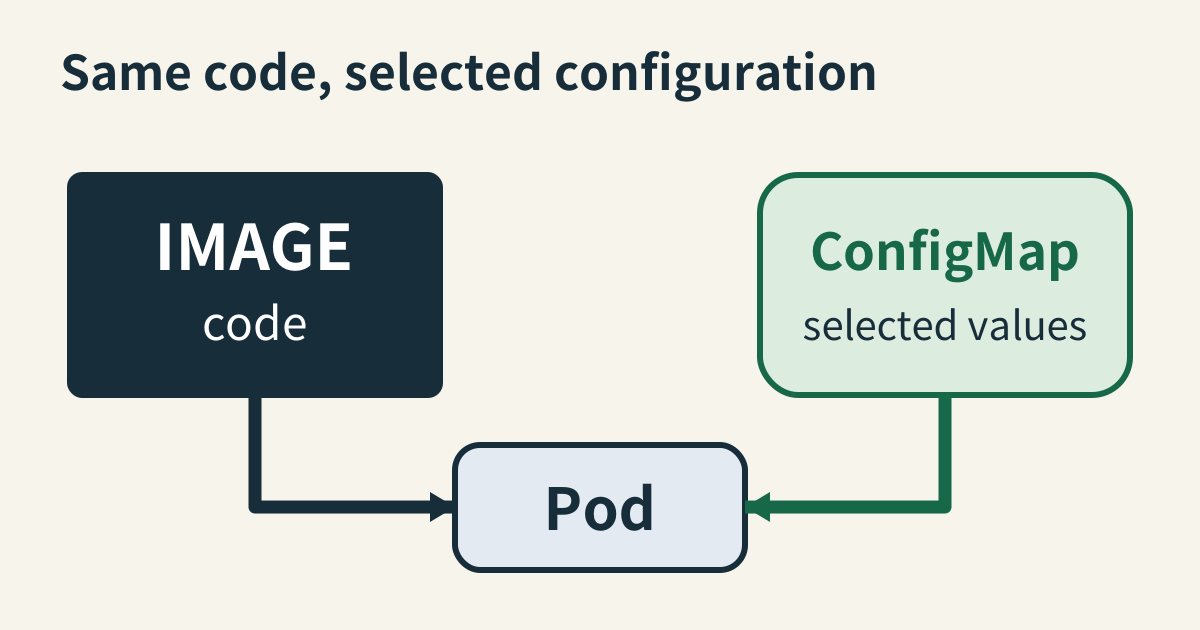
Image code and selected ConfigMap values independently feed a Pod. The workload definition identifies both inputs.

ConfigMaps separate configuration from the image

A ConfigMap stores non-confidential configuration separately from an image. That lets a release change an environment-specific value without rebuilding the application artifact. The useful boundary is explicit: the image supplies code, while the workload definition identifies which configuration that code should consume. A release is therefore more than an image tag; its configuration reference is part of the behavior being deployed. ...

August 20, 2027 · 6 min · XB Field Notes