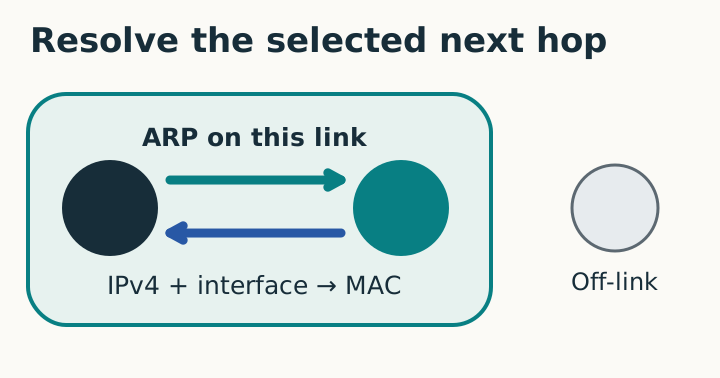
ARP maps an IPv4 next hop to a link-layer address
IPv4 forwarding chooses a next hop, but Ethernet still needs a destination MAC address. Address Resolution Protocol (ARP) asks the local link which interface owns an IPv4 address, then caches the answer as a neighbor entry. The mapping is learned rather than permanent, so it can age out, be refreshed after a move, or be forged by another host on the same broadcast domain. ...