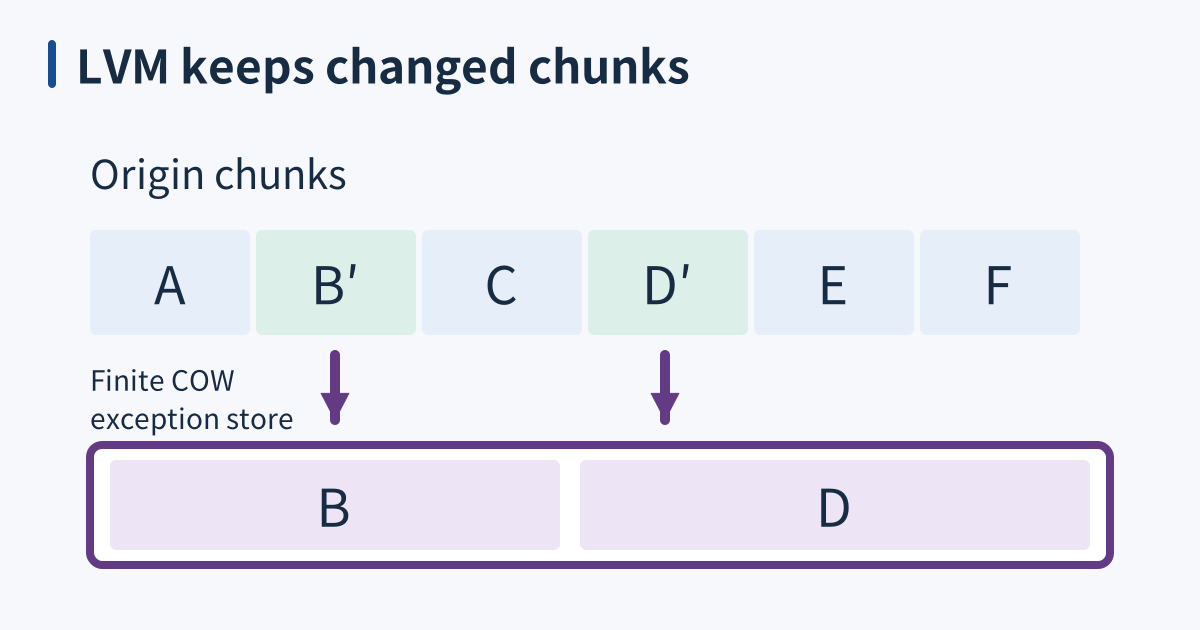
Changed origin chunks B and D point to their saved original values in a separate finite classic COW exception store.

LVM snapshots capture a block device in time

A classic LVM snapshot uses a copy-on-write exception store attached to an origin logical volume. lvcreate -s -L 5G -n snap vg/data requests a 5 GiB store, subject to allocation granularity and available volume-group space. It avoids copying the whole origin at creation, but does not guarantee zero work or instant completion. Thin snapshots use a different shared-pool mechanism. ...
April 10, 2028 · 4 min · XB Field Notes
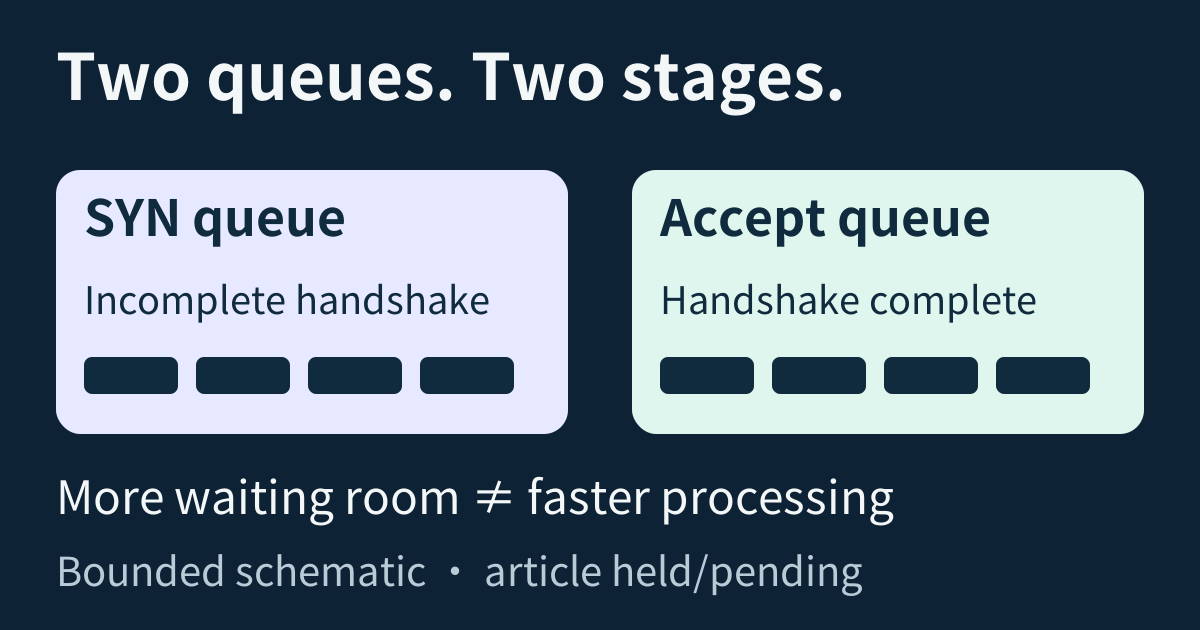
The SYN queue holds incomplete handshakes; the accept queue holds established connections awaiting accept(). With listen backlog configured as 8192 and somaxconn as 4096, the accept-side cap is 4096. Buffering more waiting work does not itself increase processing rate. The source article remains held/pending.

The SYN backlog holds incomplete handshakes

A listening TCP socket separates incomplete handshakes from established connections waiting for accept(). The real setting is tcp_max_syn_backlog; this article retains its historical URL spelling. It concerns remembered incomplete requests, whereas the listen() backlog concerns the accept queue. Diagnose which stage is under pressure before choosing a remedy. ...

March 24, 2028 · 4 min · XB Field Notes
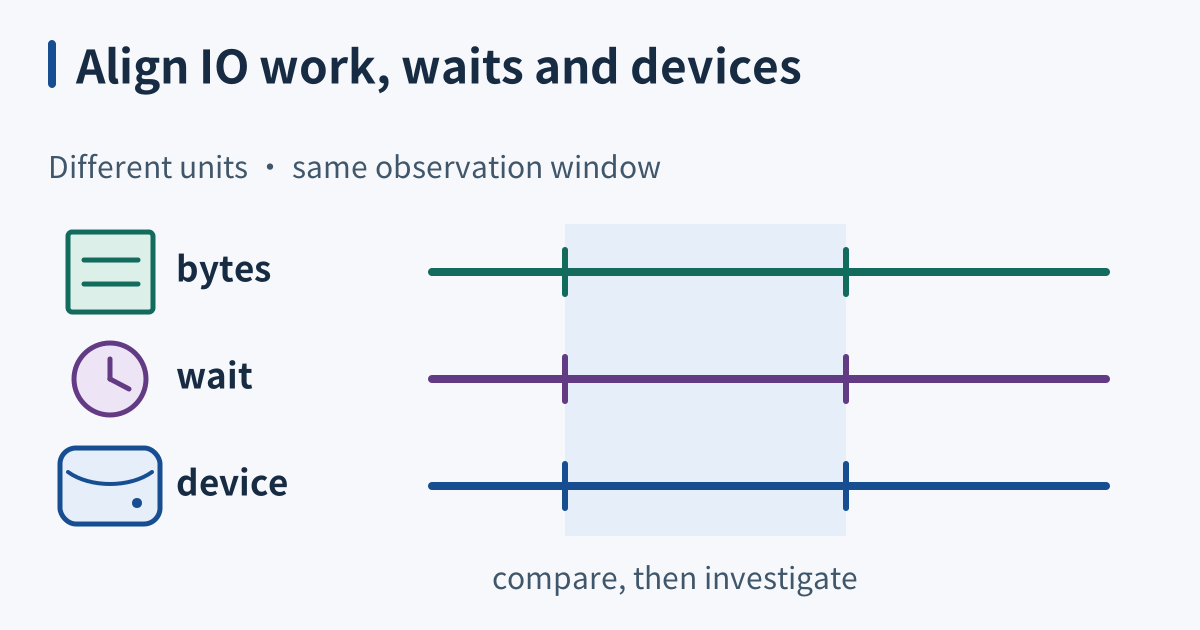
Three distinct task-byte, task-wait and device lanes share an observation window without identifying a proven culprit.

iotop shows which process is burning the disks

iotop connects task-level kernel accounting with a system-wide storage investigation. It can identify tasks reporting substantial IO or waiting, but those are different observations. A task blocked behind other work may be a victim rather than the source of contention. Kernel counters do not provide perfect attribution for every filesystem, cache, or storage layer. ...

March 15, 2028 · 6 min · XB Field Notes
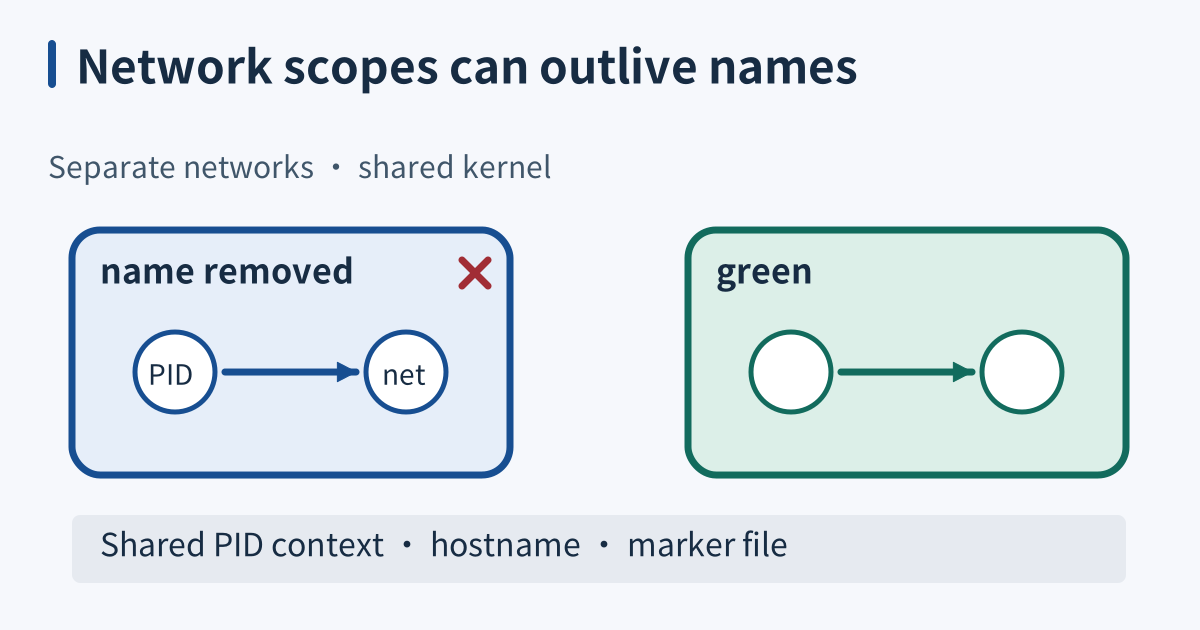
Separate blue and green networking scopes sit over shared context; deleting the blue name leaves a process reference connected.

Network namespaces isolate networking; their names do not own every process

A Linux network namespace separates networking resources such as interfaces, routes, neighbor tables, socket ports, and packet-filter rules. It shares the kernel with other namespaces; it is not a separate operating system. A process normally inherits its parent’s network namespace, and tools can execute a process in another one. The resulting isolation covers networking resources, not every aspect of process identity or filesystem access. ...

February 19, 2028 · 6 min · XB Field Notes
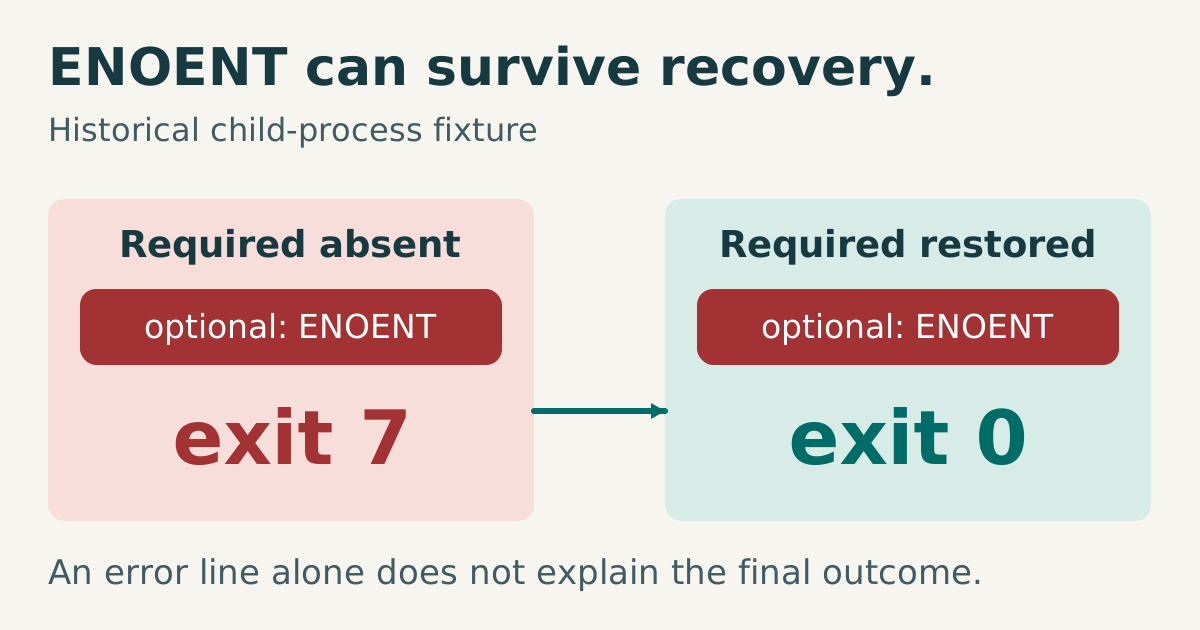
Two historical application outcomes share the same optional-file ENOENT. With the required file absent the child exits 7; after only the required file is restored it exits 0. An error line alone does not establish the cause of failure.

Strace explains selected system-call boundaries

Strace observes system calls and signals at the boundary between a selected Linux process and the kernel. It can reveal attempted paths, arguments, return values, and errors without rebuilding the program. That evidence is useful when application logs omit an operation, but it does not expose every user-space decision or automatically identify which failed call caused the application’s final outcome. ...

February 14, 2028 · 5 min · XB Field Notes
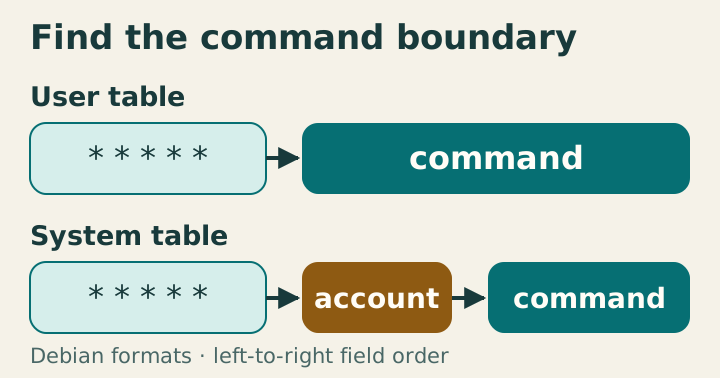
The user-table command follows five calendar fields; the system-table command follows an additional account field.

Cron system and user tables have different contracts

User crontabs belong to one account; system tables can name an account per entry. Copying lines between formats without adjusting fields changes the command boundary. Identify the format before debugging the calendar expression. In Debian user tables the command starts after five fields; system tables insert a username before it. Unescaped percent signs are handled before shell quoting and split off standard input. The figure is schematic; privileged examples were not executed. The account column changes the parser boundary User entries contain minute, hour, day of month, month, day of week, then command text; crontab installs them for the selected user. Debian’s /etc/crontab and /etc/cron.d files insert a username after those five fields. It is not an optional command annotation. ...

January 12, 2028 · 8 min · XB Field Notes
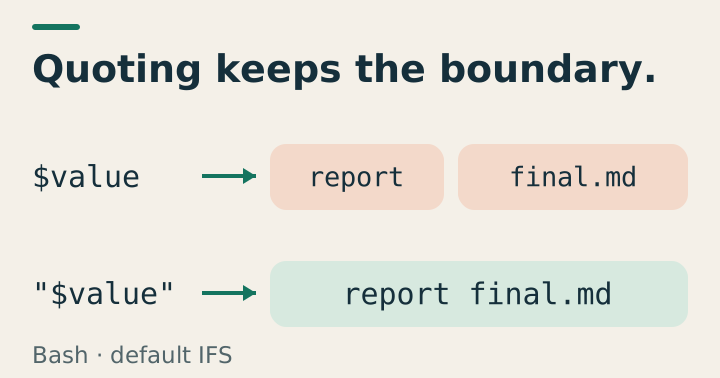
Unquoted report final.md splits into two arguments; quoted expansion preserves one.

Shell word splitting turns unquoted variables into several arguments

A shell variable holds a string, but an unquoted expansion can turn that string into several command arguments. In Bash, word splitting examines expansion results using IFS as the delimiter set. This is why a pathname that works when typed with quotes can fail after being stored in a variable. Debug the arguments the receiving command actually gets, including empty ones, before blaming the filesystem. ...

December 31, 2027 · 4 min · XB Field Notes
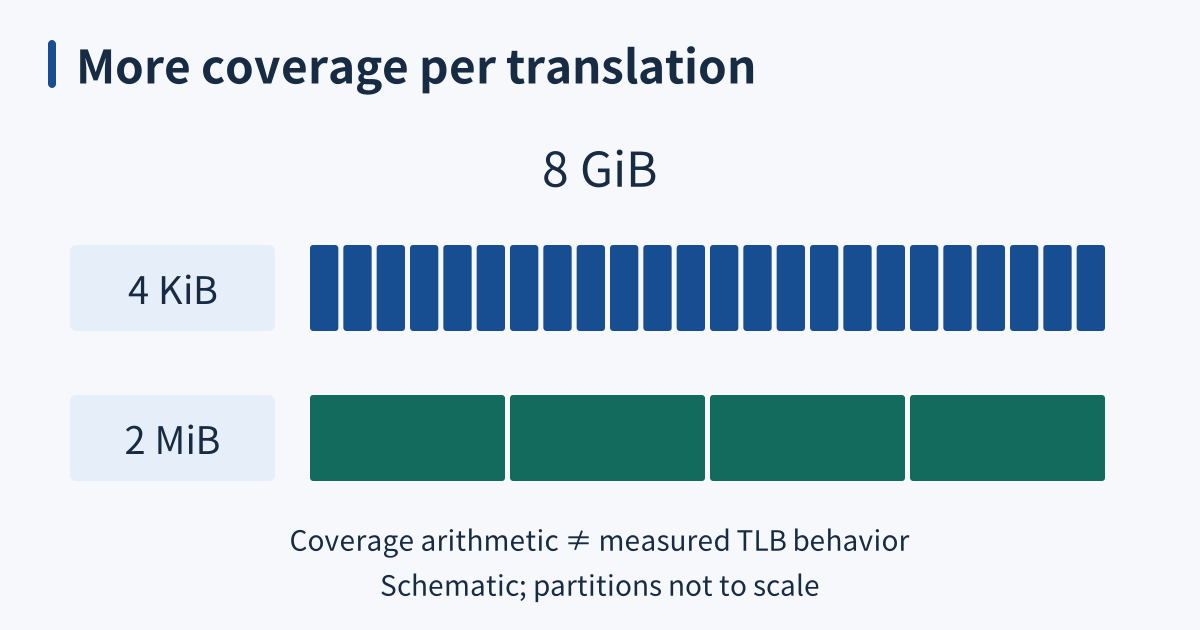
Schematic equal 8 GiB ranges illustrate fewer mappings at 2 MiB than 4 KiB. Partition counts are not to scale and do not measure TLB misses.

Huge pages trade allocation flexibility for translation reach

Huge pages can increase the amount of memory covered by each cached address translation. They can reduce translation overhead for suitable workloads, but the result depends on access patterns and hardware. A large allocation alone does not prove frequent TLB misses, and fewer pages needed to describe a working set does not mean those translations all fit in the processor’s TLB. ...

December 21, 2027 · 5 min · XB Field Notes