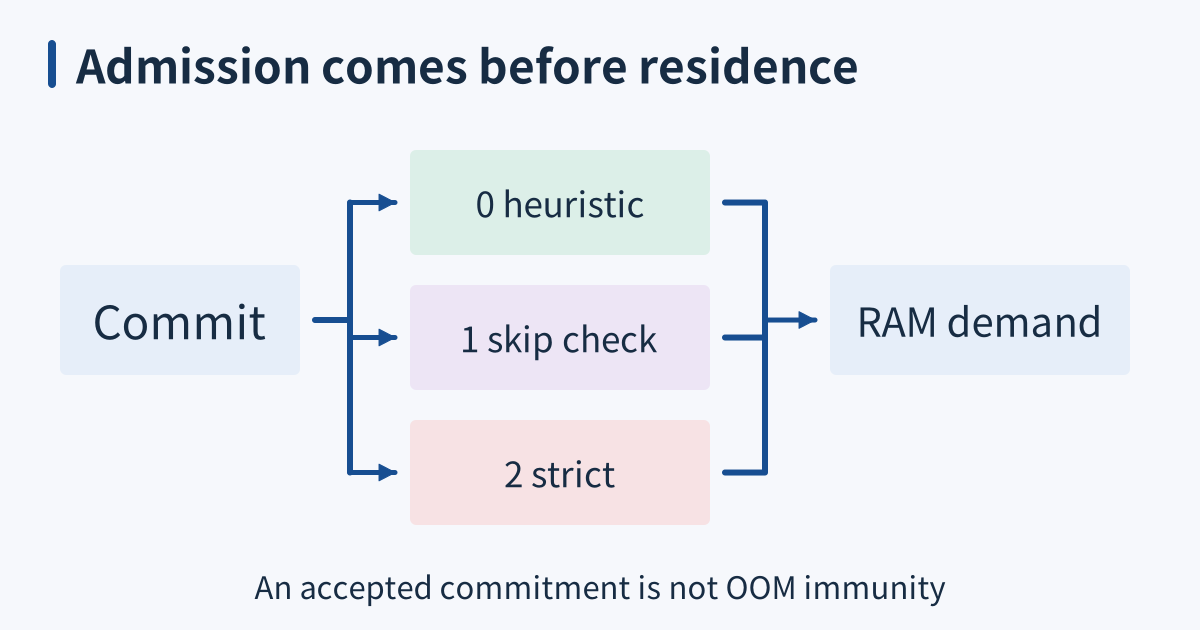
A virtual-memory request reaches one of three overcommit admission policies before later physical demand meets cgroup, NUMA and other resource constraints.

Linux overcommit budgets virtual-memory commitments

Linux overcommit policy controls admission of certain virtual-memory commitments. It is separate from allocating resident physical pages, choosing an OOM victim, and enforcing a container’s memory limit. A successful allocation can precede physical demand, but that does not make all allocations free or guarantee that later accesses will succeed under every resource constraint. ...
December 18, 2027 · 5 min · XB Field Notes
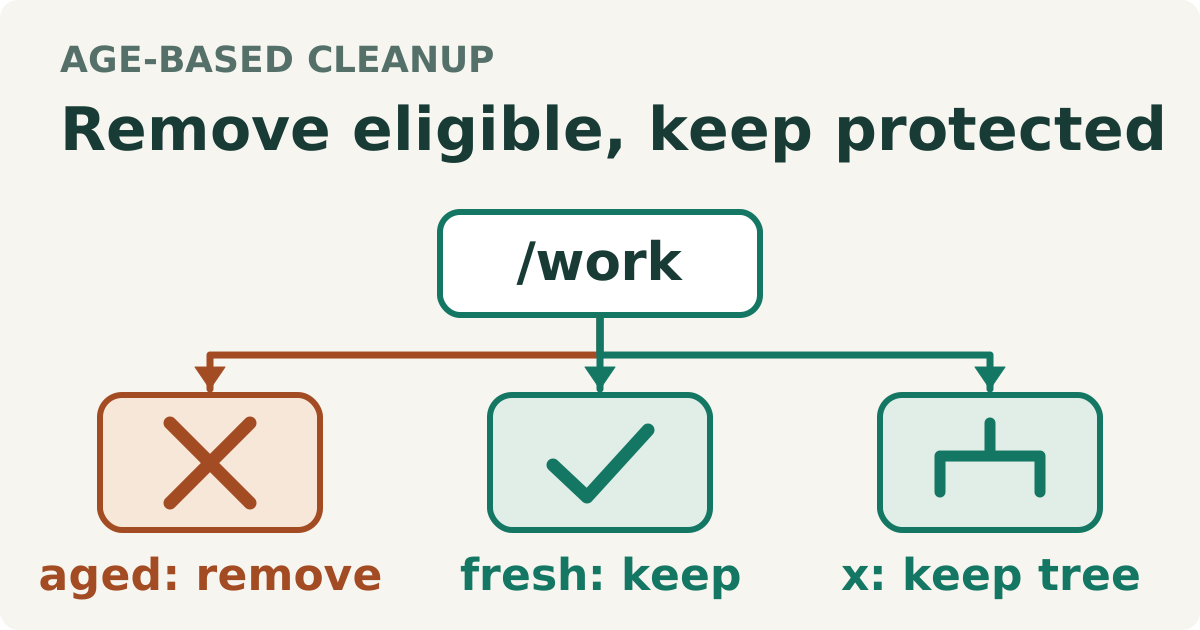
The /work directory branches to an aged entry marked for removal, a recent file kept, and an x-excluded subtree preserved.

systemd-tmpfiles applies creation and age policies

systemd-tmpfiles describes filesystem objects and housekeeping rules in configuration files. A rule can create a directory with a chosen mode, while an age rule can make old entries eligible for cleanup. The command must actually run the relevant operation for either effect to occur. This is useful lifecycle policy, but it is not a continuous watcher or a hard storage quota. ...

December 10, 2027 · 5 min · XB Field Notes
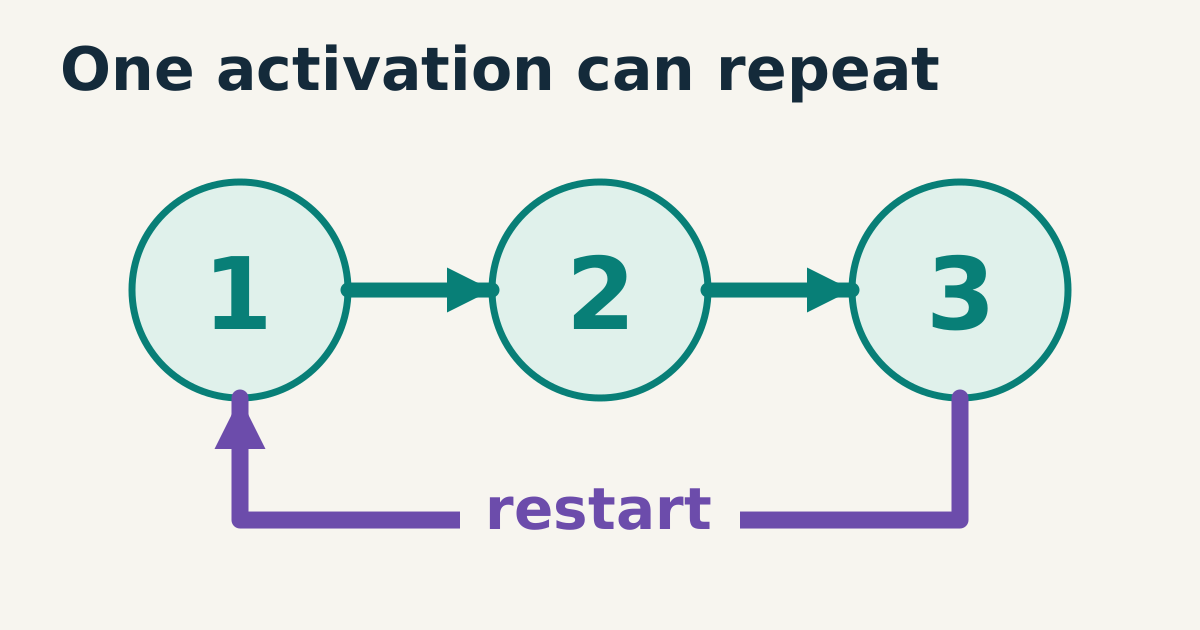
Three numbered commands form a finite forward sequence, while a large restart arrow returns from completion to the first command, showing that a new activation can repeat the work.

A systemd oneshot completes one activation

A Type=oneshot service represents finite work whose startup completes when its start commands finish successfully. That makes it useful for setup steps and scheduled jobs whose completion matters to a dependent unit. The word oneshot describes one activation’s process model. It does not create a permanent record that prevents the task from running again after a restart, another activation, or a reboot. ...

November 28, 2027 · 5 min · XB Field Notes
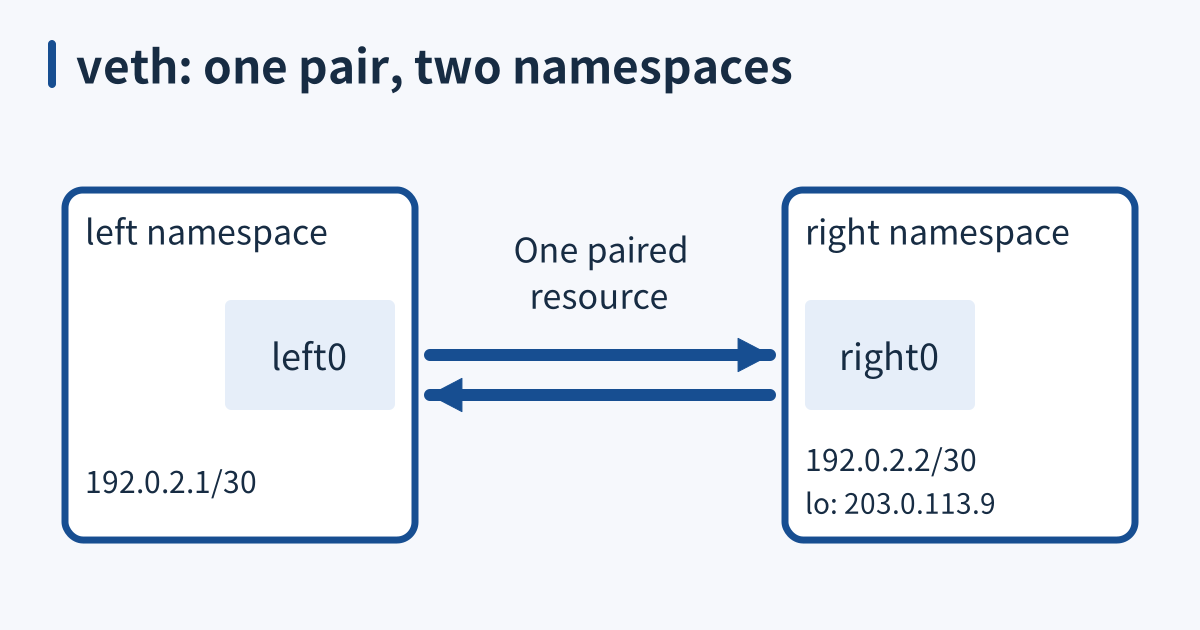
Two namespace outlines contain left0 and right0 as one paired link; the right namespace also owns a loopback destination.

A veth pair carries frames between two endpoints; routing supplies their meaning

A veth pair consists of two interconnected virtual Ethernet devices. A frame transmitted through one is delivered to the other, where the receiving network stack or bridge handles it. The two ends can reside in separate Linux network namespaces, making the pair useful for container networking. Creating the pair supplies a link; addresses, routes, bridge membership, forwarding, and access policy are additional configuration. ...

November 21, 2027 · 6 min · XB Field Notes
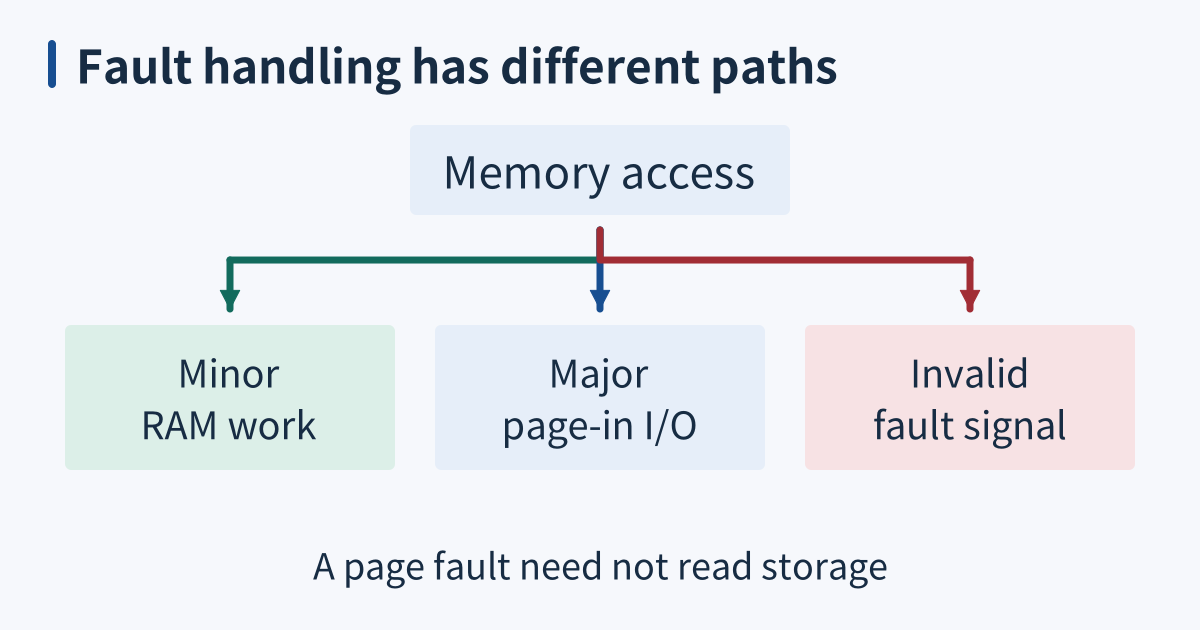
A memory access branches to minor-fault work in memory, major-fault page-in I/O, or invalid-access handling. Fault counts do not count all storage requests.

A page fault is not always a storage read

A page fault means the processor could not complete an access using the current mapping or permissions. It is not synonymous with a storage read, and some faults represent invalid accesses rather than recoverable demand paging. Linux’s minor and major counters distinguish whether handling required page-in I/O. Interpret those counters alongside the mapping type and workload; neither is a direct measurement of all application storage traffic. ...

November 13, 2027 · 5 min · XB Field Notes
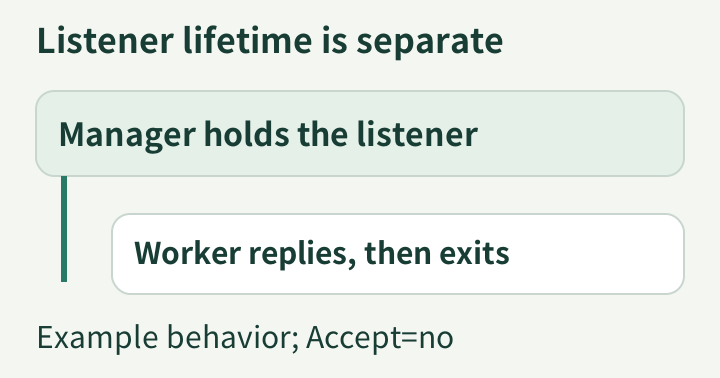
While the socket unit stays active, the manager retains the listener when this example worker replies and deliberately exits. Accept=no passes a listener; it does not force one process per connection.

Socket activation passes a listener to a compatible service

Socket activation lets systemd open a listening endpoint before the application process starts. Activity on that endpoint can then trigger a compatible service, which receives descriptors for sockets the manager already owns. The useful boundary is listener ownership versus application lifetime. An open endpoint is not yet proof that the application has initialized, accepted a request, or produced a correct response. ...

November 8, 2027 · 5 min · XB Field Notes
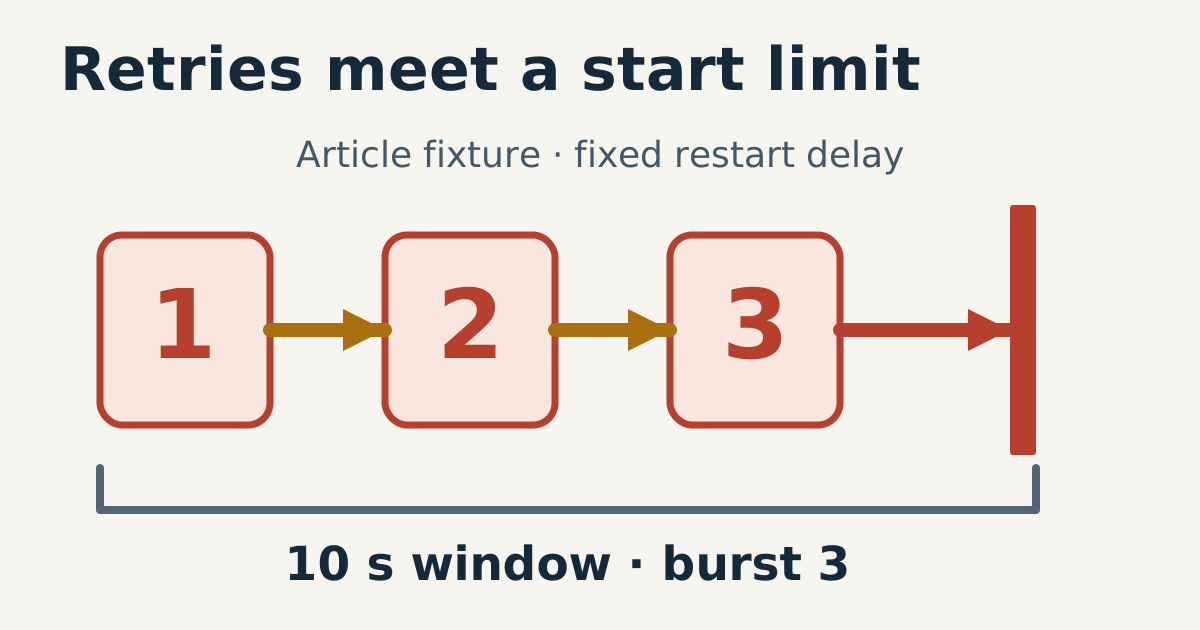
Three starts occupy one bracketed ten-second window. Equal restart gaps lead to the next starts, while a solid stop bar blocks a fourth request at burst three. These are the article’s illustrative fixture settings.

systemd restart policies need explicit failure and rate rules

A restart policy decides whether a service manager should try another process after the current one ends. It can recover from a transient failure, but it cannot correct a missing configuration or a deterministic bug. The useful contract has three parts: which endings qualify, how long to wait, and how many starts are permitted within a time window. Those settings answer different questions. ...

November 7, 2027 · 5 min · XB Field Notes
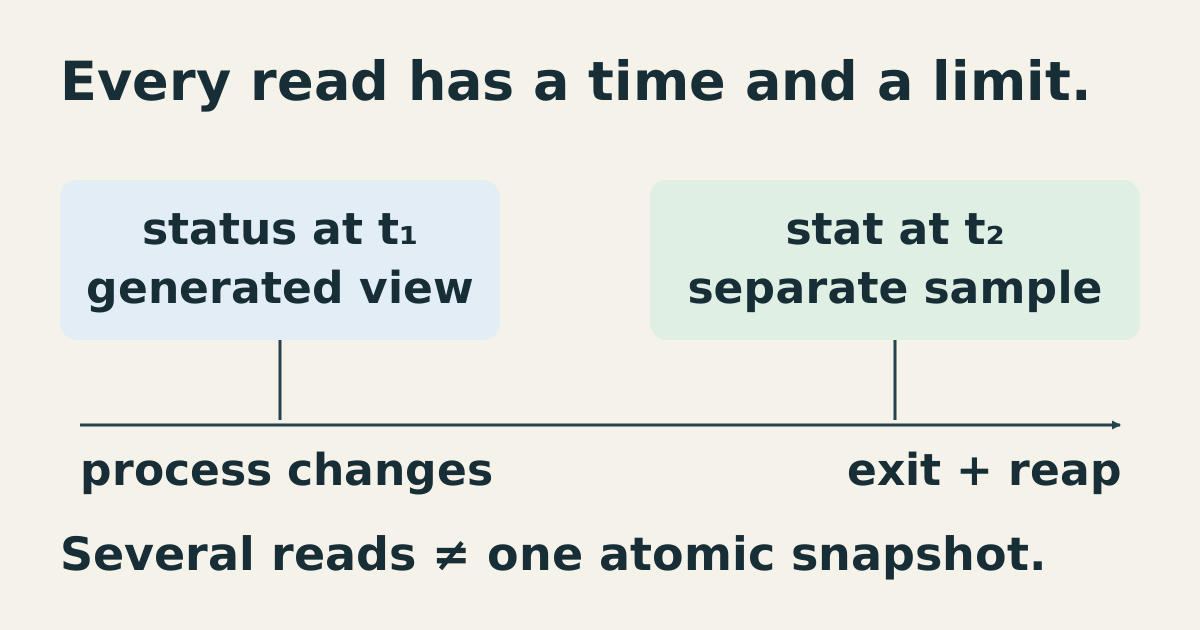
status at time one and stat at time two are separate reads of a changing process. After the controlled child exits and is reaped, its proc directory disappears; several reads do not form an atomic snapshot.

Read procfs as documented views of a changing process

Linux procfs exposes process and kernel information through filesystem interfaces. Many entries generate their contents when read instead of storing ordinary disk-file bytes. Each entry has a documented meaning, permission model, and format. Reading several entries does not freeze the process or create a transactionally consistent snapshot, so useful observations must be tied to the right process instance and interpretation. ...

October 29, 2027 · 5 min · XB Field Notes