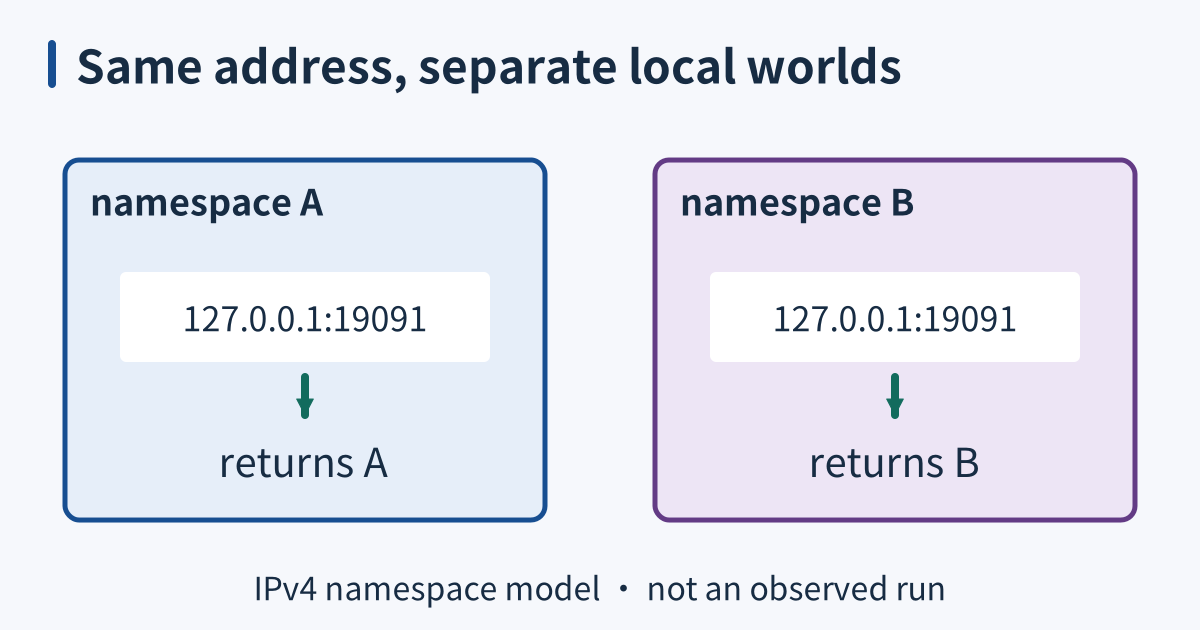
Loopback returns to the caller’s network namespace
Loopback addresses let a process communicate through its local IP stack without sending the exchange over a physical network link. IPv4 reserves 127.0.0.0/8 for loopback; 127.0.0.1 is the familiar member. IPv6 uses ::1. On Linux, the relevant local networking context is a network namespace. Two processes on the same physical machine can therefore have different answers to what counts as their own loopback service. ...