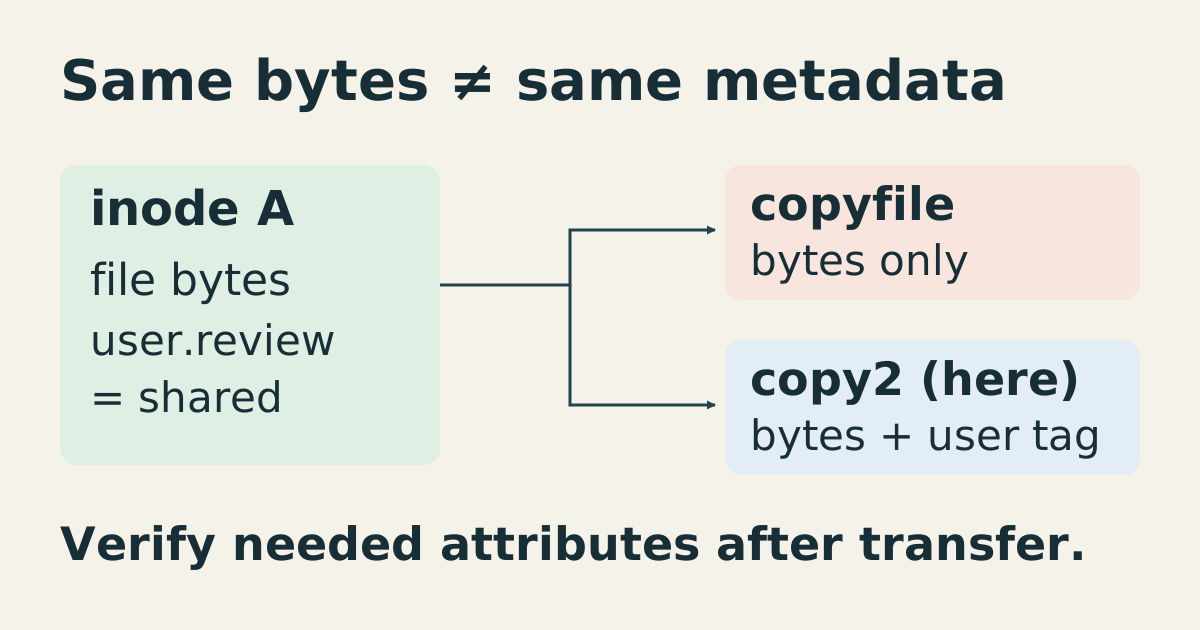
A source inode carries bytes and user.review. copyfile copies bytes without that attribute; copy2 preserves this supported attribute in the article fixture. Equal content does not imply equal metadata.

Extended attributes belong to the inode and to a namespace

Extended attributes attach named byte values to filesystem objects outside the ordinary file-content stream. Applications can use the user namespace for small metadata, while other namespaces have kernel, security-module, or privileged semantics. Their usefulness depends on the filesystem, access rules, and transfer tools. A metadata tag is reliable only when the workflow preserves and interprets it according to an explicit contract. ...
December 14, 2027 · 5 min · XB Field Notes
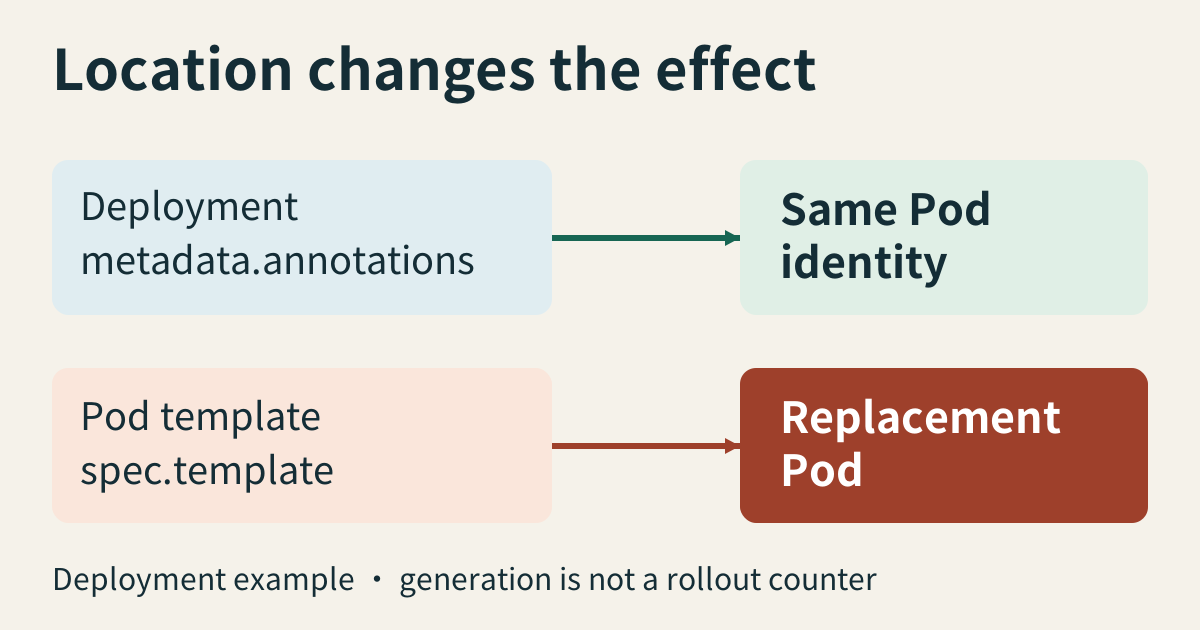
Two annotation paths in the article’s Deployment example: top-level metadata preserves the Pod identity; Pod-template metadata changes replace it. Consumers can interpret annotations.

Annotations carry metadata that consumers can interpret

Annotations attach non-identifying metadata to Kubernetes objects. They can record provenance, ownership notes, or information consumed by a tool. Standard label selectors do not select objects by annotation values, but that does not make annotations inert. A controller, admission component, or deployment tool can interpret a documented annotation and change behavior accordingly. Know the consumer before deciding that a metadata edit is harmless. ...

March 10, 2027 · 6 min · XB Field Notes