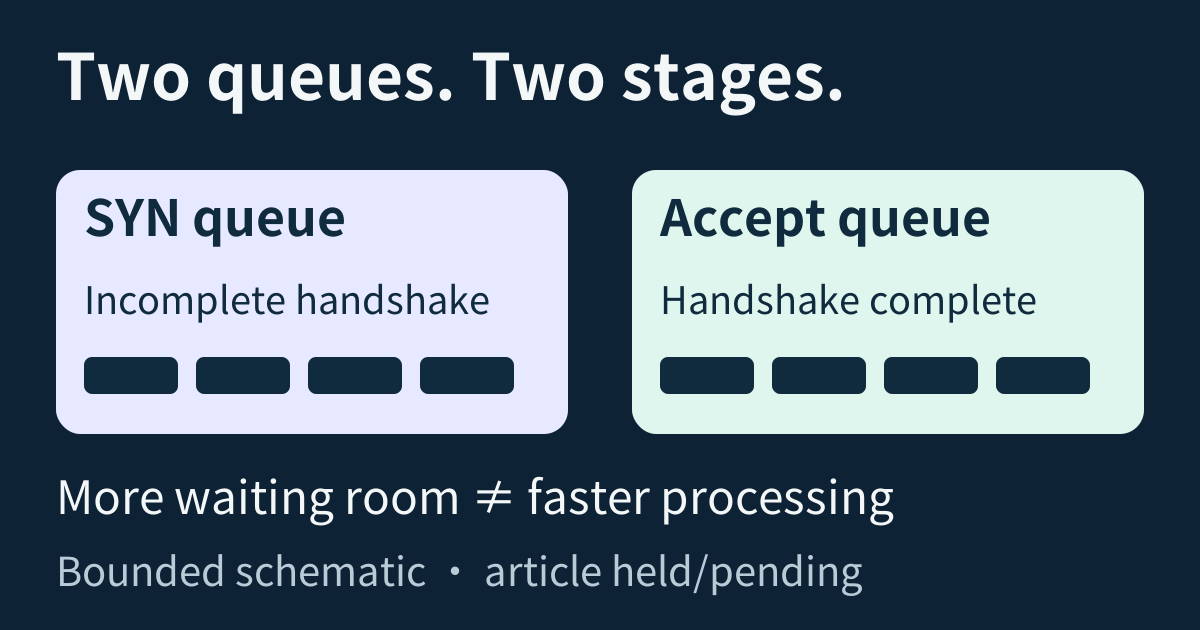
The SYN queue holds incomplete handshakes; the accept queue holds established connections awaiting accept(). With listen backlog configured as 8192 and somaxconn as 4096, the accept-side cap is 4096. Buffering more waiting work does not itself increase processing rate. The source article remains held/pending.

The SYN backlog holds incomplete handshakes

A listening TCP socket separates incomplete handshakes from established connections waiting for accept(). The real setting is tcp_max_syn_backlog; this article retains its historical URL spelling. It concerns remembered incomplete requests, whereas the listen() backlog concerns the accept queue. Diagnose which stage is under pressure before choosing a remedy. ...
March 24, 2028 · 4 min · XB Field Notes
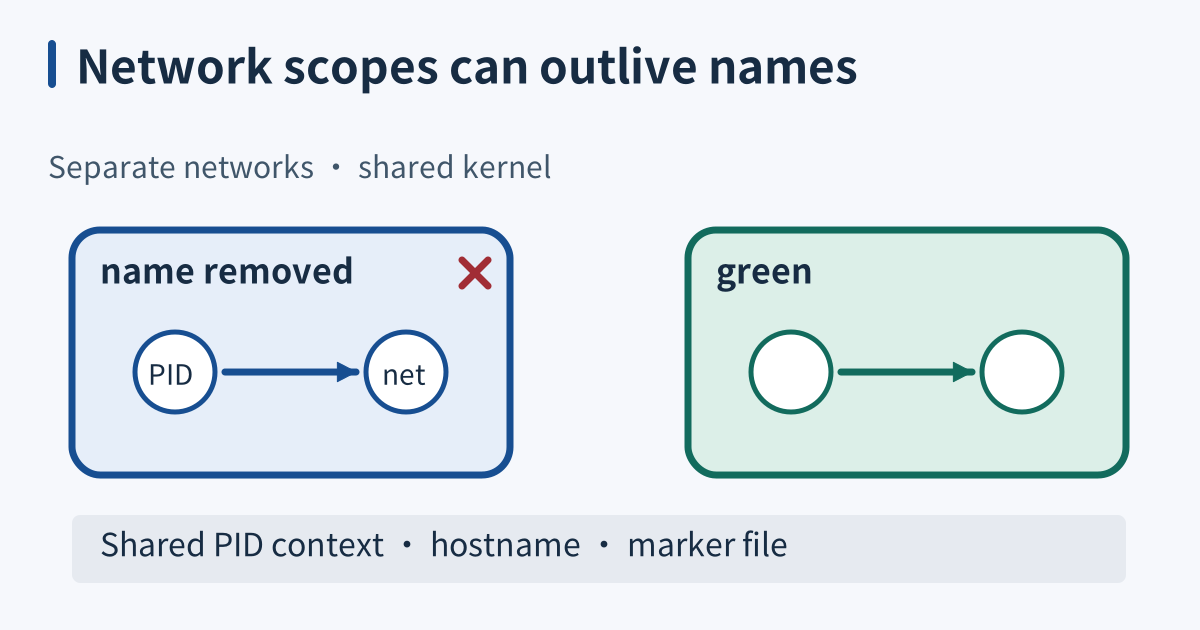
Separate blue and green networking scopes sit over shared context; deleting the blue name leaves a process reference connected.

Network namespaces isolate networking; their names do not own every process

A Linux network namespace separates networking resources such as interfaces, routes, neighbor tables, socket ports, and packet-filter rules. It shares the kernel with other namespaces; it is not a separate operating system. A process normally inherits its parent’s network namespace, and tools can execute a process in another one. The resulting isolation covers networking resources, not every aspect of process identity or filesystem access. ...

February 19, 2028 · 6 min · XB Field Notes
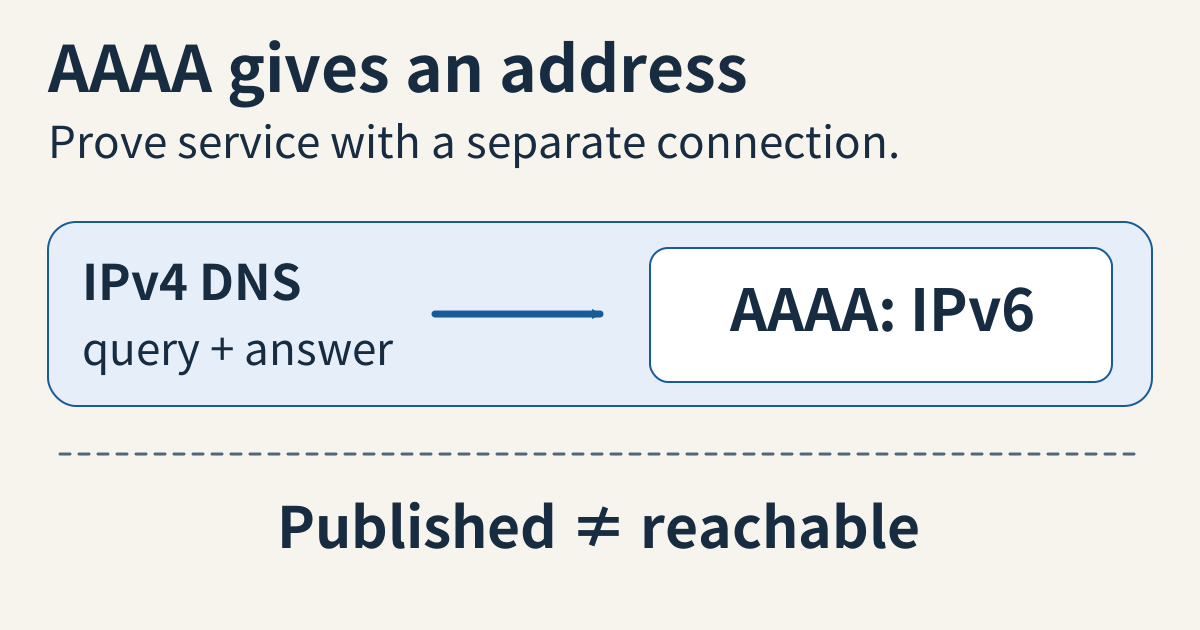
An IPv4 DNS transport carries an AAAA IPv6 address. A separate connection is needed to test the service.

AAAA records publish IPv6 addresses without proving reachability

An AAAA resource record contains one 128-bit IPv6 address. An A record contains an IPv4 address. A name may have either type, both types, or several addresses within each type. These are separate RRsets, so A and AAAA can have different TTLs. Publishing AAAA makes an address discoverable through DNS; it does not create an interface, route, listener, or working application. ...

December 30, 2027 · 6 min · XB Field Notes
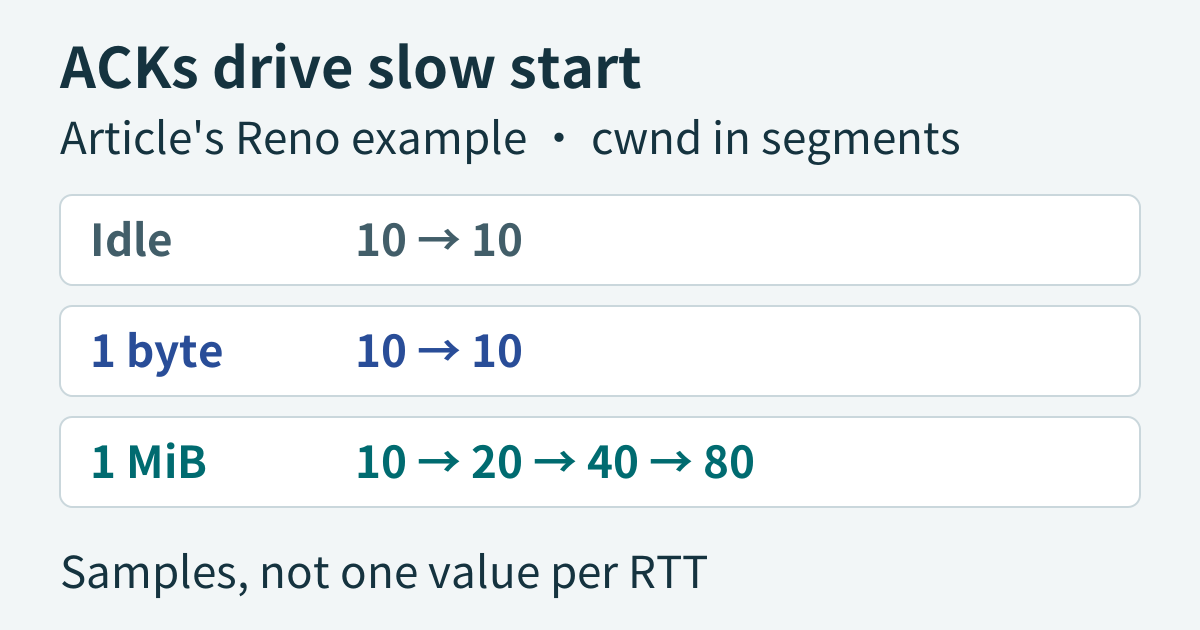
In the article’s Reno example, idle time and a one-byte request leave cwnd at ten segments; a one-MiB transfer includes selected values 10, 20, 40 and 80. These are sampled values, not one value per RTT.

TCP slow start grows with acknowledged data, not merely with elapsed time

Slow start grows a TCP sender’s congestion window while it learns how much outstanding data the path can support. With enough data and suitable acknowledgments, the classic behavior is approximately exponential growth across round trips. “Doubles every RTT” is a useful simplified pattern, not an unconditional timer rule. The window changes in response to transport feedback and the implementation’s growth conditions. ...

December 28, 2027 · 6 min · XB Field Notes
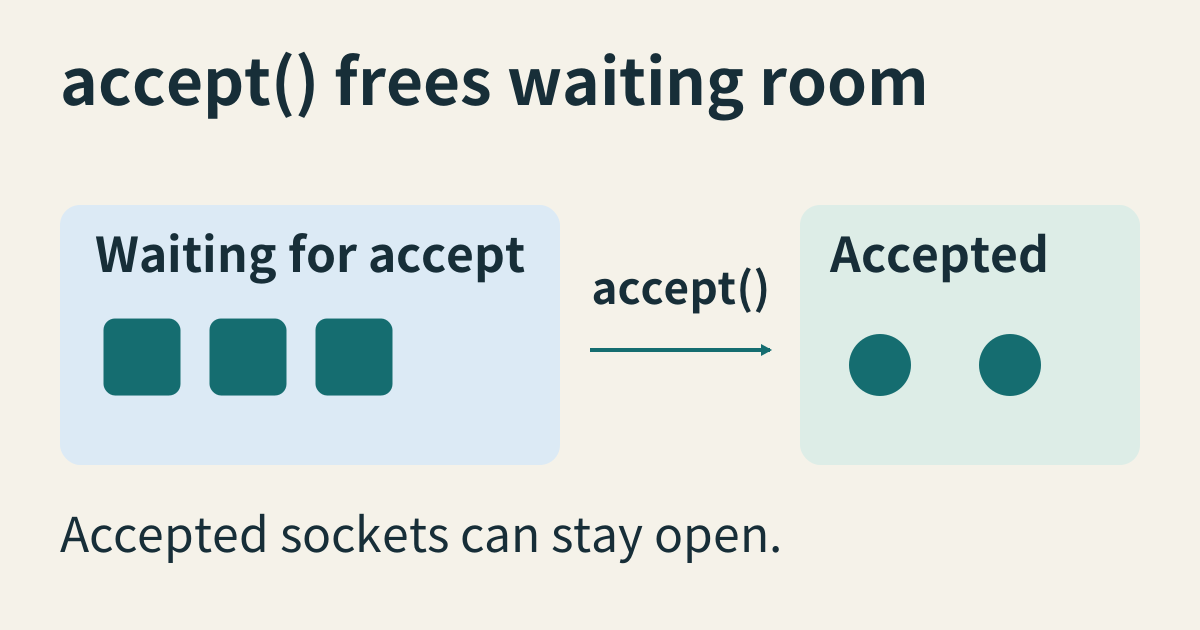
Established connections wait in an accept queue. An accept() arrow moves one to accepted sockets, which can remain open.

The listen backlog holds connections waiting for accept

On Linux TCP sockets, the listen() backlog concerns established connections waiting for the application to accept them. The incomplete-handshake queue is a separate concept. Calling accept() removes a pending connection and returns a connected socket for application use. That accepted connection no longer occupies the listener’s accept queue, even if it remains open and busy for a long time. ...

October 25, 2027 · 5 min · XB Field Notes
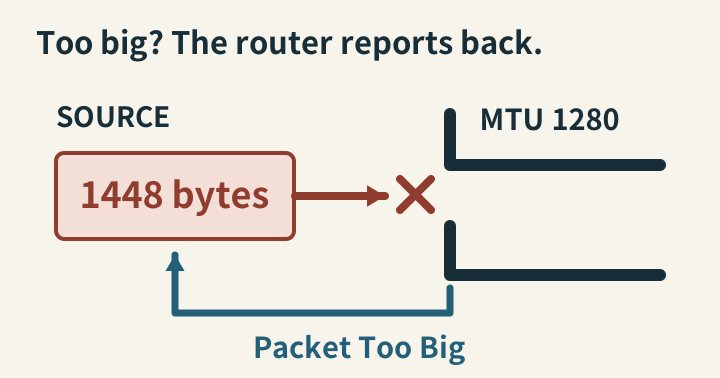
A 1448-byte IPv6 packet reaches a link with MTU 1280. The forwarding router drops it and reports Packet Too Big to the source; the router does not fragment transit packets.

IPv6 routers report oversized packets; sources decide how to fit the path

An IPv6 router does not fragment a packet while forwarding it toward its destination. If the packet is too large for the next link, the router discards it and sends ICMPv6 Packet Too Big feedback. The source can then adjust its packet size or, where appropriate, send fragments using the IPv6 Fragment header. Reassembly of those fragments takes place at the destination. ...

October 6, 2027 · 6 min · XB Field Notes
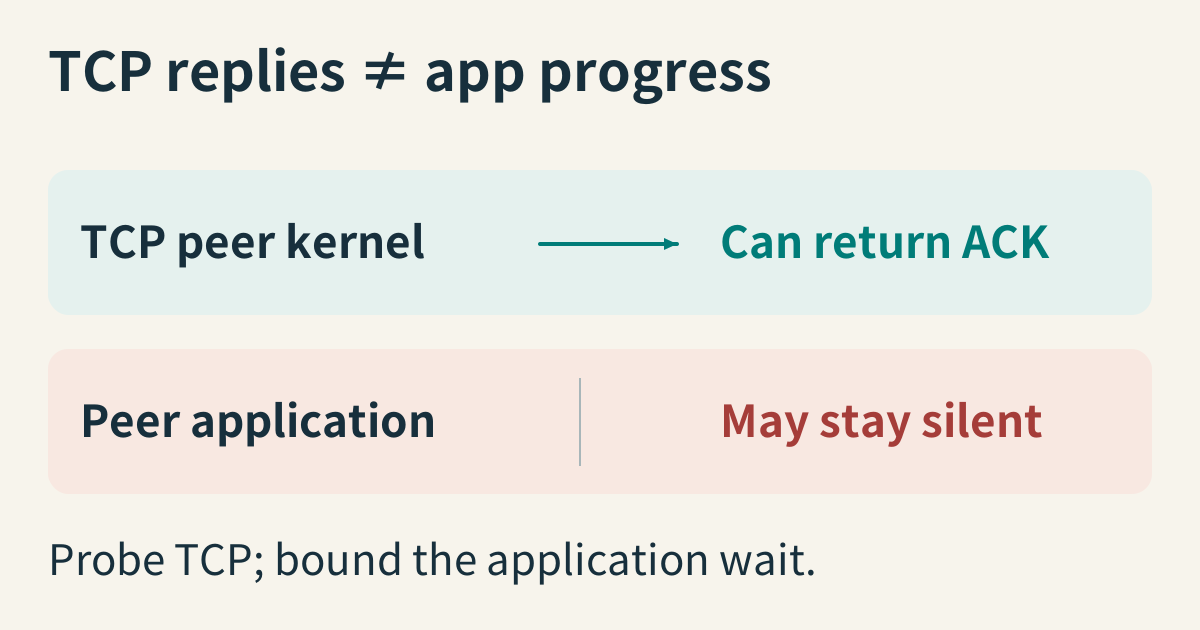
Two separated rows distinguish a TCP peer kernel that can return ACK from a peer application that may stay silent. The footer calls for an application wait deadline in addition to probing TCP.

TCP keepalive probes idle connections

TCP keepalive asks whether the other TCP endpoint still responds after a quiet period. It does not ask whether an HTTP handler, database query, or worker is making progress. A peer’s kernel can acknowledge traffic while its application is stalled. Treat transport reachability and useful application responses as different observations. ...

October 5, 2027 · 5 min · XB Field Notes
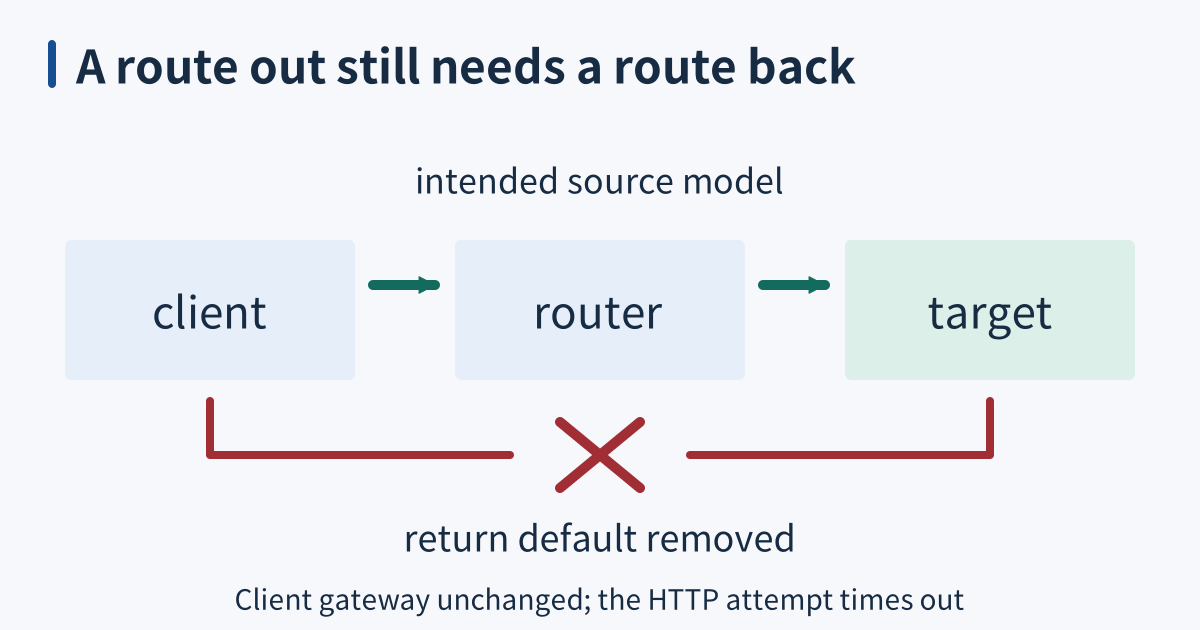
Intended source scenario, not an observed run. Client, router and target are connected in the request direction. A crossed return line marks removal of the target return default. The client gateway stays unchanged but the HTTP attempt times out, showing why a route out still needs a route back.

A default route matches broadly; it does not rescue every failed path

An IPv4 default route is the prefix 0.0.0.0/0: it matches every IPv4 destination, with the least possible specificity. In a selected routing table, a longer matching prefix normally takes precedence. The default is not a procedure that retries whenever a more specific route fails. Routing policy selects relevant tables, and the chosen route describes a forwarding decision rather than promising that the entire round trip will succeed. ...

September 14, 2027 · 6 min · XB Field Notes