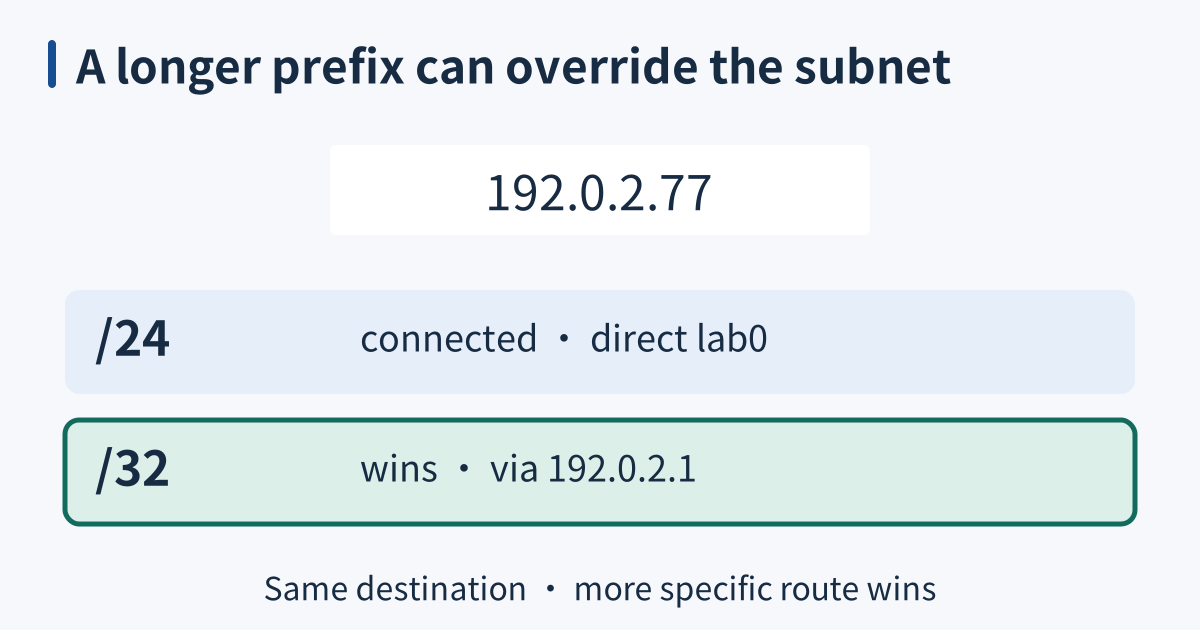
For the one destination 192.0.2.77, the connected /24 row selects lab0 directly, while the highlighted, more-specific /32 row wins via gateway 192.0.2.1. The rows show route specificity, not two sequential forwarding hops.

A subnet prefix shapes connected routes; the routing table chooses the path

An IPv4 prefix length says how many leading address bits identify a network. For 192.0.2.5/24, the network is 192.0.2.0/24 and the ordinary broadcast address is 192.0.2.255. Configuring that interface commonly installs a connected route, but the prefix is not the entire routing algorithm. The kernel consults routing policy and route tables to select a path for each destination. ...
September 13, 2027 · 5 min · XB Field Notes
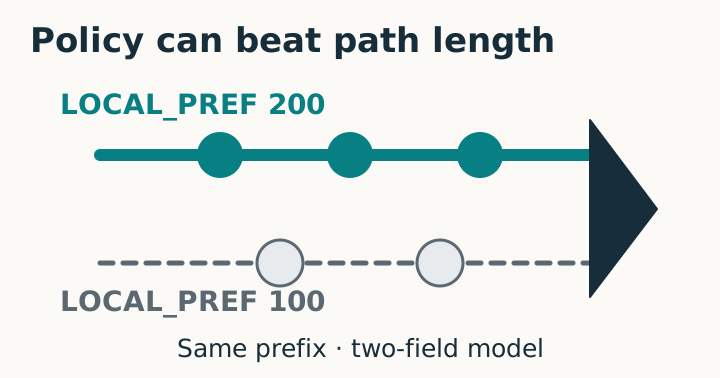
For the same prefix in the article two-field model, local preference 200 selects a three-AS path over a shorter two-AS path with preference 100.

BGP is the Internet routing table

BGP exchanges reachability between independently operated networks, but there is no single authoritative Internet forwarding table. Each router learns a policy-filtered view, chooses routes, and attempts to install usable next hops. Two routers can legitimately select different paths to the same prefix. Understanding BGP means separating announcements, selection policy, and packet forwarding rather than treating them as one universal answer. ...

September 12, 2027 · 5 min · XB Field Notes
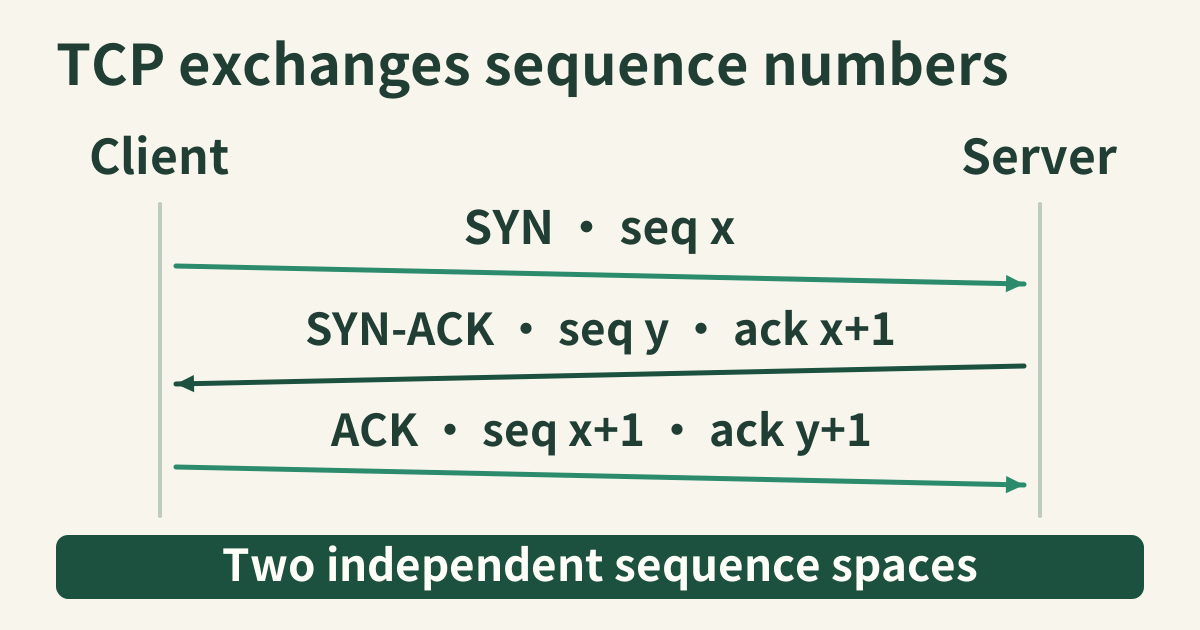
Client sends SYN with sequence x. Server sends SYN-ACK with sequence y and acknowledgment x+1. Client sends ACK with sequence x+1 and acknowledgment y+1.

The TCP handshake establishes sequence spaces, not synchronized clocks

The TCP three-way handshake establishes the two directions of a byte stream. Each endpoint supplies an initial sequence number and acknowledges the other endpoint’s number. Those are independent sequence spaces, not a shared wall clock. Applications do not need synchronized machine clocks to connect. Later sequence numbers identify bytes and support ordering, duplicate handling, acknowledgments, and retransmission within that connection. ...

September 10, 2027 · 7 min · XB Field Notes
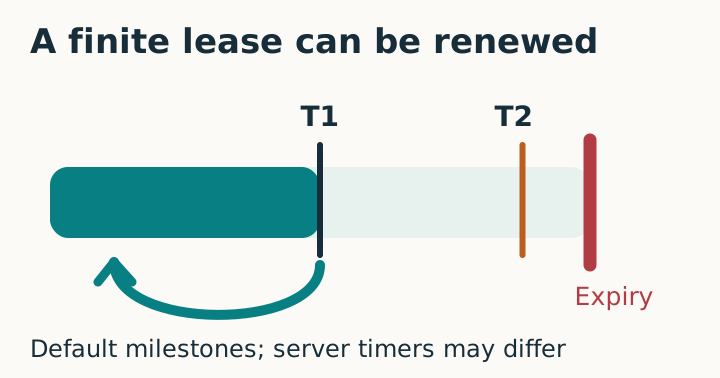
A finite dynamic DHCPv4 lease has renewal and rebinding milestones before expiry. Successful renewal updates the deadlines; server-supplied valid timers can differ from the default fractions.

DHCP lends the address until it expires

Dynamic DHCPv4 allocation lends an address for a lease period. Renewal can extend that period; expiry permits reuse. DHCP also supports other allocation policies, so a finite dynamic lease is the scope of this article, not the only configuration DHCP can deliver. ...

September 7, 2027 · 7 min · XB Field Notes
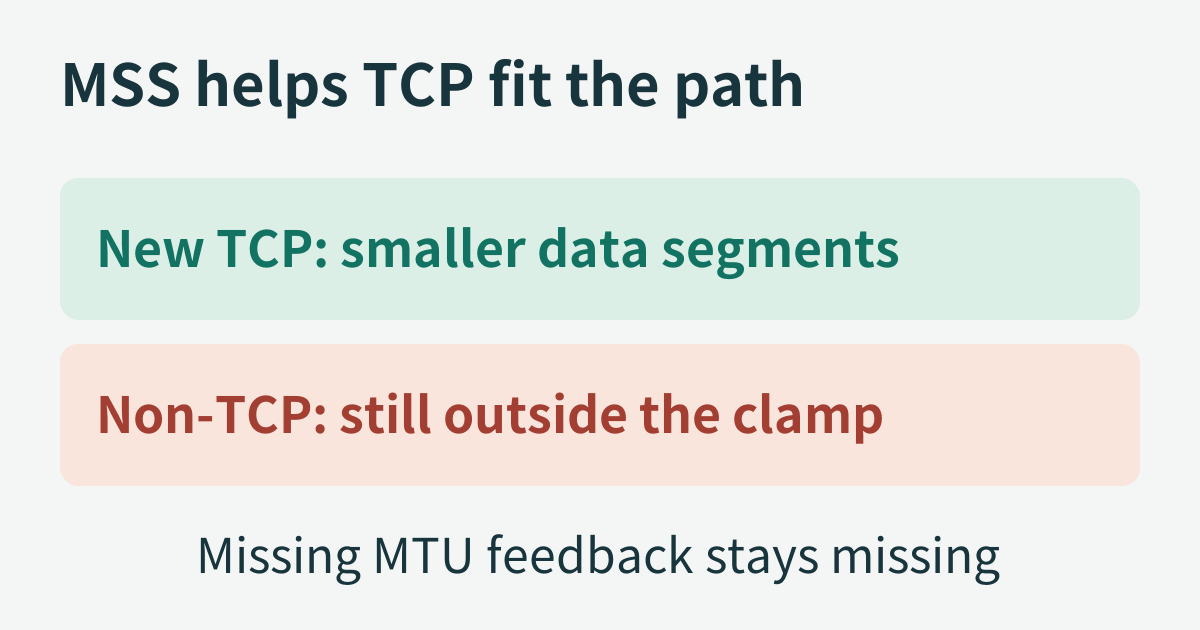
A TCP-only MSS clamp reduces a handshake advertisement to fit the packet budget. TCP can recover while oversized non-TCP traffic still fails because MTU feedback remains filtered.

MSS clamping can repair one TCP path without repairing its MTU feedback

TCP’s Maximum Segment Size option advertises the receiving endpoint’s maximum TCP data size under the option’s defined accounting rules. Each direction has its own advertisement; the two values need not match. A router can reduce those advertisements while forwarding SYN messages so later data segments fit a constrained path. That changes TCP behavior for the affected connections, not the underlying link MTU itself. ...

January 24, 2027 · 8 min · XB Field Notes