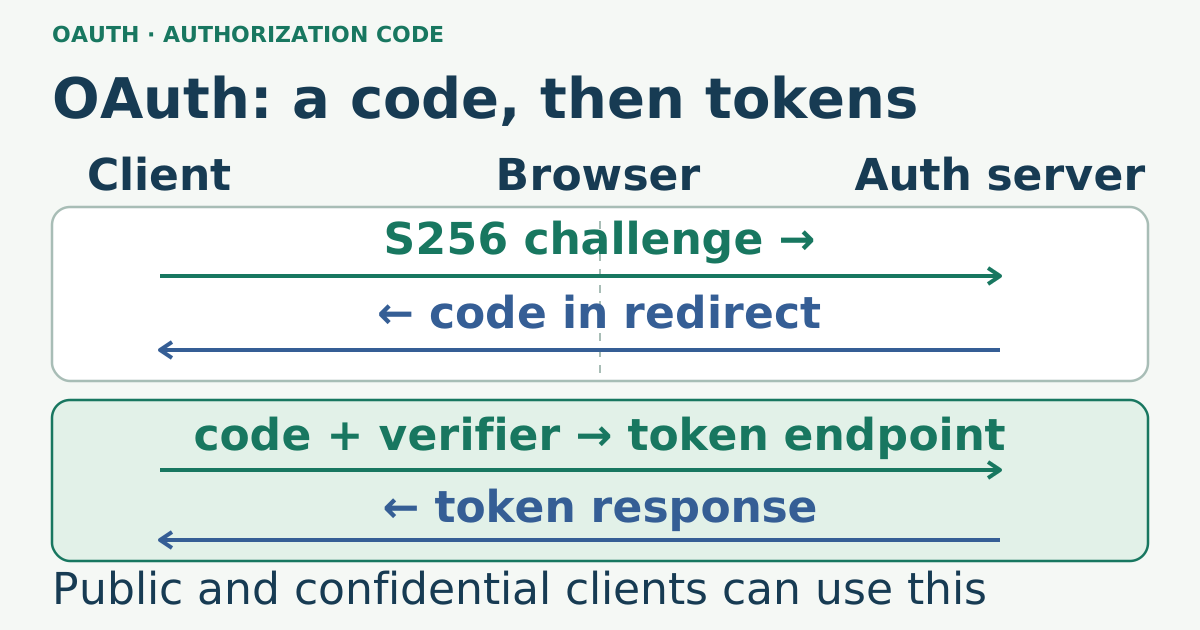
OAuth code flow trades a code for a token
Authorization-code flow moves access-token delivery to the token endpoint rather than returning an access token in the browser-facing authorization redirect. That distinction reduces exposure in URLs, but does not mean a browser can never hold a token. The client architecture determines who exchanges the code and where the resulting credentials live. ...