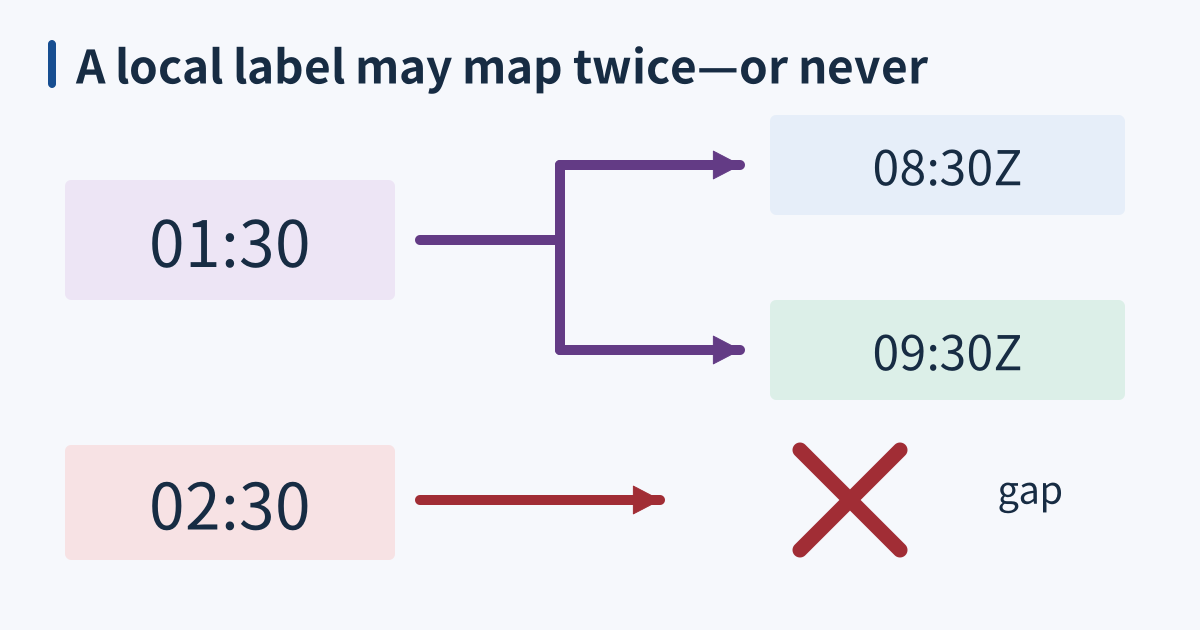
Los Angeles 2026 transition examples: repeated 01:30 branches to 08:30Z and 09:30Z; spring 02:30 points to a missing-time mark.

Timestamps need explicit time semantics

A wall-clock label such as 2026-11-01 01:30 does not identify one instant by itself. Its interpretation depends on a timezone and sometimes on which occurrence was intended during a clock transition. Conversely, an explicitly defined Unix timestamp already carries epoch and unit semantics without displaying a zone name. Decide which kind of value your system is storing before choosing a format. ...
November 29, 2026 · 5 min · XB Field Notes
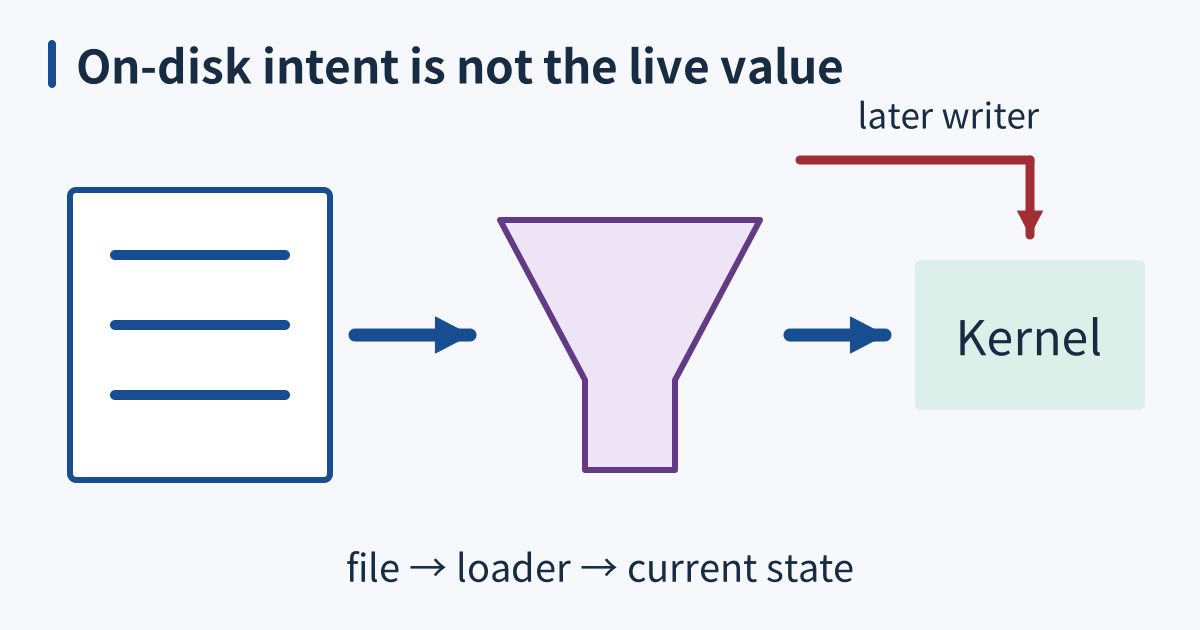
A file flows through a loader funnel into the kernel; a separate later-writer arrow can change the running value.

sysctl tunes the running kernel

On Linux, sysctl exposes selected kernel parameters through /proc/sys. It can inspect the running state, and an authorized write can change that state without rebooting. A configuration file is a separate instruction to a loader. Confusing these two layers produces a familiar incident: the desired value is on disk, but the kernel is doing something else. ...

November 22, 2026 · 5 min · XB Field Notes
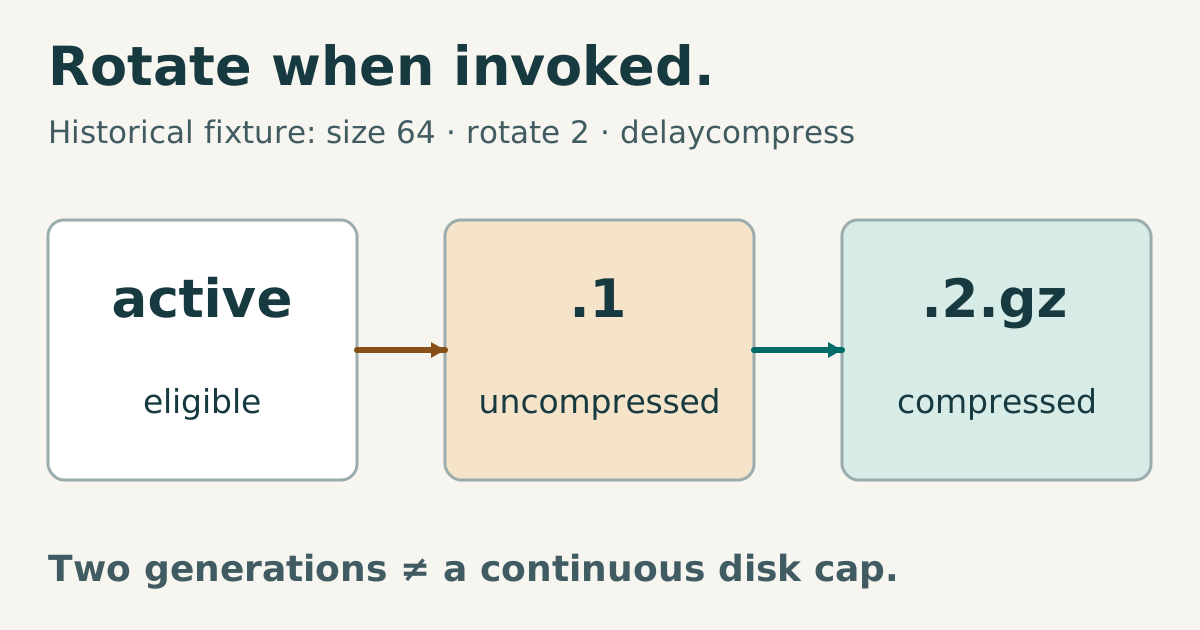
Each logrotate invocation can advance the eligible active log into generation one and the previous generation into compressed generation two. Two retained generations and a size threshold do not continuously cap disk usage.

Logrotate applies a rotation policy when it runs

Logrotate evaluates configuration when invoked, rotates eligible logs, and applies the selected retention and compression actions. A timer or another scheduler determines when that evaluation happens. The tool does not continuously cap file size, and renaming a log does not automatically redirect an application’s open descriptor. A working setup combines evaluation frequency, file policy, and the writer’s actual reopening behavior. ...

November 21, 2026 · 8 min · XB Field Notes
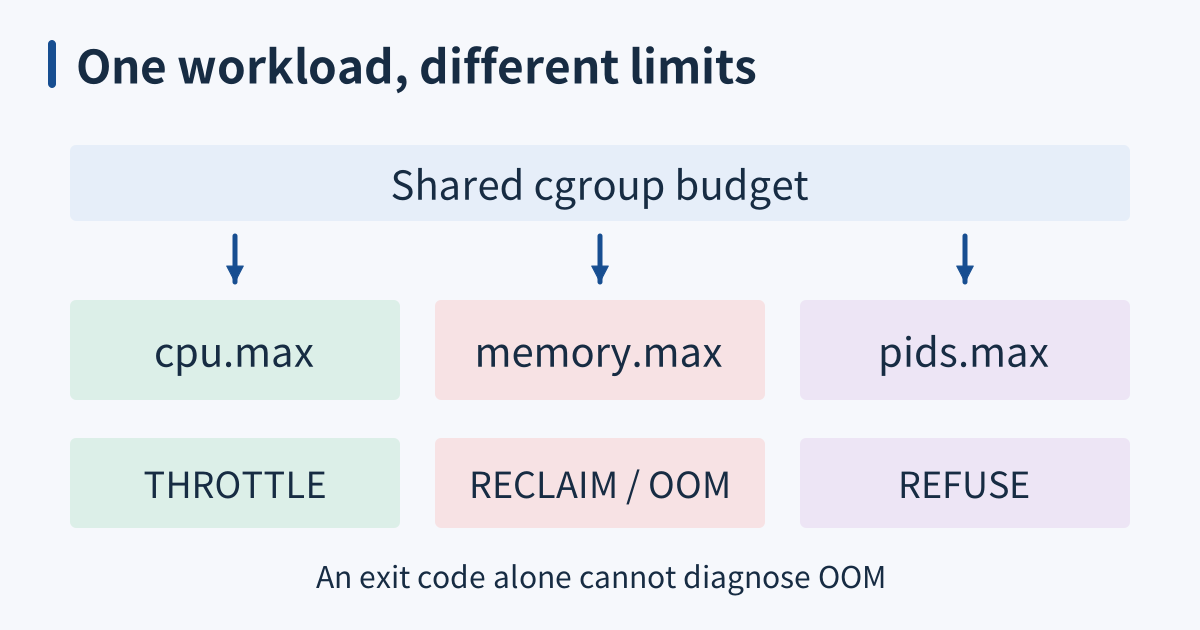
Three cgroup controller lanes show CPU bandwidth throttling, memory reclaim with possible OOM, and task-creation refusal. The budgets belong to one hierarchy.

cgroup v2 enforces different budgets with different failure modes

cgroup v2 organizes resource control in a unified hierarchy. A workload’s processes can share aggregate budgets, with limits inherited through the hierarchy rather than applied only to one particular PID. CPU bandwidth, memory usage, and task count are separate controllers with different enforcement behavior. Reading the actual cgroup files and failure counters is more useful than treating every configured limit as the same kind of hard stop. ...

November 10, 2026 · 5 min · XB Field Notes
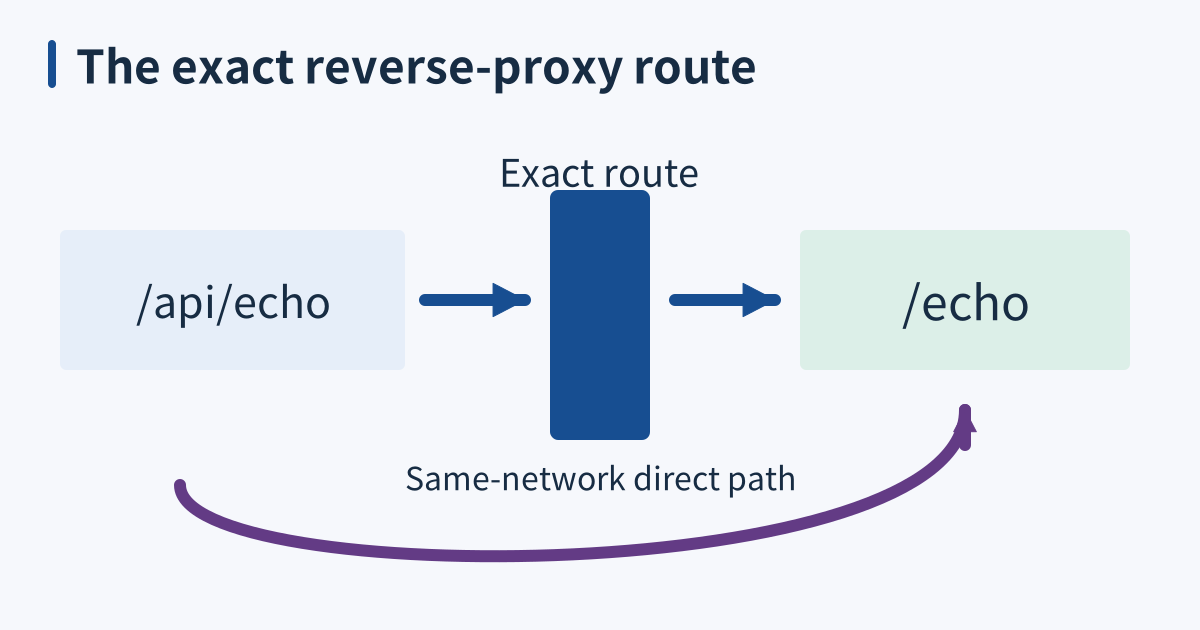
The exact /api/echo route crosses a proxy to /echo, while a separate same-network path bypasses the proxy.

A reverse proxy enforces an entry policy only on traffic that traverses it

A reverse proxy accepts client requests and makes a separate upstream exchange with an application. It can centralize routing, transport, headers, and admission policy when those behaviors are configured. It does not automatically hide every backend interface, authenticate every caller, or terminate TLS. The useful boundary is the actual traffic path and policy applied there, not simply the proxy’s position in a diagram. ...

November 5, 2026 · 7 min · XB Field Notes
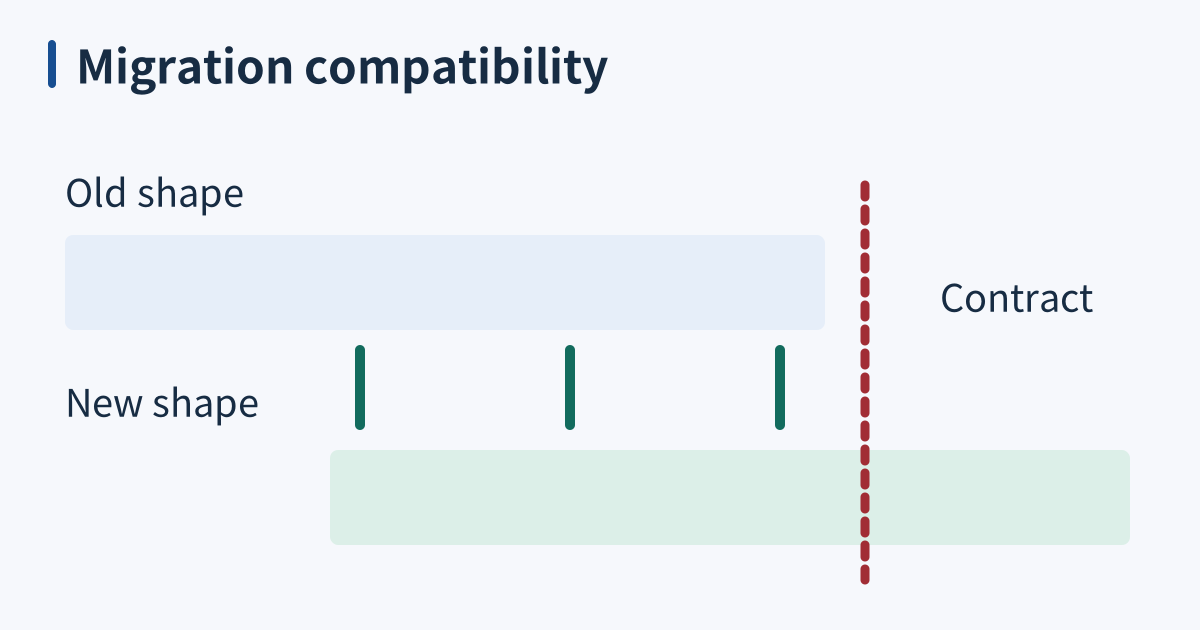
Old and new schema representations overlap through migration until the contract boundary retires the old shape.

Zero-downtime migrations change schema while old code runs

A zero-downtime migration is a compatibility and availability goal, not a guarantee attached to small statements. Old and new application versions may overlap while data is changing. Plan the schema, writer behavior, backfill, reader cutover, and recovery together. Dropping information is not automatically reversible, even when the preceding steps were additive. ...

November 3, 2026 · 5 min · XB Field Notes
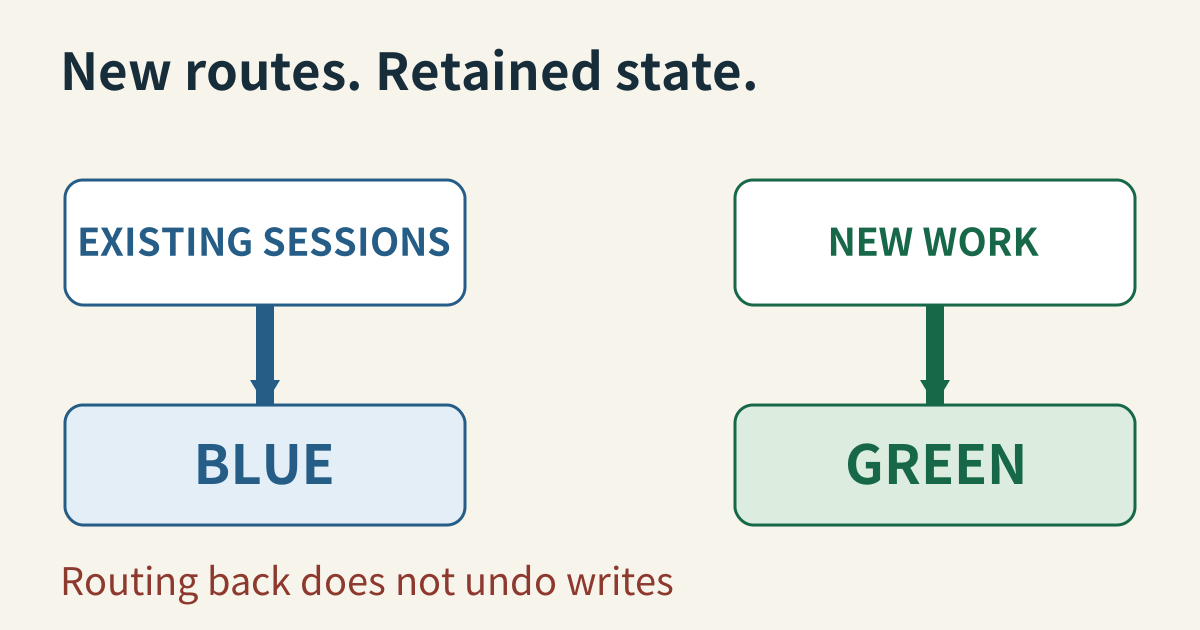
New work can enter green while existing sessions remain on blue. Routing back does not undo accepted writes.

Blue-green deployment keeps two environments ready

Blue-green deployment prepares a new application version in a separate environment while the previous version serves traffic. After readiness checks, routing directs new work toward the new environment. Keeping the old environment available can shorten rollback, because recovery need not wait for another build. The pattern does not make every dependency duplicated, every switch instantaneous, or every data change reversible. ...

November 2, 2026 · 5 min · XB Field Notes
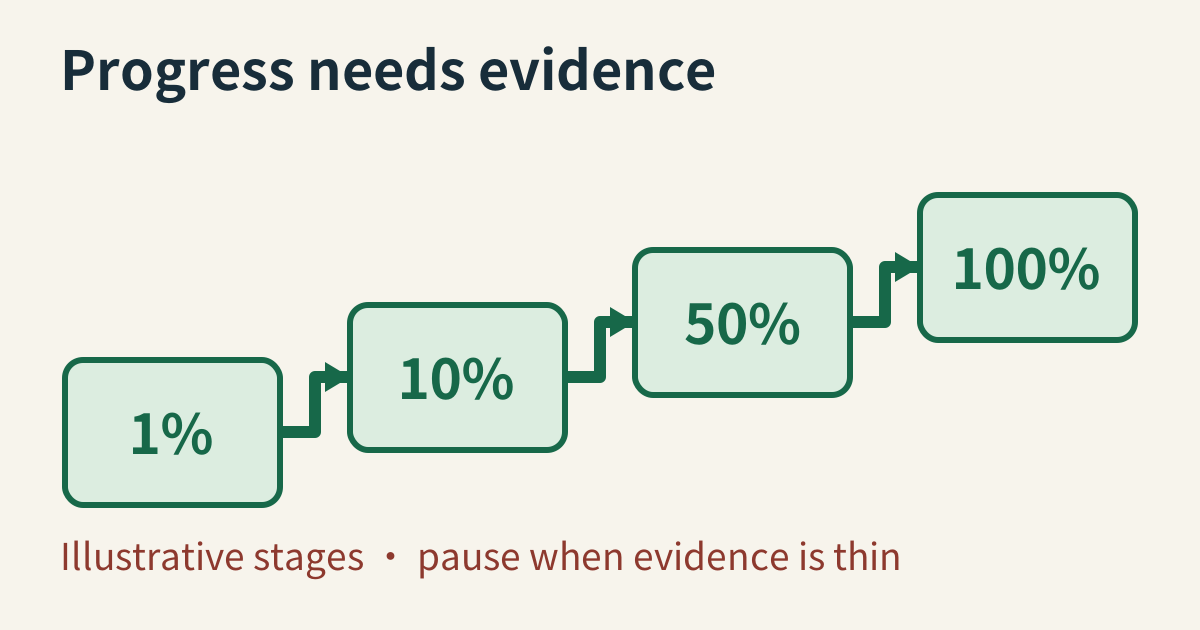
Illustrative stages rise through 1, 10, 50 and 100 percent. Evidence is required to continue; insufficient evidence pauses progression.

Progressive rollouts need evidence and a recovery path

A progressive rollout increases exposure while checking whether the new version behaves acceptably. It can discover a regression before every request uses that version. It does not make a change reversible by itself, guarantee that only the selected percentage is affected, or require a feature flag. Traffic routing, instance replacement, and feature exposure are different controls that can participate in the same release plan. ...

September 18, 2026 · 5 min · XB Field Notes