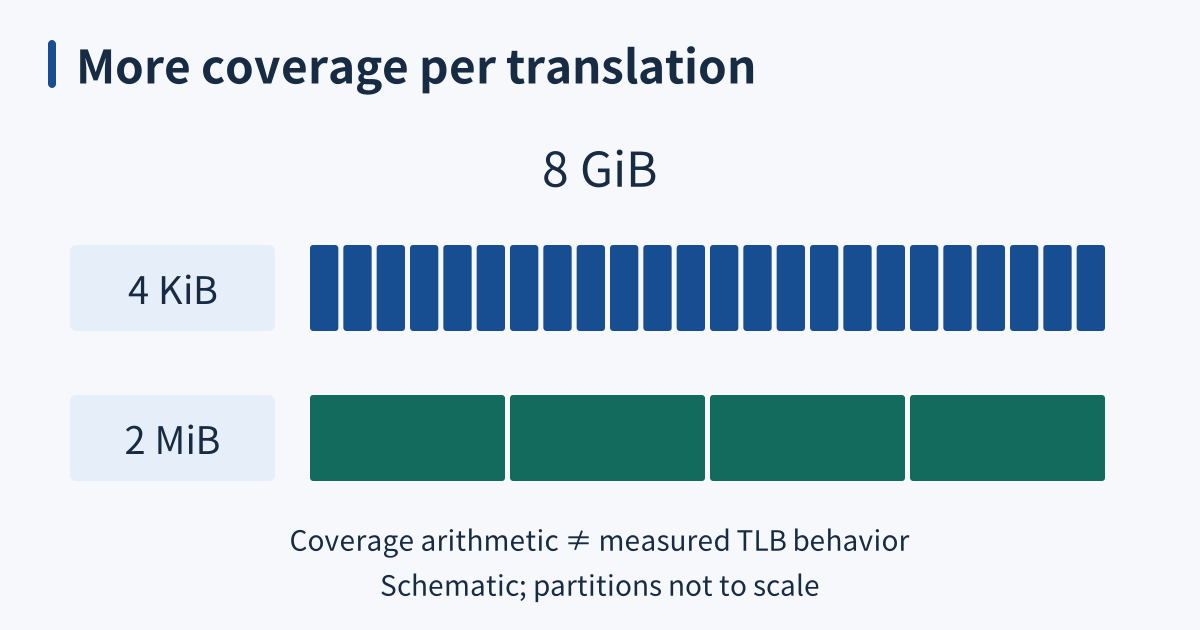
Schematic equal 8 GiB ranges illustrate fewer mappings at 2 MiB than 4 KiB. Partition counts are not to scale and do not measure TLB misses.

Huge pages trade allocation flexibility for translation reach

Huge pages can increase the amount of memory covered by each cached address translation. They can reduce translation overhead for suitable workloads, but the result depends on access patterns and hardware. A large allocation alone does not prove frequent TLB misses, and fewer pages needed to describe a working set does not mean those translations all fit in the processor’s TLB. ...
December 21, 2027 · 5 min · XB Field Notes
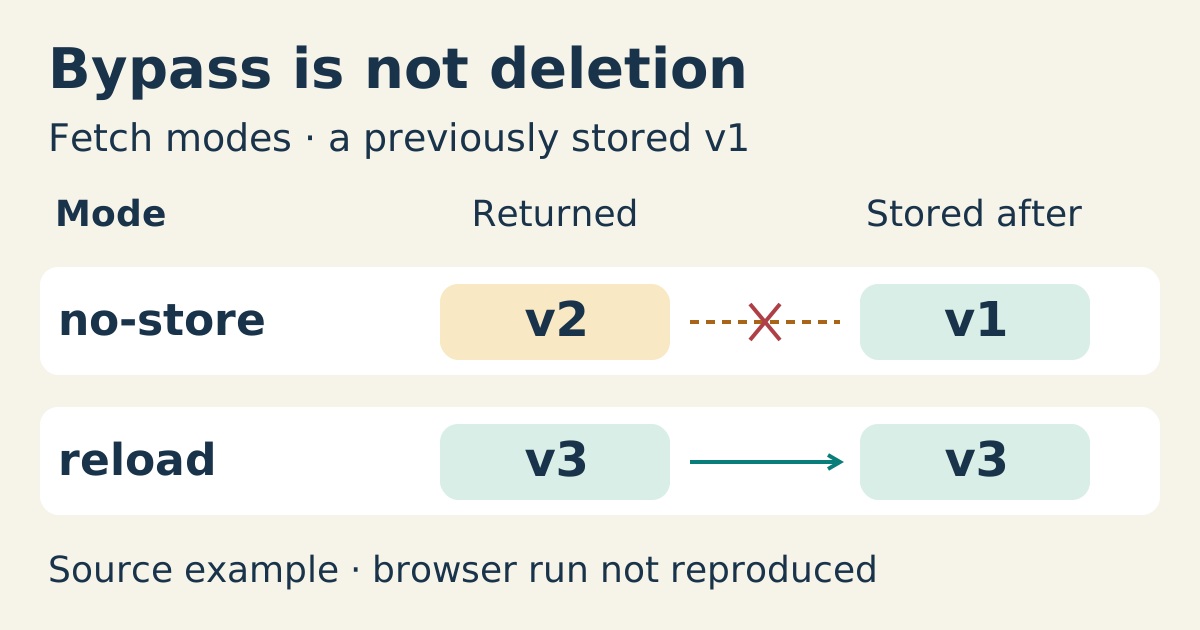
Fetch no-store obtains version two while the stored version one remains; reload obtains and stores version three. Response Cache-Control policy and Fetch cache mode are distinct.

Cache-Control is a contract between cache and origin

A cache policy needs a behavioral test, not just a header-presence check. Two responses can both contain max-age yet behave differently because one also requires validation or prohibits storage. The request matters too: a browser can bypass an otherwise reusable copy without changing the origin’s response policy or deleting an older cached entry. ...

December 20, 2027 · 5 min · XB Field Notes
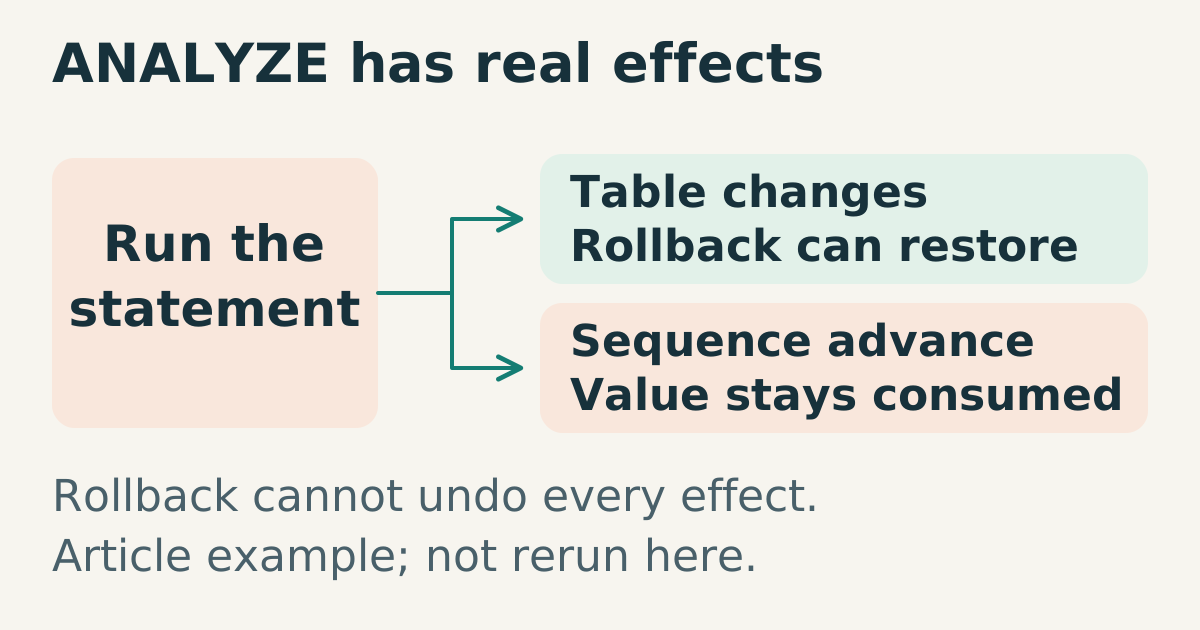
EXPLAIN ANALYZE performs real work. After savepoint rollback, table changes are restored, but a consumed sequence value remains consumed. The article example is illustrated, not rerun.

EXPLAIN ANALYZE runs the query to show real cost

EXPLAIN describes a PostgreSQL execution plan; EXPLAIN ANALYZE also executes the statement and measures its work. The useful comparison is between estimated rows and observed rows at the same node. Neither number is a verdict by itself: an estimate is a model, while a measurement describes one execution under particular data, cache, concurrency, and instrumentation conditions. ...

December 16, 2027 · 5 min · XB Field Notes
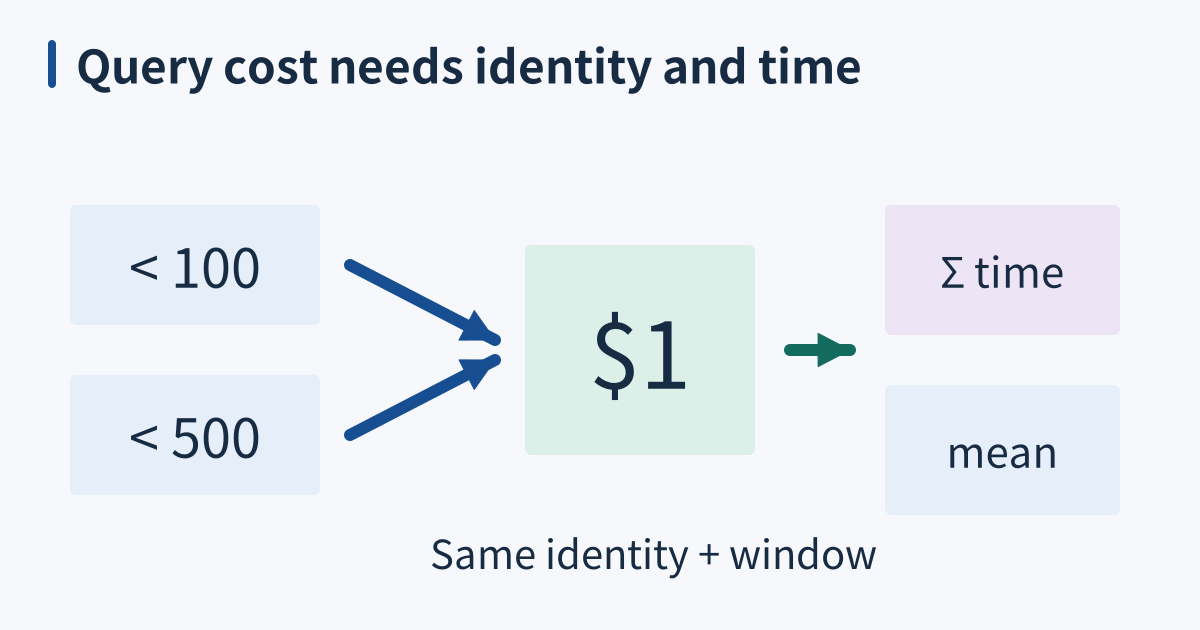
Two literal predicates converge into one parameterized shape, which feeds separate total-time and mean-time summaries within the same identity and collection window.

pg_stat_statements ranks query work within a collection window

pg_stat_statements groups statement executions and accumulates their costs. It can identify a frequently executed short query whose total time is substantial, as well as an individually slow query. These are different questions. Neither ranking alone proves which change will improve application latency, and execution time is not the same as CPU consumption, storage latency, or end-to-end request duration. ...

December 12, 2027 · 6 min · XB Field Notes
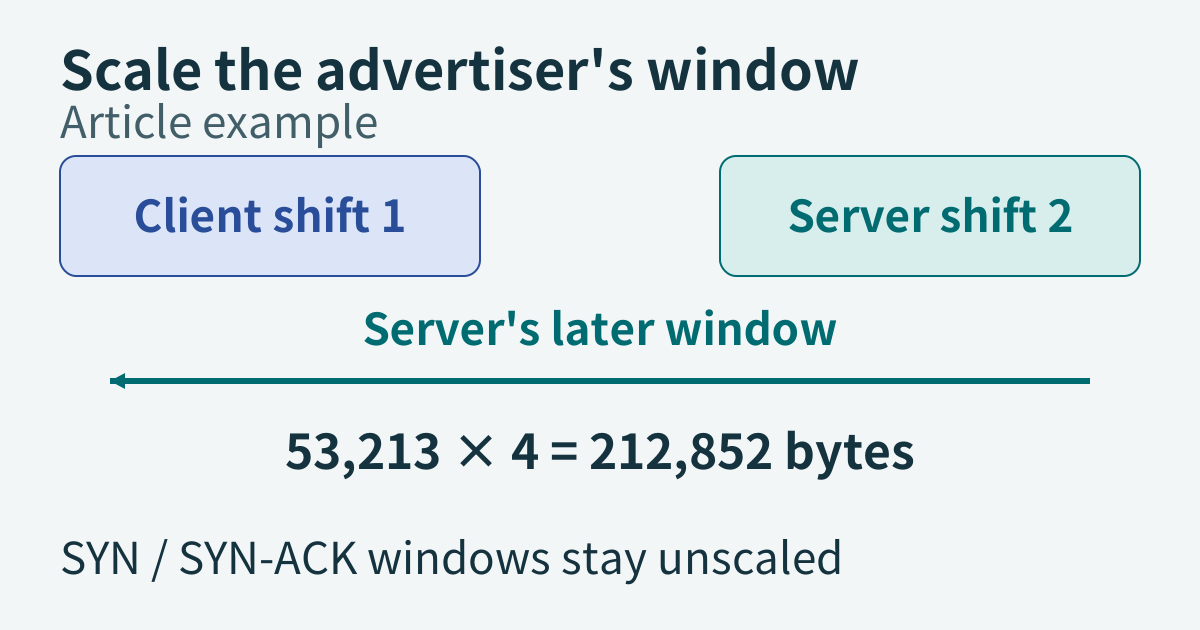
Client offers shift one and server offers shift two. After setup, the server’s advertised field 53,213 is multiplied by four for a 212,852-byte receive window. SYN and SYN-ACK windows remain unscaled.

TCP window scaling enlarges receive-window encoding in each direction

TCP’s header has a 16-bit receive-window field. Window scaling lets established connections interpret that field using a shift negotiated during setup, allowing a receiver to advertise more than 65535 bytes of space. The two directions can use different shifts. The extension enlarges the encoding of receive-window information; it does not directly enlarge every buffer or guarantee that a sender will keep that much data in flight. ...

December 2, 2027 · 6 min · XB Field Notes
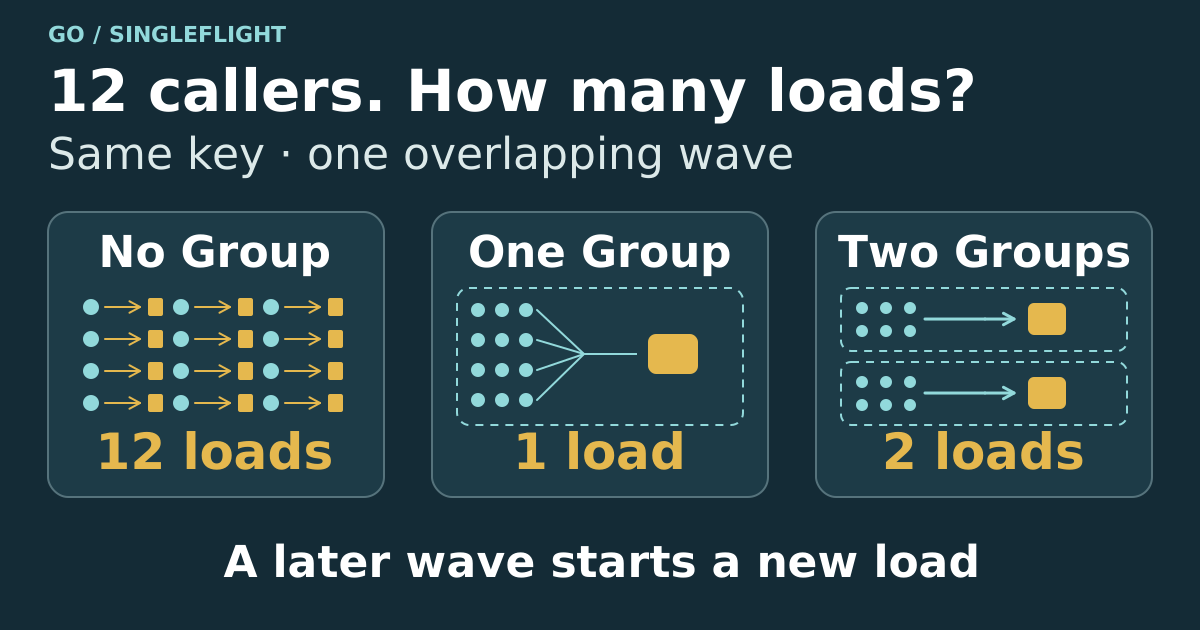
For twelve overlapping calls using the same key, the article’s controlled fixture makes twelve loader calls without coalescing, one within one shared Group, and two across two independent Groups. When a wave finishes, the next wave loads again.

A cache stampede hits when expiry syncs

A cache stampede occurs when concurrent misses cause redundant work against the same dependency. Synchronized expiration is one trigger, but eviction, a cold deployment, or cache unavailability can create the same burst. A single popular key can be enough. The useful question is how many rebuilds reach the source while one result is still being computed. ...

November 22, 2027 · 5 min · XB Field Notes
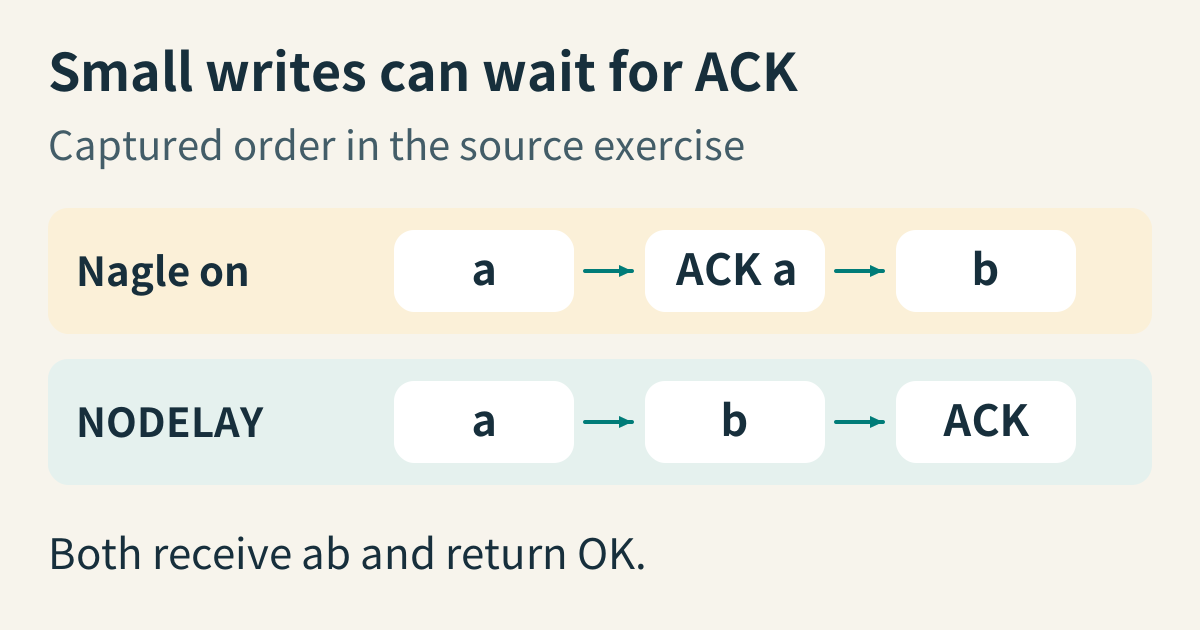
Historical source packet-order lanes show Nagle on: a, ACK covering a, b; TCP_NODELAY: a, b, first data ACK. Both source trials receive ab and return OK.

Nagle and delayed ACK can stall the second part of a small request

Nagle’s algorithm reduces small TCP segments by holding additional short data while earlier data remains unacknowledged, unless enough data accumulates for a full segment. Delayed acknowledgment is a separate receiver behavior that can postpone an ACK briefly. The interaction matters when an application sends a request in multiple small writes and the peer needs the later bytes before producing a response. ...

October 31, 2027 · 6 min · XB Field Notes
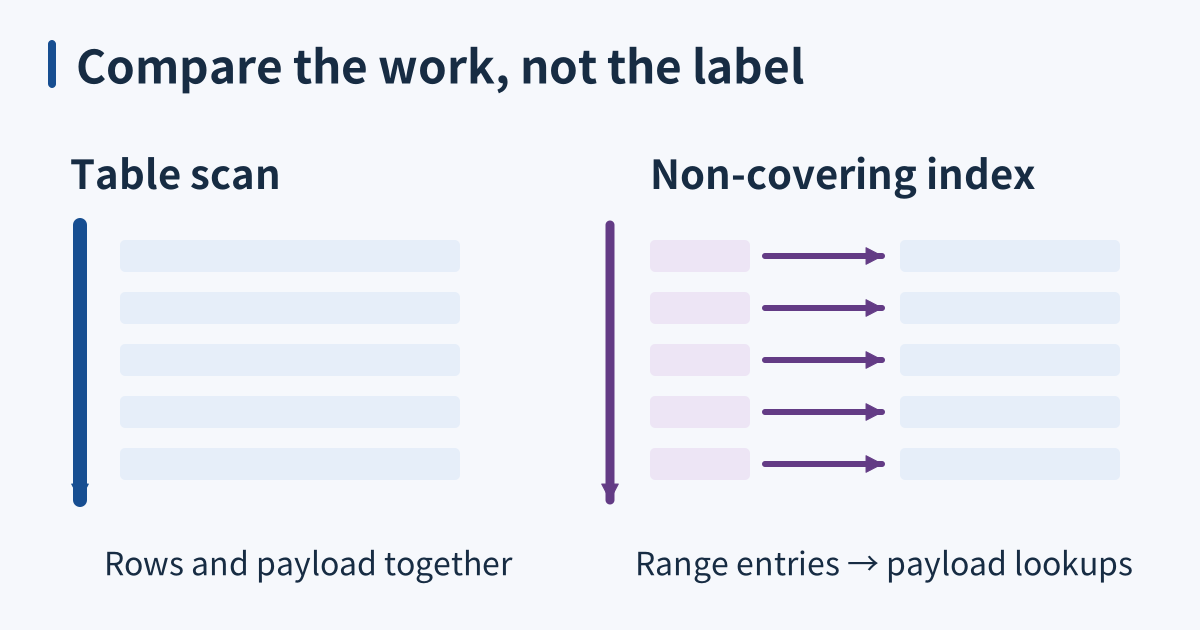
A schematic contrasts direct table-row traversal with adjacent non-covering index entries that each lead to table payload lookups. The five drawn rows are schematic, not the fixture population or a timing result.

Full table scans can win on small tables

An index trades storage and write work for a possible reduction in read work. A full scan can win when the table is small or a predicate selects much of it, but neither row count nor selectivity decides alone. Projection, ordering, caching, row width, and available access paths change the comparison. Start with the query’s actual result contract. ...

September 16, 2027 · 5 min · XB Field Notes