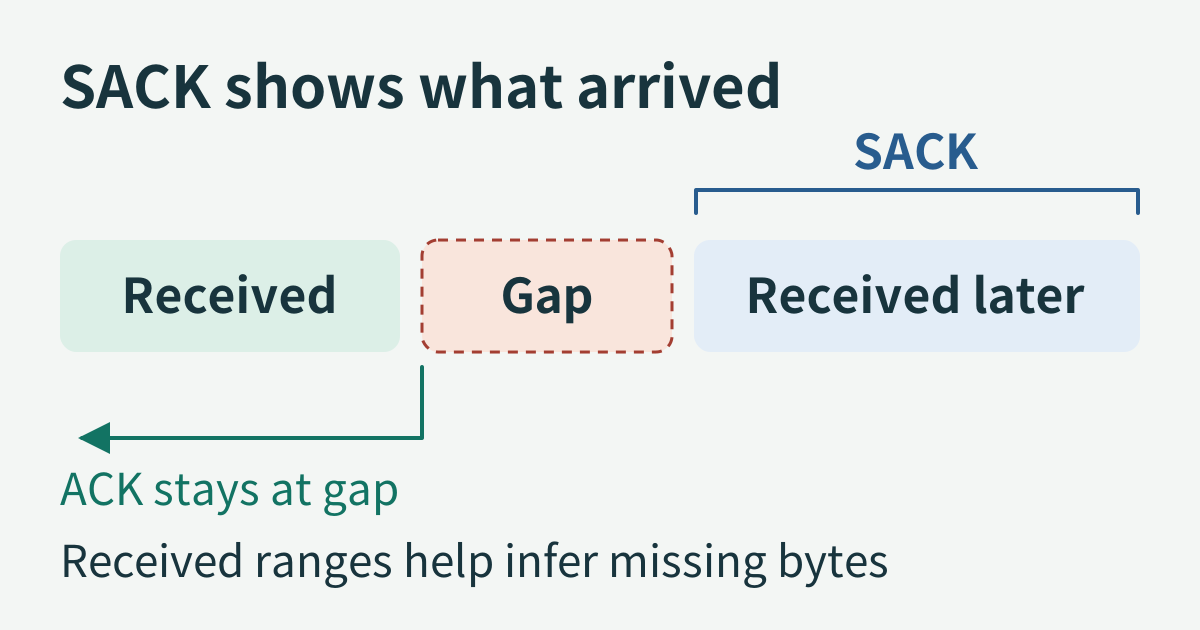
A received byte range is followed by a gap and a later received range. Cumulative ACK stays at the gap; SACK reports the later received range.

SACK reports received ranges beyond a gap so recovery can target missing data

A TCP cumulative acknowledgment identifies the next byte expected in order. If a segment is missing but later bytes arrive, that acknowledgment cannot advance across the hole. Selective Acknowledgment, or SACK, adds information about received byte ranges beyond the cumulative boundary. It helps a sender distinguish missing data from data already queued at the receiver, improving the information available to its recovery algorithm. ...
September 11, 2027 · 6 min · XB Field Notes
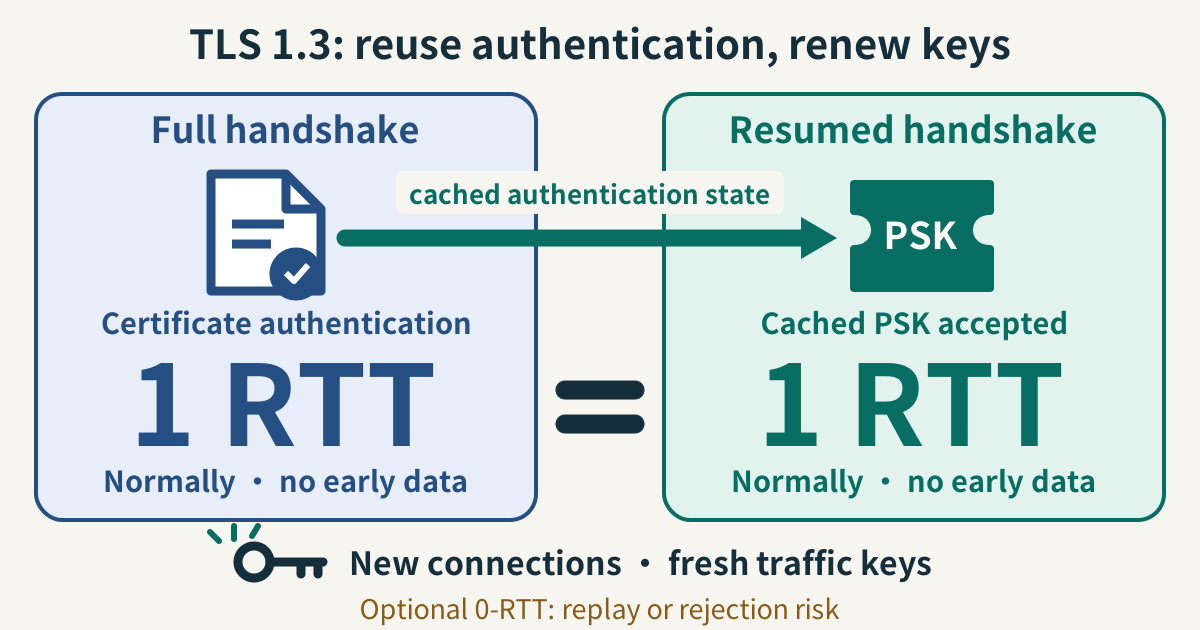
TLS 1.3 full and resumed handshake cards both say normally one TLS RTT without early data. The full handshake uses certificate authentication; resumption uses accepted PSK authentication and renews keys. Optional 0-RTT data can be replayed.

TLS 1.3 resumption reuses authentication state

Saving a round trip depends on the protocol and early-data mode. In TLS 1.3, an ordinary full handshake and a resumed handshake without early data normally both take one TLS round trip. Resumption can still reduce certificate transmission and authentication work. Enabling tickets does not make every HTTPS request start one RTT sooner. ...

August 8, 2027 · 5 min · XB Field Notes
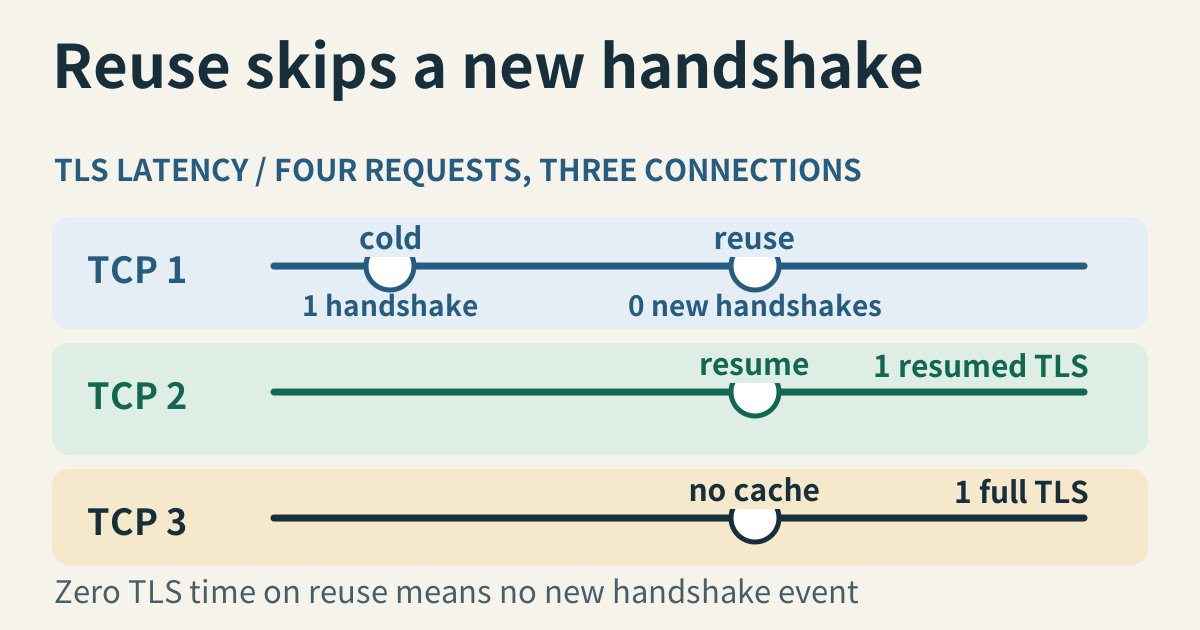
Three TCP lanes hold four requests. Cold and reuse share connection 1, with one and zero new handshakes. Resume uses connection 2 with one resumed handshake; no cache uses connection 3 with one full handshake.

TLS handshakes add latency you can shrink

HTTPS latency combines several stages, and a warm request may avoid some without making cryptography faster. DNS, connection acquisition, TCP setup, TLS authentication, server work, and response transfer have different clocks. First determine which stages actually ran. Request duration alone cannot distinguish an existing connection from a new connection that resumed a TLS session. ...

June 28, 2027 · 6 min · XB Field Notes
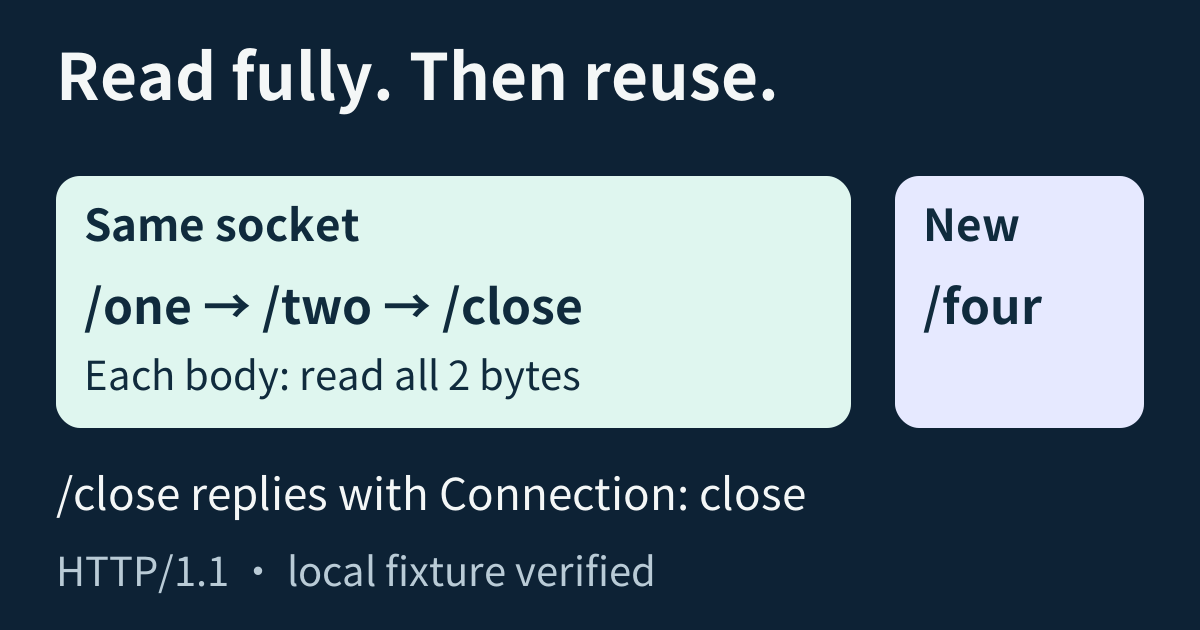
In the source HTTP/1.1 exercise, /one, /two and /close share one socket; /four uses a new socket. All four responses are 200 with Content-Length: 2 and body ok, which is fully read before the next request. Connection: close on /close forces the later reconnect. This is an observed local sequential fixture result, not HTTP/2 or end-to-end proxy evidence.

HTTP keep-alive reuses one TCP connection

HTTP persistence lets several request and response exchanges use one connection. That can avoid repeated TCP setup and, for HTTPS, repeated TLS negotiation. The benefit depends on latency, request size, and whether another usable connection already exists. Persistence does not make application work disappear, nor does it promise that a socket will remain open indefinitely. ...

May 28, 2027 · 4 min · XB Field Notes
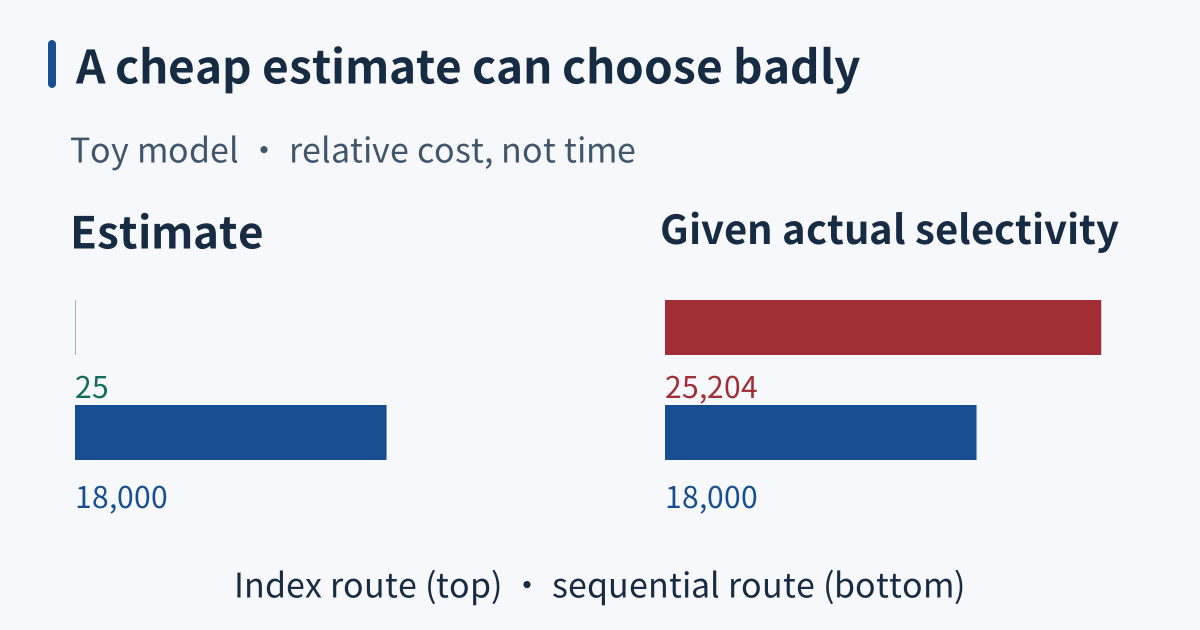
Equal-scale cost bars compare index 25 versus sequential 18,000 under the estimate, then index 25,204 versus sequential 18,000 under supplied actual selectivity. Toy formula values, not measured times.

EXPLAIN plans reveal the route of a query

EXPLAIN shows the execution plan selected for a statement. It helps locate expensive work and mistaken estimates, but a slow request can also involve locks, network transfer, or application behavior outside the plan. Use plan evidence to test a specific hypothesis rather than assuming that every performance problem requires a different scan or another index. ...

May 21, 2027 · 5 min · XB Field Notes
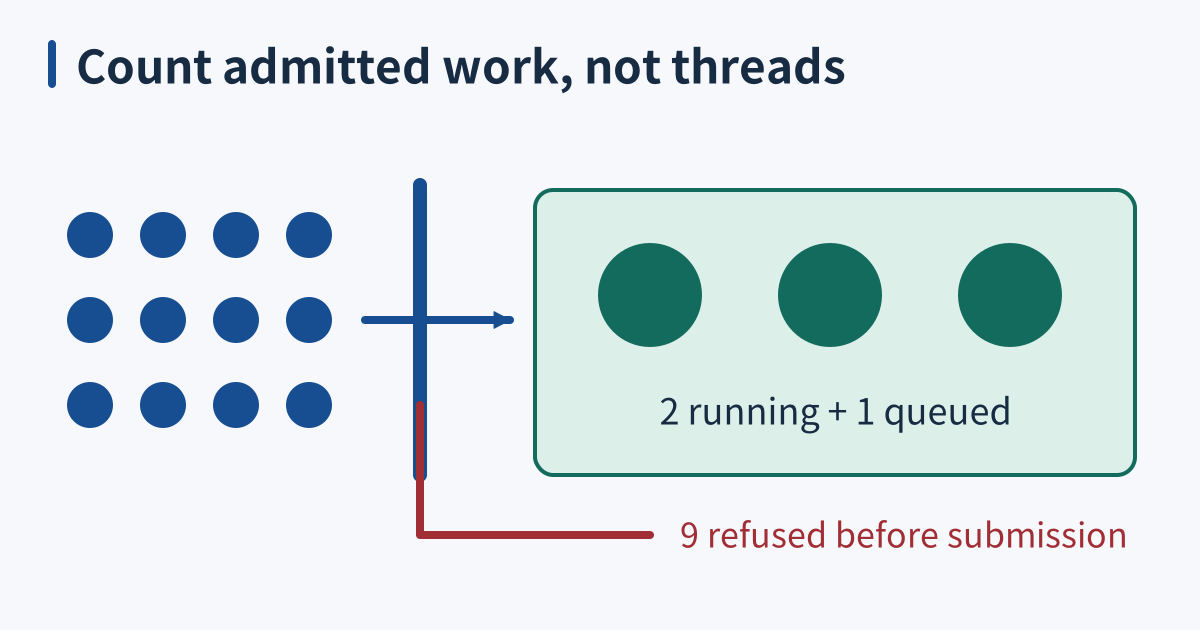
Twelve incoming tasks meet an admission gate. Three are accepted, comprising two running and one queued; nine are refused before executor submission.

Load shedding protects the system

Load shedding deliberately refuses some work when accepting everything would threaten useful service. The aim is to preserve capacity for work that can still complete, not to promise that every accepted request will be fast or important. Rejection is itself work, so the admission point and its cost matter as much as the threshold. ...

May 16, 2027 · 6 min · XB Field Notes
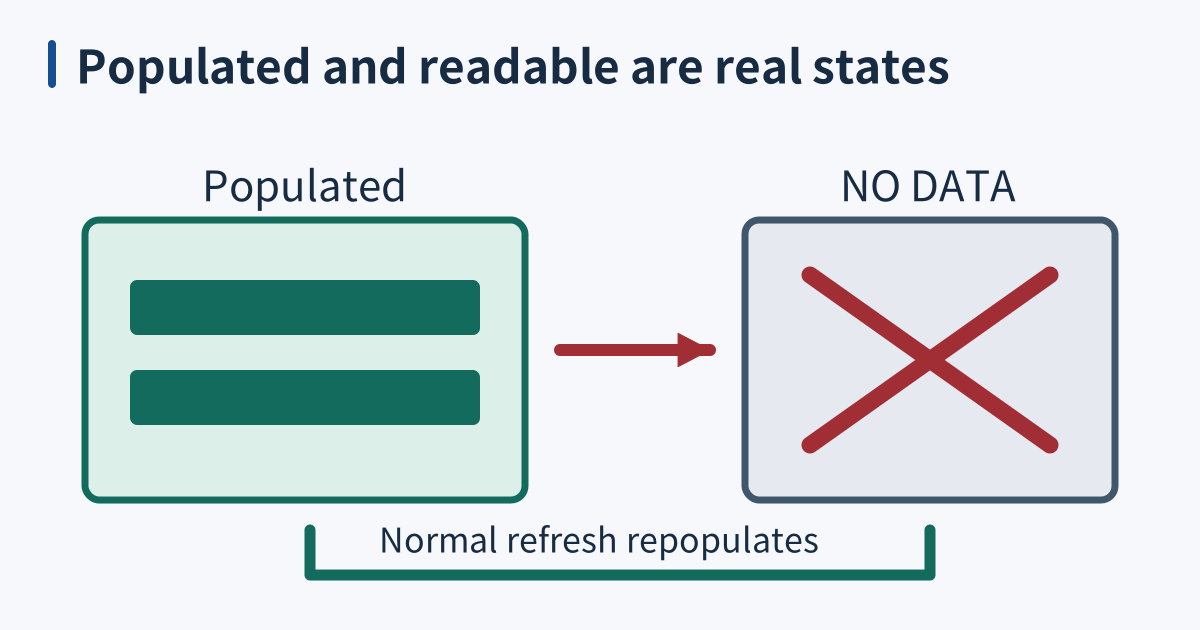
A populated view holds two solid row bars; WITH NO DATA points to a crossed empty block, and a separate normal-refresh return path repopulates it.

A materialized view stores a query's result for reuse

A materialized view stores the result of a defining query so later reads can access those stored rows. It moves computation from every read into refresh operations, which can benefit repeated reporting queries. The tradeoff is an explicit freshness boundary and another relation to maintain; neither instant reads nor automatic synchronization with the source tables is guaranteed. ...

April 26, 2027 · 5 min · XB Field Notes
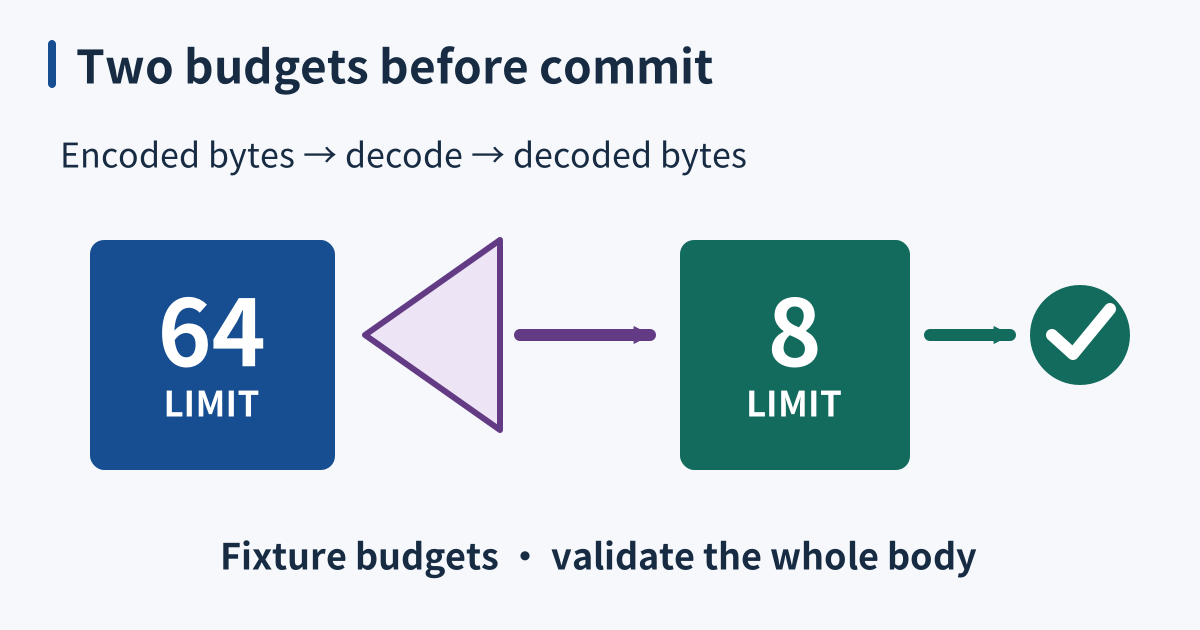
Encoded input is limited before decompression and decoded output afterward. Complete valid input alone reaches the application commit point.

Request body limits set a boundary

A request-body limit bounds accepted input, not merely the number written in Content-Length. Enforce it while consuming the body, before committing application effects. Compressed input needs separate limits for encoded and decoded bytes. A 413 response is useful only if the expensive allocation or irreversible write has not already happened. ...

April 18, 2027 · 7 min · XB Field Notes