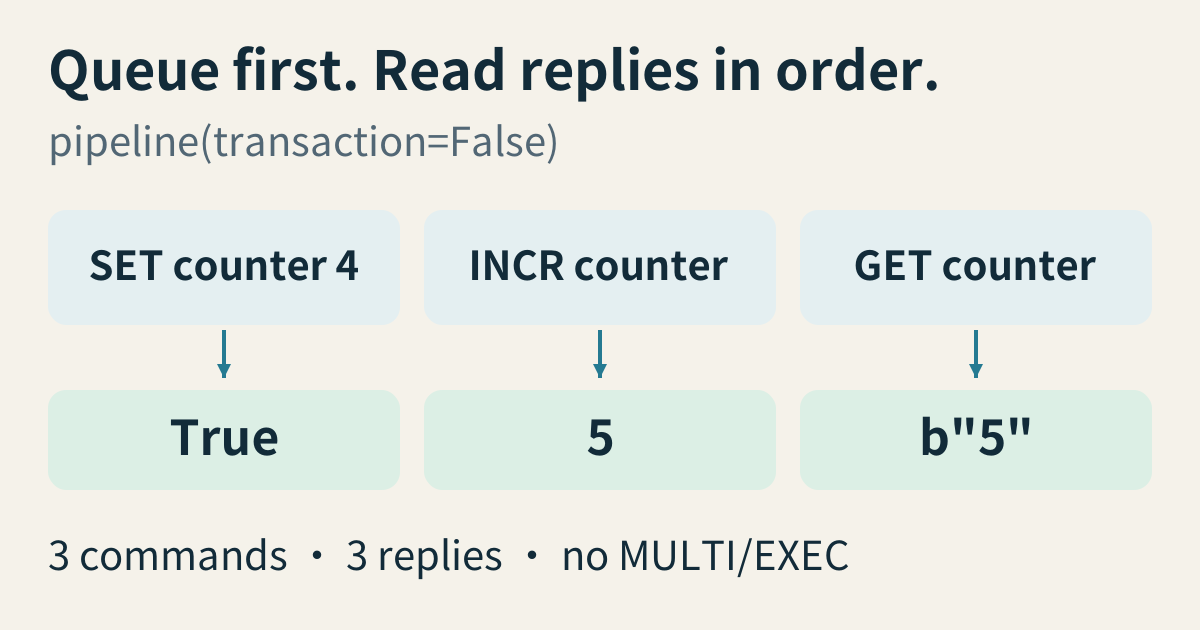
SET counter 4, INCR and GET have known arguments and yield ordered replies True, 5 and bytes 5 in the source exercise. A plain pipeline adds no MULTI or EXEC and an error does not cancel later submitted commands.

Redis pipelining reduces per-command waits

Pipelining lets a client send several Redis commands without waiting for each reply before sending the next. It reduces request-response waiting and can amortize socket I/O overhead. Redis still executes the commands and produces their replies; batching is neither a promise of parallel execution nor a transaction boundary. ...
January 20, 2027 · 6 min · XB Field Notes
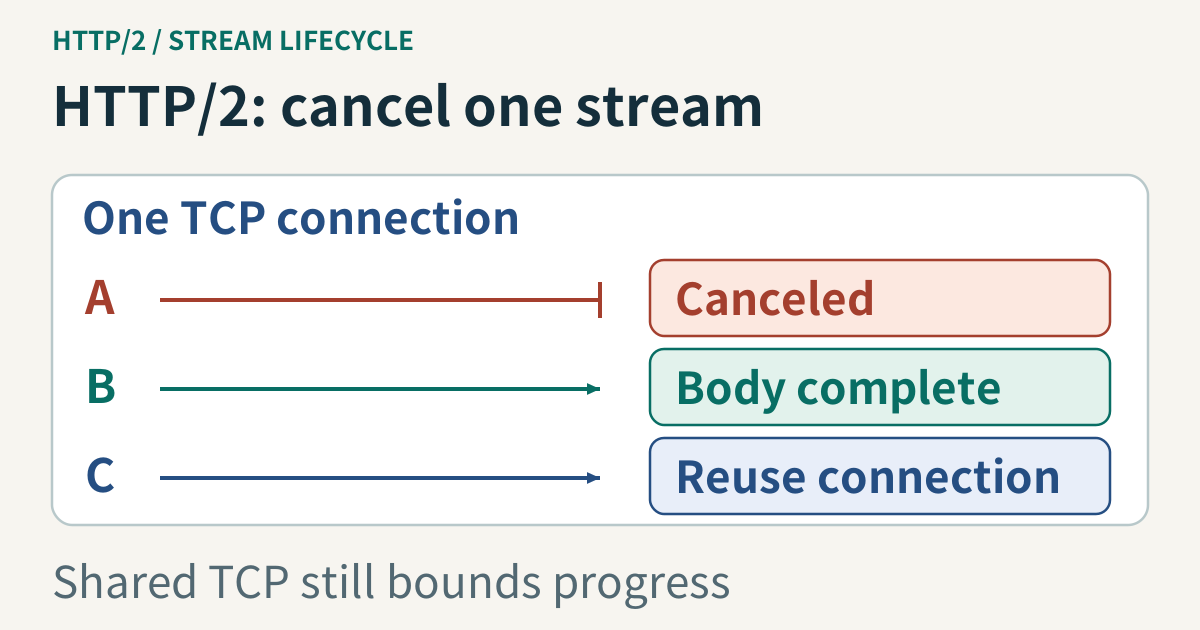
One TCP connection contains three HTTP/2 stream lanes. A is canceled, sibling B completes its body, and a later C reuses the connection. Shared TCP constraints still bound progress.

HTTP/2 multiplexing fixes a queue

HTTP/2 removes HTTP response-order constraints by multiplexing streams, but those streams still share a TCP connection and its failure modes. One useful boundary is cancellation: terminating a request need not destroy its sibling requests or the reusable connection. That is a scoped capability, not a guarantee that streams never affect each other. ...

January 16, 2027 · 6 min · XB Field Notes
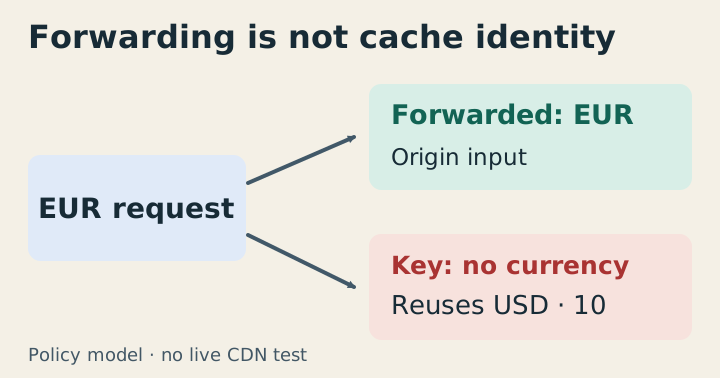
An EUR request branches into a forwarded EUR origin input and a cache key that omits currency and reuses stored USD price 10.

CDNs move the cache closer

A CDN can shorten the path between a reader and a reusable response, while reducing requests to the origin. Those benefits depend on routing, cache contents, and policy. A domain pointing at a CDN does not prove that an object is cached, that the geographically nearest machine serves it, or that every request avoids the origin. ...

January 4, 2027 · 5 min · XB Field Notes
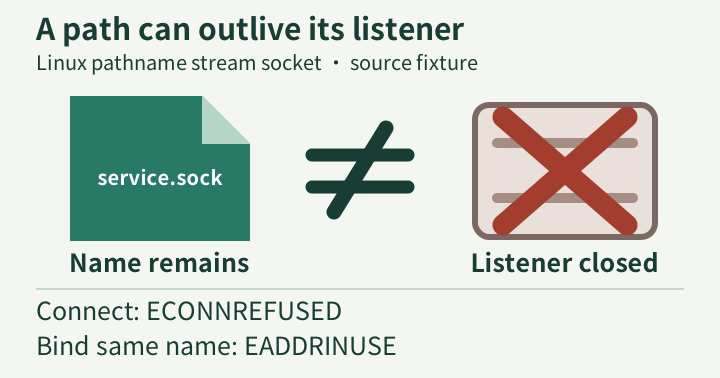
A retained Linux pathname socket entry is separated from a crossed-out, closed listener by a large not-equal sign. In the source stream-socket fixture, connecting returns ECONNREFUSED; binding the same name returns EADDRINUSE.

Unix sockets provide local IPC with explicit naming and access rules

Unix domain sockets provide local interprocess communication without IP addresses, TCP ports, or an external network route. They still use kernel socket facilities, buffers, scheduling, and an application protocol. A pathname socket exposes a filesystem name, but Unix sockets can also be unnamed, and Linux supports abstract names. These naming forms have different access rules, so “a Unix socket is just a protected file” is incomplete. ...

November 28, 2026 · 5 min · XB Field Notes
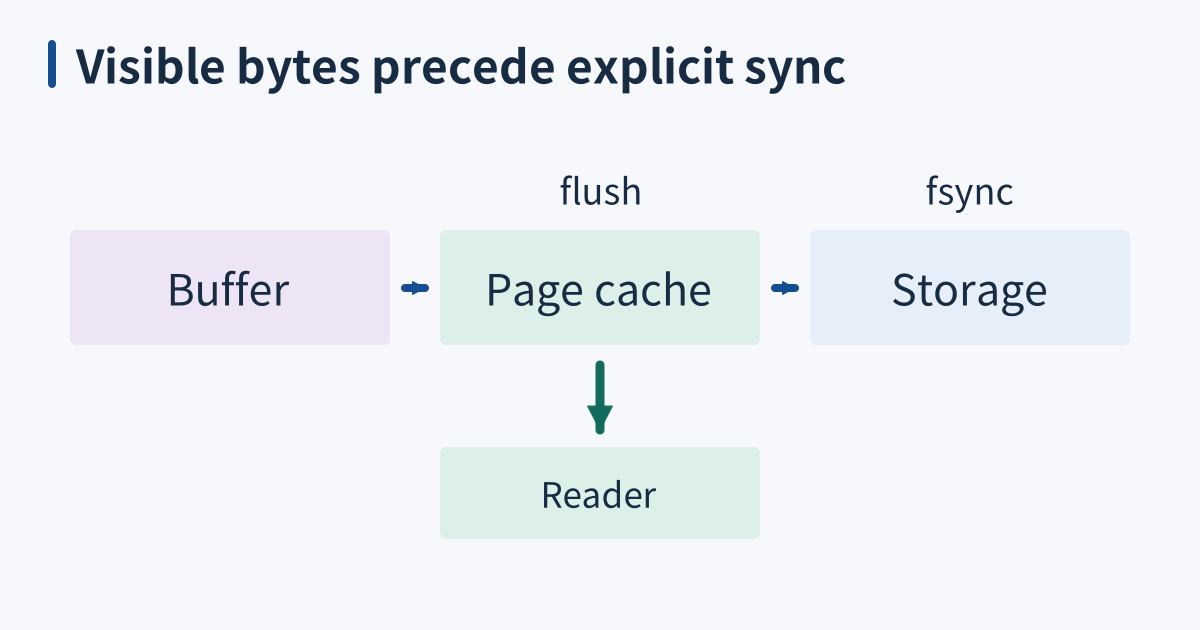
Data moves from a language buffer to page cache and storage. A separate reader branches from page cache before the explicit fsync boundary; visibility does not prove durable completion.

Writeback separates buffered visibility from storage completion

Buffered file I/O can pass through a language buffer, the kernel page cache, and the storage stack at different times. Modified cache pages need writeback so their data reaches the backing filesystem and device. This separation can combine work and improve throughput, but it means that another reader seeing new bytes is not, by itself, evidence that a crash-safe storage boundary has completed. ...

November 26, 2026 · 5 min · XB Field Notes
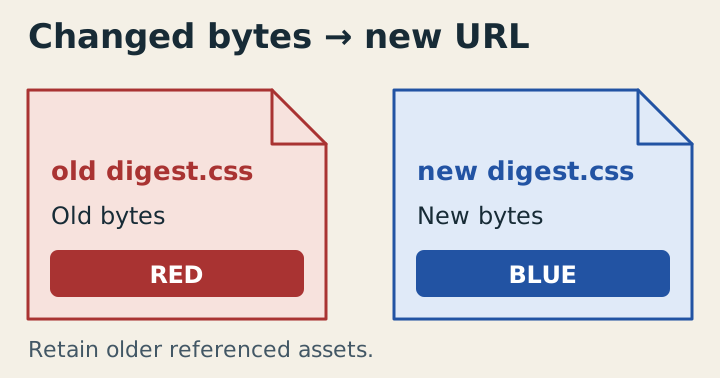
Old red bytes keep their old digest filename while changed blue bytes use a new digest filename.

Immutable assets and fingerprints

A fingerprinted asset puts a digest of its bytes into its URL. Changing a stylesheet produces a different address, so a page can request the new representation without depending on every existing cache expiring simultaneously. The useful guarantee comes from the publishing process: once an address is released, its contents must remain consistent with that digest. ...

November 25, 2026 · 5 min · XB Field Notes
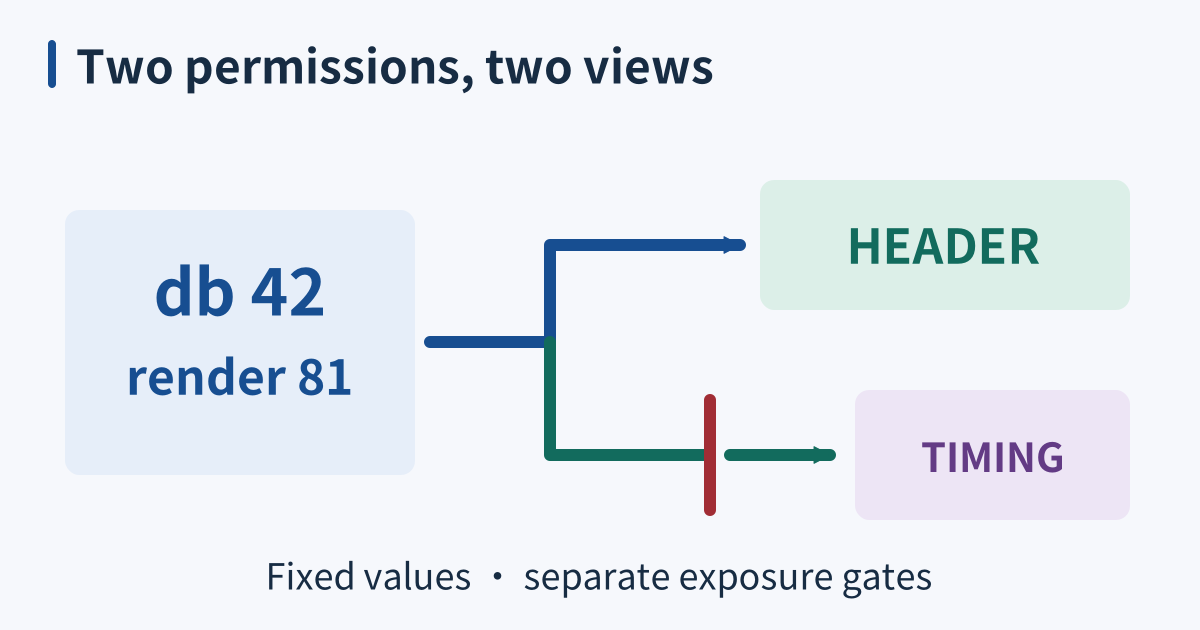
Both synthetic responses expose their Server-Timing header. Only the timing-authorized response exposes the named browser timing entries in the source’s historical observation.

Server-Timing exposes named measurements to the browser

The Server-Timing response header lets a server attach named measurements to a response. Browser developer tools and performance APIs can then associate those measurements with the resource request. It is useful when the network waterfall shows a long wait but cannot explain whether backend work involved a database call, rendering, or another measured operation. The header supplies server-selected observations, not an independent browser measurement of those operations. ...

November 7, 2026 · 5 min · XB Field Notes
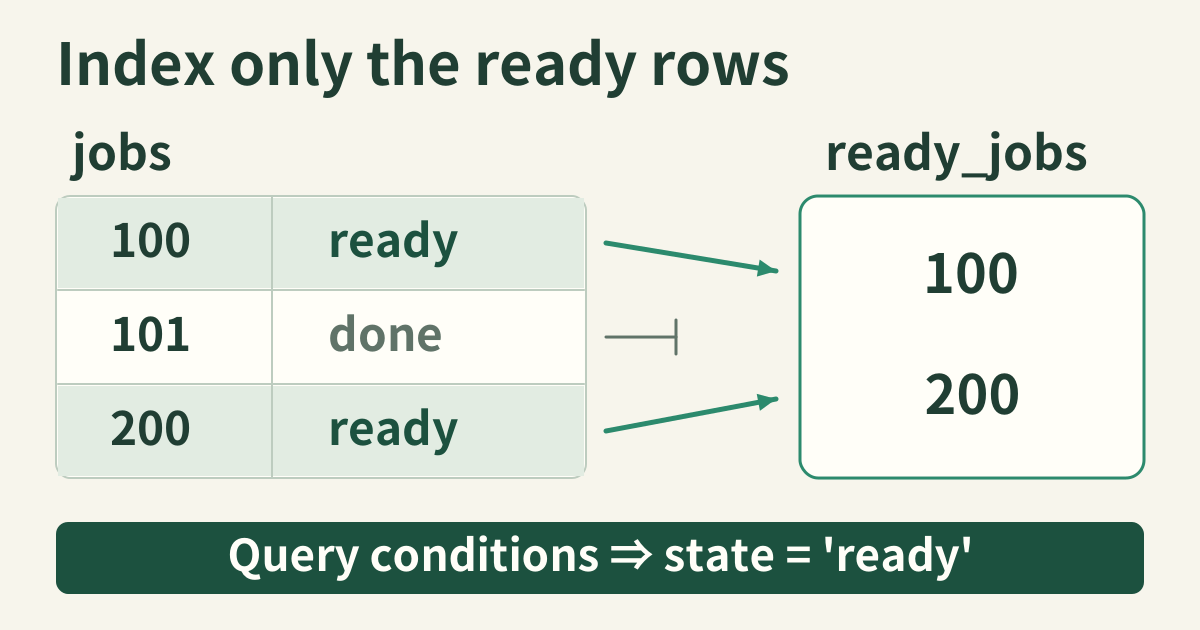
Rows 100 and 200 have state ready and enter ready_jobs; done row 101 is excluded. Query conditions must imply state equals ready.

Prepared plans must prove a partial-index predicate

A queue with a hundred ready jobs and thousands of completed jobs can benefit from an index containing only ready work. PostgreSQL calls this a partial index: its predicate determines which table rows have entries. The benefit depends on the actual query population and write pattern, not simply on making every index smaller. ...

October 17, 2026 · 4 min · XB Field Notes