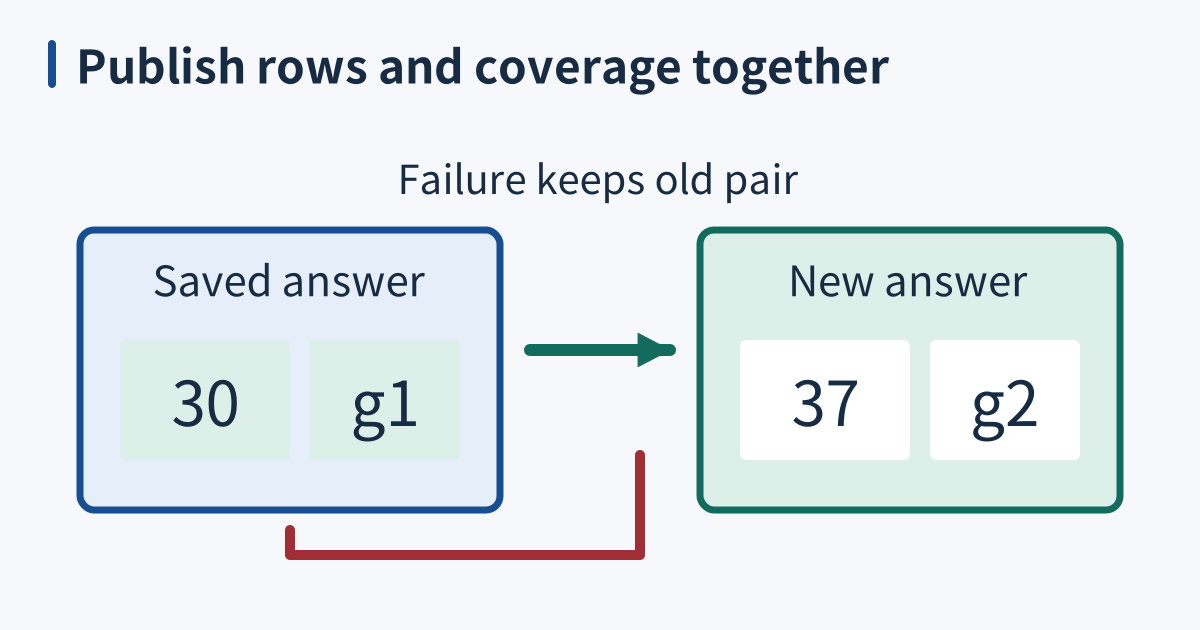
An old saved-answer pair of east thirty and generation one connects to a new pair of east thirty-seven and generation two; a failed-refresh return path loops to the old pair.

Materialized answers need freshness and cost budgets

A materialized answer saves repeated computation by storing a query result. The decision is economic and semantic: how much work will reuse avoid, and which source state may readers accept? This article focuses on that budget. PostgreSQL’s native materialized-view lifecycle has additional prerequisites; a stored answer should never acquire a freshness promise merely because its reads are fast. ...
October 16, 2026 · 5 min · XB Field Notes
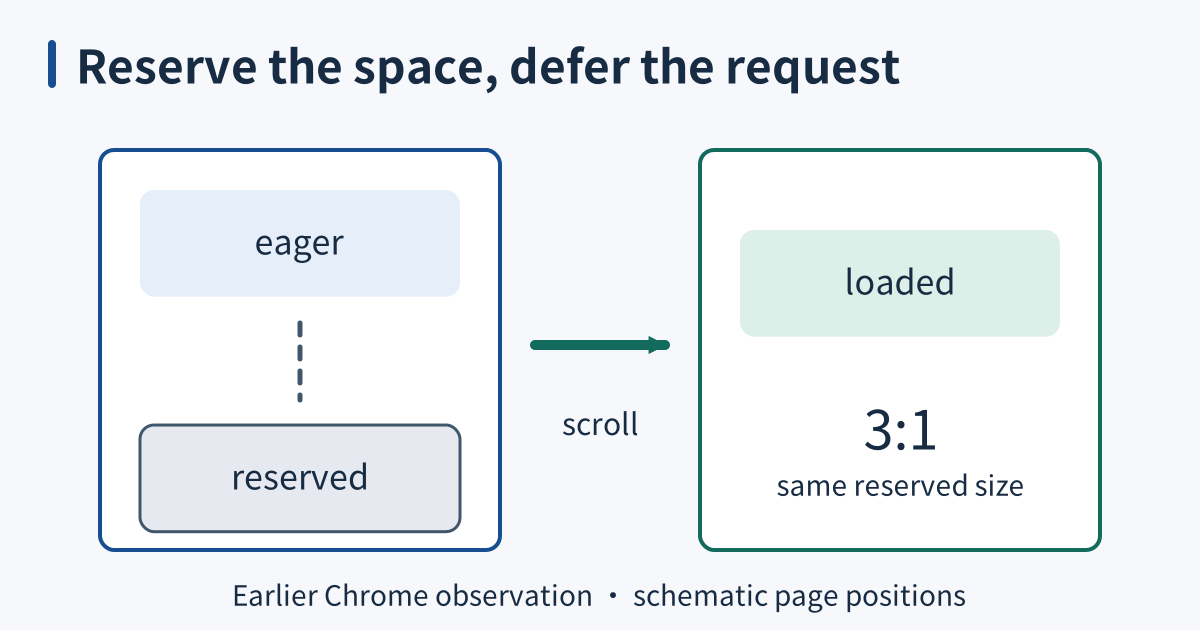
Two schematic page positions show an eager image, a distant reserved placeholder and the lazy image after scrolling. The reserved image shape retains its 3:1 ratio.

Lazy loading defers what is not needed yet

Lazy loading postpones work until it becomes useful. For an HTML image, loading="lazy" lets the browser defer its request until the image is near the viewport according to the browser’s policy. This can reduce initial transfers on long articles, but the attribute is a scheduling input, not a guarantee that every unseen image remains undownloaded. ...

October 14, 2026 · 5 min · XB Field Notes
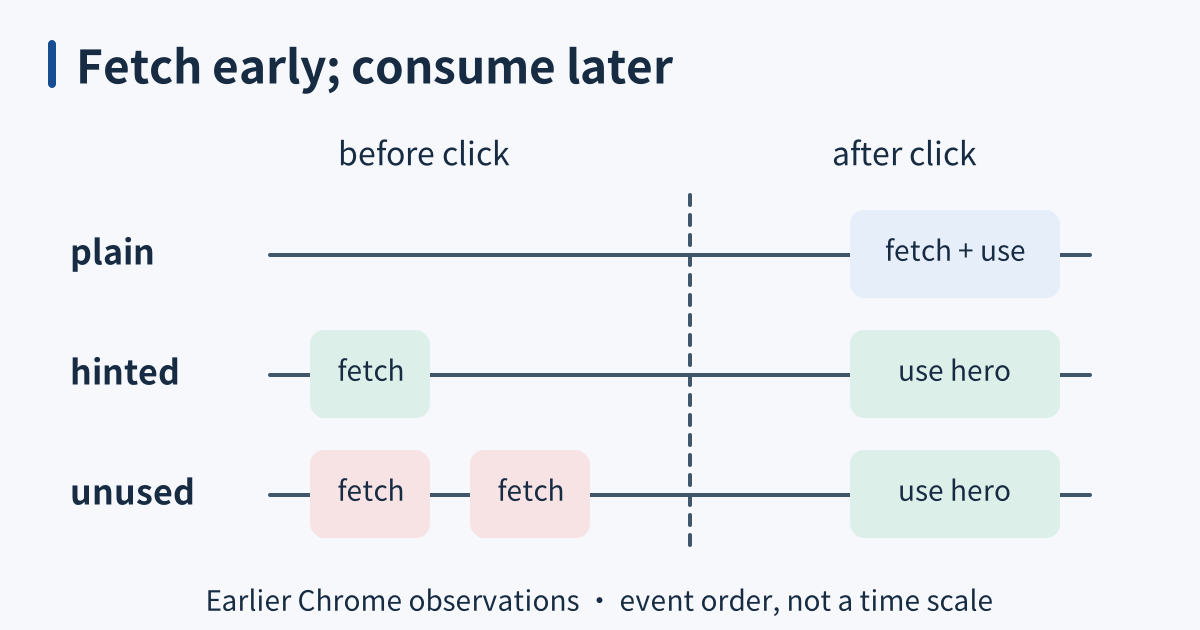
Three event lanes compare plain fetching after a click, hinted fetching before it, and unused fetching two assets while only hero is consumed. The divider is an event boundary, not a measured time scale.

Preload gives crucial assets a head start

A preload announces a resource before its normal consumer discovers it. This can help when a needed image is created by JavaScript or a font is discovered only after loading and parsing a stylesheet. The benefit is an earlier opportunity to fetch. It does not follow that every hinted asset becomes the browser’s highest priority or that every page becomes faster. ...

October 6, 2026 · 5 min · XB Field Notes
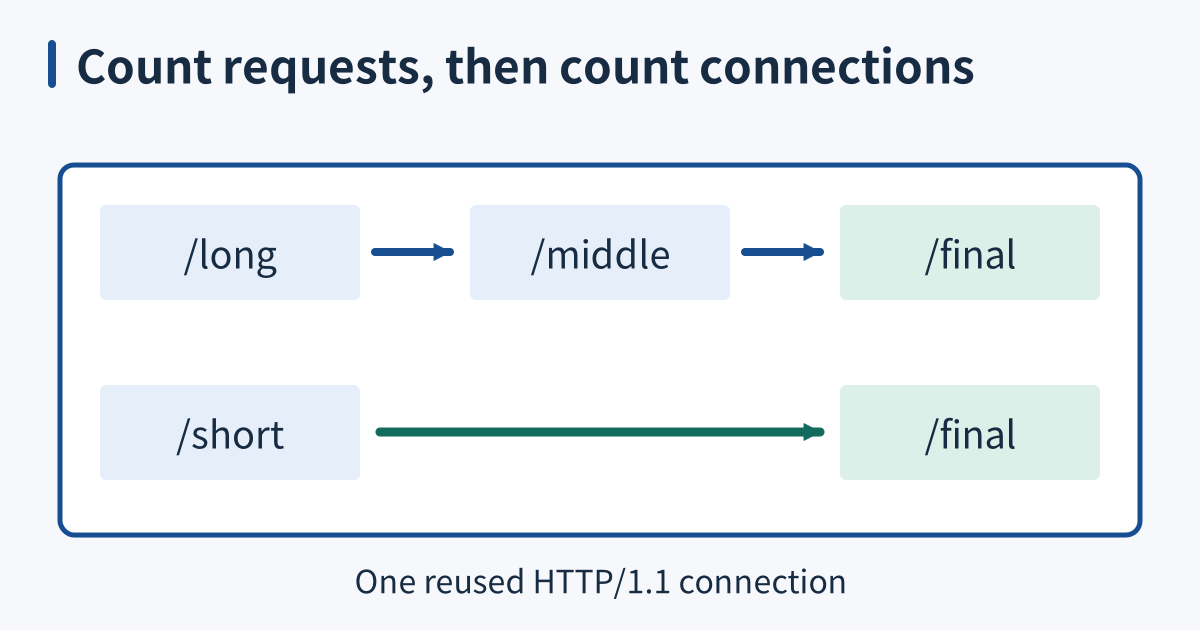
Within one reused HTTP/1.1 connection, the long route has three request nodes and the short route has two, both ending at /final.

Redirect chains add requests

A followed redirect makes the client resolve a Location value and issue another request before it reaches the desired representation. Several individually reasonable rules can form a chain: normalize a hostname, add HTTPS, fix a trailing slash, and move an old article. Review the complete path seen by a visitor, because each intermediary becomes another dependency. ...

October 4, 2026 · 5 min · XB Field Notes
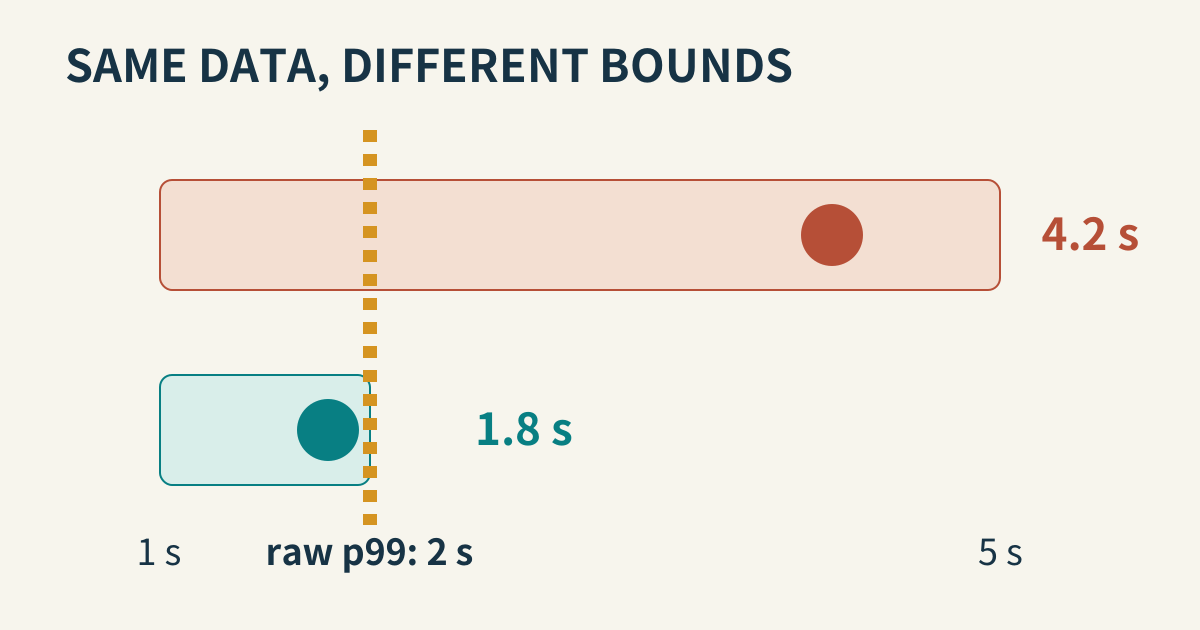
A wide one-to-five-second interval and a narrow one-to-two-second interval give different p99 estimates for the same raw two-second p99: 4.2 and 1.8 seconds.

Histograms preserve the latency shape

A mean can make an uncomfortable service look fast. If ninety-five requests take 50 milliseconds and five take two seconds, the average is only 147.5 milliseconds. A latency histogram retains more information about that slow minority without storing every request. What it preserves is a bucketed approximation of the distribution, not the complete original observations or an automatically exact percentile. ...

September 20, 2026 · 5 min · XB Field Notes
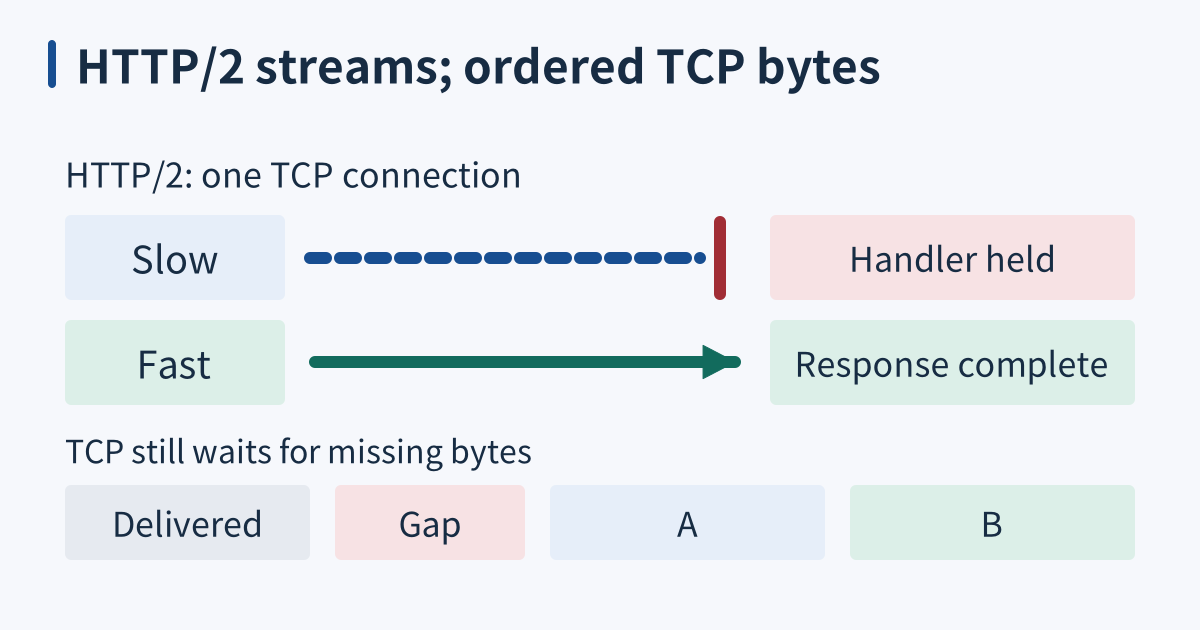
A fast HTTP/2 response completes while a slow handler waits on the same TCP connection; a missing TCP byte range blocks later bytes from both streams.

HTTP/2 removes HTTP response-order blocking

Here, removing head-of-line blocking means removing HTTP response-order constraints on a shared connection. HTTP/2 does not remove TCP head-of-line blocking. A later response can finish while an earlier handler waits, but shared transport capacity, connection-level flow control, and application bottlenecks can still couple the streams. ...

September 15, 2026 · 6 min · XB Field Notes
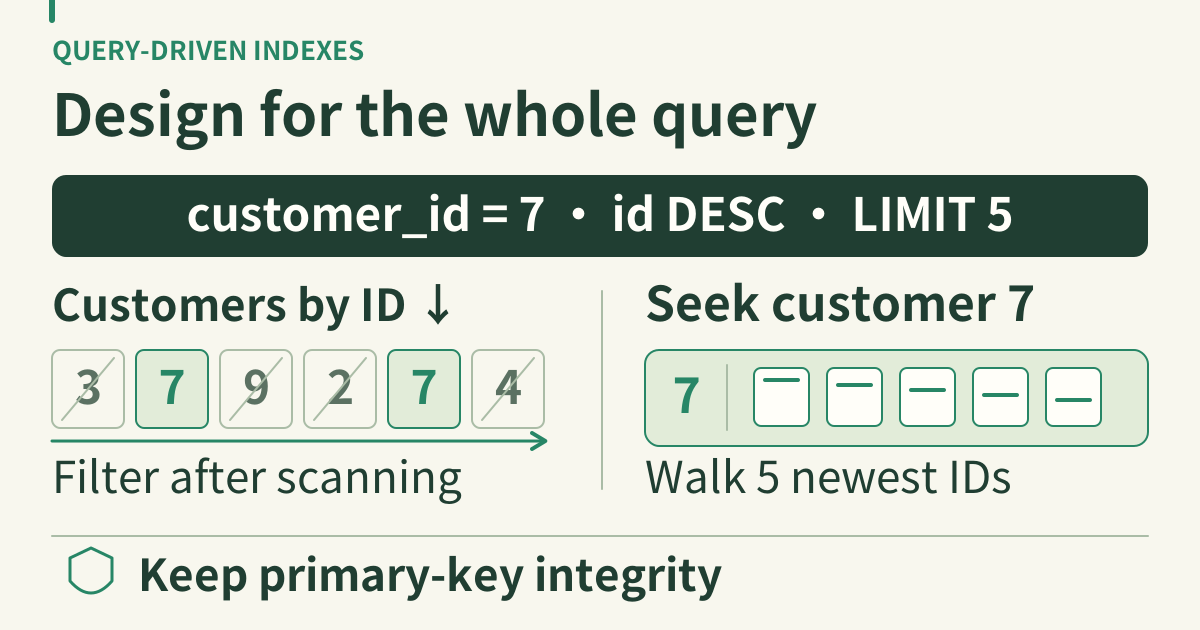
Customer labels encountered in ID order are filtered after scanning. A customer-first path instead selects customer seven and walks five recent ID entries. The primary key keeps protecting unique order IDs.

Indexes serve queries, not algorithms

An index is justified by an access requirement or an integrity rule. The first might be retrieving one customer’s latest five orders; the second might be preventing duplicate order identifiers. Both are real purposes, even if only one appears as a frequent read in query statistics. Index design starts by recording those purposes and measuring their costs, not by accumulating interesting data structures or deleting everything with a low scan count. ...

September 10, 2026 · 5 min · XB Field Notes
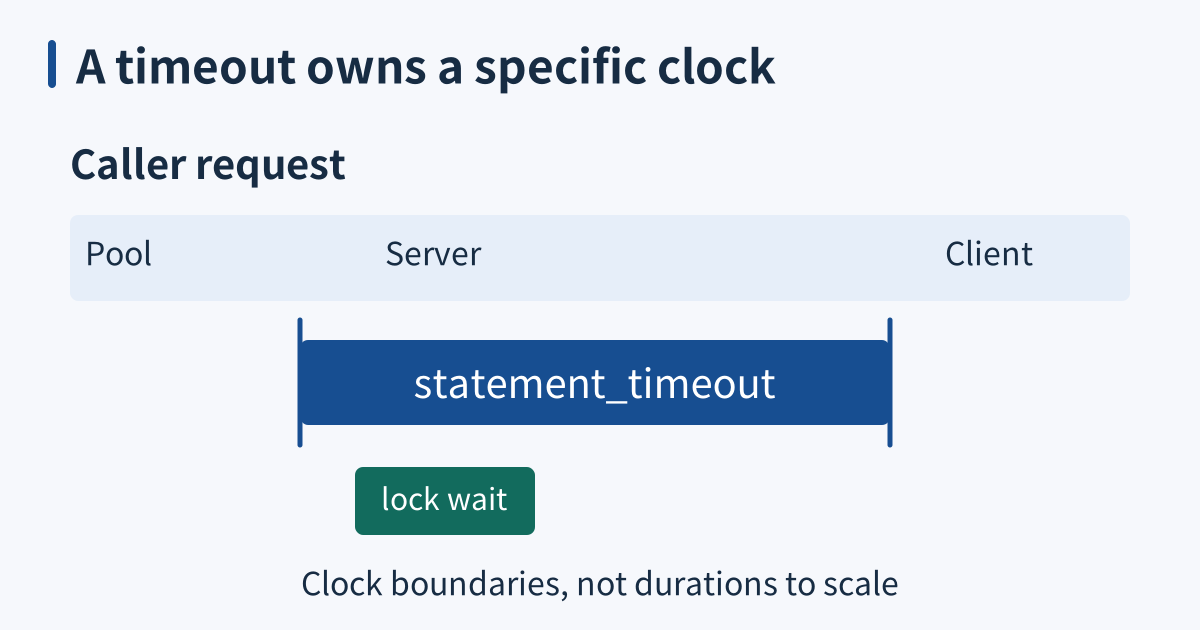
A caller-request band includes pool acquisition, server work and client handling. The statement-timeout band covers server work, with a smaller lock-wait band inside its scope. Widths show scope, not measured duration.

Query timeouts bound a bad query's cost

A query timeout limits one part of database work. It does not automatically bound connection-pool waiting, cancel remote execution, or finish transaction cleanup. Protecting shared capacity requires knowing which component owns the timer, what that component actually interrupts, and what state remains after the error. ...

September 2, 2026 · 5 min · XB Field Notes