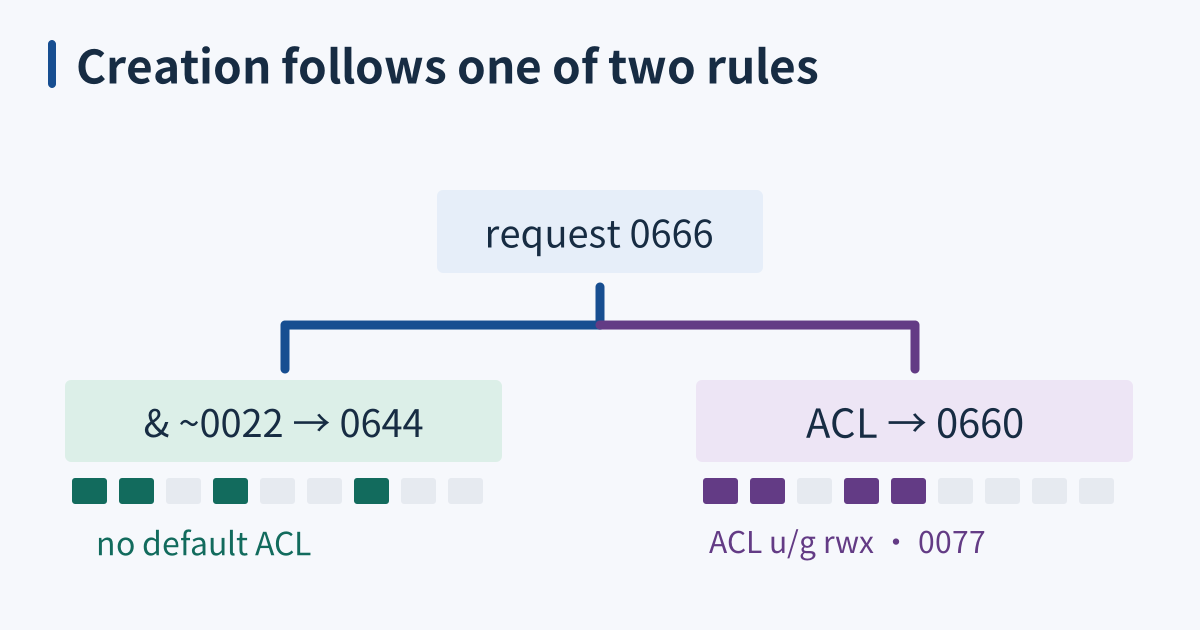
A requested mode branches to ordinary umask filtering or default ACL inheritance; existing inodes follow a separate path.

Umask filters new permissions, with a default ACL exception

A process’s umask removes permission bits when creating files and directories under the ordinary mode-based creation rule. The application first supplies a requested mode; the mask restricts that request. It is neither a complete access policy nor an instruction to rewrite existing files. A directory’s default access control list changes the creation calculation, so inspecting only the process mask can give an incomplete prediction. ...
October 9, 2027 · 5 min · XB Field Notes
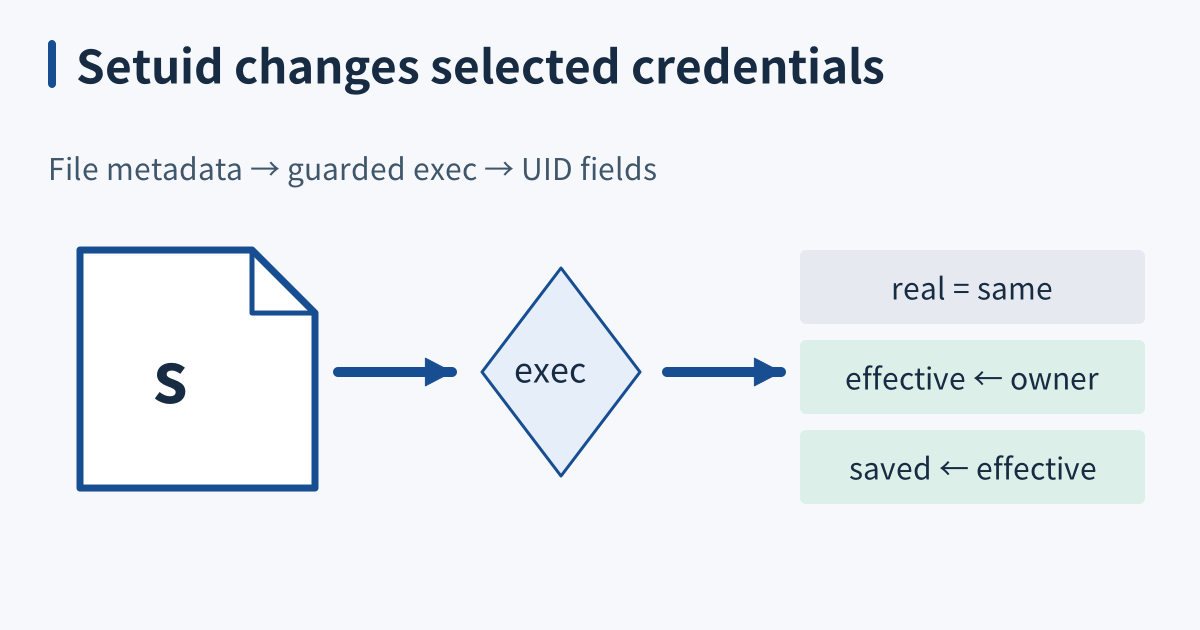
Executable ownership and an exec gate lead to effective and saved UID changes while real UID remains unchanged.

Setuid changes effective identity at exec

Setuid on a Linux executable can change the process’s effective user ID to the file owner’s ID when exec succeeds. It does not replace every credential with the owner’s login identity. A privileged helper can therefore perform a controlled operation on another account’s behalf, but its input handling and privilege lifetime become part of the security boundary. The mode bit alone proves neither that a transition occurred nor that the helper is safe. ...

October 2, 2027 · 5 min · XB Field Notes
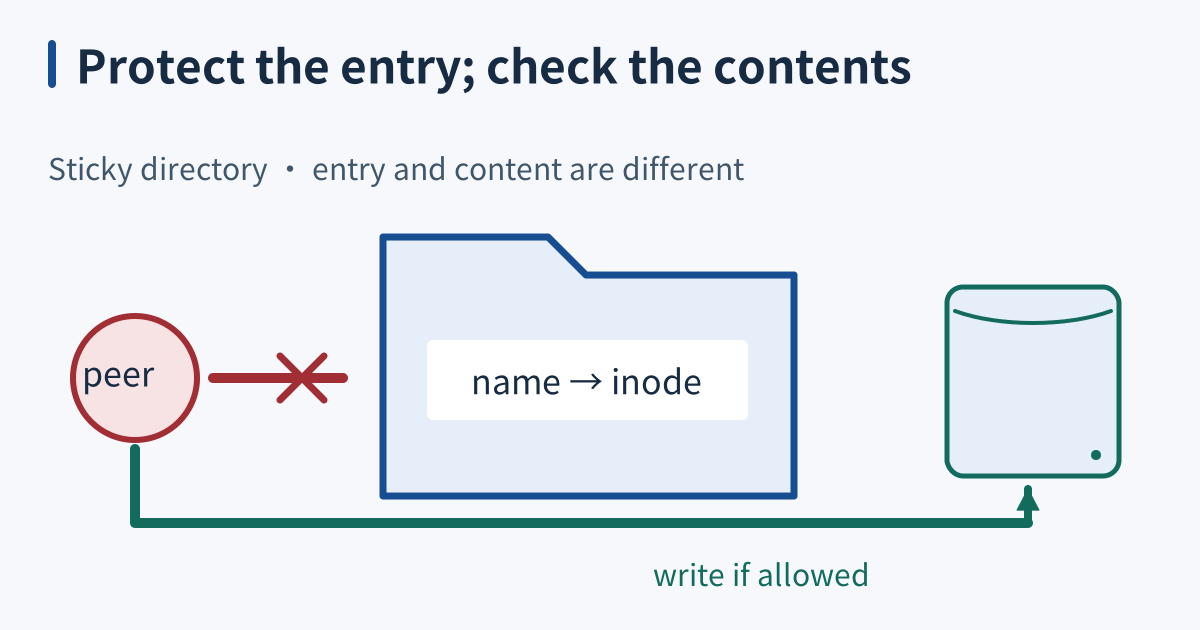
A sticky directory blocks peer removal of an entry while a separate content-write path remains governed by the file mode.

The sticky bit restricts removal in a shared directory

The sticky bit on a Linux directory adds an ownership restriction to removing or renaming entries. It is commonly combined with broad directory write and search permissions so several users can create temporary files without freely removing one another’s entries. The directory permission check and the sticky ownership check both matter; sticky is an additional condition, not a replacement for normal access control. ...

October 1, 2027 · 5 min · XB Field Notes