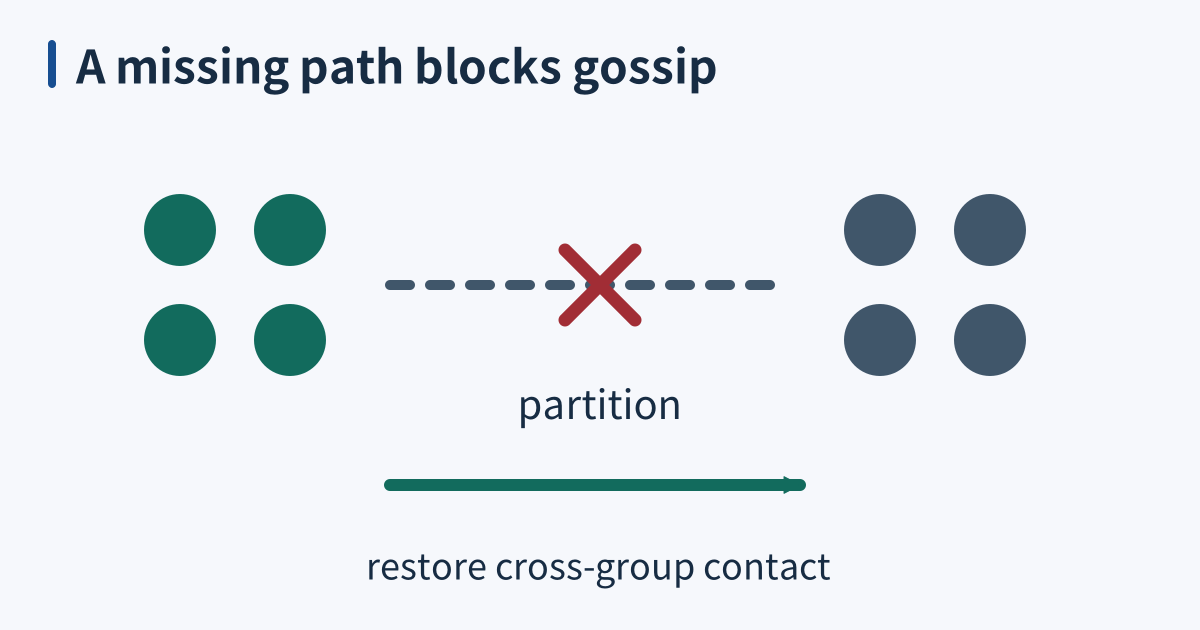
Two schematic peer groups have a broken contact path during partition; restoring a cross-group path permits dissemination to resume.

Gossip converges under explicit assumptions

Gossip spreads information through repeated peer contact. It can tolerate some lost exchanges because surviving copies can be sent again. Eventual convergence still needs assumptions: relevant peers must become reachable, updates must remain available, and the merge rule must handle the states that can arise. Random contact alone does not guarantee agreement by a fixed deadline. ...
September 20, 2027 · 5 min · XB Field Notes
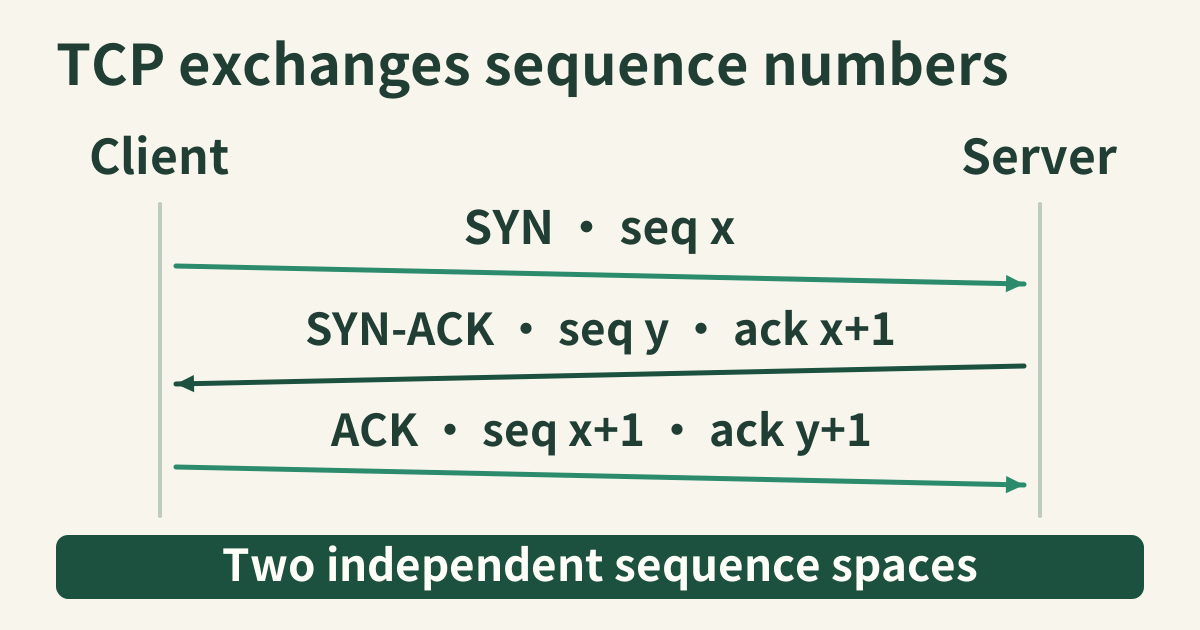
Client sends SYN with sequence x. Server sends SYN-ACK with sequence y and acknowledgment x+1. Client sends ACK with sequence x+1 and acknowledgment y+1.

The TCP handshake establishes sequence spaces, not synchronized clocks

The TCP three-way handshake establishes the two directions of a byte stream. Each endpoint supplies an initial sequence number and acknowledges the other endpoint’s number. Those are independent sequence spaces, not a shared wall clock. Applications do not need synchronized machine clocks to connect. Later sequence numbers identify bytes and support ordering, duplicate handling, acknowledgments, and retransmission within that connection. ...

September 10, 2027 · 7 min · XB Field Notes
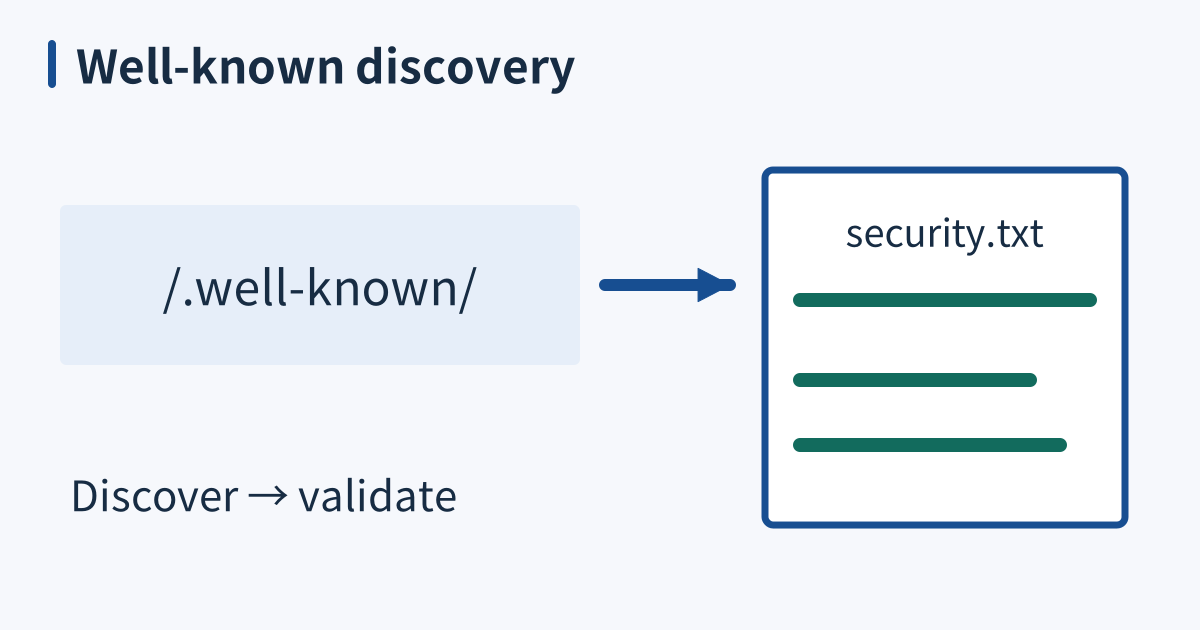
The well-known path points to a security.txt document whose fields still require validation.

Well-known endpoints provide a discovery convention

A well-known URI gives software a conventional place to discover information associated with an origin. The reserved /.well-known/ prefix reduces collisions between independently designed protocols, and registered suffixes identify their defining specifications. The prefix is a naming mechanism, not an implementation or a guarantee of trustworthy content. A server must still route the selected endpoint correctly, and a client must interpret the response according to that endpoint’s own contract. ...

June 22, 2027 · 5 min · XB Field Notes
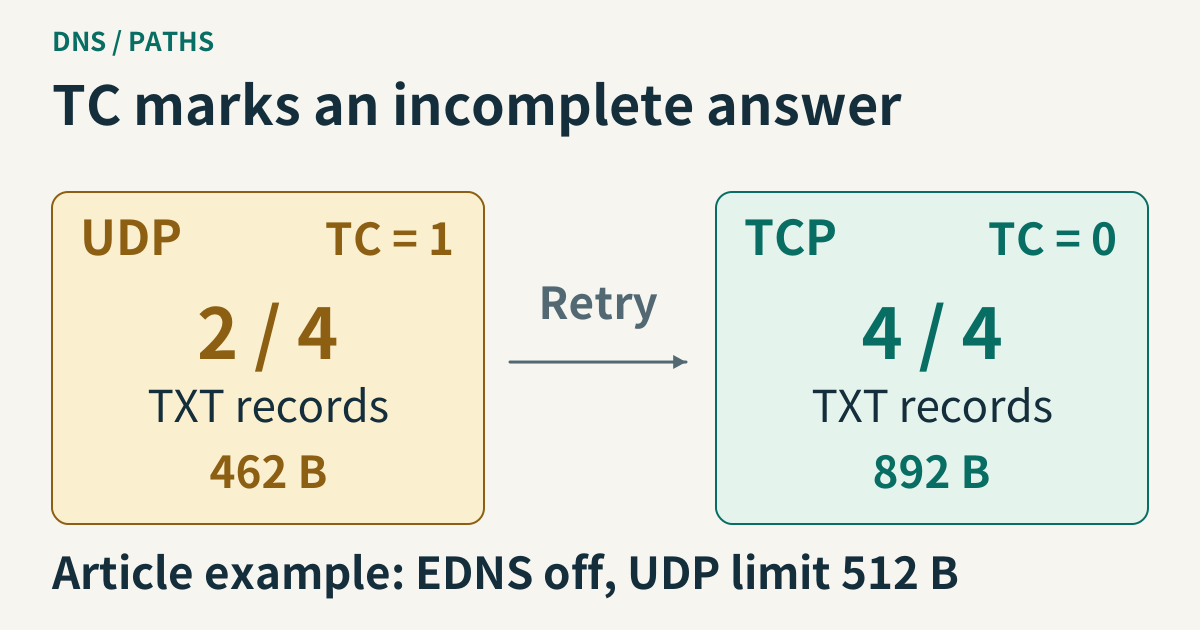
In the EDNS-off article fixture, UDP returns 462 bytes with TC set and two of four TXT records. A TCP retry on the working path returns 892 bytes with TC clear and all four records.

DNS needs a working TCP path when a UDP answer is truncated

DNS supports both UDP and TCP. A server sets the TC flag when a response is truncated for the available message space. A client receiving that flag must handle the incomplete result, commonly by retrying over TCP. This is about the DNS response limit in use, not proof that the physical network cannot carry any larger UDP datagram. ...

November 19, 2026 · 6 min · XB Field Notes
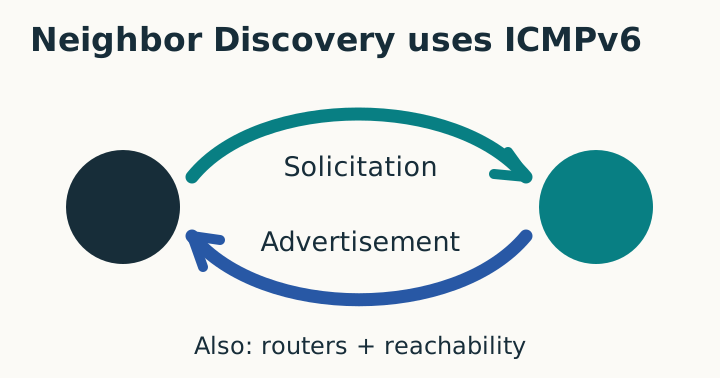
ICMPv6 solicitation and advertisement resolve a local neighbor. Neighbor Discovery also includes router discovery and reachability detection.

IPv6 resolves neighbors with ICMPv6 before the TCP connection can work

An IPv6 host on an Ethernet link needs a link-layer destination before it can send a frame to a neighbor. Neighbor Discovery performs that address-resolution work using ICMPv6 Neighbor Solicitation and Neighbor Advertisement messages. It also covers functions beyond IPv4 ARP, including router discovery and neighbor reachability detection. Calling it merely “ARP with longer addresses” hides dependencies that matter when configuring an IPv6 network. ...

November 16, 2026 · 6 min · XB Field Notes
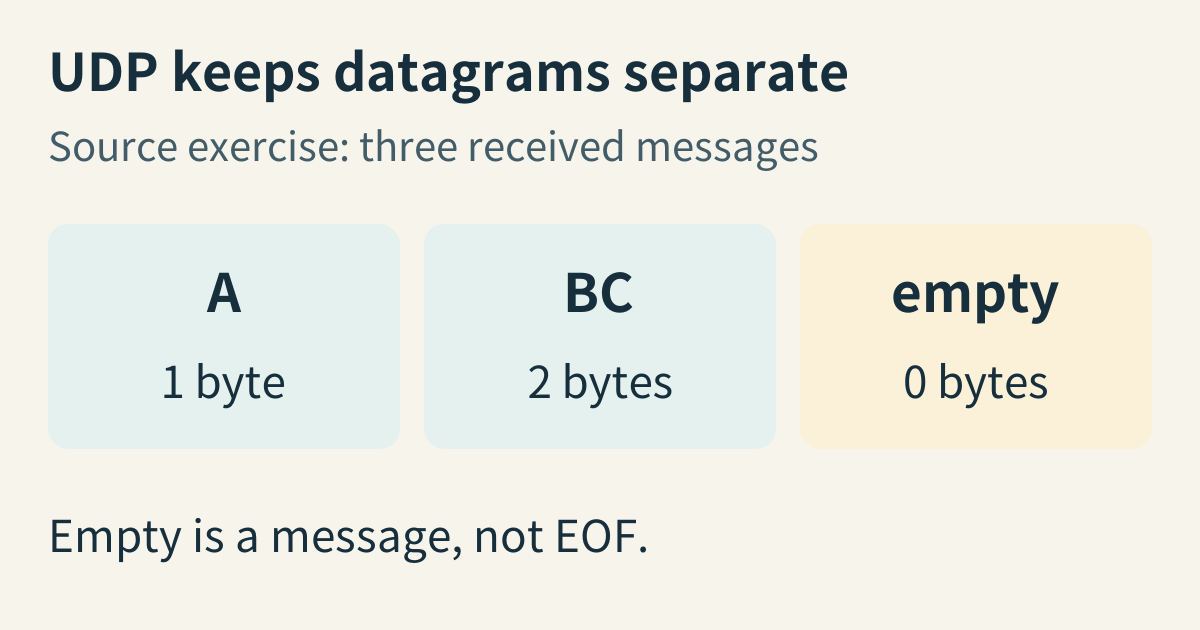
Three separate datagram cards show A with 1 byte, BC with 2 bytes, and empty with 0 bytes. The empty payload remains a message and is not EOF.

UDP preserves datagrams; recovery and timing belong to the application

UDP carries discrete datagrams between transport endpoints. Its eight-byte header contains source port, destination port, length, and checksum fields. The protocol does not add TCP’s reliable ordered byte stream or its congestion-control behavior. This gives applications room to choose their own delivery policy, but it does not promise lower latency for every workload. A missing datagram can be more costly than a handshake when the application needs its contents. ...

November 11, 2026 · 5 min · XB Field Notes
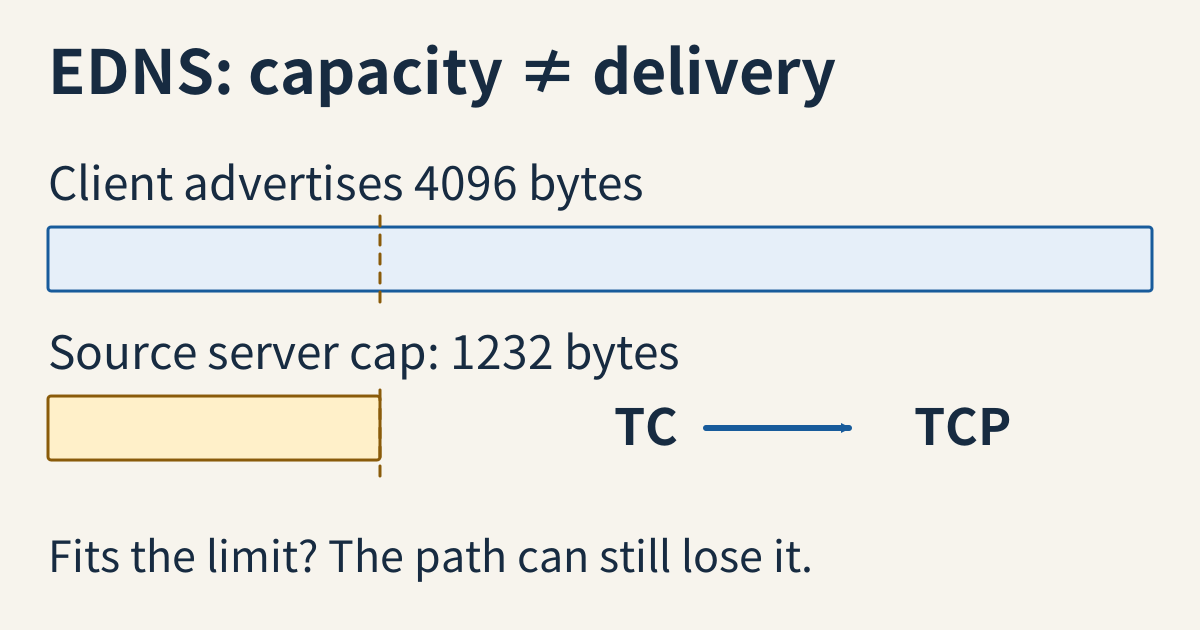
A client advertises 4096 bytes but the source server caps UDP at 1232. A truncated answer can require TCP; the path still determines delivery.

EDNS advertises UDP capacity without guaranteeing path delivery

EDNS extends DNS through an OPT pseudo-record. Among other information, a request can advertise the UDP payload size its sender is prepared to receive. This allows answers beyond the traditional 512-byte DNS limit. It is an advertisement within a DNS exchange, not a network path-MTU discovery protocol or a promise that every intervening device will deliver a datagram of that size. ...

October 28, 2026 · 6 min · XB Field Notes
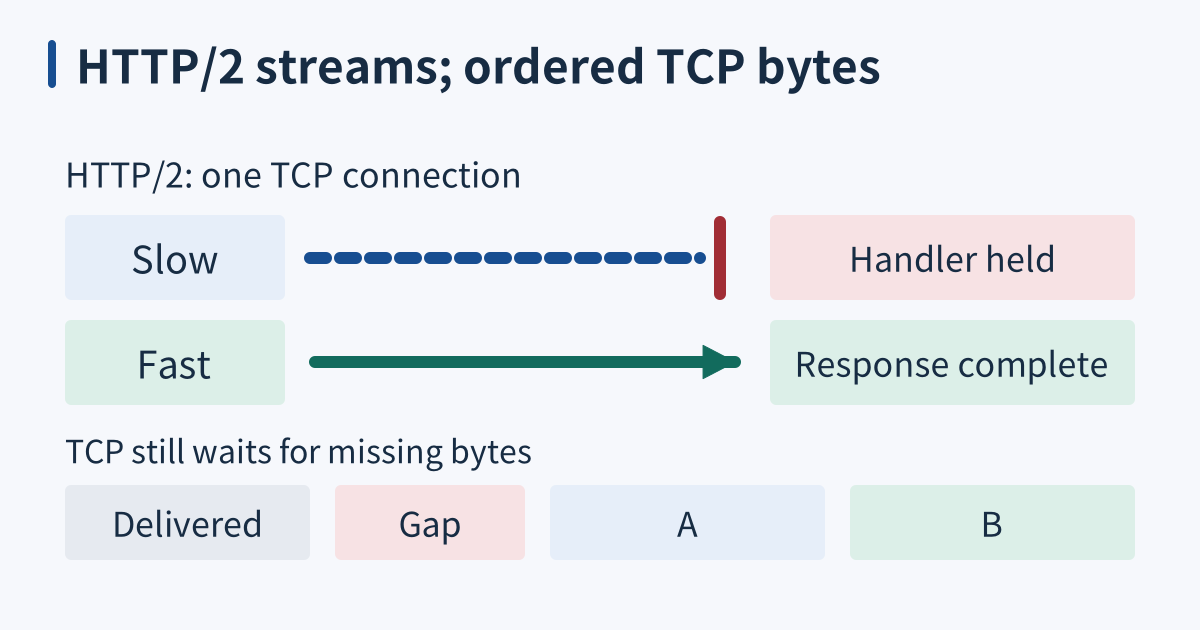
A fast HTTP/2 response completes while a slow handler waits on the same TCP connection; a missing TCP byte range blocks later bytes from both streams.

HTTP/2 removes HTTP response-order blocking

Here, removing head-of-line blocking means removing HTTP response-order constraints on a shared connection. HTTP/2 does not remove TCP head-of-line blocking. A later response can finish while an earlier handler waits, but shared transport capacity, connection-level flow control, and application bottlenecks can still couple the streams. ...

September 15, 2026 · 6 min · XB Field Notes