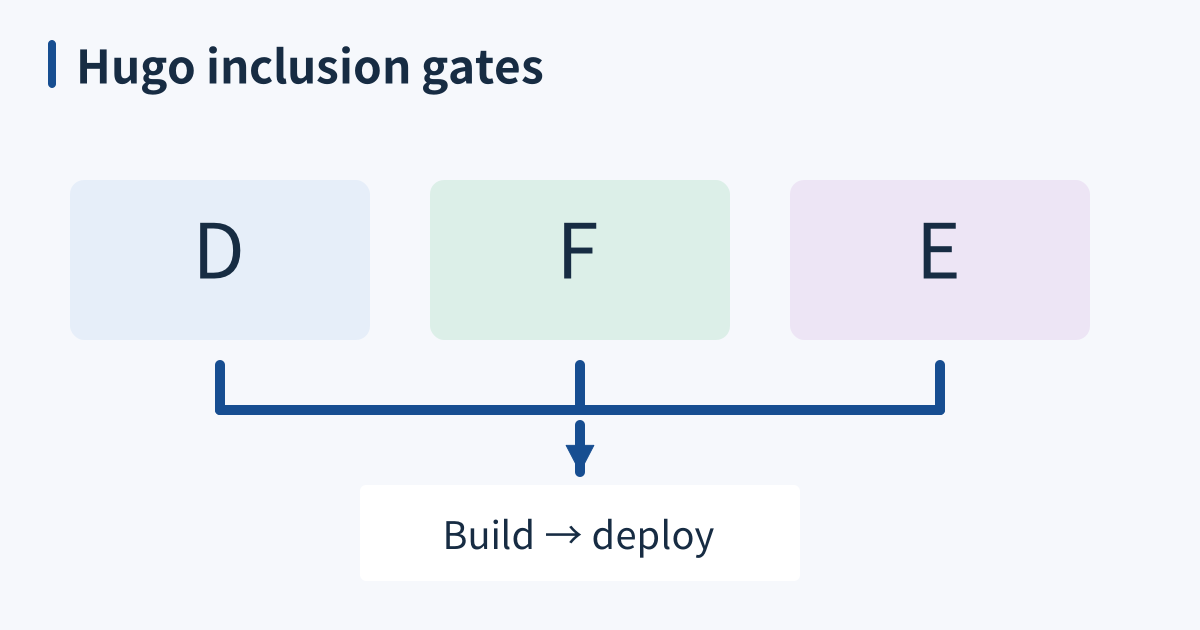
Independent draft, future and expired inclusion gates lead to a build artifact and separate deployment.

Hugo publication flags decide what enters the artifact

Hugo decides which pages to render when a build runs. Front matter supplies publication metadata, configuration and command flags supply inclusion rules, and the build clock supplies the time used for evaluation. The deployed directory then stays unchanged until another artifact replaces it. A date reaching midnight is not itself a deployment event, and a file without draft: true is not automatically a draft. ...
March 18, 2028 · 5 min · XB Field Notes
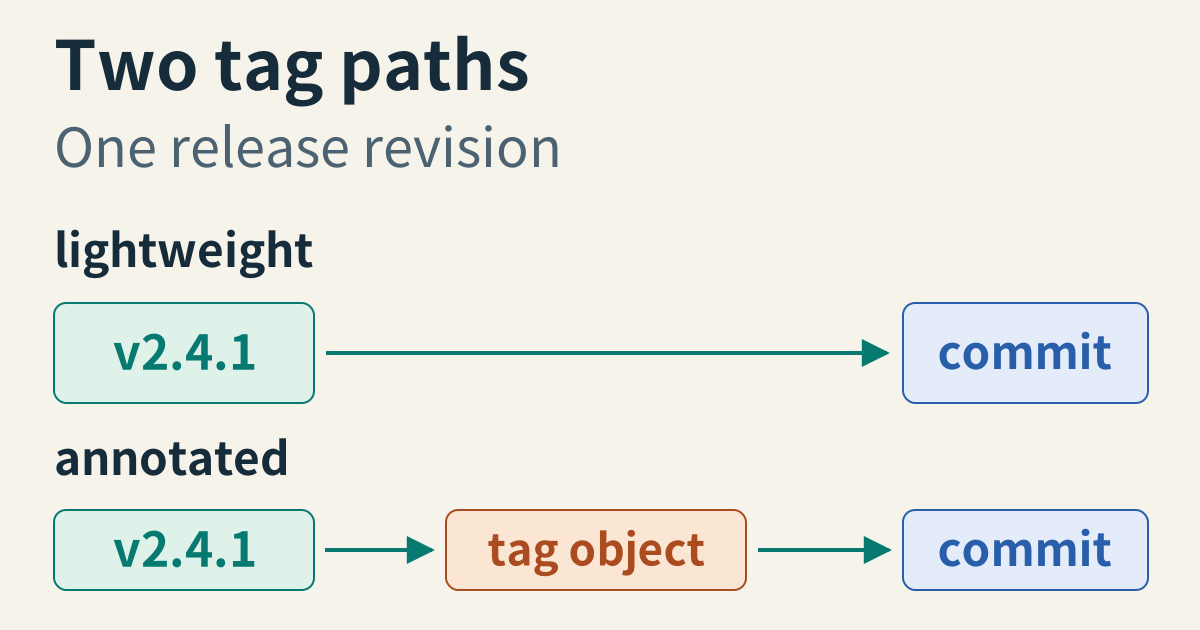
A lightweight reference points directly to a commit. An annotated reference points to a tag object, which targets a commit.

Git tags pin a release to a commit

A release tag gives people a readable name for a particular source revision. Unlike a branch, it does not advance when another commit is created. However, Git does not make a tag reference physically impossible to change: a user with sufficient access can replace or delete it. The dependable release contract is therefore a combination of a recorded object ID, an immutable-name policy, and controls over who may update release references. ...

June 11, 2027 · 4 min · XB Field Notes
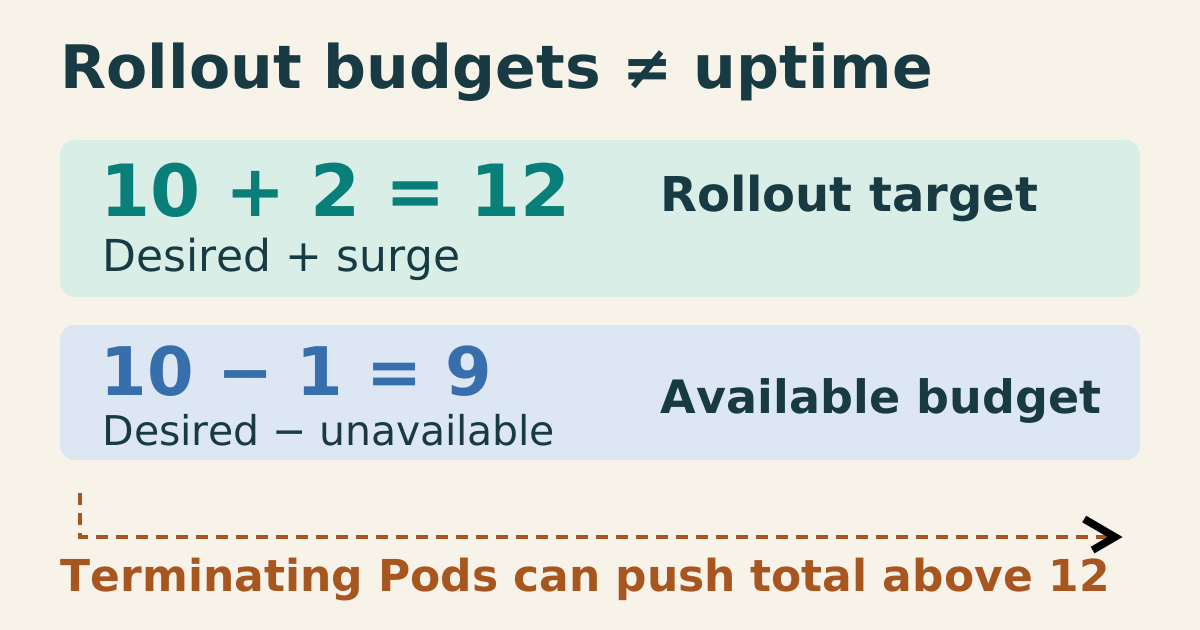
Ten desired replicas plus two surge gives a rollout target of twelve. Ten minus one unavailable gives a planning budget of nine available replicas. A separate terminating tail may extend beyond twelve. These budgets do not guarantee uptime.

Rolling updates replace pods in small waves

A rolling update is a controlled replacement, not a promise of uninterrupted service. Its useful property is that the controller can retain old replicas while introducing new ones. Whether users notice the change also depends on spare capacity, meaningful health checks, and shutdown behavior. This article tunes that process; the companion strategy article asks whether versions should overlap at all. ...

June 7, 2027 · 5 min · XB Field Notes
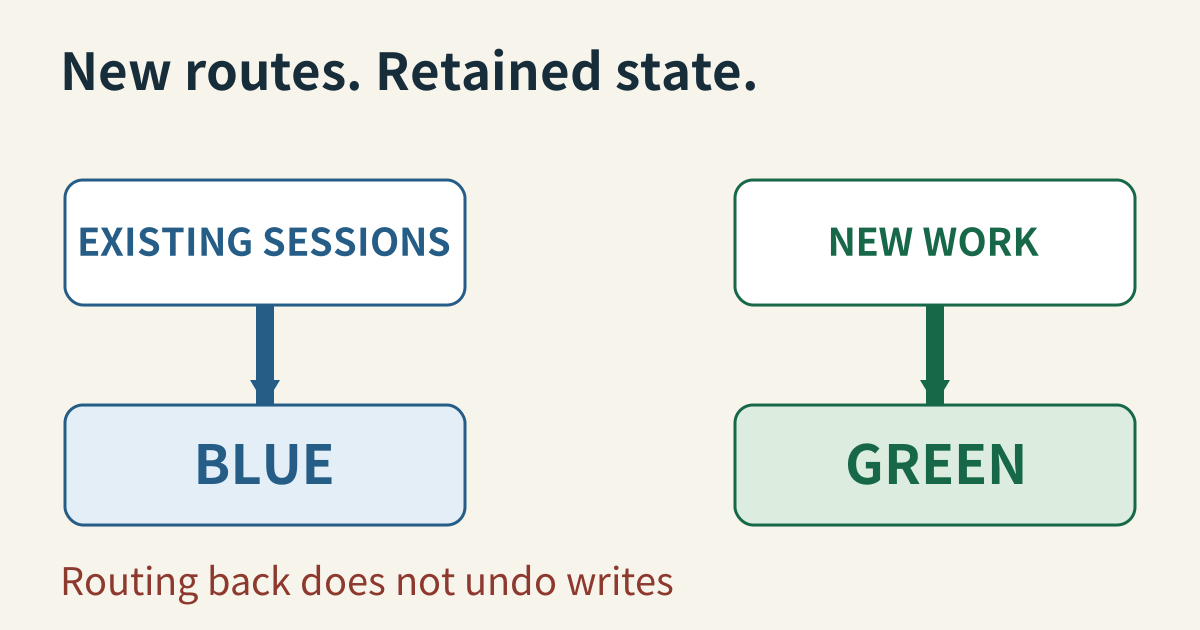
New work can enter green while existing sessions remain on blue. Routing back does not undo accepted writes.

Blue-green deployment keeps two environments ready

Blue-green deployment prepares a new application version in a separate environment while the previous version serves traffic. After readiness checks, routing directs new work toward the new environment. Keeping the old environment available can shorten rollback, because recovery need not wait for another build. The pattern does not make every dependency duplicated, every switch instantaneous, or every data change reversible. ...

November 2, 2026 · 5 min · XB Field Notes
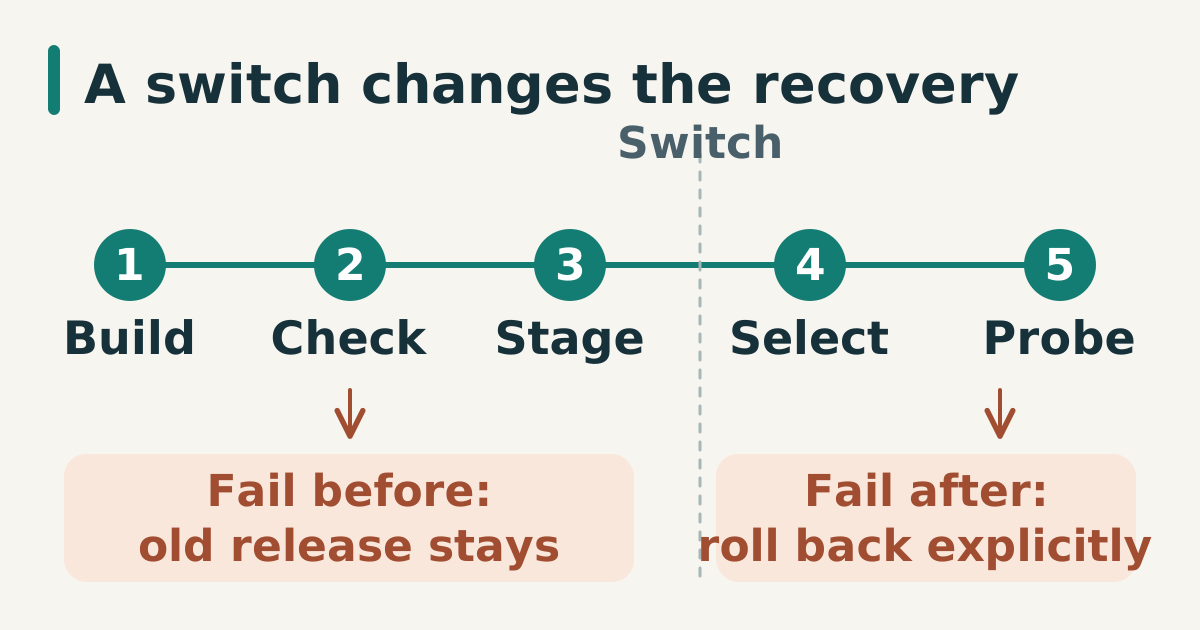
Build, check and stage precede a marked selection boundary, then a sampled edge check follows. Failure before selection leaves the old release; failure after selection requires explicit rollback.

Ship a static site and prove the edge agrees

Build, publish, and check delivery while keeping artifact identity, sampled observations, and rollback distinct.

August 11, 2026 · 8 min · XB Field Notes
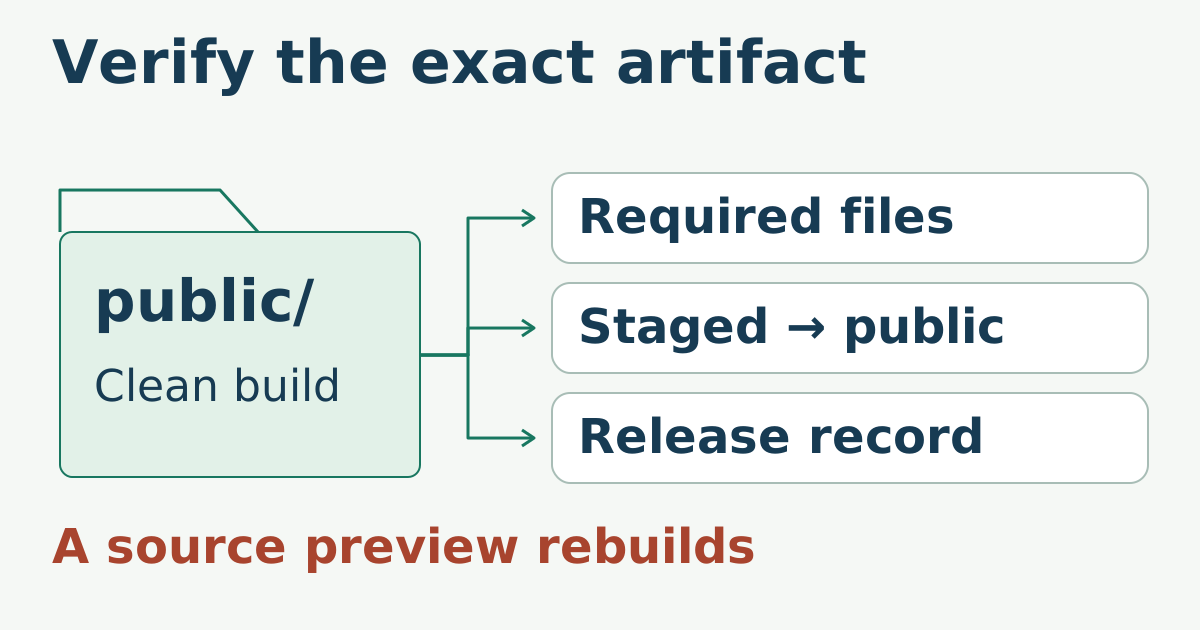
One clean public/ artifact feeds required-file inspection, staged-to-public route checks, and a release record. A separate reminder states that a source preview rebuilds. No check is marked complete.

A release checklist for a static site

Verify the artifact before replacing the live directory, and keep the checks close to the release command.

July 30, 2026 · 3 min · XB Field Notes
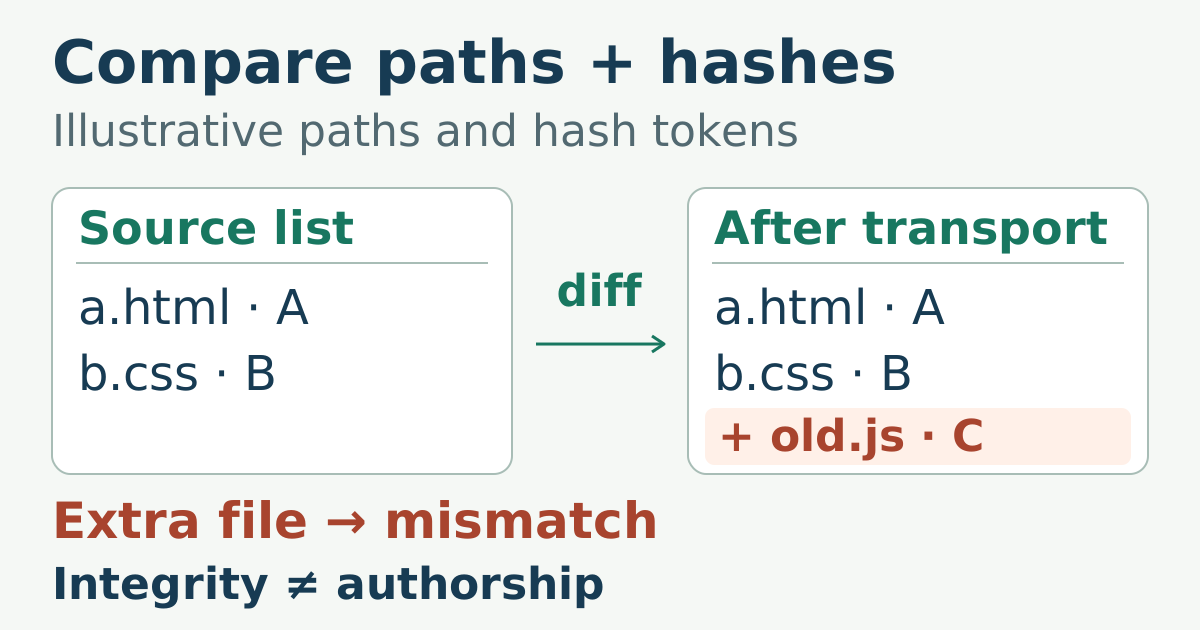
Illustrative source and destination path/hash lists are compared. The destination has an extra old.js file, so the full-record comparison must fail. Matching hashes concern integrity, not authorship.

A release manifest should name every published byte

One aggregate digest is useful, but a sorted per-file manifest tells you exactly what changed or went missing.

July 16, 2026 · 3 min · XB Field Notes
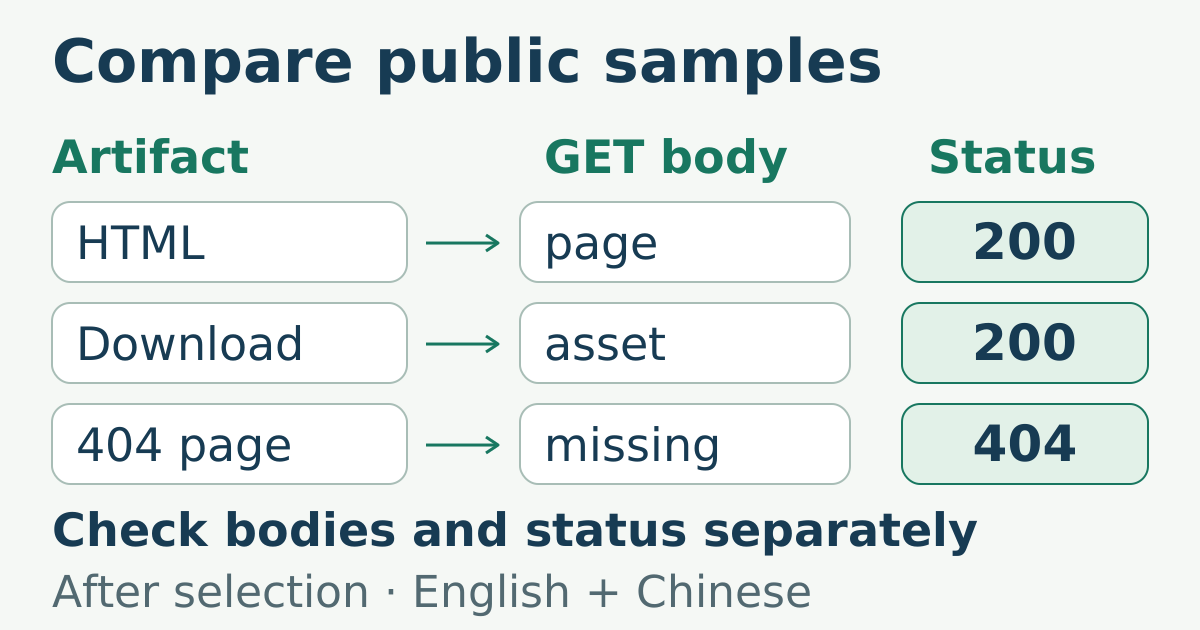
HTML, download, and error-page artifact samples point to corresponding public GET bodies. Expected statuses are shown separately as 200, 200, and 404. These are post-selection samples to compare in English and Chinese.

A release is not complete until the public edge agrees

Validate one staged artifact, publish it, then compare representative public responses with those exact bytes.

July 9, 2026 · 3 min · XB Field Notes