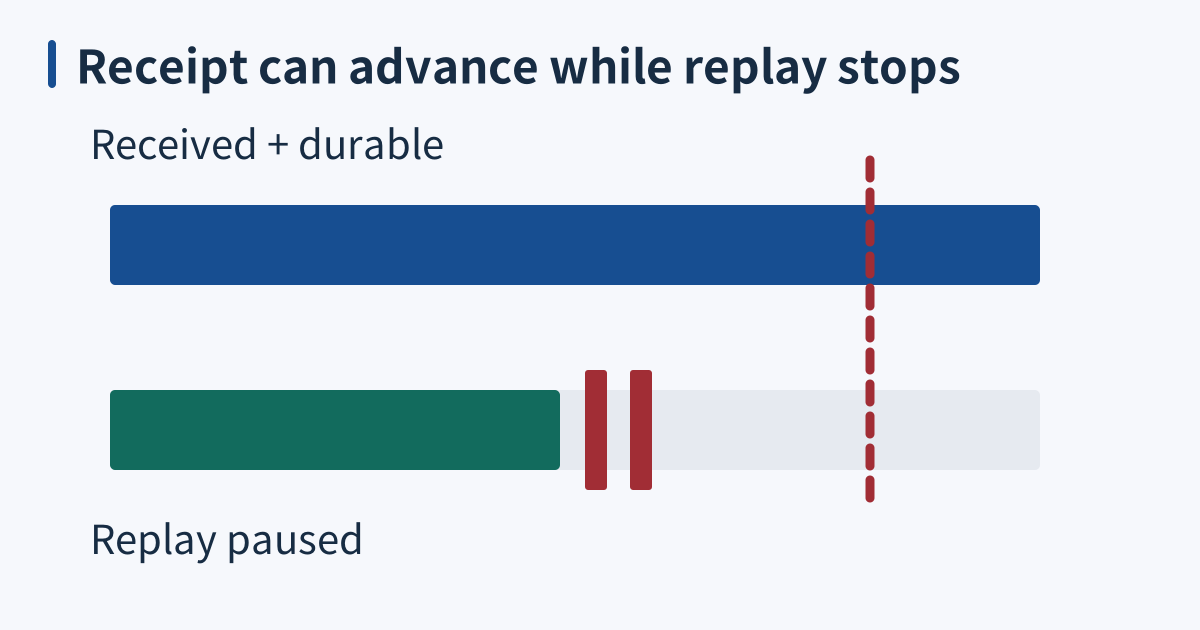
The received-and-durable WAL track passes a target while the replay track stops behind it at a pause marker.

Postgres streaming replication keeps a warm standby

Physical streaming replication sends PostgreSQL WAL to a standby, which replays the records to maintain another copy of the cluster. It can send records without waiting for a whole segment to finish. This is distinct from logical replication of selected table changes. A running receiver and a reachable standby are useful health signals, but neither establishes that a particular committed row is already visible there. ...
August 10, 2027 · 6 min · XB Field Notes
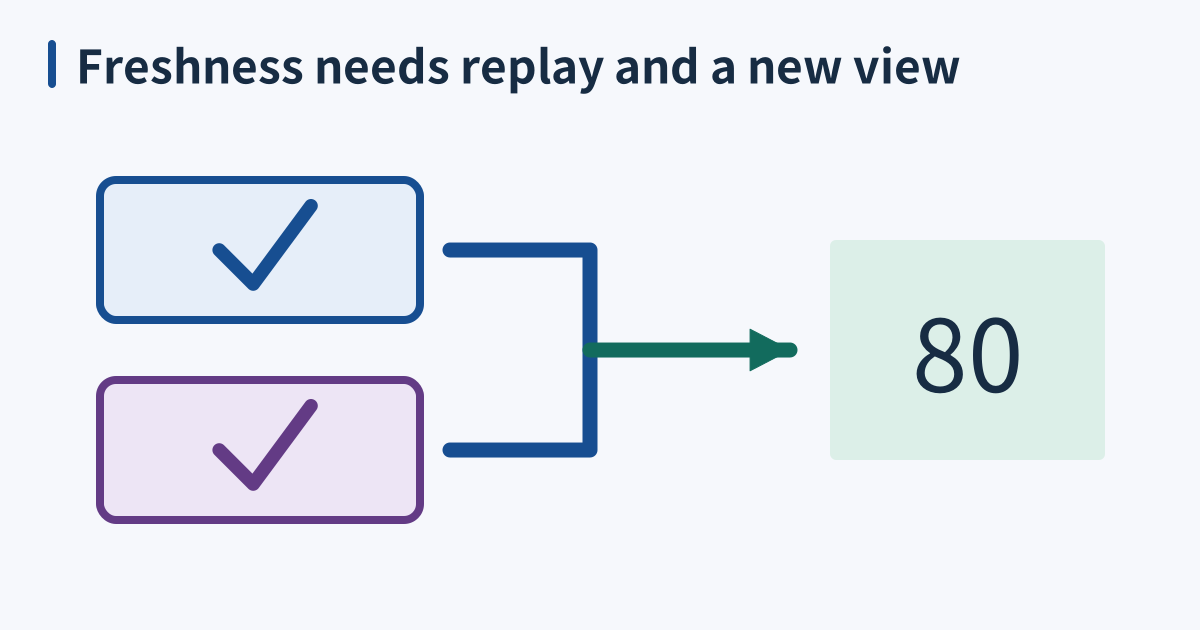
Two required gates, replay coverage and a new snapshot, converge on a read of balance 80.

Read replicas serve demand copies

A read replica can serve queries while another database handles writes. That can move reporting, search, or other eligible reads away from the writer, but routing a connection is only part of the design. The application must specify which committed changes a result needs to include. This article uses a PostgreSQL physical hot standby, whose normal recovery mode permits reads but does not accept ordinary writes. ...

July 12, 2027 · 6 min · XB Field Notes
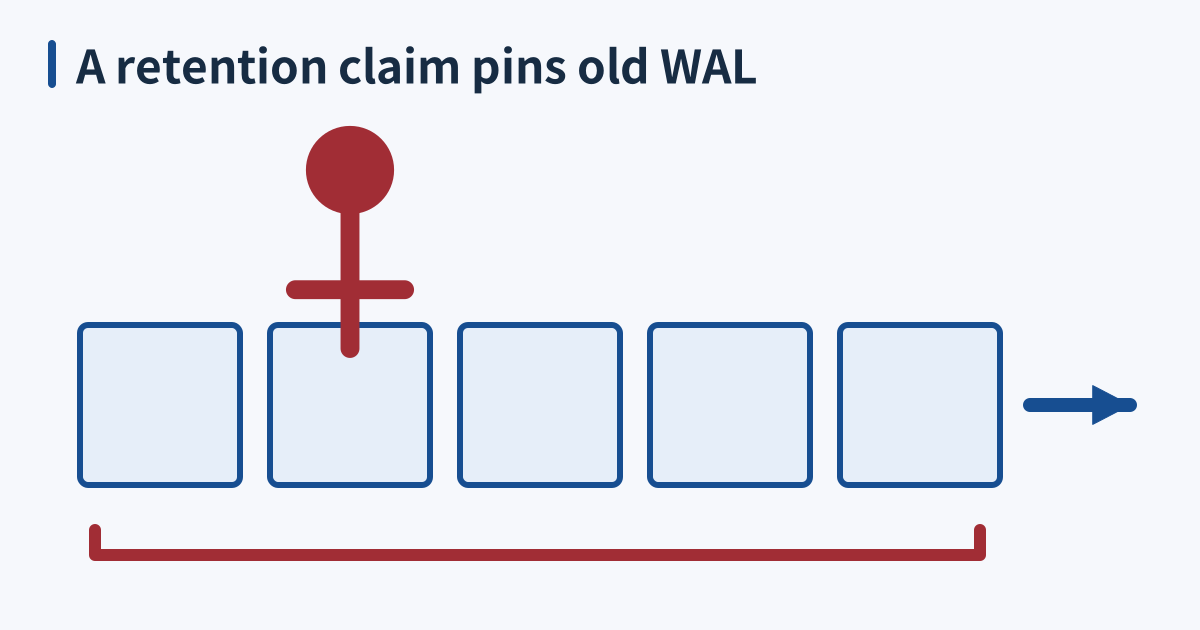
A large retention pin holds a schematic run of old WAL segments while the write position continues forward.

A stale replication slot holds WAL back

A PostgreSQL replication slot records retention requirements for a consumer. Once the slot has reserved a WAL position, losing the consumer’s connection does not automatically release that position. The primary may keep generating log while the slot’s requirement remains unchanged. The operational risk is retained storage and an increasingly expensive catch-up or rebuild decision. Slot usability depends on retained WAL availability and the configured invalidation rules. ...

October 19, 2026 · 6 min · XB Field Notes