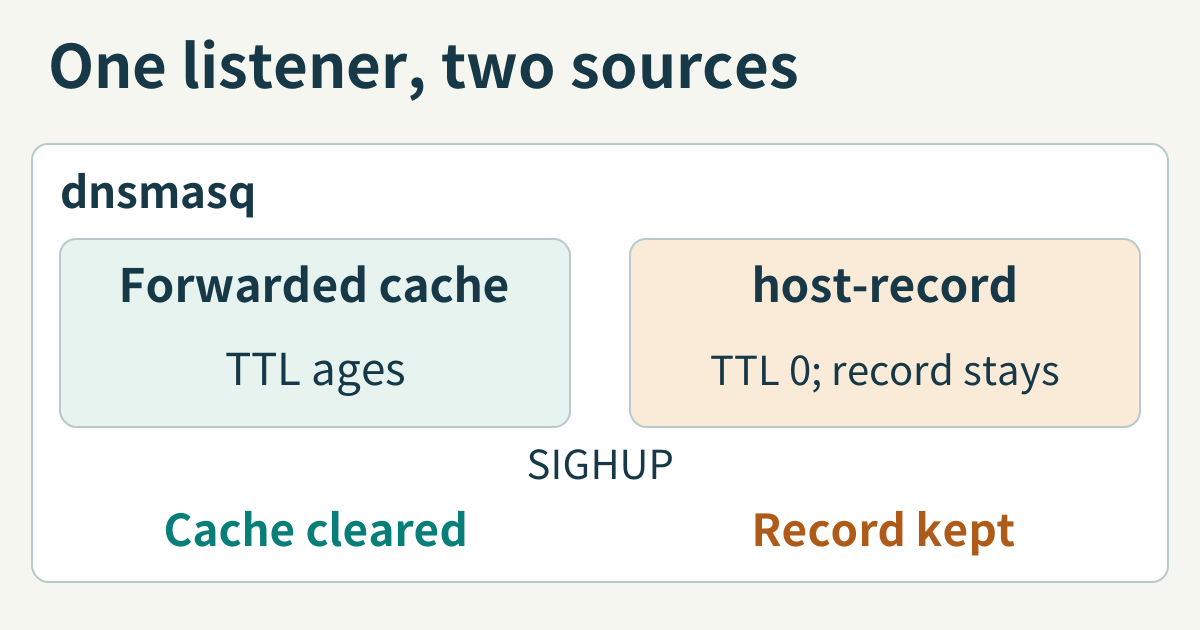
Inside dnsmasq, a forwarded cached answer ages with TTL, while a configured host-record is generated from configuration. SIGHUP clears forwarded state while the configured record remains, even at local TTL zero.

dnsmasq separates forwarded cache entries from configured local names

dnsmasq can forward DNS questions upstream, retain supported answers in a bounded cache, and serve names configured locally. These are different sources of data. A repeated answer may be a cache hit or a local configuration result. Establishing which source supplied it is essential when a hostname disagrees with the authority or continues resolving after a cache flush. ...
April 15, 2028 · 6 min · XB Field Notes
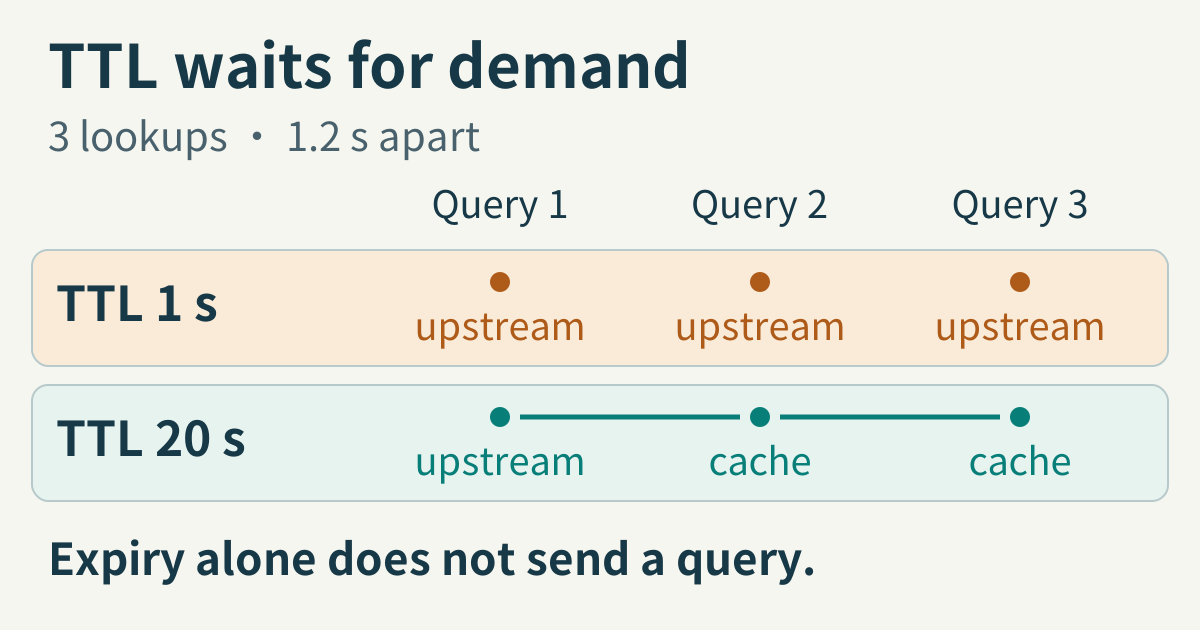
Three lookups separated by 1.2 seconds contact the authority three times at TTL 1 and once at TTL 20 in the article example. Expiry alone does not schedule a query.

DNS TTL trades repeated upstream queries against retained answers

A DNS TTL is a lifetime attached to cached data, not a refresh job scheduled for every second. A cache can reuse a valid answer while it retains that entry. After expiry, a subsequent request usually requires fresh resolution unless another configured behavior applies. An idle record need not produce an upstream query merely because its TTL has reached zero. ...

March 1, 2028 · 6 min · XB Field Notes