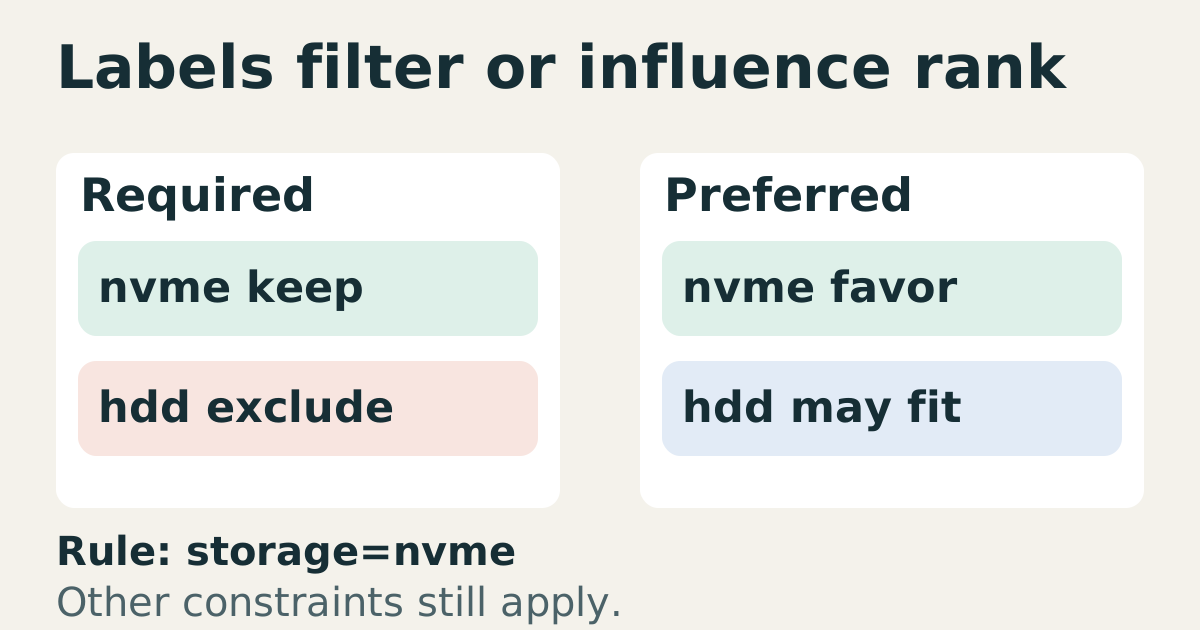
For a storage=nvme label rule, required affinity excludes a nonmatching node; preferred affinity favors a match while a nonmatch may remain a candidate. Other constraints must still pass.

Node affinity places workloads on matching nodes

Node affinity matches workload requirements to node labels. It can require NVMe storage or prefer a newer instance family, but it does not replace the scheduler’s other checks. Even without affinity, scheduling filters resource requests, taints and volume constraints before scoring feasible nodes. It is not simply a comparison of idle capacity. ...
December 9, 2027 · 4 min · XB Field Notes
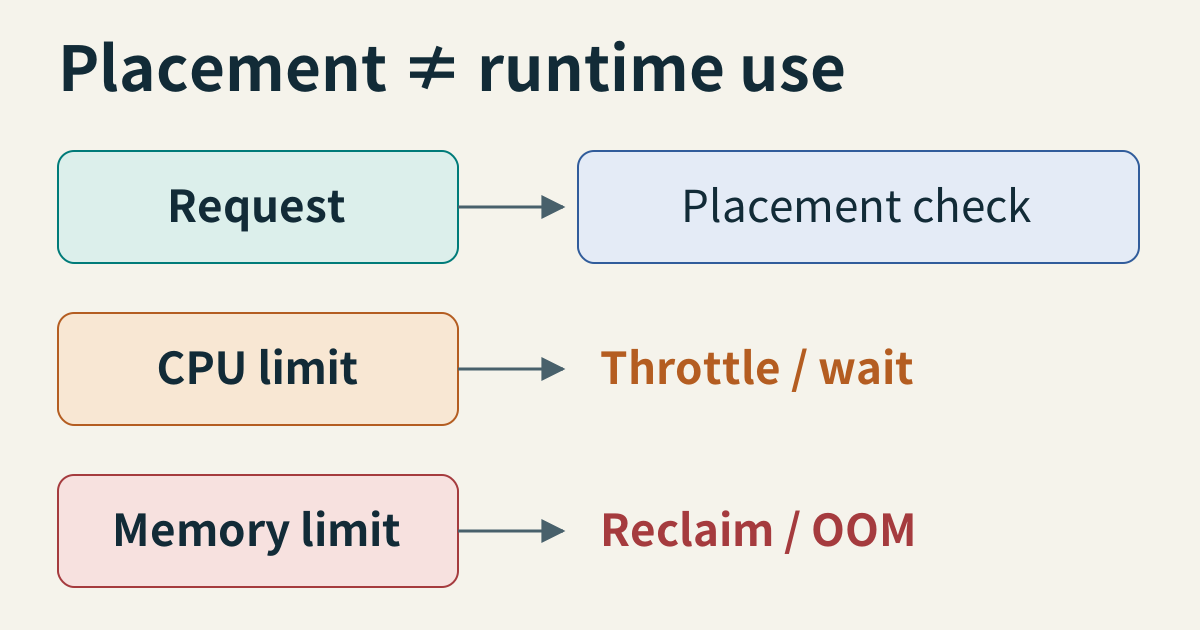
Requests lead to node-capacity matching. CPU limits lead to throttling and waiting, while memory limits lead to reclaim and possible OOM.

Requests guide placement; limits constrain resource use

Requests guide placement and resource sharing; limits constrain runtime consumption. They are related inputs, not a universal floor-and-ceiling guarantee for application performance. Choose them from workload behavior, contention risk and recovery requirements. Inspect the admitted Pod because defaults and policy can change the resource values submitted in a manifest. ...

May 27, 2027 · 5 min · XB Field Notes
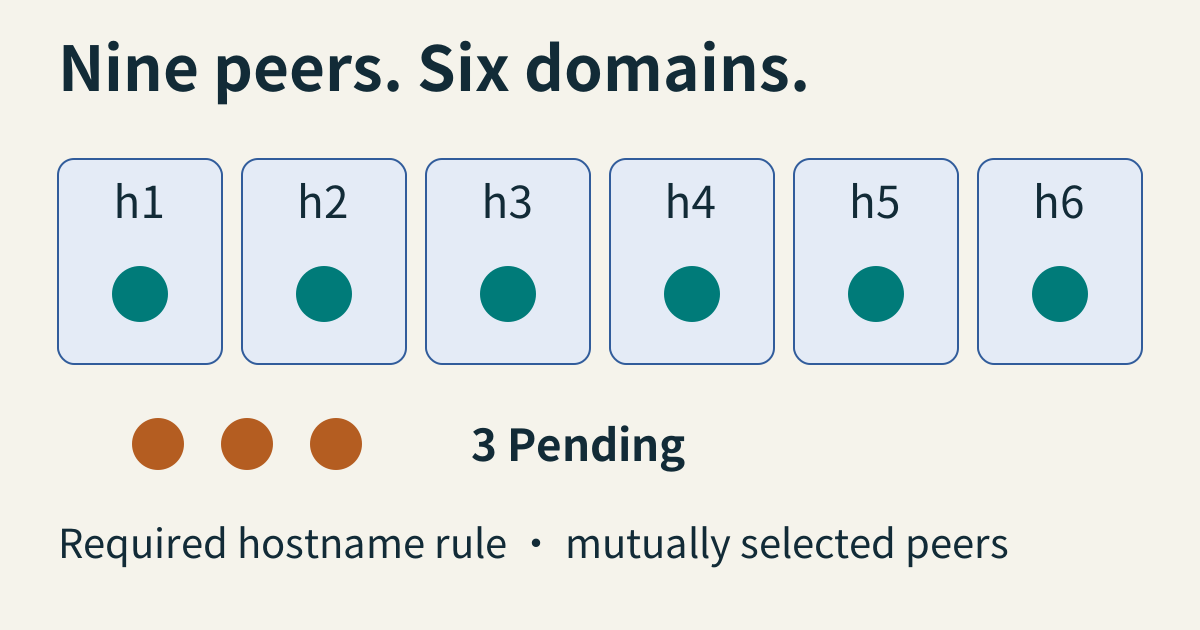
Six eligible hostname domains each contain one matching peer, while three of nine replicas remain Pending under required hostname anti-affinity with mutually selected peers.

Pod anti-affinity spreads peers away from each other

Pod anti-affinity expresses where a Pod should avoid selected peers. A hostname topology can reduce shared-node exposure; a zone topology can address a broader failure domain. The rule does not create extra capacity or prove application availability. It shapes placement, while replication, readiness, storage, and failure recovery remain separate responsibilities. ...

March 18, 2027 · 5 min · XB Field Notes
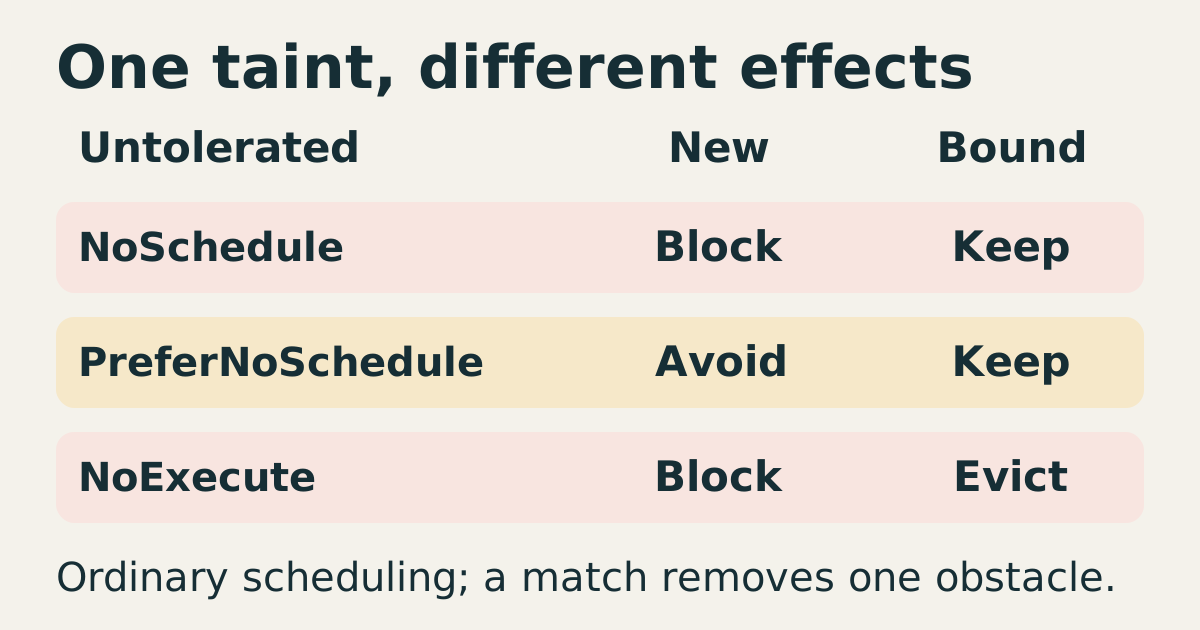
For untolerated taints, NoSchedule blocks new ordinary scheduling but leaves bound Pods; PreferNoSchedule softly avoids placement and leaves bound Pods; NoExecute blocks new scheduling and can evict bound Pods.

Taints repel pods that do not tolerate them

A taint repels Pods that do not tolerate its effect. A toleration removes that obstacle; it does not force placement onto specialized hardware. Dedicated-node designs usually combine a taint with a label and required node affinity, then check capacity and admission policy separately. ...

February 25, 2027 · 6 min · XB Field Notes