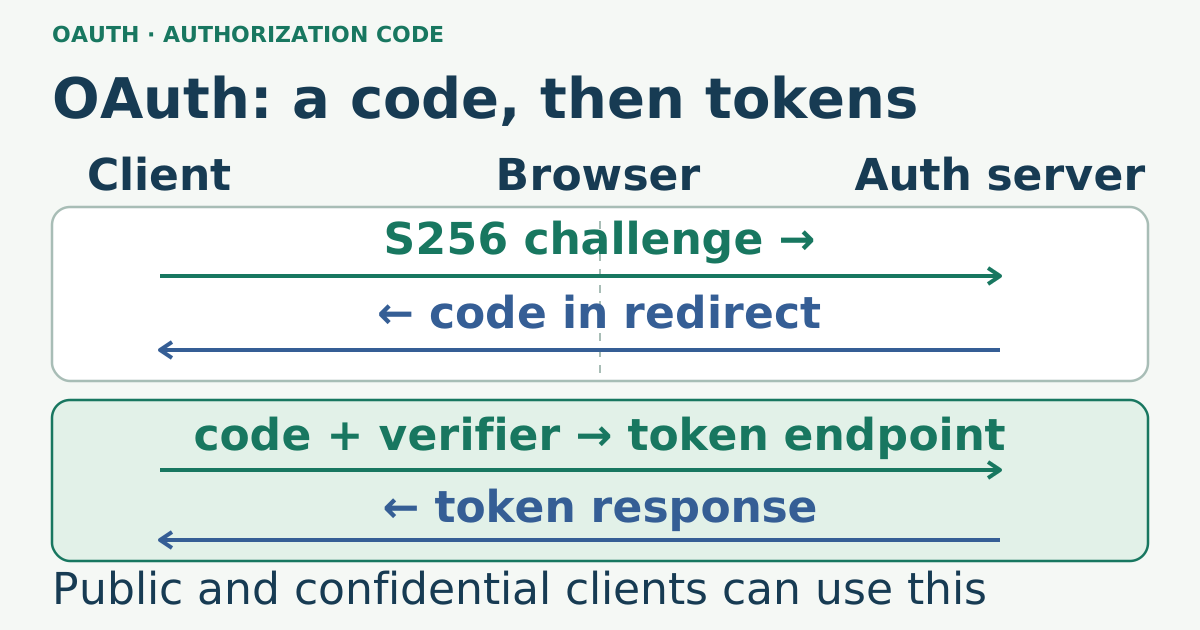
Client and authorization server exchange an S256 challenge and browser-facing callback code through the browser. A separate token-endpoint lane exchanges code plus verifier for tokens. The client can be public or confidential.

OAuth code flow trades a code for a token

Authorization-code flow moves access-token delivery to the token endpoint rather than returning an access token in the browser-facing authorization redirect. That distinction reduces exposure in URLs, but does not mean a browser can never hold a token. The client architecture determines who exchanges the code and where the resulting credentials live. ...
October 20, 2027 · 5 min · XB Field Notes
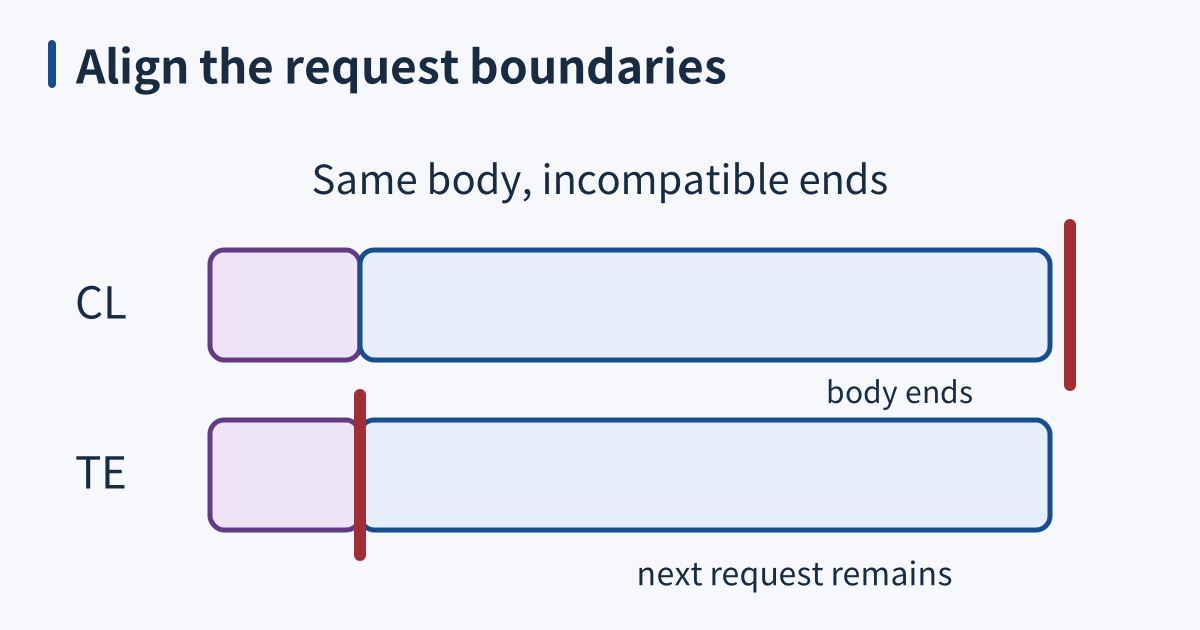
Two identical body strips have different red end markers: the CL marker follows the full body, while the TE marker follows the zero-chunk segment and leaves a synthetic next request.

Request smuggling desyncs the proxy chain

Request smuggling occurs when components disagree about HTTP message boundaries and an attacker exploits the disagreement. In a proxy chain, bytes treated as one request’s body by the front end may become another request at the back end. The important evidence is inconsistent parsing and forwarding, not simply finding two HTTP status lines in a response capture. ...

October 19, 2027 · 5 min · XB Field Notes
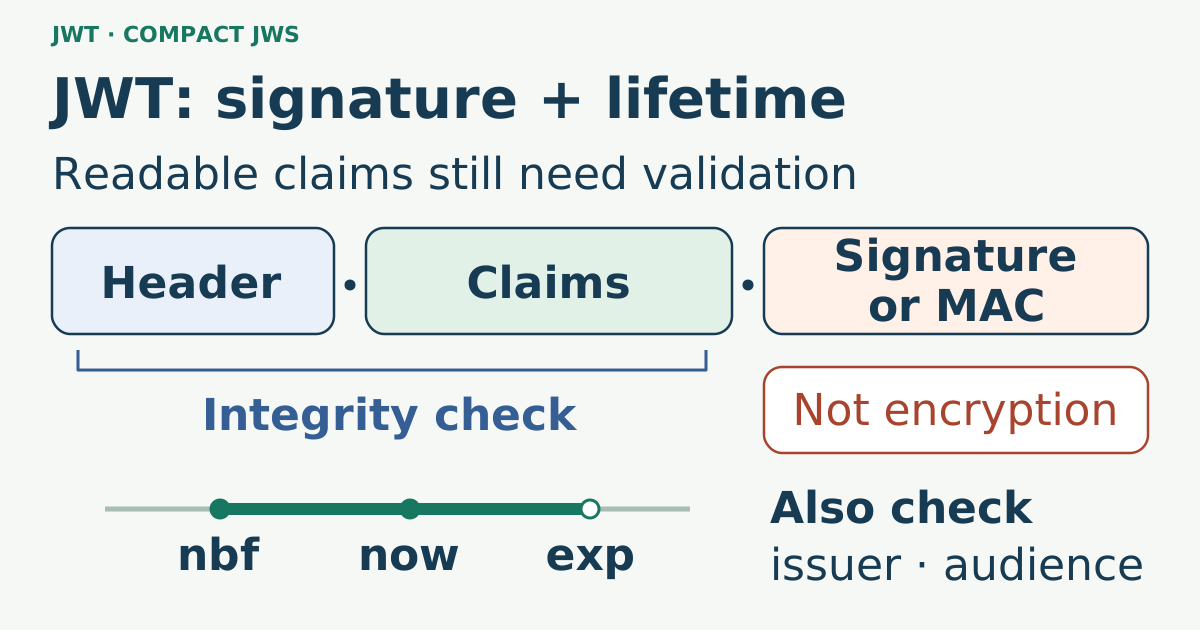
A compact JWS has header, claims, and signature or MAC segments. Integrity protection does not encrypt the claims. A schematic validity interval includes nbf and excludes exp; issuer and audience checks remain necessary.

JWTs carry a signature and a lifetime

A signed JWT carries claims whose integrity can be checked without looking up the entire token in a session table. That convenience does not make its contents confidential, establish authorization, or prevent replay. Start with the token format and the application’s validation contract, then test each boundary independently. A successful cryptographic check is one input to an access decision, not the decision itself. ...

October 18, 2027 · 6 min · XB Field Notes
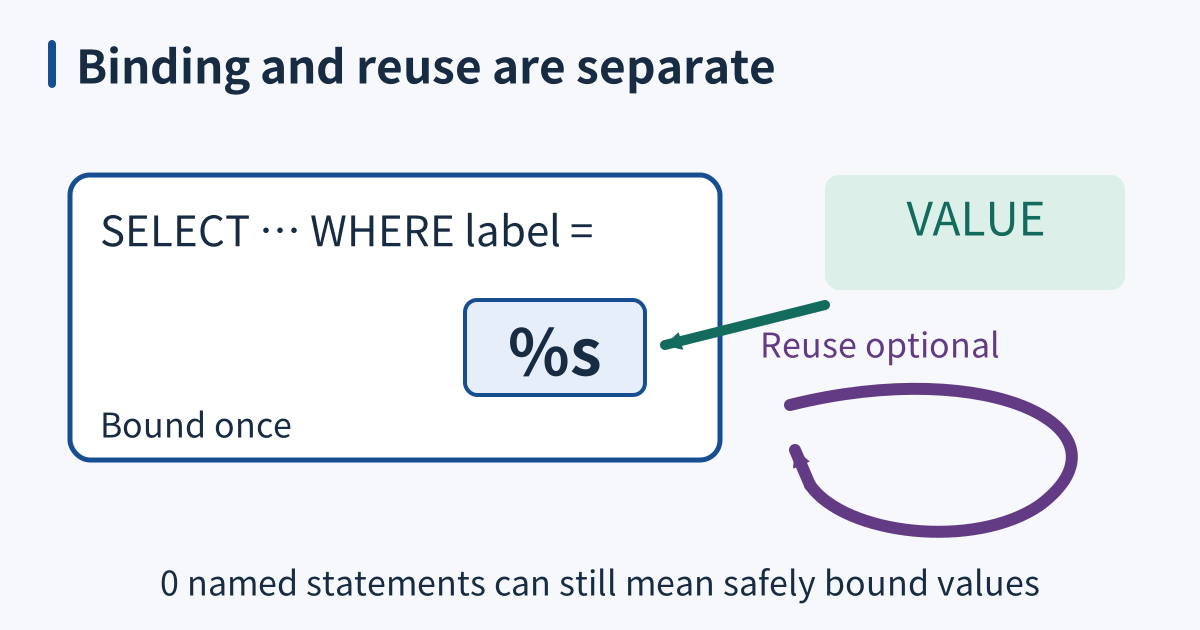
A value arrow enters a percent-s placeholder in SQL. A separate purple loop marks optional reuse; zero named statements can still retain binding. Source fixture, not rerun.

Prepared statements separate values from SQL structure

Parameter binding gives a database value a designated position in a SQL statement. A name containing a quote or a semicolon remains a value instead of becoming another clause. Reusing a named prepared statement adds a separate optimization: the server can retain statement information across executions in one session. Safe binding does not require the application to create a named statement for every query. ...

October 16, 2027 · 5 min · XB Field Notes
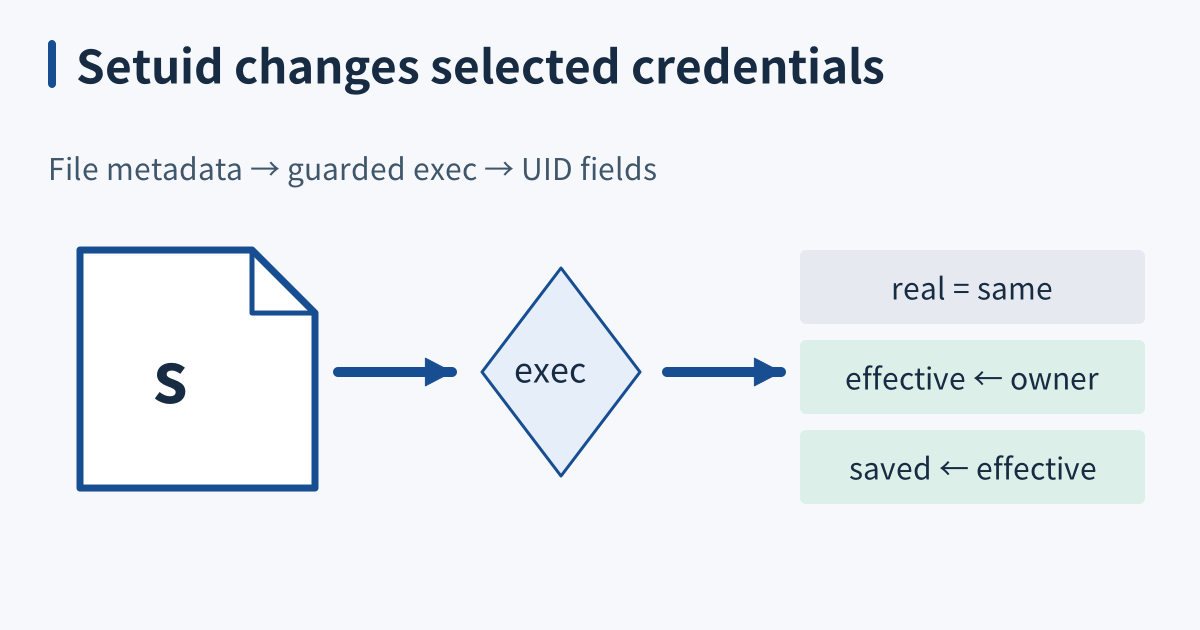
Executable ownership and an exec gate lead to effective and saved UID changes while real UID remains unchanged.

Setuid changes effective identity at exec

Setuid on a Linux executable can change the process’s effective user ID to the file owner’s ID when exec succeeds. It does not replace every credential with the owner’s login identity. A privileged helper can therefore perform a controlled operation on another account’s behalf, but its input handling and privilege lifetime become part of the security boundary. The mode bit alone proves neither that a transition occurred nor that the helper is safe. ...

October 2, 2027 · 5 min · XB Field Notes
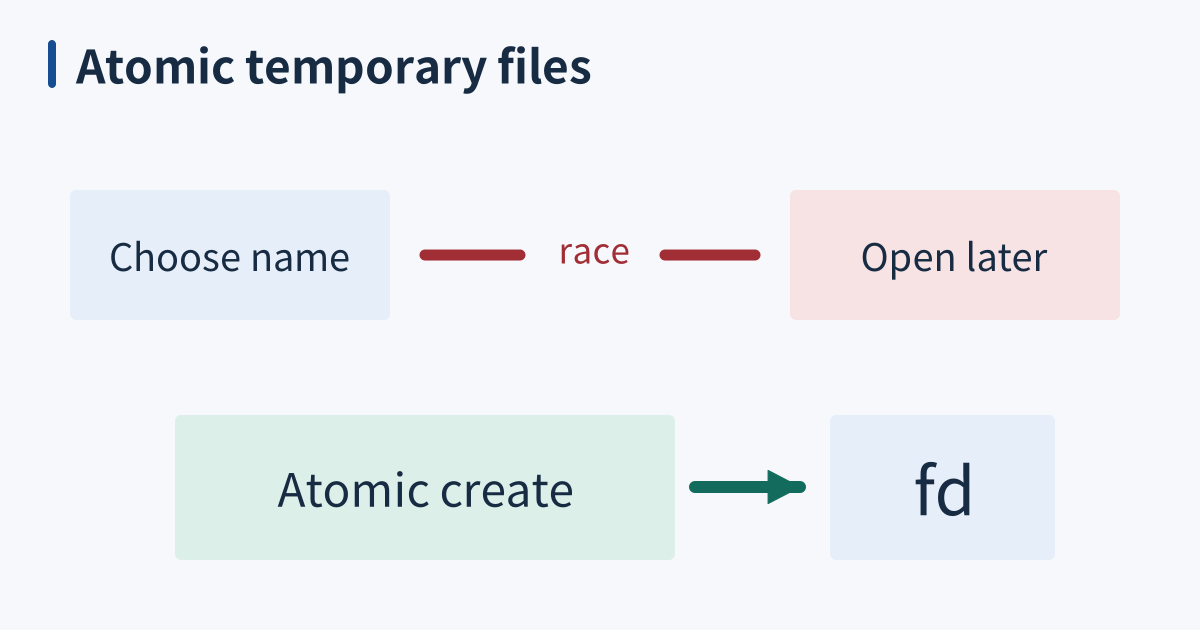
A name-then-open race is contrasted with exclusive atomic creation returning an owned file descriptor.

Create temporary files atomically in a trusted location

A shared temporary directory is a namespace other users may also write to, not a guarantee that every file inside is public. File permissions still control content access. The dangerous assumption is that choosing a pathname gives your process ownership of whatever already occupies it. Create a new object atomically and keep using the returned handle instead of trusting a predictable name. ...

September 26, 2027 · 5 min · XB Field Notes
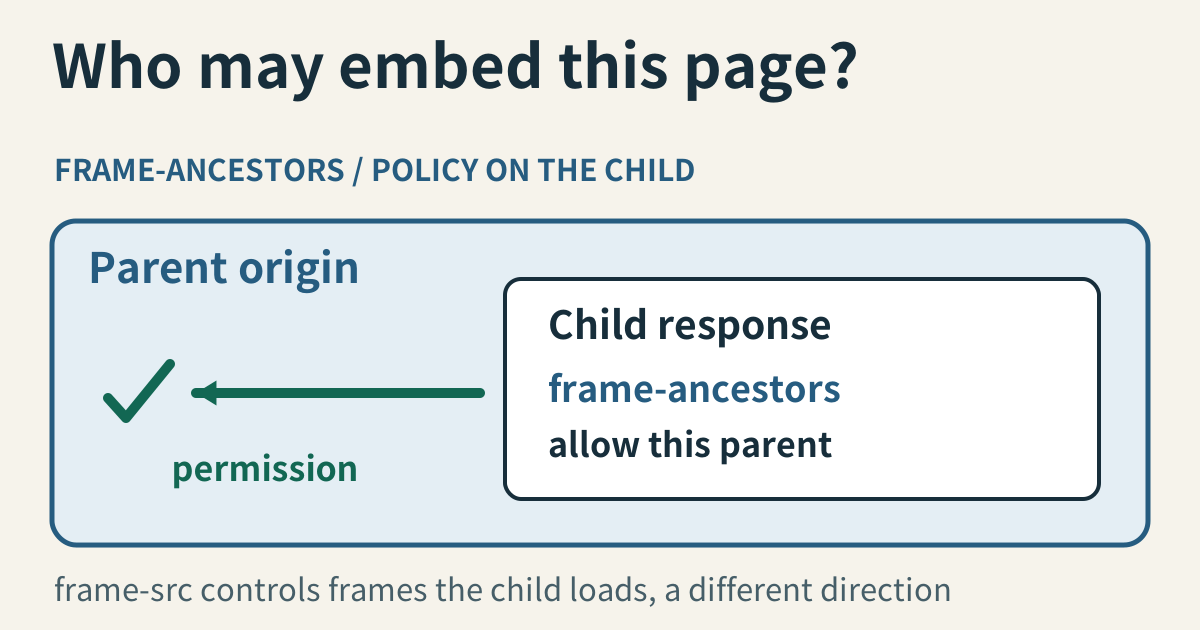
A parent page contains a child response. A permission arrow points from the child’s frame-ancestors policy to the allowed parent origin.

Frame policy names who may embed your page

Clickjacking deceives a user about which interface receives an action. A hostile parent can place a framed application behind a misleading visual layer so that a click reaches a real control in that application. The parent need not read the child’s DOM for the user to interact with it. Same-origin read restrictions therefore do not replace a decision about whether the application may be embedded at all. ...

September 23, 2027 · 5 min · XB Field Notes
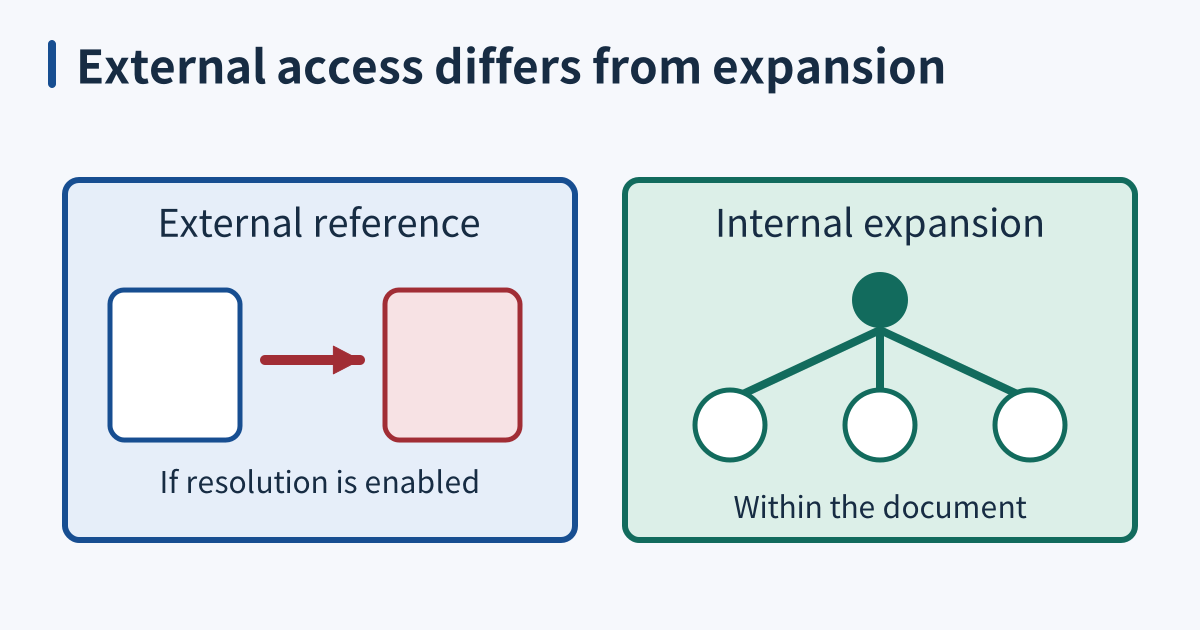
One panel shows a conditional external-reference path from a document to a resource; a separate panel shows a bounded branching expansion within the document.

XXE follows external references with the parser’s authority

XML external entity processing can make a parser resolve a document-controlled reference using the application’s access. Depending on the parser and its configuration, this can expose files or initiate requests to other services. XML support alone does not establish vulnerability: identify the actual parser, enabled features, resolver and downstream processing before deciding what an input can do. ...

September 22, 2027 · 5 min · XB Field Notes