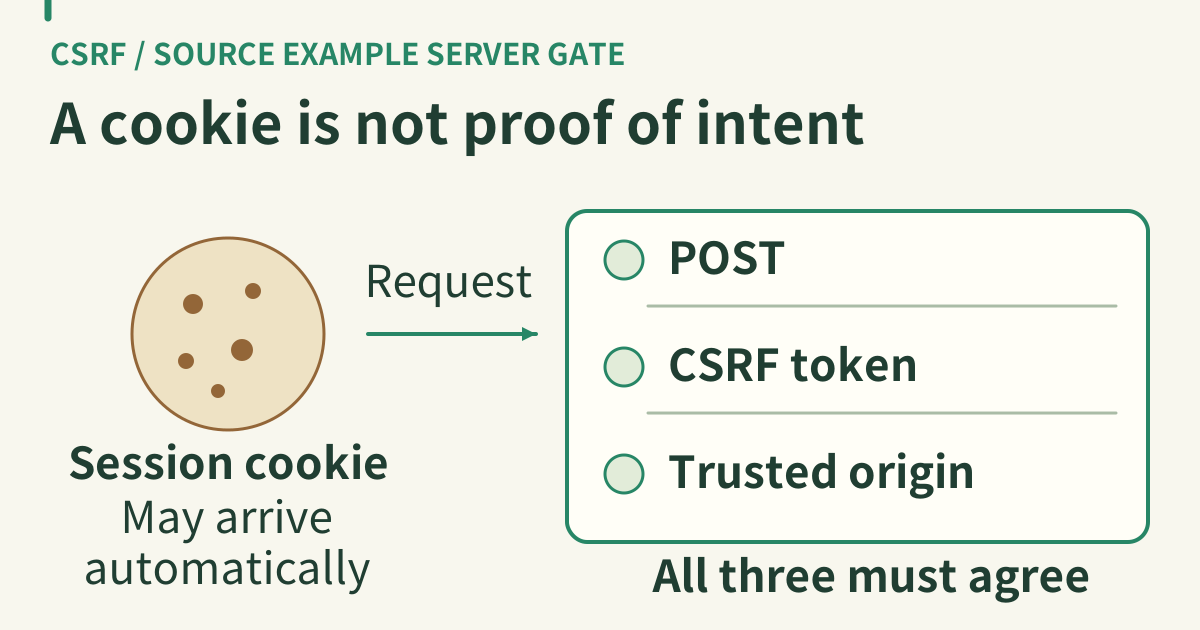
Browsers can attach session cookies to attacker-triggered requests. CSRF defenses distinguish authorized request contexts; they do not prove that a person saw or intended an action.
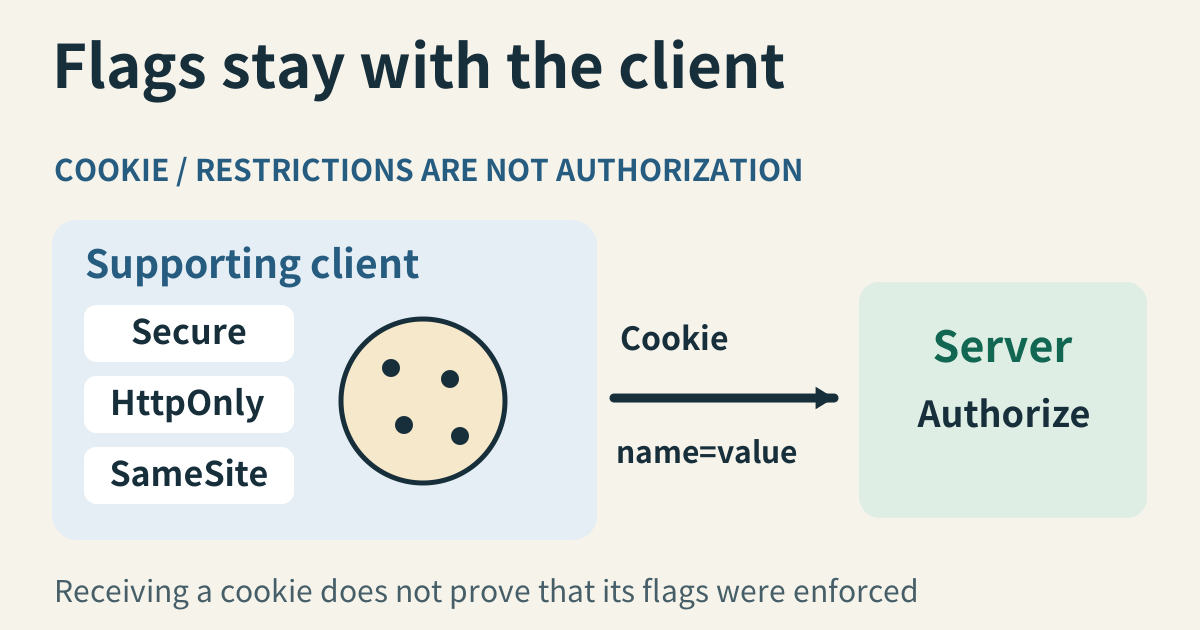
This shows the article’s server fixture, not a browser test. SameSite reduces cookie delivery; trusted request context does not prove human intent. XSS and authentication require separate defenses. Cookies travel without asking Browsers attach cookies to a request according to domain, path, Secure, SameSite, and other browser rules, not on whether the page causing the request was the user’s earlier intent. That means a page on an attacker’s origin can make the victim’s browser send a state-changing request — a transfer, a password change — that carries the authenticated session cookie, and the server sees a request that looks like it came from the legitimate user. This is why a request’s mere presence of credentials is not evidence of the user’s intent; the browser is following the cookie rules, not the user’s choice.
...