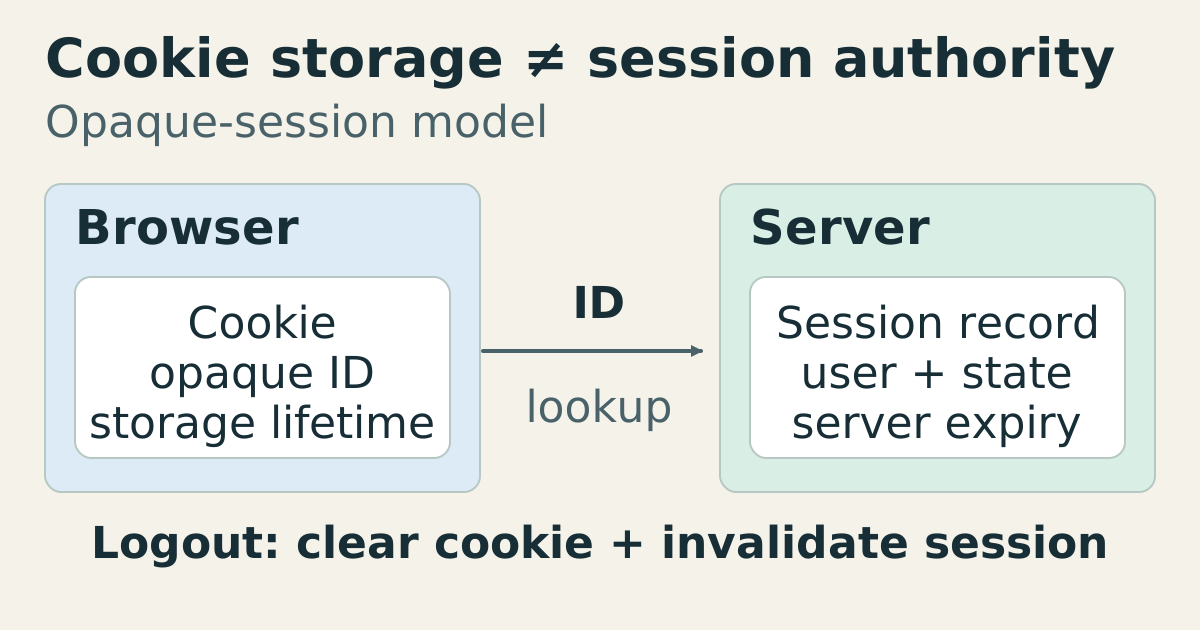
In an opaque-session model, the browser stores a cookie with an opaque identifier and storage lifetime. The identifier locates a server-side session record with user state and server expiry. Logout must both clear the cookie and invalidate the session.

Cookies and sessions hold boundaries

A cookie is a browser storage and transport mechanism. A server-side session is one application design that uses a cookie value to locate stored state. Keeping those responsibilities separate makes login, expiry, and logout testable. This article follows an opaque session identifier, rather than repeating the host, path, or SameSite matching rules. ...
January 12, 2027 · 5 min · XB Field Notes
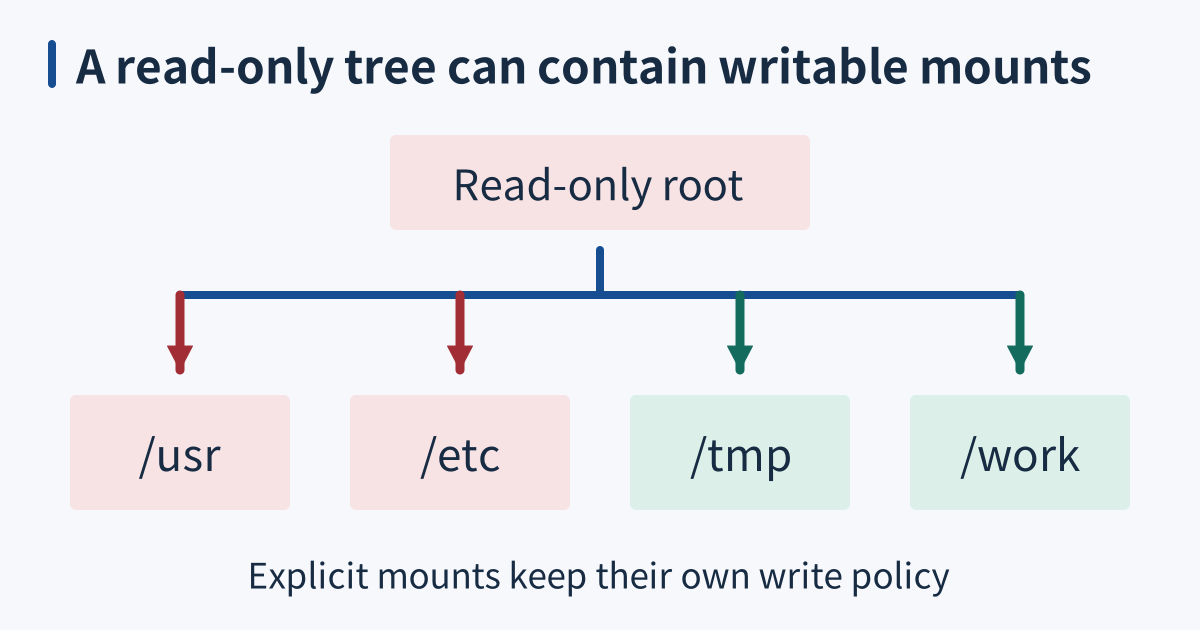
A read-only root tree branches to /usr and /etc and to explicitly writable /tmp and /work mounts.

A read-only root restricts filesystem mutation within its scope

A read-only root filesystem prevents ordinary writes to the filesystem layer containing a service’s packaged code and configuration. Explicit mounts can still provide writable locations for runtime data. Its boundary is filesystem mutation. It does not by itself remove process privileges, prevent reading available data, or block communication with other services. ...

December 23, 2026 · 6 min · XB Field Notes
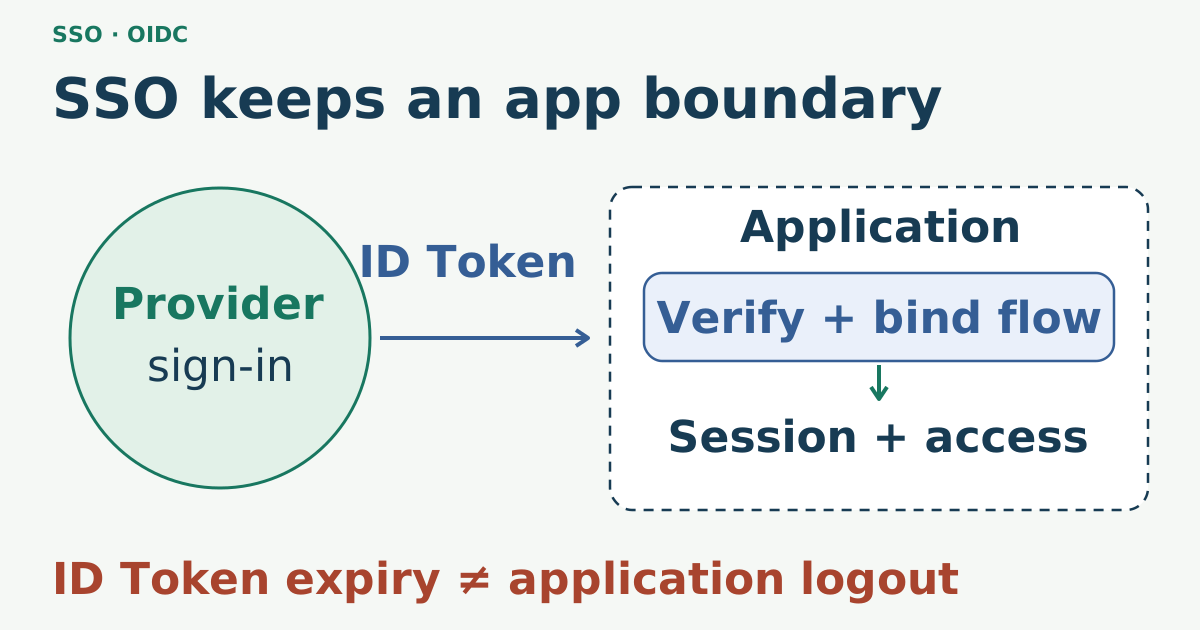
An identity provider authenticates and relays an ID Token to an application boundary. Inside, the application verifies the token and binds the login flow, then owns its session and access decisions. ID Token expiry does not automatically log out the application.

SSO delegates authentication; the app still verifies

Single sign-on lets an application rely on an identity provider’s authentication result. The user does not need to hand that provider password to each application. The application still owns its authorization decisions, local sessions, and integration configuration; confidential clients may also hold client credentials. Delegating authentication does not remove the application’s security boundary or guarantee that every future login can skip user interaction. ...

November 17, 2026 · 5 min · XB Field Notes
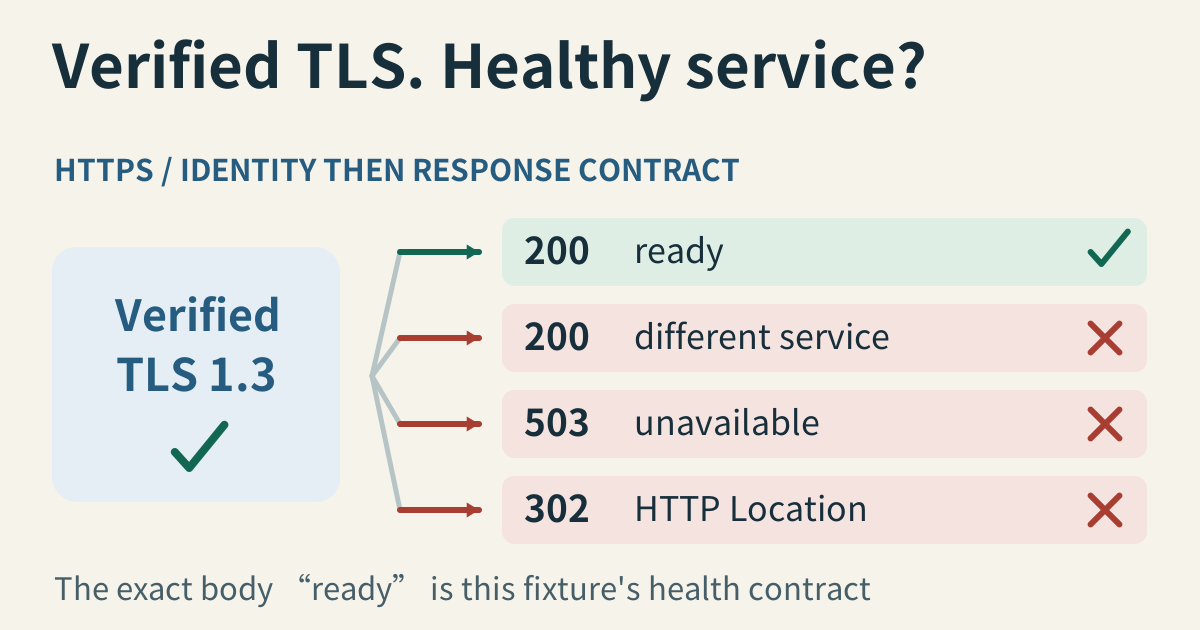
Verified TLS 1.3 branches to four responses. HTTP 200 with ready receives a check; 200 with different service, 503 unavailable, and 302 HTTP Location receive crosses.

Checking HTTPS beyond the lock icon

HTTPS protects a connection and authenticates its peer according to the client’s trust policy. It does not certify the site’s intentions, correctness, or availability. A security indicator is therefore neither just an encryption label nor a complete health report. A useful check separately evaluates the TLS connection, the HTTP response, and the service’s expected behavior. ...

November 9, 2026 · 6 min · XB Field Notes
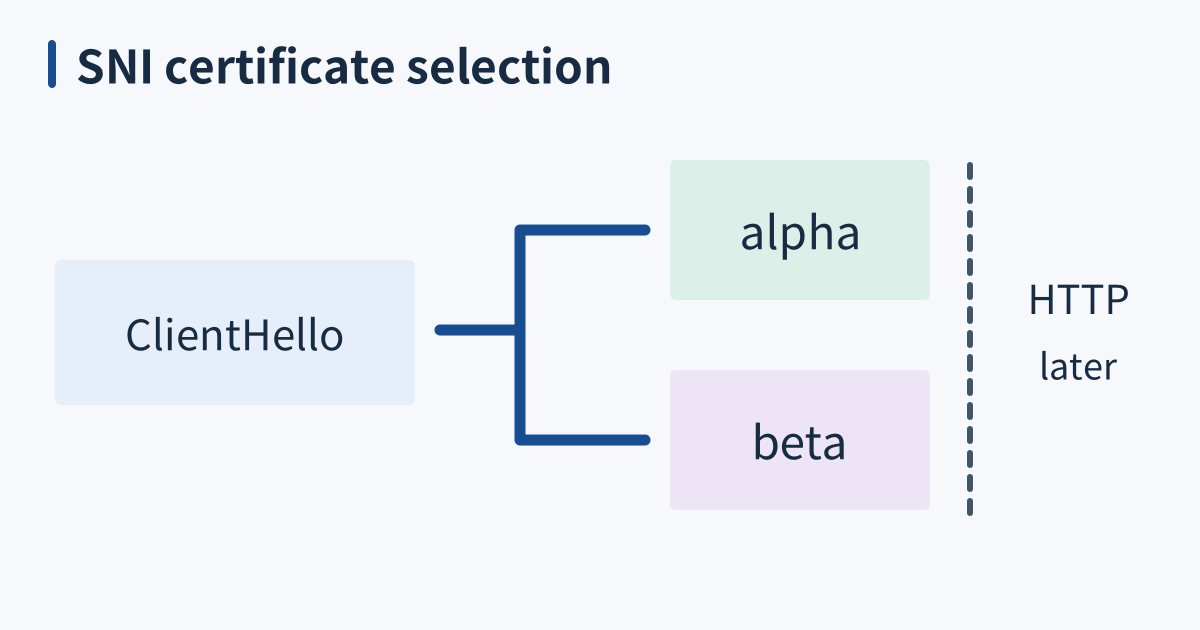
ClientHello branches to alpha or beta certificate selection before the separate later HTTP layer.

SNI selects a TLS certificate for the requested hostname

Server Name Indication gives a TLS server a hostname while it is choosing handshake parameters and a certificate. In the certificate-based, no-early-data path discussed here, this happens before ordinary HTTP bytes, not before any bytes cross the network. SNI is a selection hint; the client must still verify the selected identity. ...

November 8, 2026 · 6 min · XB Field Notes
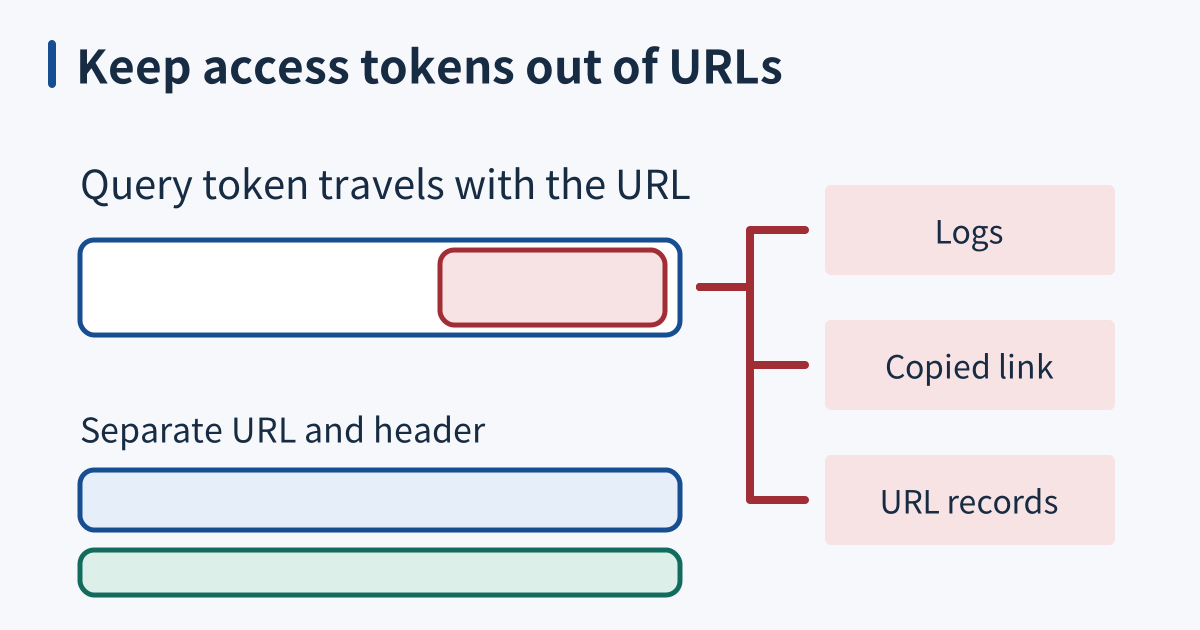
A highlighted query-token segment fans out from a URL into logs, copied links and URL records; separate lower URL and header bands show field separation.

Keep reusable access tokens out of request URLs

A reusable bearer access token grants its holder defined access; sender-constrained tokens additionally require proof tied to the sender. Putting it in a URL exposes that capability to systems that routinely copy URLs: access logs, monitoring records, browser navigation history, bookmarks, and shared links. The exact exposure depends on the request and policy, but a secret-looking query parameter is not automatically protected by its name. Treat transport placement as part of the credential’s disclosure boundary. ...

November 1, 2026 · 7 min · XB Field Notes
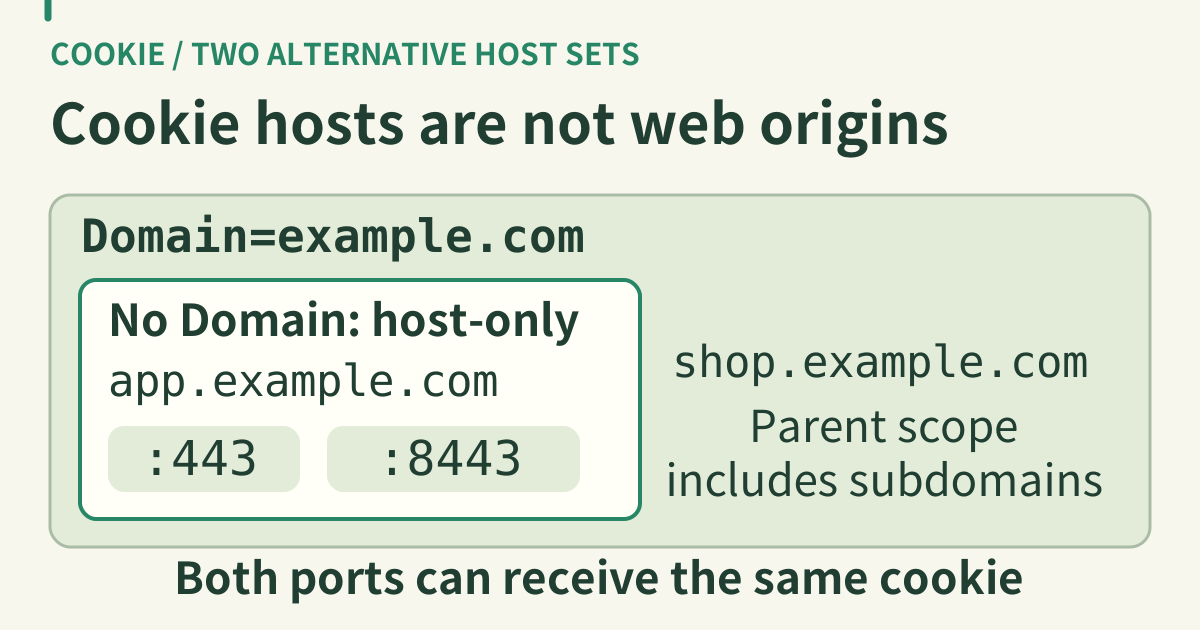
Two alternative cookie host sets: omitted Domain matches app.example.com without isolating its ports; Domain=example.com also covers the parent and matching subdomains such as shop.example.com.

Cookie scope keeps the session where it belongs

A cookie’s host and path scope controls which destinations are eligible to receive its name and value. It is useful to minimize that set, but scope is not authorization, and cookies do not follow the browser’s full origin boundary. This article concentrates on Domain and Path; transport and request context add separate restrictions. ...

October 25, 2026 · 5 min · XB Field Notes
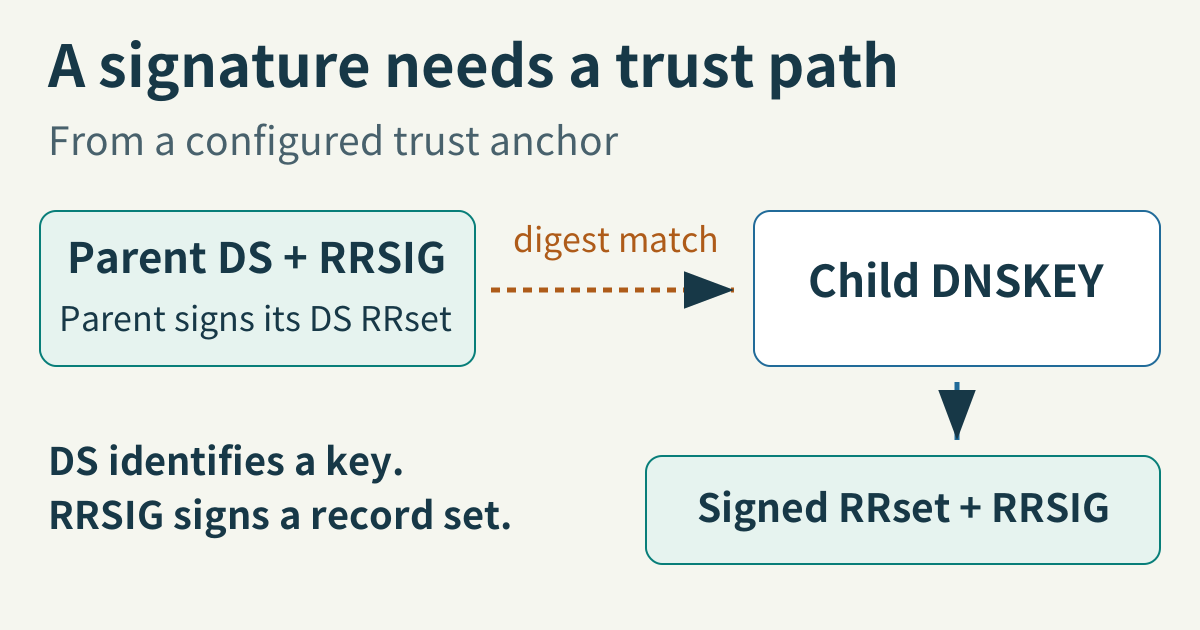
A configured trust anchor leads to a parent-signed DS RRset. Its digest identifies a child DNSKEY; the child key relationship supports verification of the signed RRset. The parent does not directly sign the child key.

DNSSEC validates a chain of signed data, not merely the presence of signatures

DNSSEC adds origin authentication and integrity checking for DNS data. RRSIG records sign RRsets, DNSKEY records publish verification keys, and a parent’s DS record identifies a child DNSKEY through a digest. The parent signs its DS RRset; it does not simply sign the child’s public key directly. Validation follows these relationships from a configured trust anchor to the requested data. ...

October 21, 2026 · 7 min · XB Field Notes