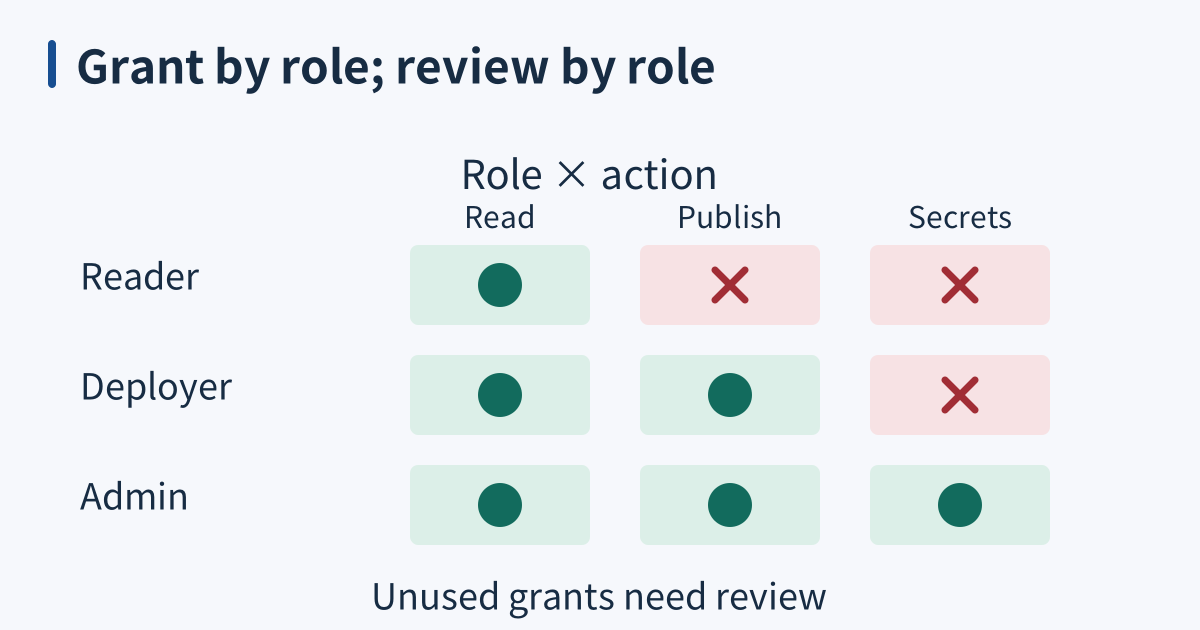
A role-by-action matrix uses green circles for granted membership and red crosses for absence; a separate label calls for review of unused grants.

Least privilege is a threshold, not a feeling

Least privilege means granting a principal the operations required for a defined job, on the intended resources, for an appropriate lifetime. It is a testable policy rather than a reassuring label. Start with the service’s real launch identity and dependencies; an unused permission and a missing permission are different findings that need different responses. ...
August 11, 2026 · 5 min · XB Field Notes
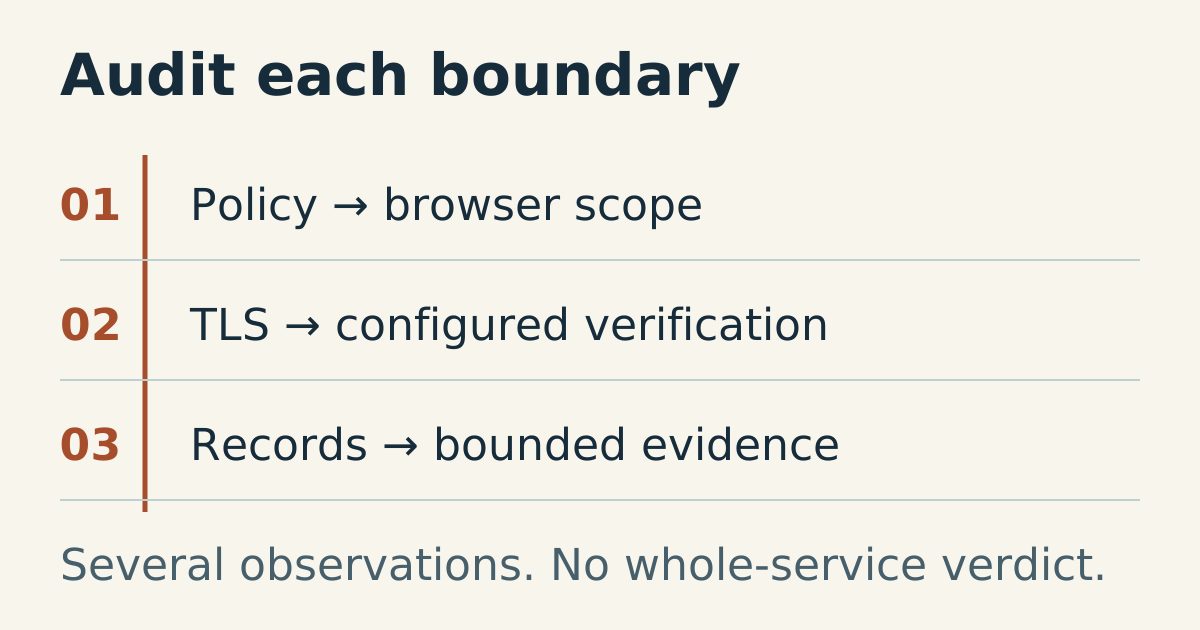
An audit ledger keeps policy, TLS and deployment evidence on separate lines, with a reminder that evidence has scope.

Audit the trust of a public edge

Inspect security policy, verified TLS identity, issuance restrictions, and deployment trust with explicit limits.

August 6, 2026 · 7 min · XB Field Notes
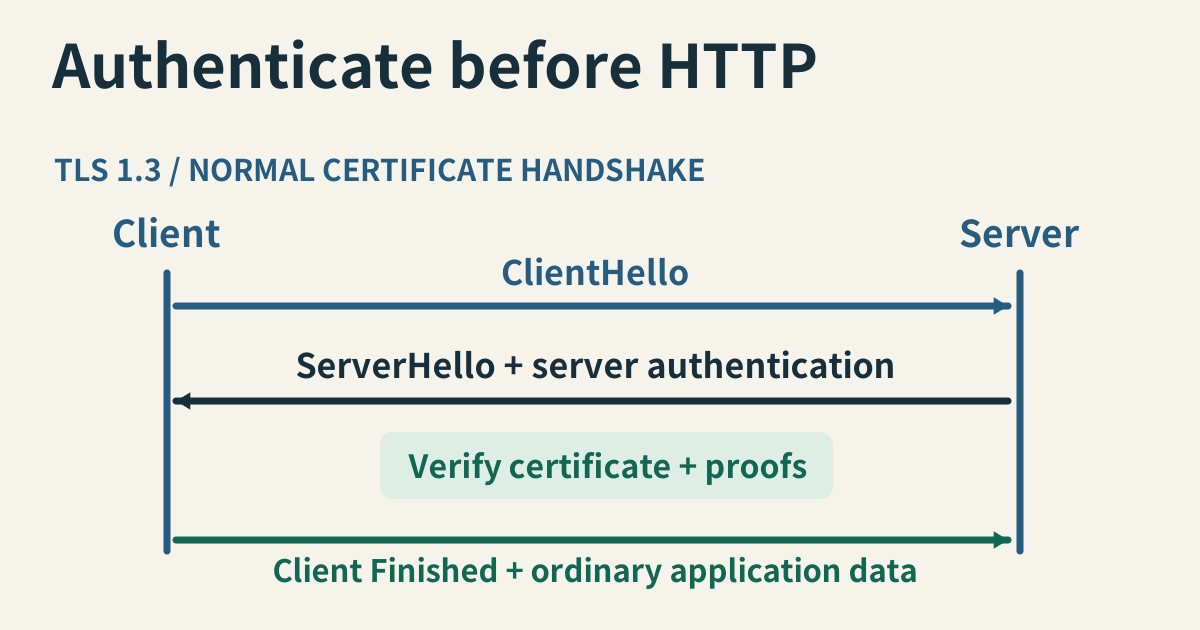
Client and server lifelines exchange ClientHello, ServerHello and server authentication. After certificate and proof verification, client Finished and ordinary application data travel to the server.

TLS 1.3 handshake basics

TLS 1.3 establishes traffic keys and authenticates the peer under the application’s trust policy. Ordinary HTTPS authenticates the server; client certificates are optional, not an automatic consequence of encryption. A successful TCP connection alone establishes neither identity nor a working HTTP service. ...

August 6, 2026 · 5 min · XB Field Notes
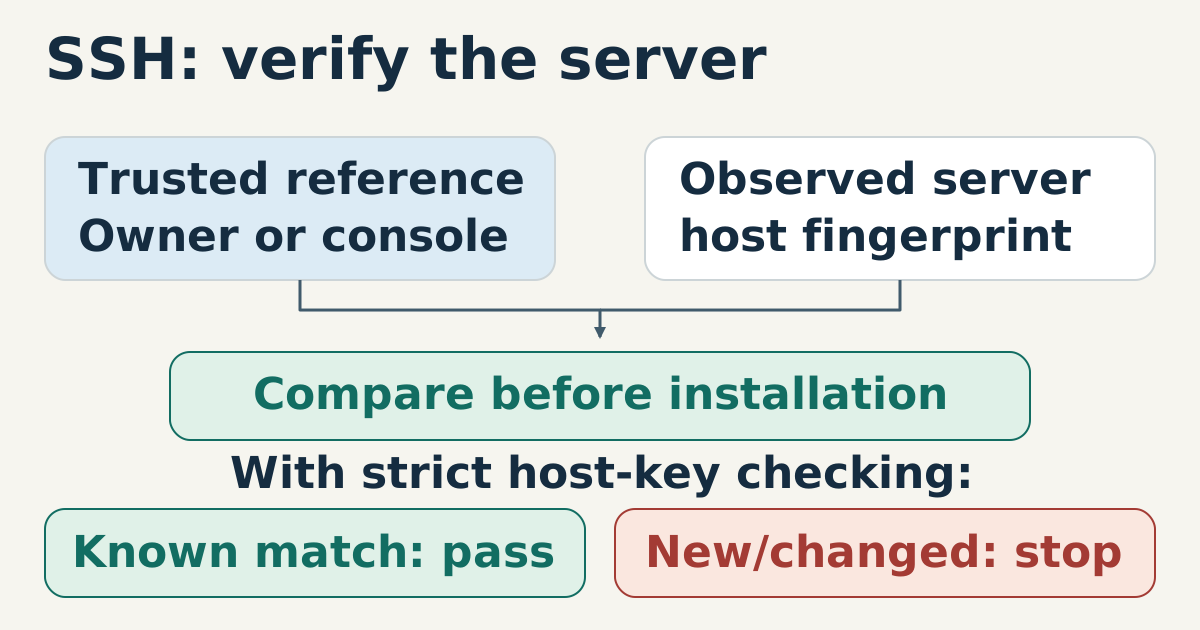
A trusted owner or console reference and an observed server host fingerprint feed a comparison before key installation. Under strict checking, a known matching key passes the host-key check, while new or changed keys stop.

SSH host keys are part of the deployment record

Record the expected fingerprint, use a deliberate StrictHostKeyChecking policy, and treat changes as an incident until explained.

July 28, 2026 · 3 min · XB Field Notes
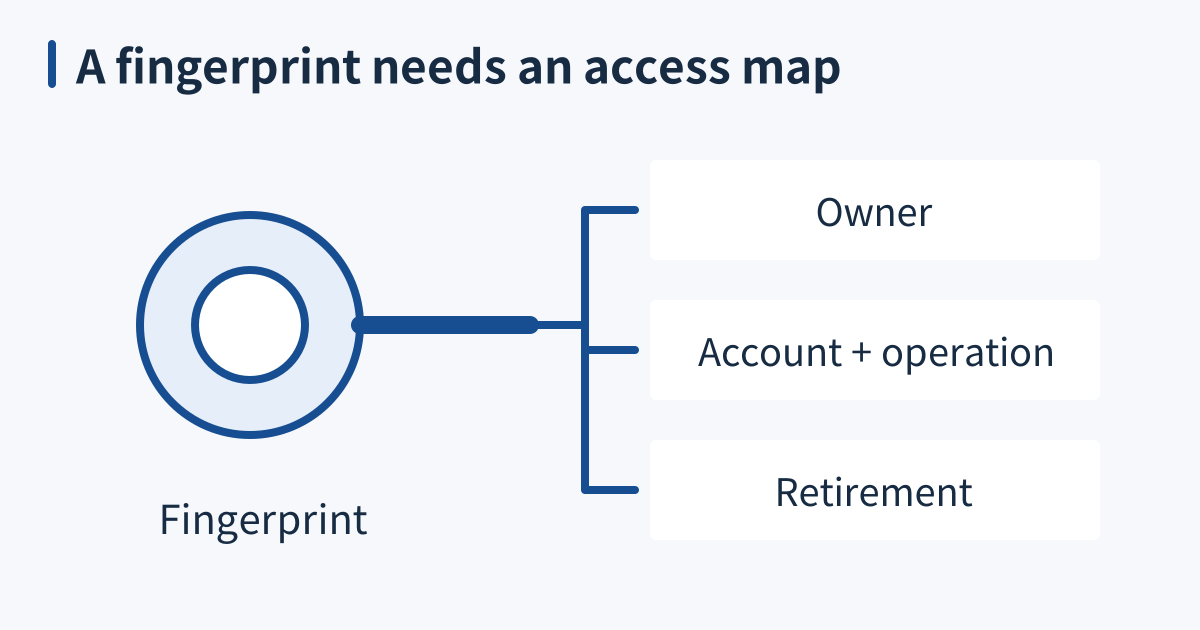
A fingerprint-like key symbol branches to accountable owner, account and operation, and retirement, showing access inventory rather than a security badge.

SSH key hygiene is mostly limiting where a key works

SSH key hygiene starts with knowing which credential grants which access, who owns it, and how that access ends. A key comment helps people maintain an inventory, but it is not an authenticated owner record or an authorization rule. Track fingerprints alongside accountable owners, intended accounts, permitted operations, and a removal plan. Generating a modern key is only the beginning. ...

July 6, 2026 · 5 min · XB Field Notes
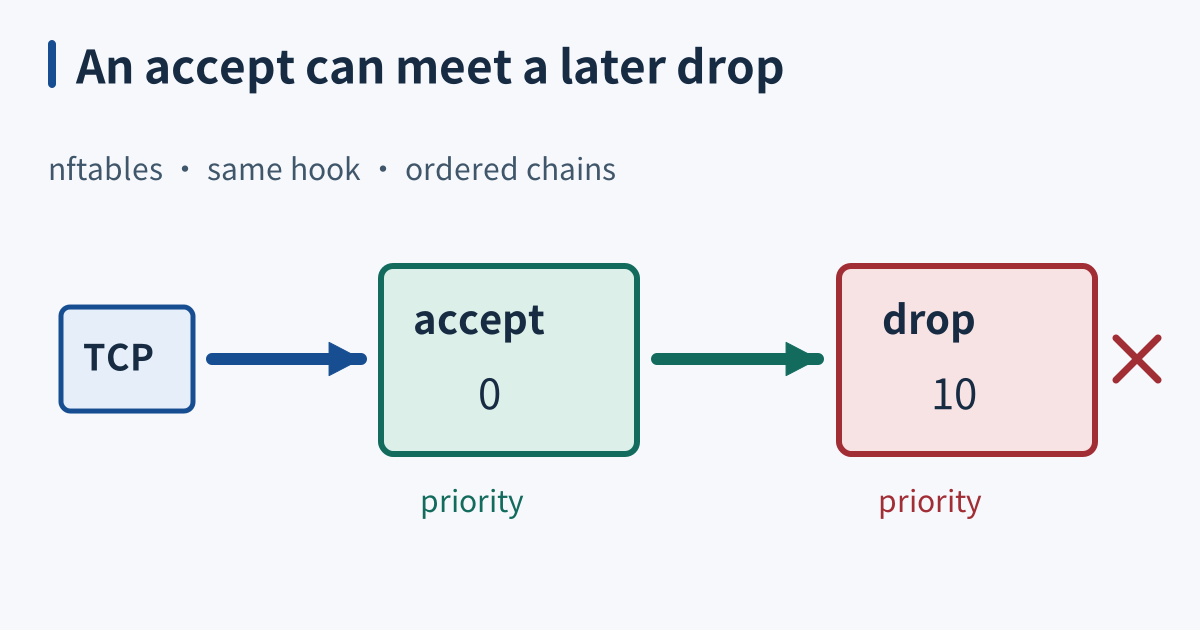
A packet passes an input-chain accept at priority zero and reaches a terminal drop at priority ten.

A firewall policy must match the packet path, family, and chain order

A firewall applies packet policy at particular points in a network stack. A useful rule therefore names more than a port: its address family, hook, direction, state conditions, and place among other rules matter. With nftables, base chains attach to Netfilter hooks at specified priorities. The effective packet path, rather than the order of descriptions in an operations document, determines which decisions a packet encounters. ...

July 1, 2026 · 6 min · XB Field Notes
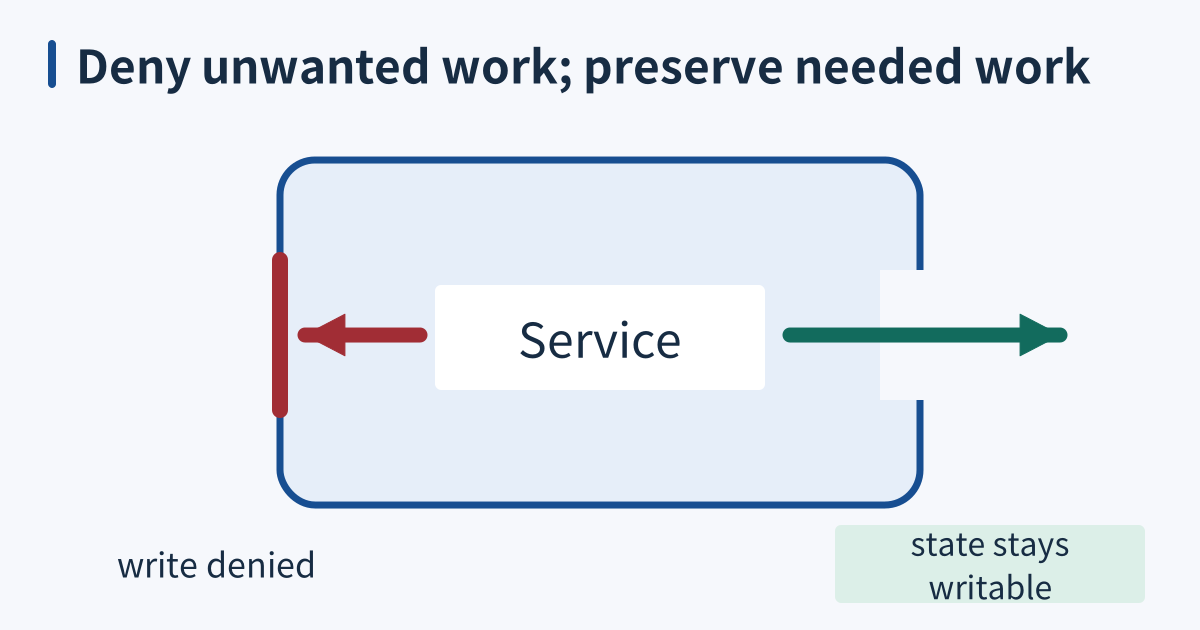
A service boundary blocks an unwanted write while a deliberate opening leads to writable state.

Harden a systemd service by testing its boundaries

Service hardening should turn a specific unwanted operation into a denied operation while preserving the work the application must perform. systemd supplies execution settings for filesystem views, namespaces, privileges, and other resources. They are separate controls with separate limits. Adding four familiar directives does not make every readable file, reachable process, inherited descriptor, or allowed system call disappear. ...

June 27, 2026 · 7 min · XB Field Notes