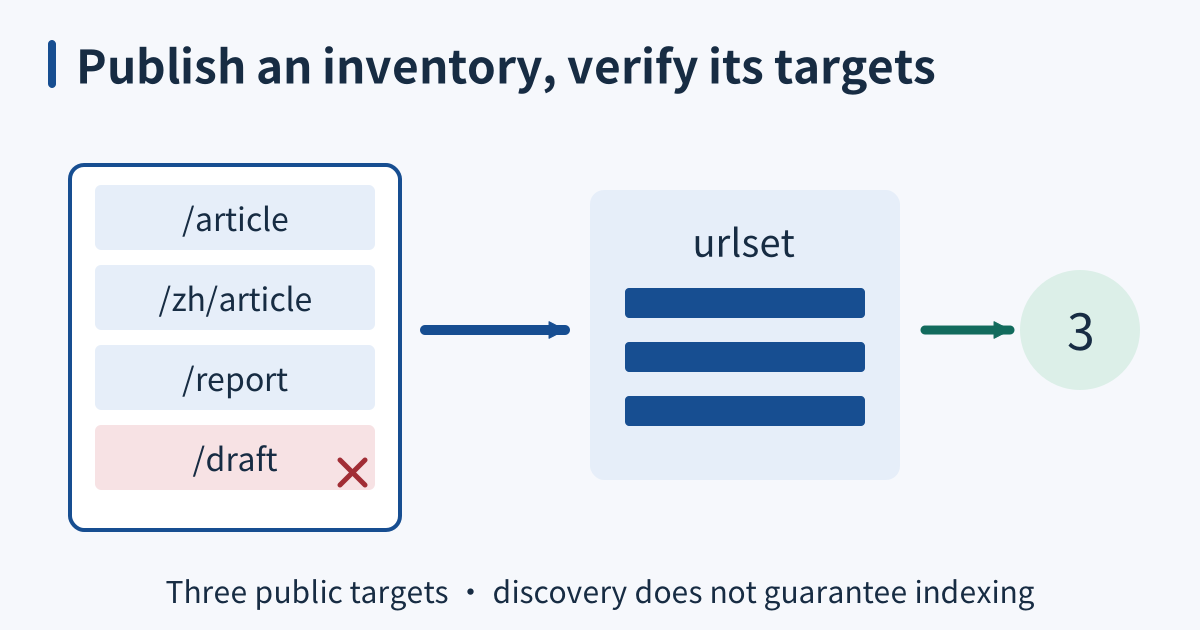
An inventory of three public paths and one crossed-out draft yields a urlset with three entries and three public targets. Discovery does not guarantee indexing.

Sitemaps guide crawler discovery

A sitemap gives a crawler an explicit list of URLs to consider. It is useful when new or deeply linked documents are difficult to discover through ordinary navigation. The list does not bypass authentication, grant crawl permission, guarantee indexing, or promise a revisit date. Treat it as a published inventory of intended public documents, and keep that inventory aligned with the site’s canonical URLs and actual release state. ...
June 30, 2027 · 5 min · XB Field Notes
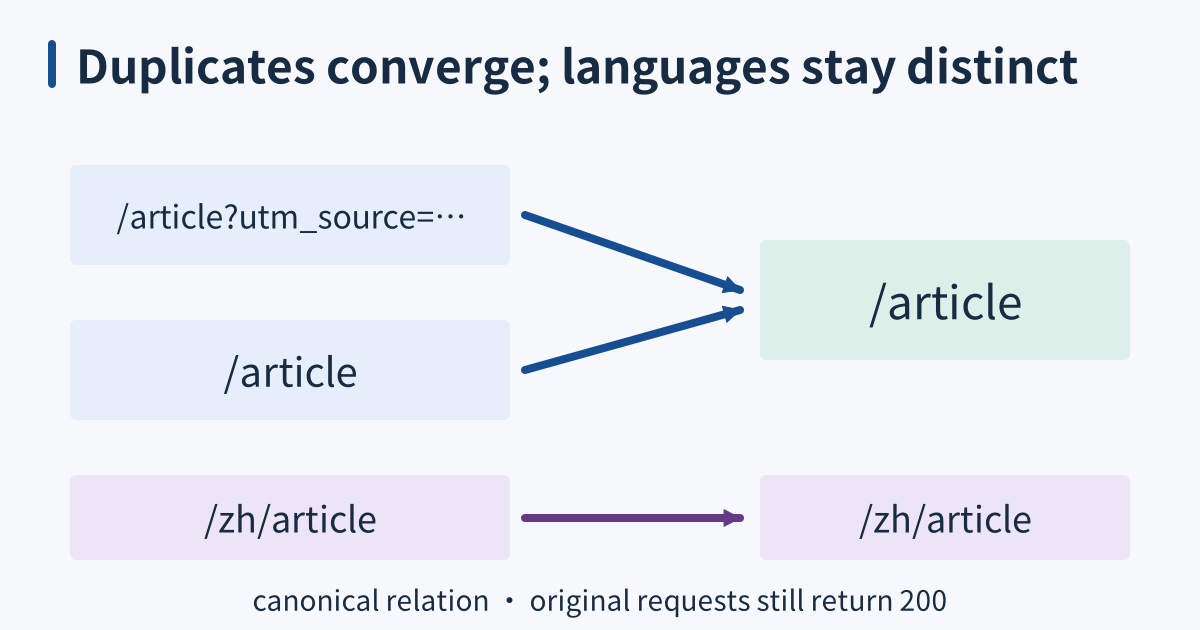
Canonical arrows from the English tracking variant and primary converge on /article. The separate Chinese row points to /zh/article. Original requests still return 200.

Canonical URLs name a preferred representation

Several URLs can deliver the same document: a tracking parameter, alternate host, or trailing-slash variant may leave the meaningful content unchanged. A canonical link identifies the preferred representation among suitable duplicates. It helps consumers interpret that relationship, but it does not redirect an HTTP request or force a search engine to select the declared URL. The declaration is useful only when its target and surrounding signals describe the actual content relationship. ...

June 26, 2027 · 5 min · XB Field Notes
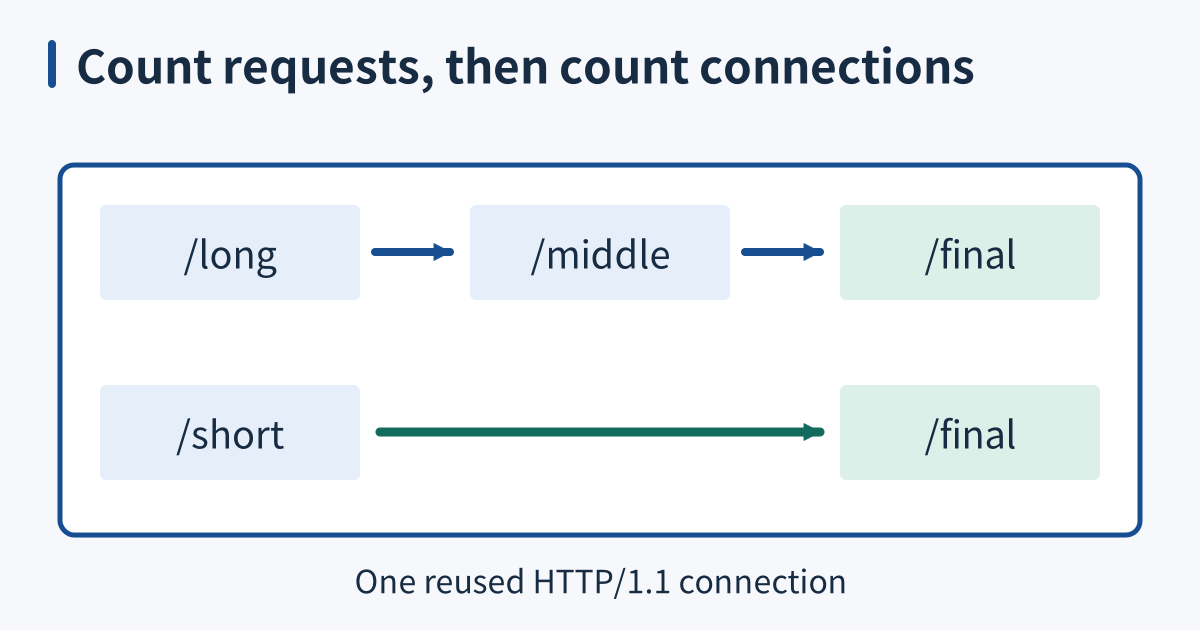
Within one reused HTTP/1.1 connection, the long route has three request nodes and the short route has two, both ending at /final.

Redirect chains add requests

A followed redirect makes the client resolve a Location value and issue another request before it reaches the desired representation. Several individually reasonable rules can form a chain: normalize a hostname, add HTTPS, fix a trailing slash, and move an old article. Review the complete path seen by a visitor, because each intermediary becomes another dependency. ...

October 4, 2026 · 5 min · XB Field Notes