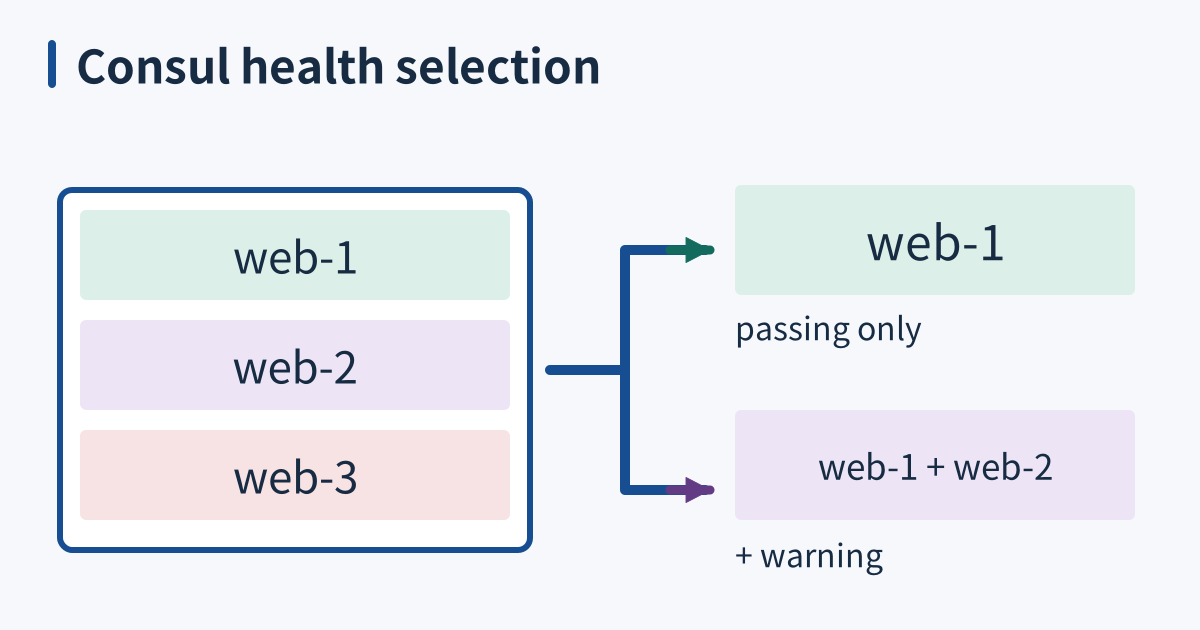
Three registered web endpoints split into passing-only web-1 and warning-inclusive web-1 plus web-2 sets.

Consul discovery reflects health policy and freshness

Consul discovery reports registered endpoints and recorded health observations. It cannot promise that every returned endpoint will answer the caller’s next request. A useful operating model separates four things: what is registered, which checks apply, which states the query accepts, and how old those observations may be. A successful lookup establishes none of those guarantees by itself. ...
April 6, 2028 · 6 min · XB Field Notes
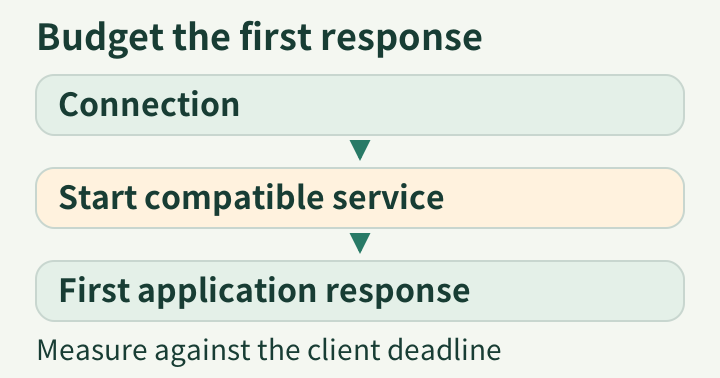
Cold start spans connection, compatible-service startup and the first application response. Measure that delay against the client deadline and the resident footprint saved. Selected conditional mechanism only; the source article remains held/pending.

Socket activation starts a service only when needed

A socket unit can keep a listening endpoint available while its compatible application is stopped. This can reduce the resident memory and periodic work of rarely used services. The socket, kernel queues and manager still consume resources, and installed software still needs security updates. Availability of the listener also depends on successful binding, permissions and the socket unit remaining active. A listening port is an opportunity to request work, not evidence that the application is ready. ...

February 1, 2028 · 5 min · XB Field Notes
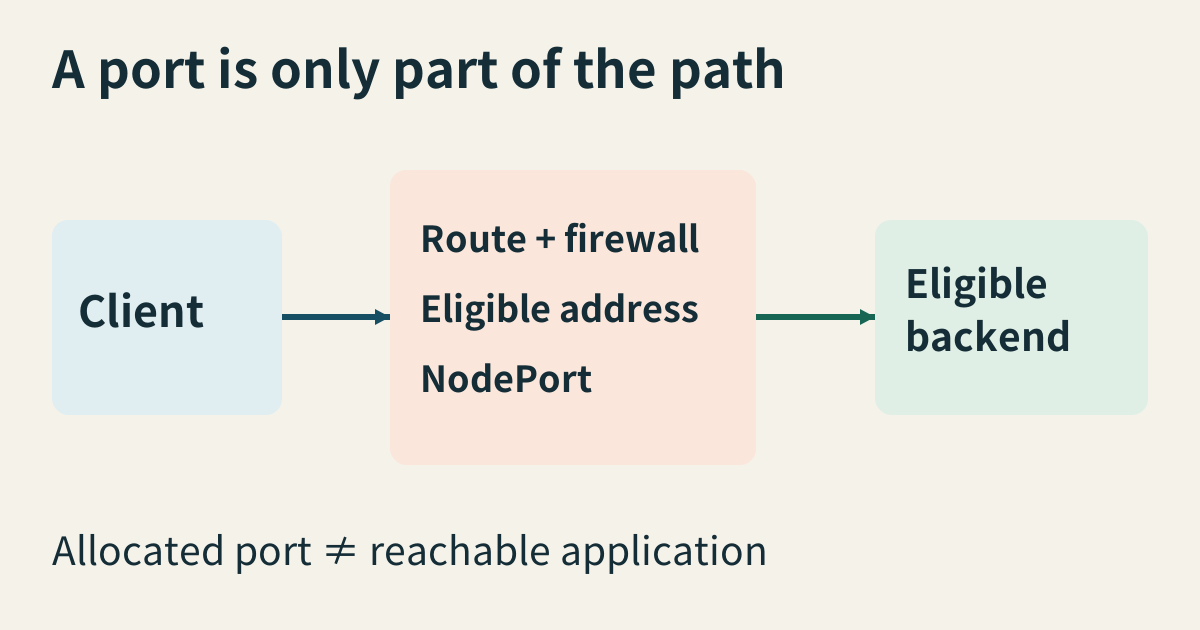
A client reaches a node-facing NodePort entry only through a usable route and firewall policy; forwarding then targets an eligible backend. Allocation alone does not prove reachability.

NodePort exposes a Service through eligible node addresses

A NodePort Service allocates a cluster-wide port and arranges forwarding through eligible node addresses. It is useful for external load balancers, development environments and deliberately exposed services. It does not make every address on every machine reachable, nor does it promise an application-level listening socket on each node. Network routing, firewalls, proxy implementation and traffic policy remain part of the path. ...

May 11, 2027 · 4 min · XB Field Notes
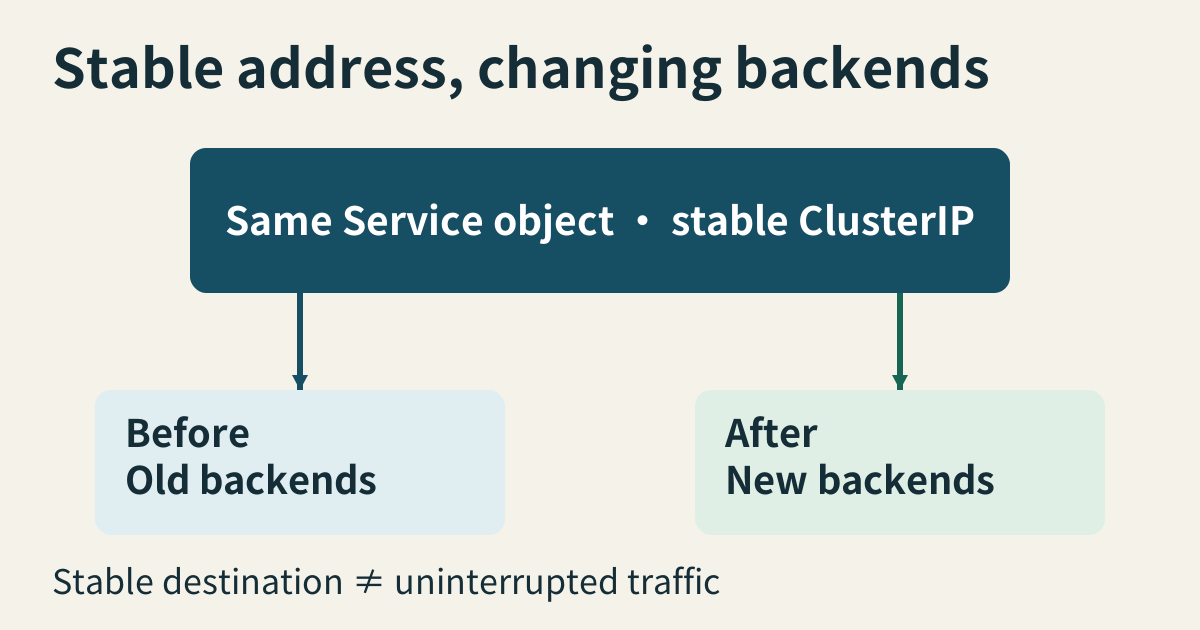
One ordinary ClusterIP Service address spans backend replacement: the before and after Pod states differ, while the Service object remains. This does not guarantee uninterrupted traffic.

A Service gives a pod a stable virtual address

The selector turns the Service from a fixed Endpoint into a live view: refresh happens in the background, and a client never edits its config when pods restart. The Service object lifetime bounds address stability. Membership, routing convergence and successful traffic remain separate. The exact allocator model passed again; no Kubernetes execution was added. Declared, then given an address An ordinary ClusterIP Service provides a virtual address and, with cluster DNS, a stable discovery name for its lifetime. A selector-based Service also declares which Pods in its namespace are intended backends. Other forms differ: headless Services allocate no virtual IP, ExternalName uses DNS indirection, and selectorless Services can use separately managed EndpointSlices. ...

February 9, 2027 · 6 min · XB Field Notes