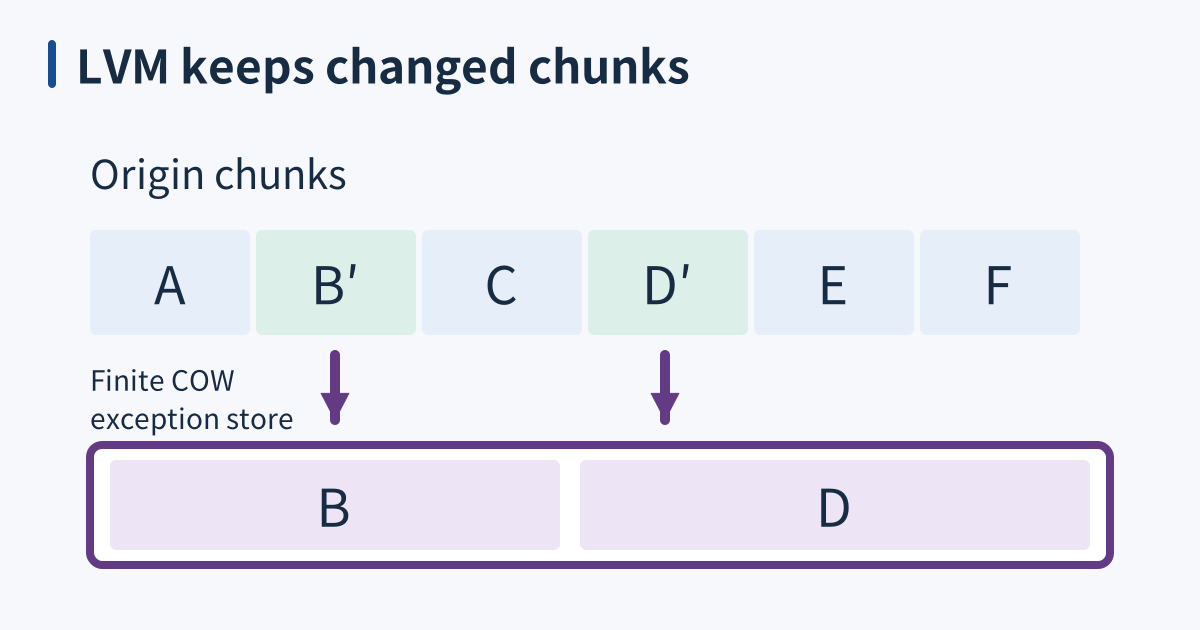
Changed origin chunks B and D point to their saved original values in a separate finite classic COW exception store.

LVM snapshots capture a block device in time

A classic LVM snapshot uses a copy-on-write exception store attached to an origin logical volume. lvcreate -s -L 5G -n snap vg/data requests a 5 GiB store, subject to allocation granularity and available volume-group space. It avoids copying the whole origin at creation, but does not guarantee zero work or instant completion. Thin snapshots use a different shared-pool mechanism. ...
April 10, 2028 · 4 min · XB Field Notes
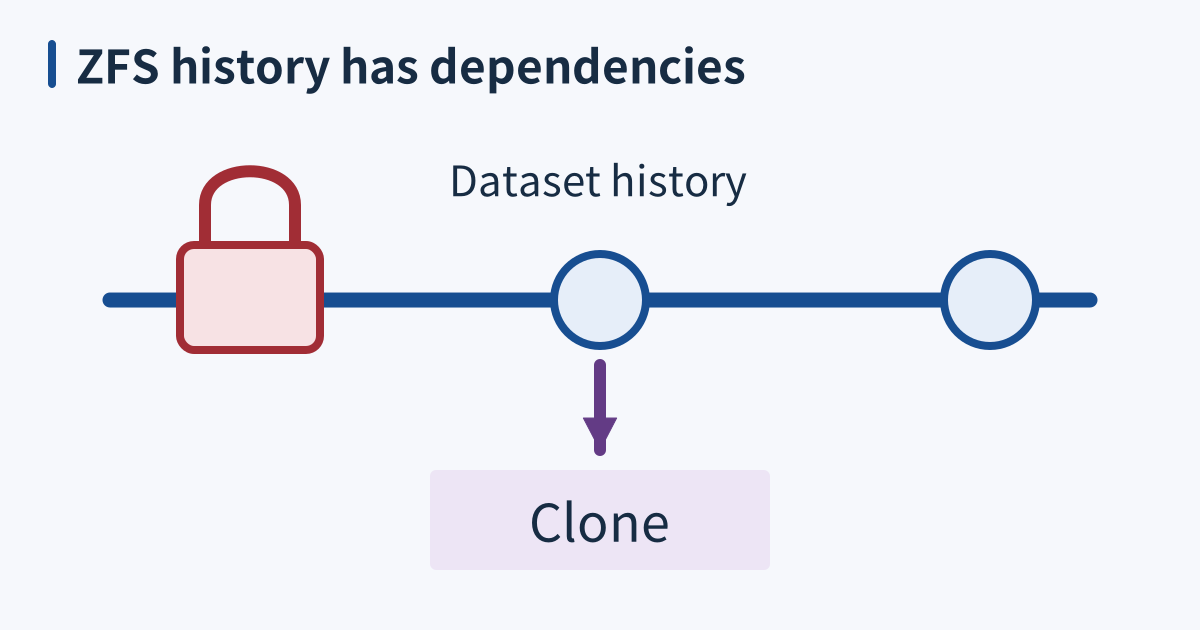
A dataset history line branches from a snapshot to a clone, while a separate lock marks a user hold on another snapshot.

ZFS snapshots give the filesystem a rewind button

A ZFS snapshot preserves a point-in-time dataset view through copy-on-write references instead of a full duplicate of its data. Existing blocks remain available while references need them. Creation still has metadata and synchronization work; neither zero allocation nor completion before a shell redraw is a measured guarantee. This review did not run ZFS or recover the earlier claimed fixture’s raw output. ...

March 21, 2028 · 5 min · XB Field Notes
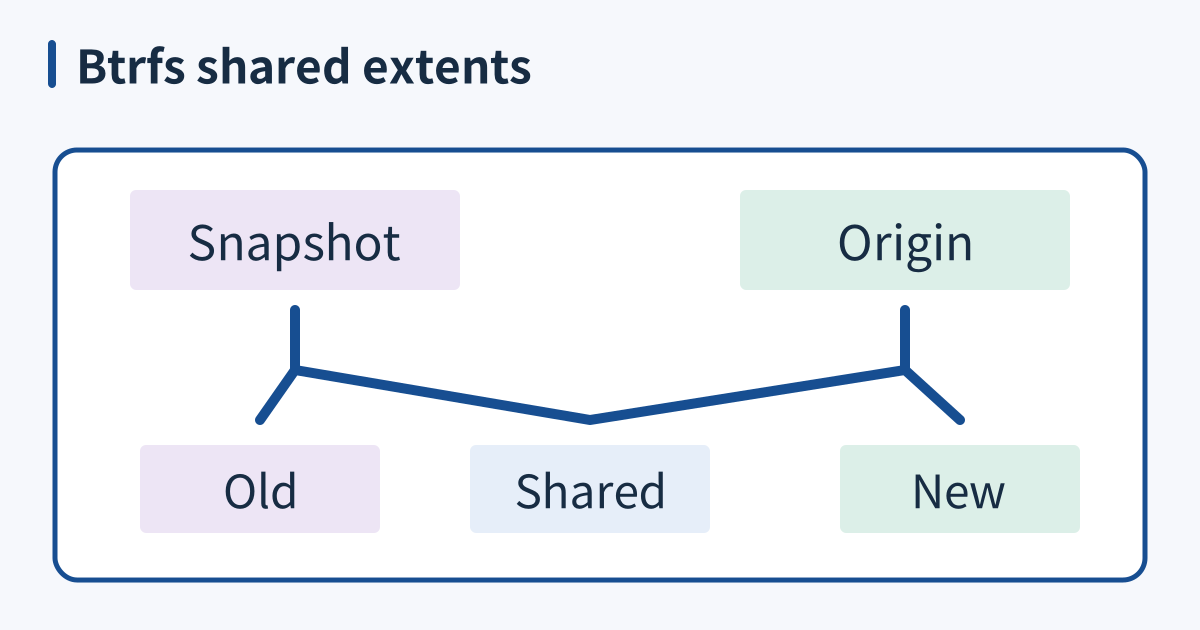
Snapshot and origin roots inside one filesystem point to shared unchanged extents and separate old and new data after divergence.

Btrfs snapshots are copy-on-write, not copies

A Btrfs snapshot is a new subvolume with the source’s initial contents, sharing existing file extents rather than duplicating every data block. Creation copies root metadata and may flush dirty source data, so it is not guaranteed to finish in milliseconds. More than two subvolumes or reflinks can reference the same extent; there is no fixed two-reference limit. ...

November 14, 2027 · 5 min · XB Field Notes