SSRF makes the server open the door
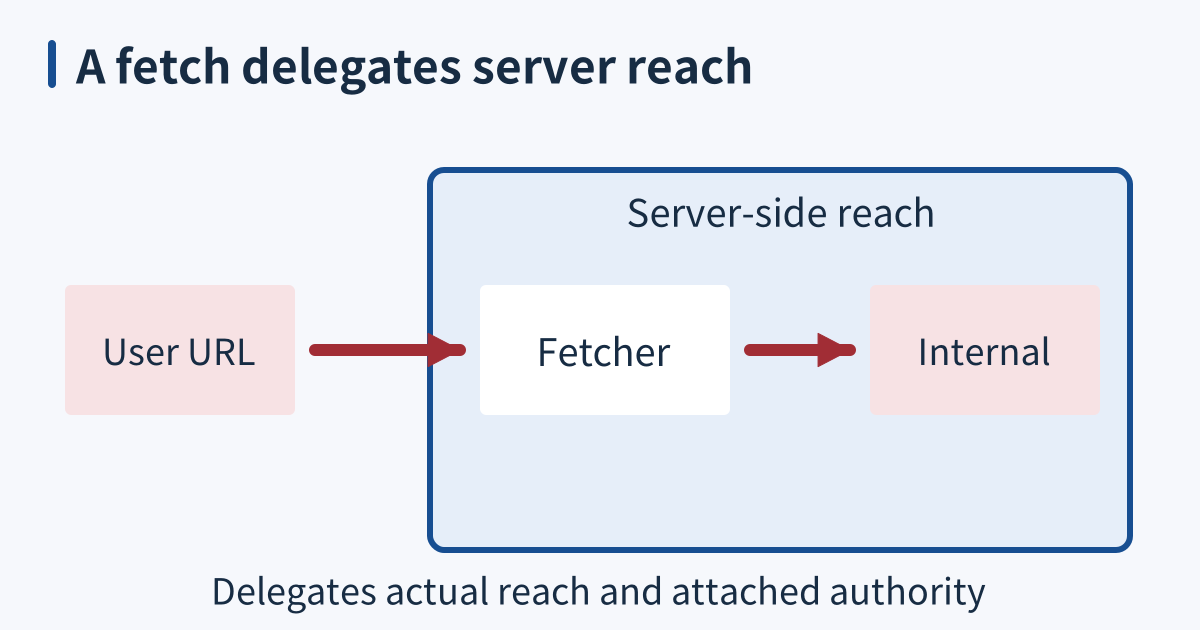
Server-side request forgery makes a server issue a request selected or influenced by an attacker. A thumbnail service, importer, webhook tester, or document renderer may reach destinations that the requesting user cannot reach directly. The server contributes its network position and whatever credentials that particular fetch path actually attaches. A URL fetch does not automatically inherit every account credential available to the process. ...