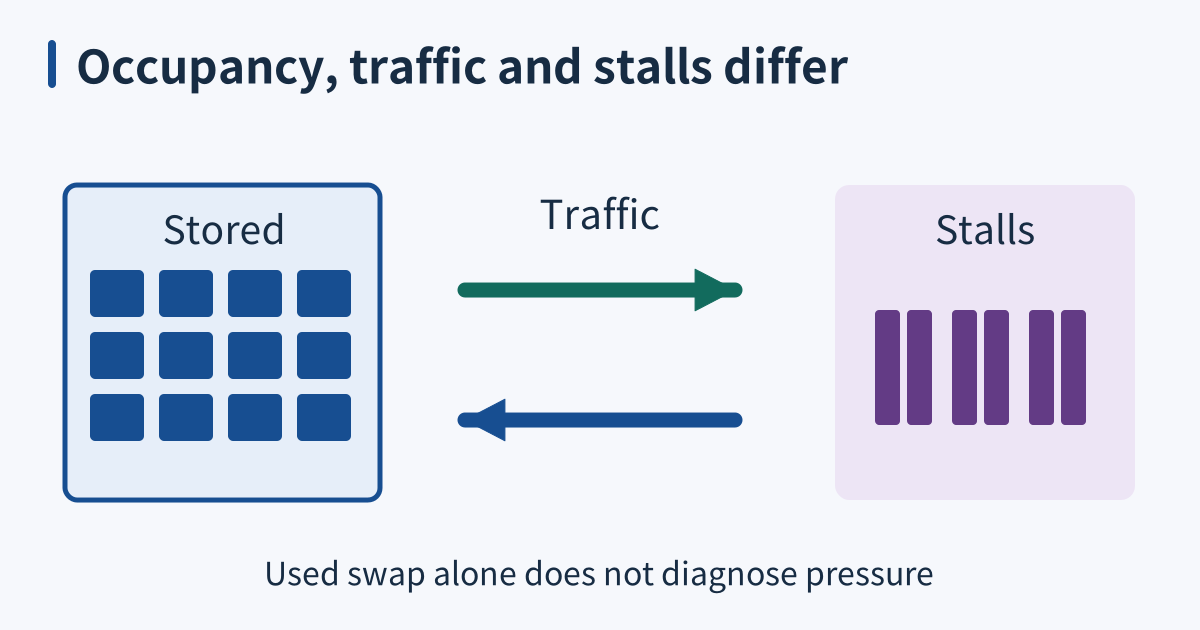
Swap occupancy is shown as stored cold pages, interval traffic as opposing page-transfer arrows, and memory pressure as stalled task marks. The three observations answer different questions.

Swap trades residency for reclaim cost

Swap gives Linux a backing store for eligible memory pages that need not remain resident. It can preserve cold data while RAM serves active work, but it does not make the machine’s working set fit at RAM speed. The useful question is whether reclaim frees space without repeatedly stalling important tasks. Swap occupancy, swap traffic, and application progress answer different parts of that question. ...
November 25, 2026 · 4 min · XB Field Notes
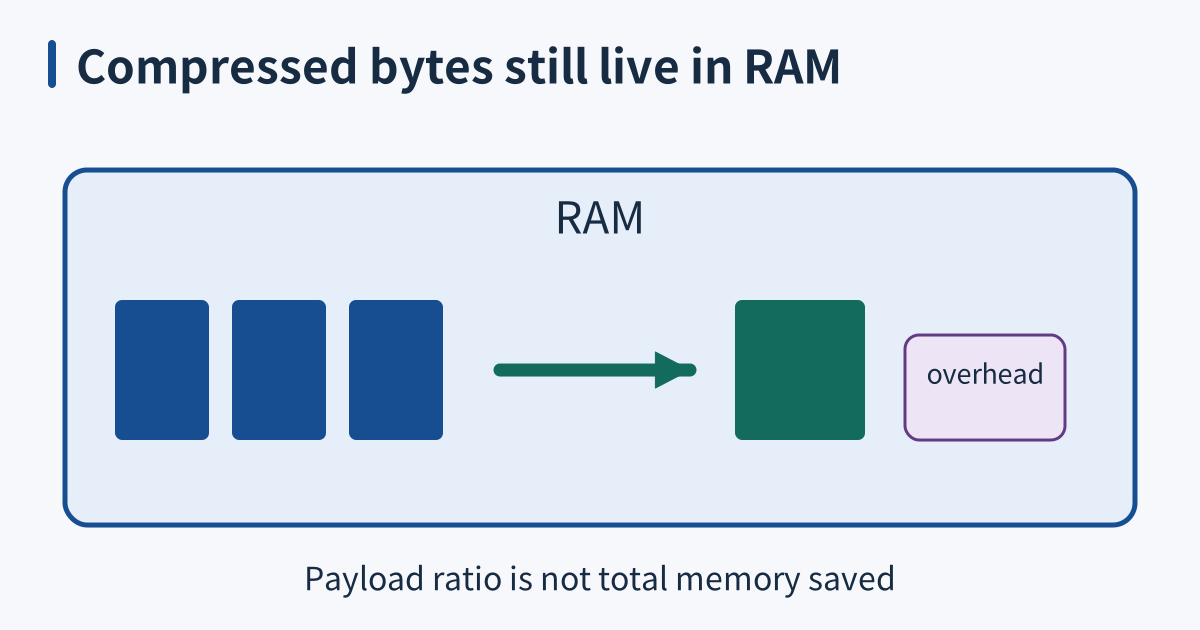
Three original-page symbols become one compressed-payload symbol plus a separate overhead symbol inside a RAM boundary. This is an illustrative ratio, not a measured capacity gain.

zram squeezes swap into RAM

When memory tightens, eligible cold pages may be reclaimed to swap. A zram swap device stores compressed pages in RAM, trading CPU work and memory overhead for potential headroom. The benefit depends on the workload; it is not a fixed amount of extra memory. ...

November 24, 2026 · 7 min · XB Field Notes