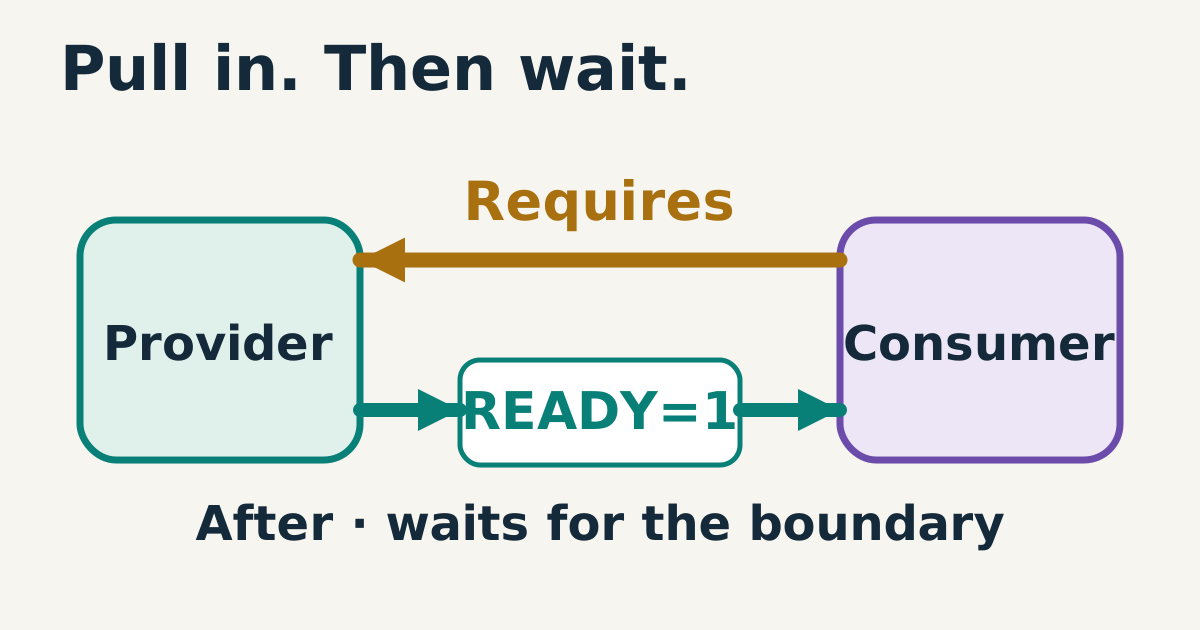
Opposing arrows distinguish a consumer requesting its provider through Requires from the provider’s READY=1 startup boundary releasing the ordered consumer. Requires and After have different directions and purposes.

systemd dependencies separate activation, ordering, and readiness

A dependency graph needs to express more than “start the database first.” One relationship decides whether another unit is pulled into the transaction; another orders the jobs; the service type defines when startup has finished. Application readiness is a further promise that the program must actually fulfill. Confusing these layers produces a boot sequence that looks ordered while the dependent service still starts too early. ...
February 18, 2028 · 6 min · XB Field Notes
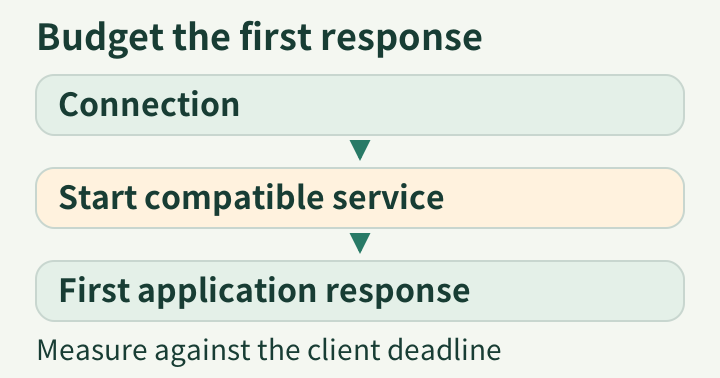
Cold start spans connection, compatible-service startup and the first application response. Measure that delay against the client deadline and the resident footprint saved. Selected conditional mechanism only; the source article remains held/pending.

Socket activation starts a service only when needed

A socket unit can keep a listening endpoint available while its compatible application is stopped. This can reduce the resident memory and periodic work of rarely used services. The socket, kernel queues and manager still consume resources, and installed software still needs security updates. Availability of the listener also depends on successful binding, permissions and the socket unit remaining active. A listening port is an opportunity to request work, not evidence that the application is ready. ...

February 1, 2028 · 5 min · XB Field Notes
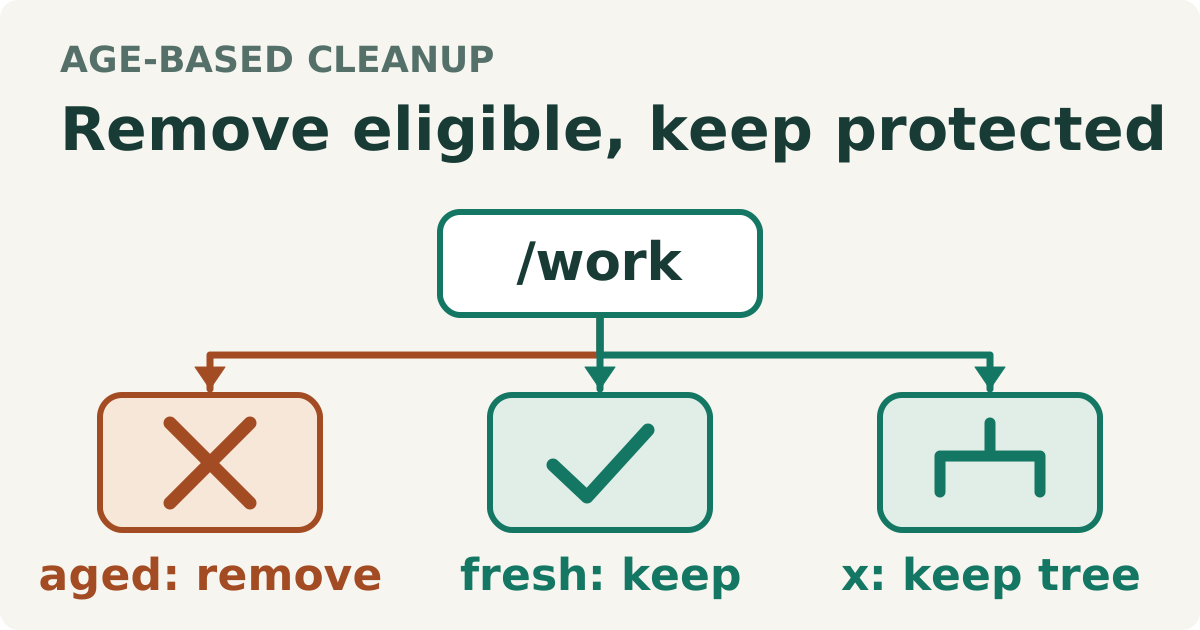
The /work directory branches to an aged entry marked for removal, a recent file kept, and an x-excluded subtree preserved.

systemd-tmpfiles applies creation and age policies

systemd-tmpfiles describes filesystem objects and housekeeping rules in configuration files. A rule can create a directory with a chosen mode, while an age rule can make old entries eligible for cleanup. The command must actually run the relevant operation for either effect to occur. This is useful lifecycle policy, but it is not a continuous watcher or a hard storage quota. ...

December 10, 2027 · 5 min · XB Field Notes
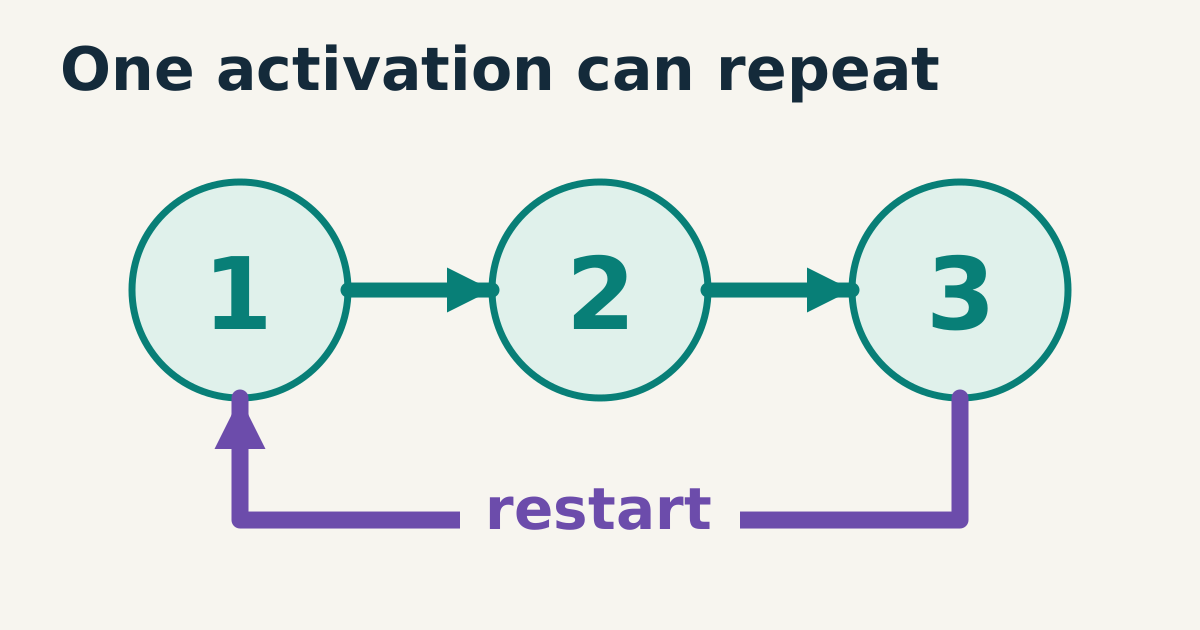
Three numbered commands form a finite forward sequence, while a large restart arrow returns from completion to the first command, showing that a new activation can repeat the work.

A systemd oneshot completes one activation

A Type=oneshot service represents finite work whose startup completes when its start commands finish successfully. That makes it useful for setup steps and scheduled jobs whose completion matters to a dependent unit. The word oneshot describes one activation’s process model. It does not create a permanent record that prevents the task from running again after a restart, another activation, or a reboot. ...

November 28, 2027 · 5 min · XB Field Notes
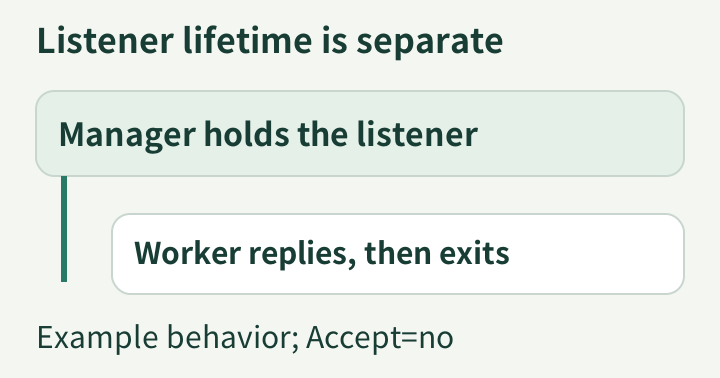
While the socket unit stays active, the manager retains the listener when this example worker replies and deliberately exits. Accept=no passes a listener; it does not force one process per connection.

Socket activation passes a listener to a compatible service

Socket activation lets systemd open a listening endpoint before the application process starts. Activity on that endpoint can then trigger a compatible service, which receives descriptors for sockets the manager already owns. The useful boundary is listener ownership versus application lifetime. An open endpoint is not yet proof that the application has initialized, accepted a request, or produced a correct response. ...

November 8, 2027 · 5 min · XB Field Notes
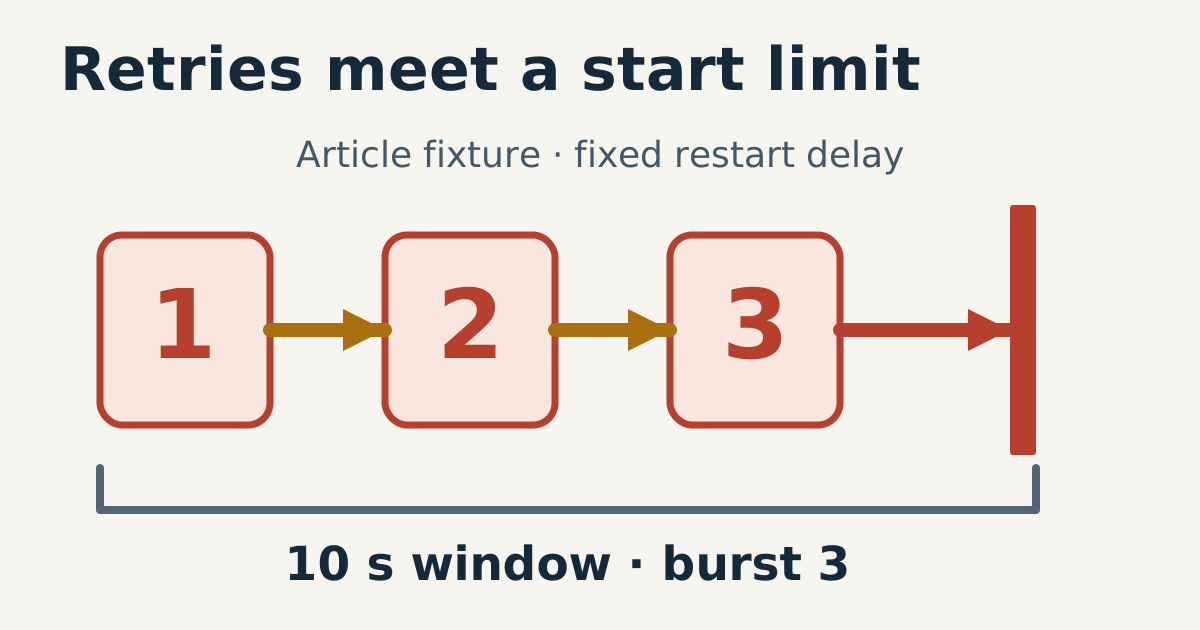
Three starts occupy one bracketed ten-second window. Equal restart gaps lead to the next starts, while a solid stop bar blocks a fourth request at burst three. These are the article’s illustrative fixture settings.

systemd restart policies need explicit failure and rate rules

A restart policy decides whether a service manager should try another process after the current one ends. It can recover from a transient failure, but it cannot correct a missing configuration or a deterministic bug. The useful contract has three parts: which endings qualify, how long to wait, and how many starts are permitted within a time window. Those settings answer different questions. ...

November 7, 2027 · 5 min · XB Field Notes
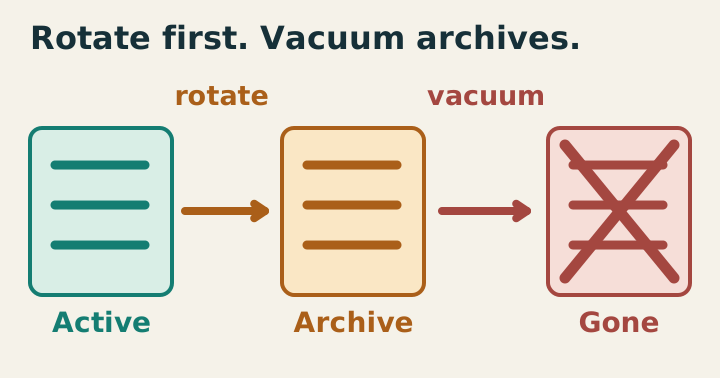
A journal file moves from active to archived on rotation, then an archived file can be removed by vacuum.

The systemd journal needs an explicit retention contract

The systemd journal stores messages with structured metadata in journal files. That makes service output searchable without first inventing a parser for every application’s text format. Keeping those messages for a useful period is a separate requirement. Storage location, size policy, rotation, and forwarding determine which evidence remains available when an incident is investigated later. ...

October 26, 2027 · 5 min · XB Field Notes
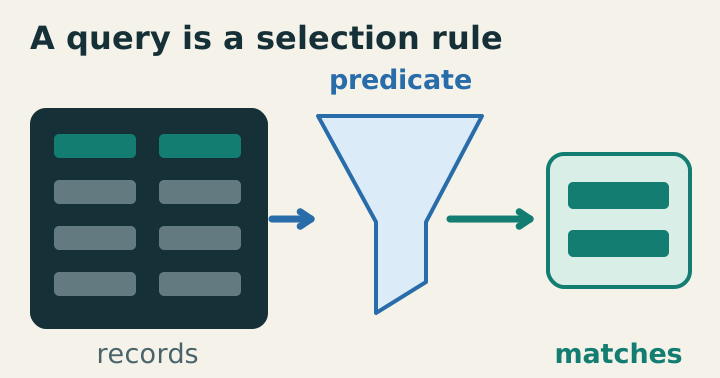
Journal record bars pass through an explicit predicate into a smaller matched set.

Query the journal with explicit field and priority rules

A useful journal query selects the records that answer a specific incident question. Unit identity, invocation, time, priority, and application fields provide different dimensions. Combining them correctly matters more than finding a familiar word somewhere in the machine’s history. journald can attach process metadata, but it does not automatically collect every file an application writes or infer the business meaning of each message. ...

July 30, 2027 · 5 min · XB Field Notes