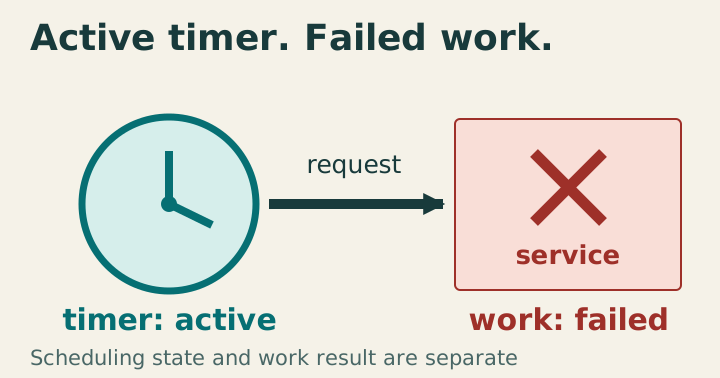
An active timer sends an activation request to a service that can fail.

A systemd timer schedules a service, not its success

A systemd timer separates the scheduling rule from the service that performs the work. The timer decides when to request activation; the service supplies the command, execution identity, environment, timeout, and result. This separation makes a maintenance job inspectable using normal unit tools. It does not turn a scheduled attempt into proof that a backup, cleanup, or report completed correctly. ...
June 21, 2027 · 5 min · XB Field Notes
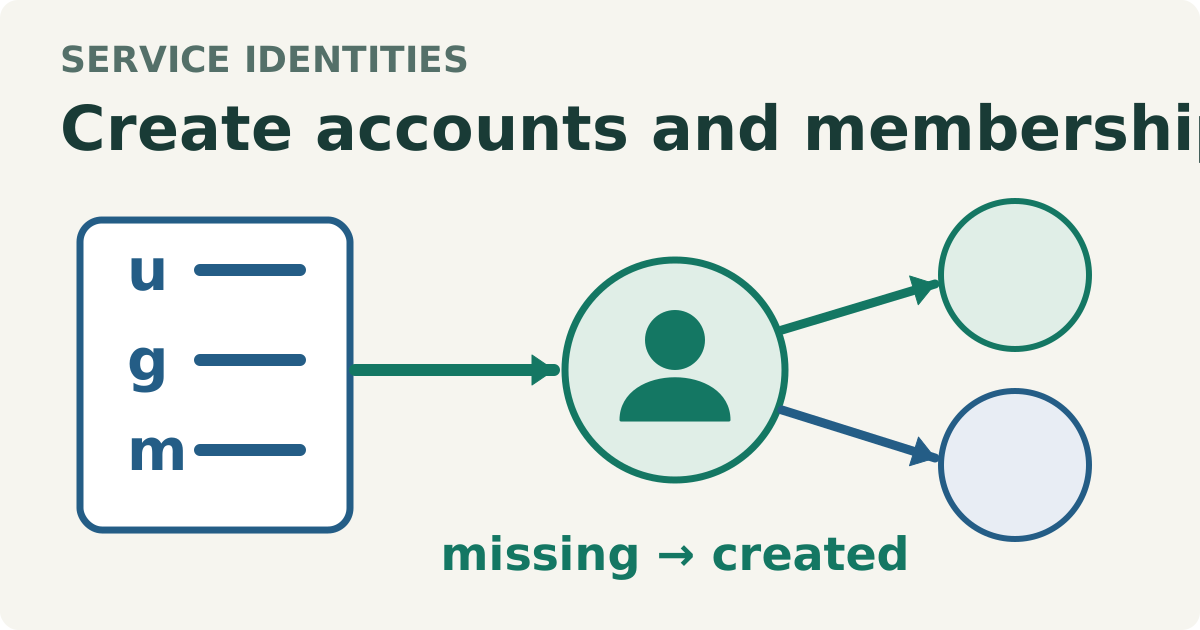
A u, g and m declaration points to a missing service user being created and linked to its primary and supplementary groups.

systemd-sysusers creates missing service accounts

A service package often needs a dedicated account before it can own files or run without root. systemd-sysusers describes that account and its groups in a small configuration file. Its central operation is creating missing identities and establishing requested memberships. It is not a general account migration engine, a directory creator, or a guarantee that automatically allocated numeric IDs match on every host. ...

June 8, 2027 · 5 min · XB Field Notes
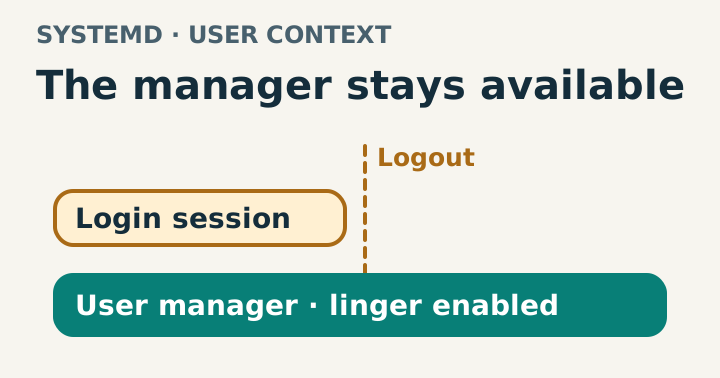
A short login-session band ends at logout, while a long user-manager band continues beyond the same boundary with linger enabled.

Linger extends a systemd user manager beyond login

Linger changes when an account’s systemd user manager is kept available. With lingering enabled, logind can start that manager at boot and retain it after the account’s login sessions end. This supports unattended work owned by a normal account. The flag controls manager lifetime; individual services still have their own activation, failure, shutdown, and installation rules. ...

April 20, 2027 · 5 min · XB Field Notes
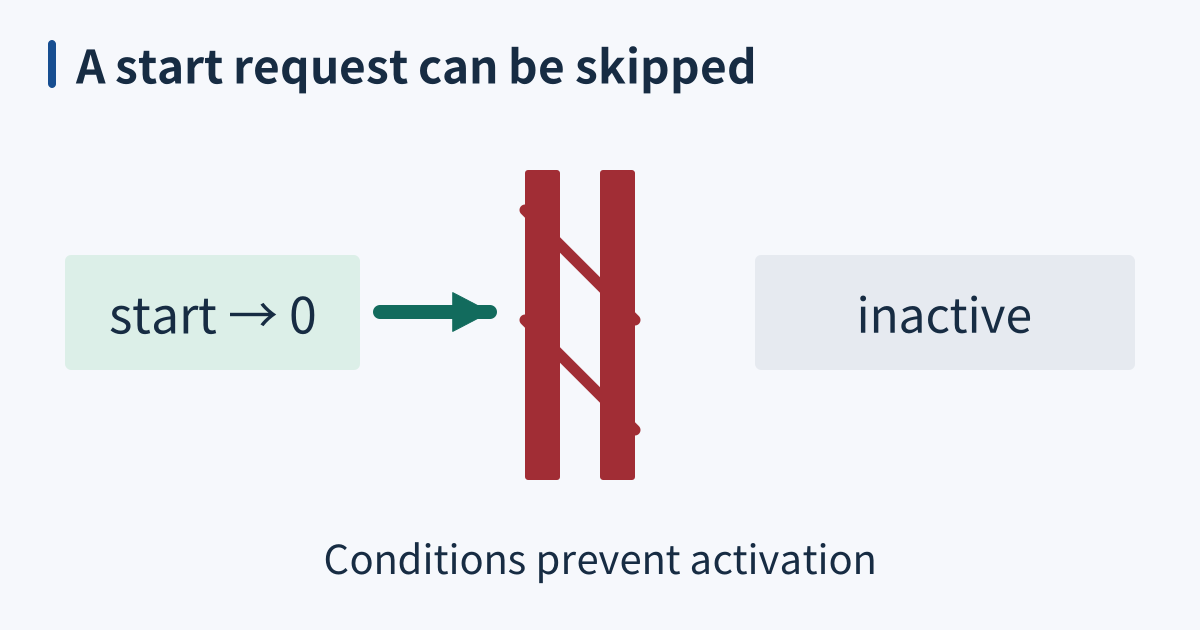
A start request marked return zero meets a closed condition gate, leaving the service inactive.

Check timesyncd’s service state and clock evidence separately

systemd-timesyncd is a minimal SNTP client for synchronizing the local system clock against configured time sources. It can help keep certificate checks and wall-clock timestamps meaningful, but it does not provide an unconditional accuracy guarantee. Whether the daemon can run, whether it receives acceptable samples, and whether the system reports synchronization are separate facts to establish. ...

March 11, 2027 · 5 min · XB Field Notes
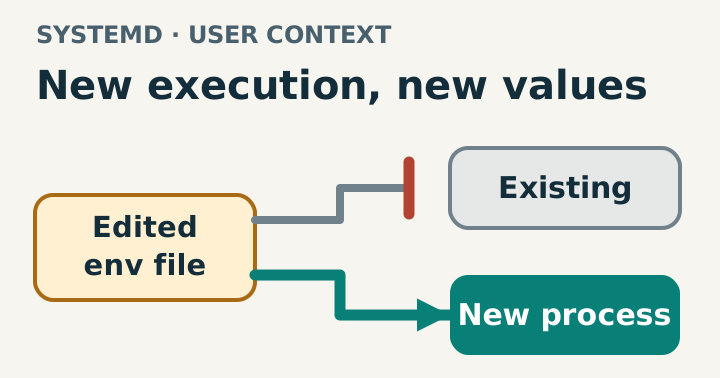
An edited environment file branches toward two process boxes. A stop bar blocks the route to an existing process, while an arrow delivers values to a new process.

EnvironmentFile supplies values when systemd executes a process

An environment file separates deployment values from the unit definition that describes process supervision. systemd reads the configured file before executing a service command and supplies those values in that process’s environment. Editing the file does not rewrite the environment of an already running process. A reload helper is another process, however, and can receive newer file values than the service’s existing main process. ...

February 19, 2027 · 5 min · XB Field Notes
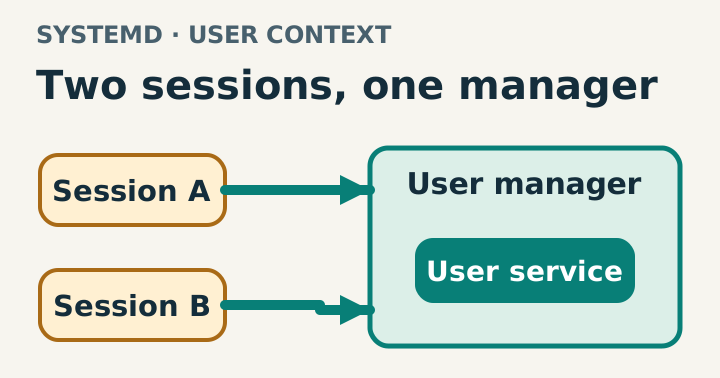
Two login-session boxes point to the same large account manager, which contains one user-service box.

One systemd user manager serves an account’s sessions

A systemd user manager runs services on behalf of one account. Multiple login sessions for that account normally share the same manager, rather than each shell receiving a private service universe. User unit files can live under ~/.config/systemd/user, and systemctl --user addresses the user’s manager. This provides lifecycle management with the account’s authority, not automatic isolation from every shared system resource. ...

January 26, 2027 · 5 min · XB Field Notes
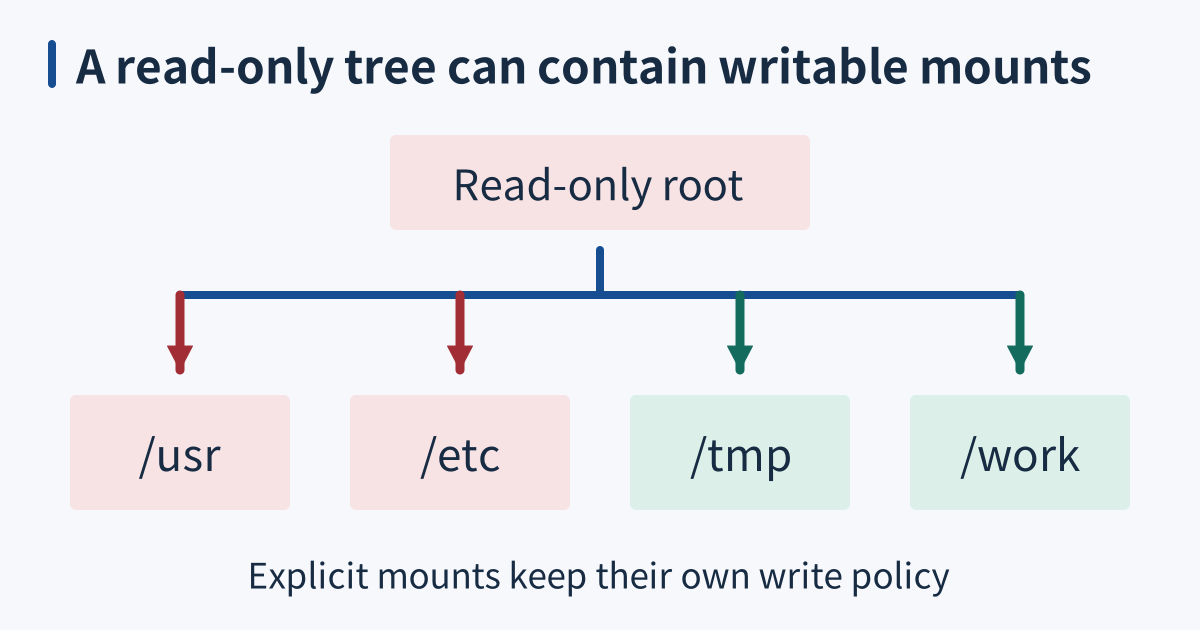
A read-only root tree branches to /usr and /etc and to explicitly writable /tmp and /work mounts.

A read-only root restricts filesystem mutation within its scope

A read-only root filesystem prevents ordinary writes to the filesystem layer containing a service’s packaged code and configuration. Explicit mounts can still provide writable locations for runtime data. Its boundary is filesystem mutation. It does not by itself remove process privileges, prevent reading available data, or block communication with other services. ...

December 23, 2026 · 6 min · XB Field Notes
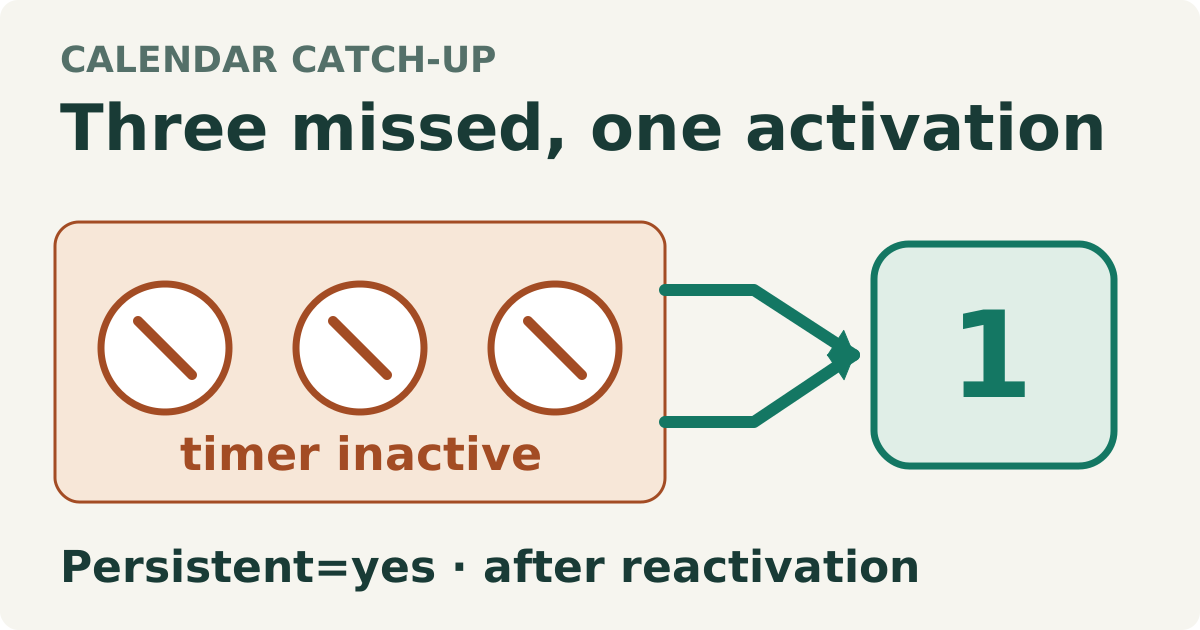
Three missed calendar events merge into one catch-up activation after a persistent timer is reactivated.

Choose the clock and catch-up rule for a systemd timer

A schedule must specify what time means. “At nine each morning in New York” refers to a civil-time calendar. “A quarter hour after this job finishes” refers to an elapsed interval and an event. systemd timers support both, but the two clocks and reference points have different behavior around time-zone changes, suspension, and periods when the timer is inactive. ...

November 20, 2026 · 5 min · XB Field Notes