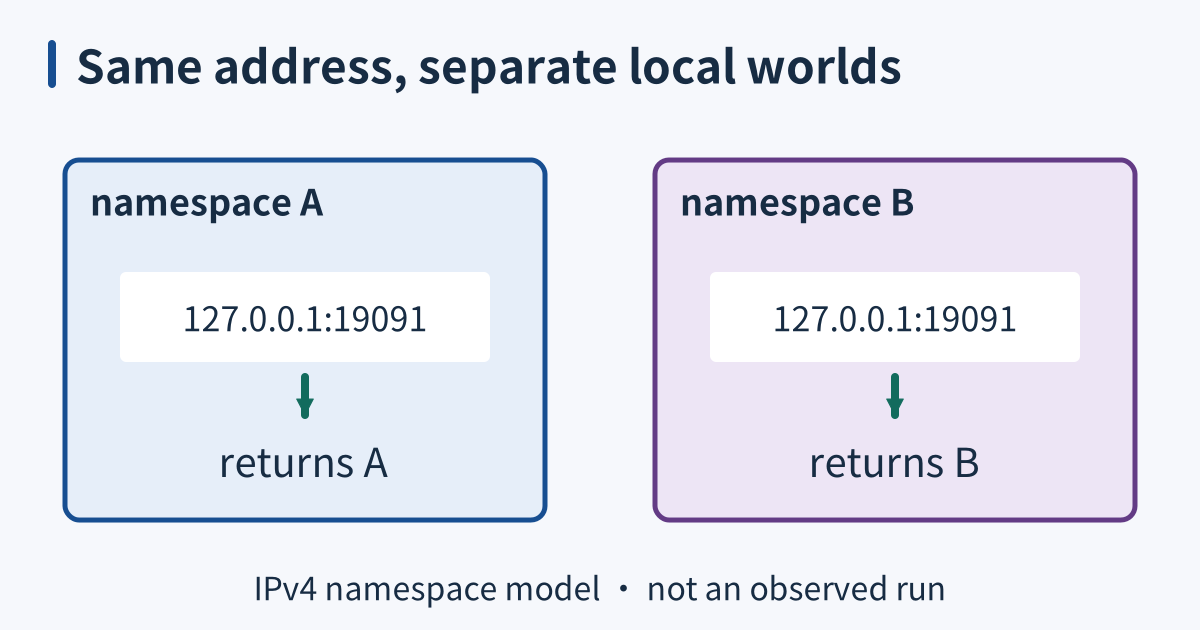
An intended IPv4 model shows two namespace boundaries A and B with the identical endpoint 127.0.0.1:19091. Each local probe reaches its own service. No arrow crosses the boundary. This is not an observed run or evidence of IPv6 readiness.

Loopback returns to the caller’s network namespace

Loopback addresses let a process communicate through its local IP stack without sending the exchange over a physical network link. IPv4 reserves 127.0.0.0/8 for loopback; 127.0.0.1 is the familiar member. IPv6 uses ::1. On Linux, the relevant local networking context is a network namespace. Two processes on the same physical machine can therefore have different answers to what counts as their own loopback service. ...
November 17, 2026 · 6 min · XB Field Notes
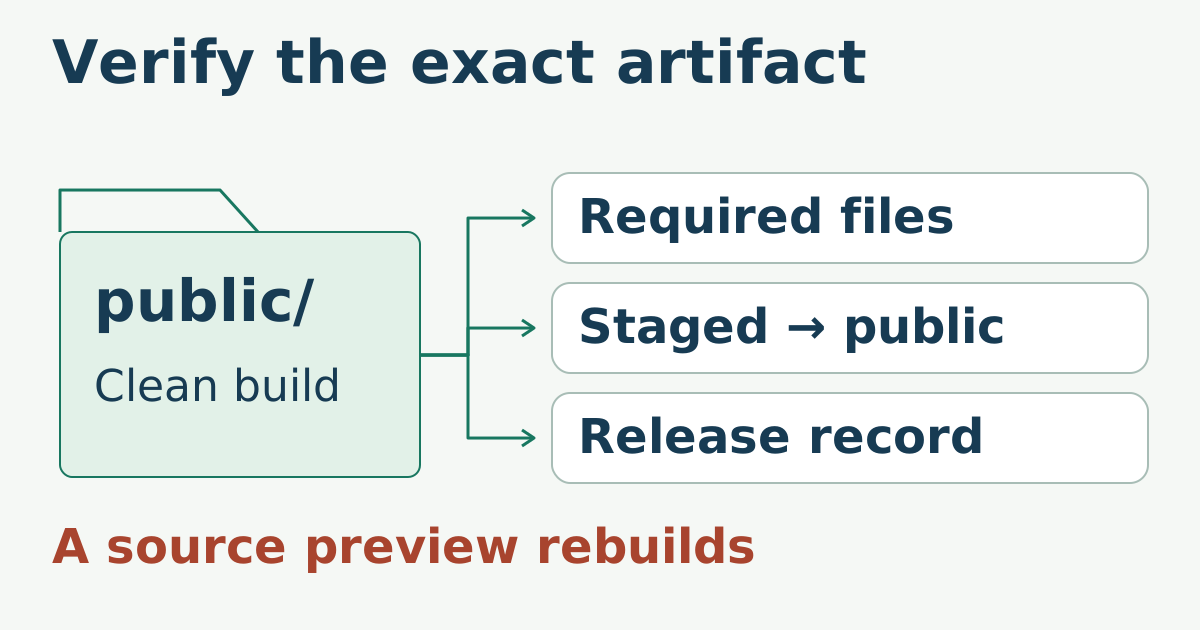
One clean public/ artifact feeds required-file inspection, staged-to-public route checks, and a release record. A separate reminder states that a source preview rebuilds. No check is marked complete.

A release checklist for a static site

Verify the artifact before replacing the live directory, and keep the checks close to the release command.

July 30, 2026 · 3 min · XB Field Notes
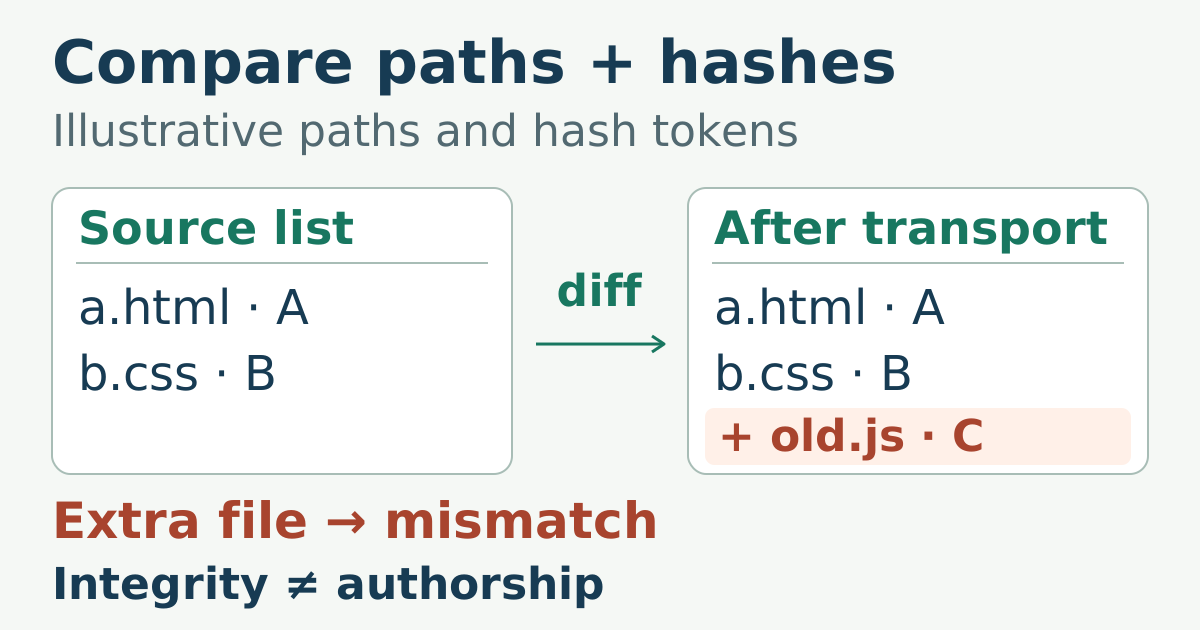
Illustrative source and destination path/hash lists are compared. The destination has an extra old.js file, so the full-record comparison must fail. Matching hashes concern integrity, not authorship.

A release manifest should name every published byte

One aggregate digest is useful, but a sorted per-file manifest tells you exactly what changed or went missing.

July 16, 2026 · 3 min · XB Field Notes
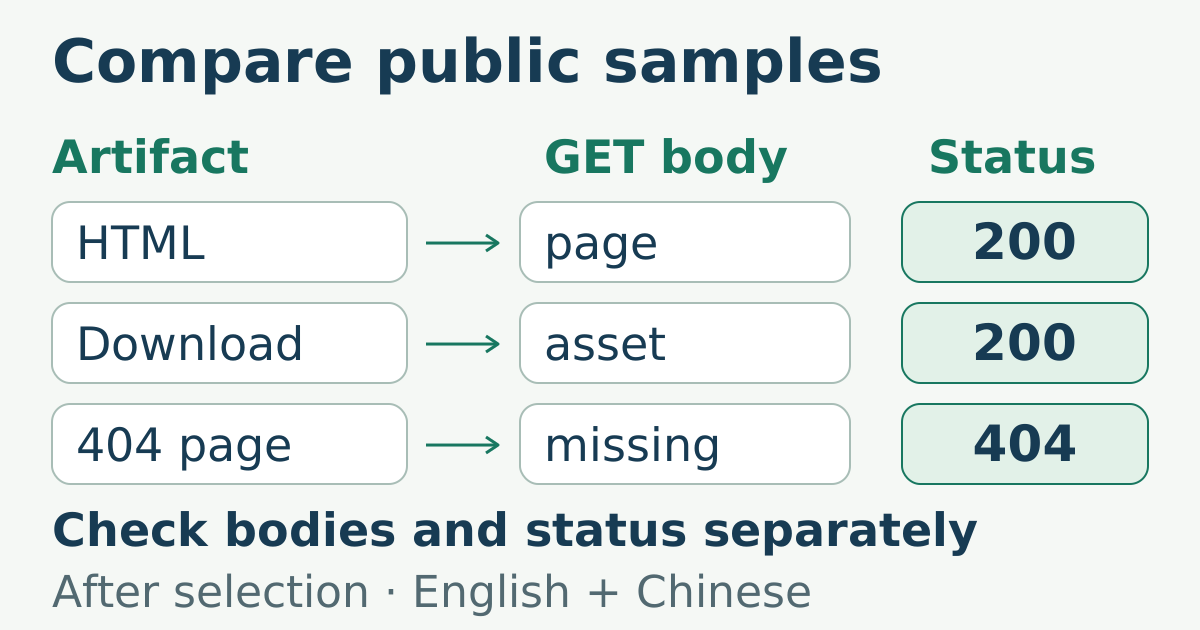
HTML, download, and error-page artifact samples point to corresponding public GET bodies. Expected statuses are shown separately as 200, 200, and 404. These are post-selection samples to compare in English and Chinese.

A release is not complete until the public edge agrees

Validate one staged artifact, publish it, then compare representative public responses with those exact bytes.

July 9, 2026 · 3 min · XB Field Notes
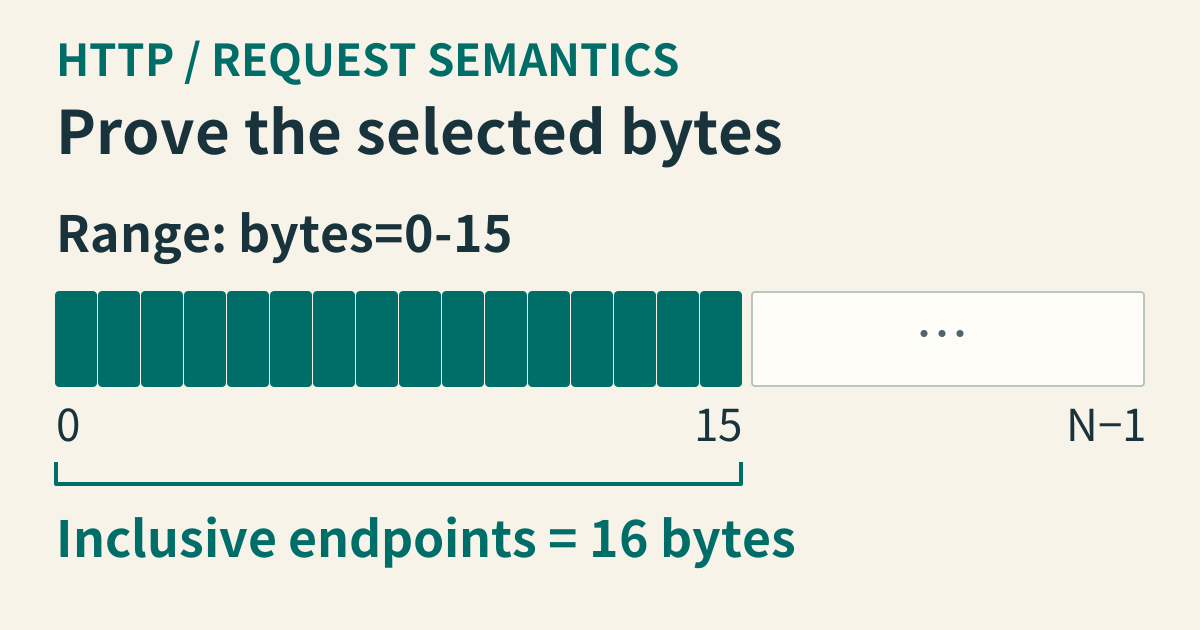
Inclusive byte offsets 0 through 15 select exactly 16 bytes from a complete representation of N bytes.

Range requests should prove which bytes were selected

A 206 response is useful only when its boundaries and total size describe the bytes that were returned.

July 6, 2026 · 3 min · XB Field Notes
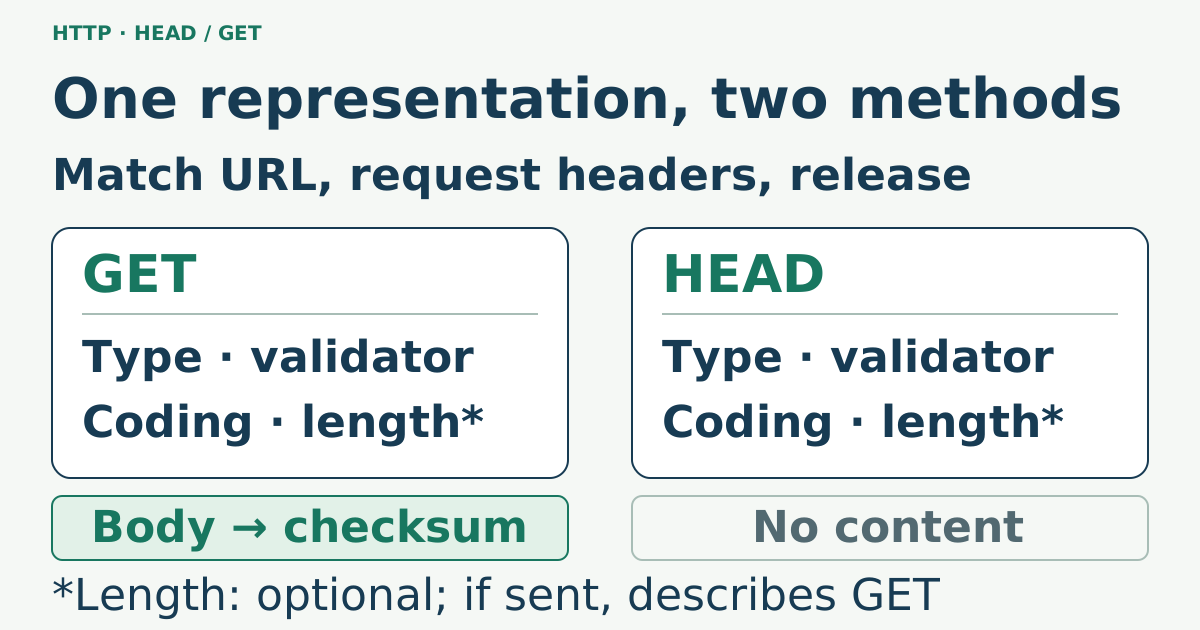
GET and HEAD use matched URL, request headers, and release. Both response cards show type, validator, coding, and length categories. Only GET has content and checksum evidence. HEAD length can be omitted; if provided it describes GET.

HEAD should describe the same representation as GET

HEAD is a metadata view of GET; status and representation headers should tell the same story.

June 22, 2026 · 2 min · XB Field Notes