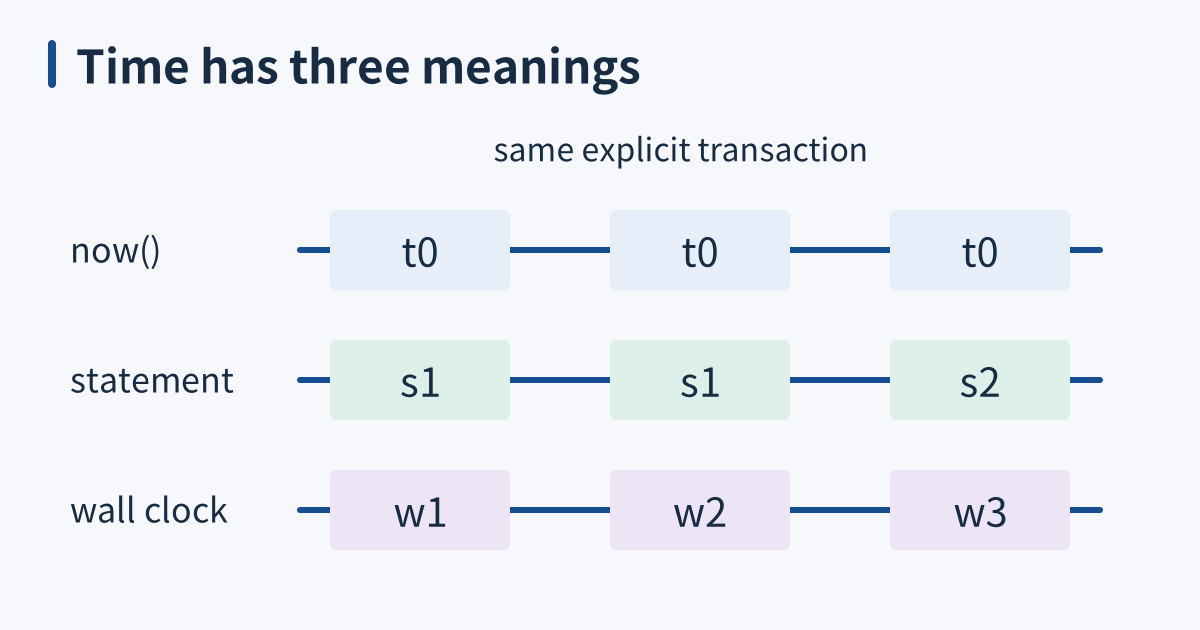
A transaction-start marker is reused across commands. Statement markers track command receipt, and wall-clock samples are taken on evaluation.

PostgreSQL time functions sample different moments

PostgreSQL offers several meanings of “current time.” A transaction timestamp identifies the beginning of a transaction, a statement timestamp identifies a command’s arrival, and a wall-clock reading samples the current clock during evaluation. Choosing among them changes the meaning of audit fields, expiration checks, and observations made during long-running work. ...
January 13, 2028 · 5 min · XB Field Notes
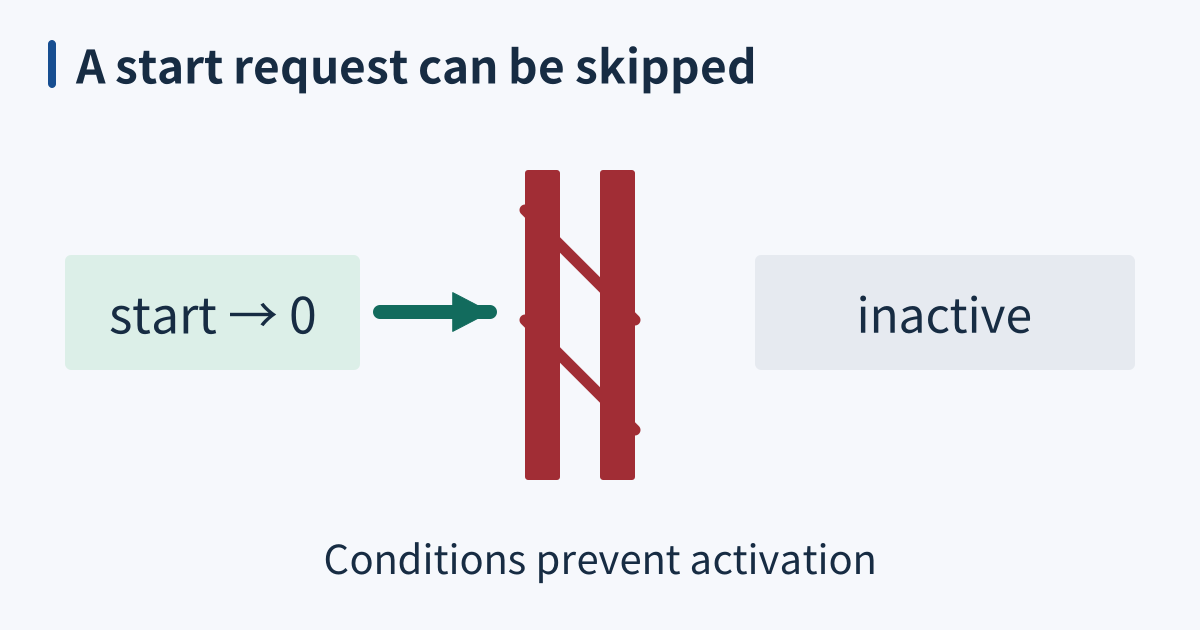
A start request marked return zero meets a closed condition gate, leaving the service inactive.

Check timesyncd’s service state and clock evidence separately

systemd-timesyncd is a minimal SNTP client for synchronizing the local system clock against configured time sources. It can help keep certificate checks and wall-clock timestamps meaningful, but it does not provide an unconditional accuracy guarantee. Whether the daemon can run, whether it receives acceptable samples, and whether the system reports synchronization are separate facts to establish. ...

March 11, 2027 · 5 min · XB Field Notes
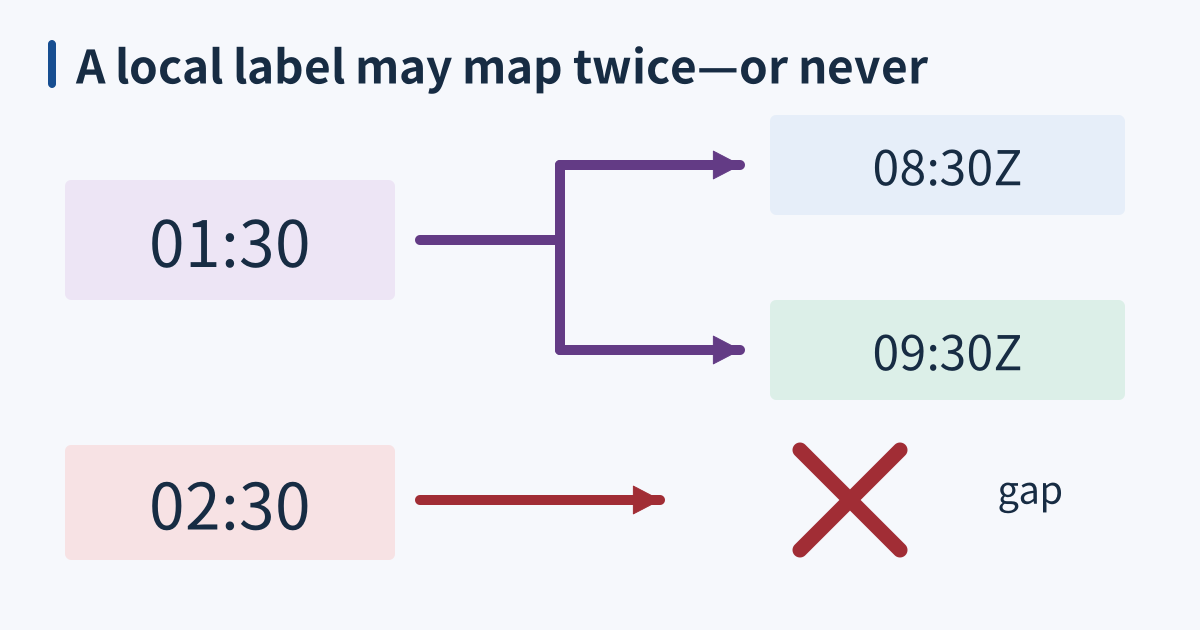
Los Angeles 2026 transition examples: repeated 01:30 branches to 08:30Z and 09:30Z; spring 02:30 points to a missing-time mark.

Timestamps need explicit time semantics

A wall-clock label such as 2026-11-01 01:30 does not identify one instant by itself. Its interpretation depends on a timezone and sometimes on which occurrence was intended during a clock transition. Conversely, an explicitly defined Unix timestamp already carries epoch and unit semantics without displaying a zone name. Decide which kind of value your system is storing before choosing a format. ...

November 29, 2026 · 5 min · XB Field Notes
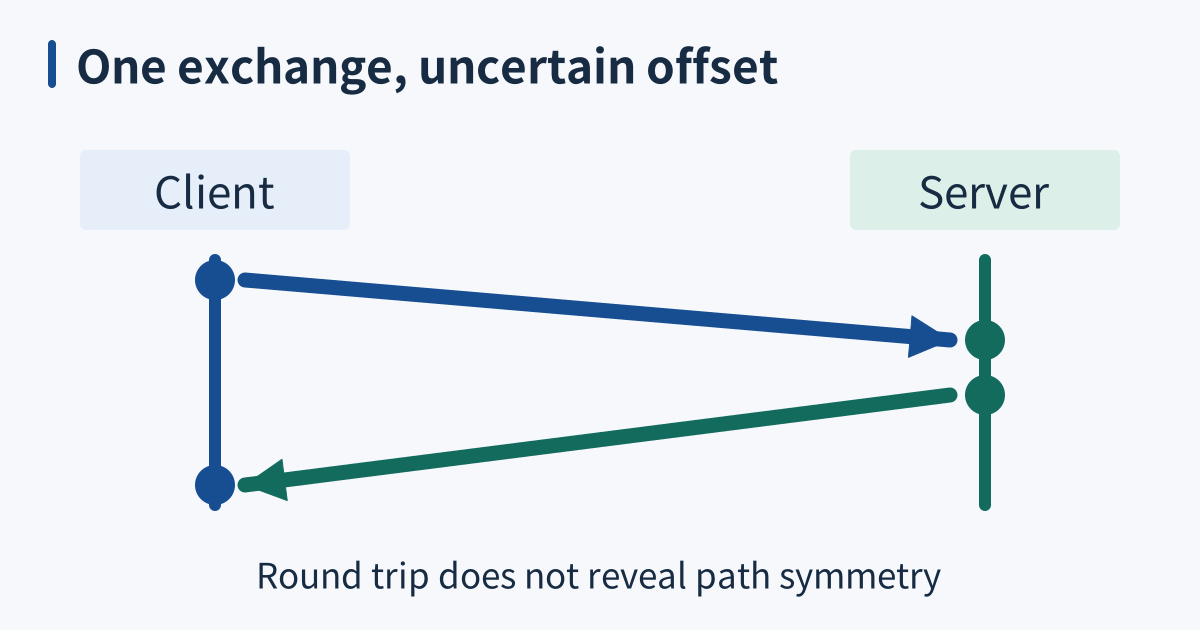
Client and server rails with one request arrow and one return arrow; unequal one-way delay can bias offset.

Clock synchronization bounds time disagreement

Clock synchronization reduces disagreement between machines’ civil-time readings. It supports certificate validity checks, timestamp interpretation, and many expiration policies, but it does not establish a perfect global clock. A host can emit well-formatted UTC while measuring the wrong instant. Applications still need to distinguish elapsed durations, absolute deadlines, and causal ordering rather than making them all depend on raw wall-clock comparisons. ...

September 9, 2026 · 6 min · XB Field Notes
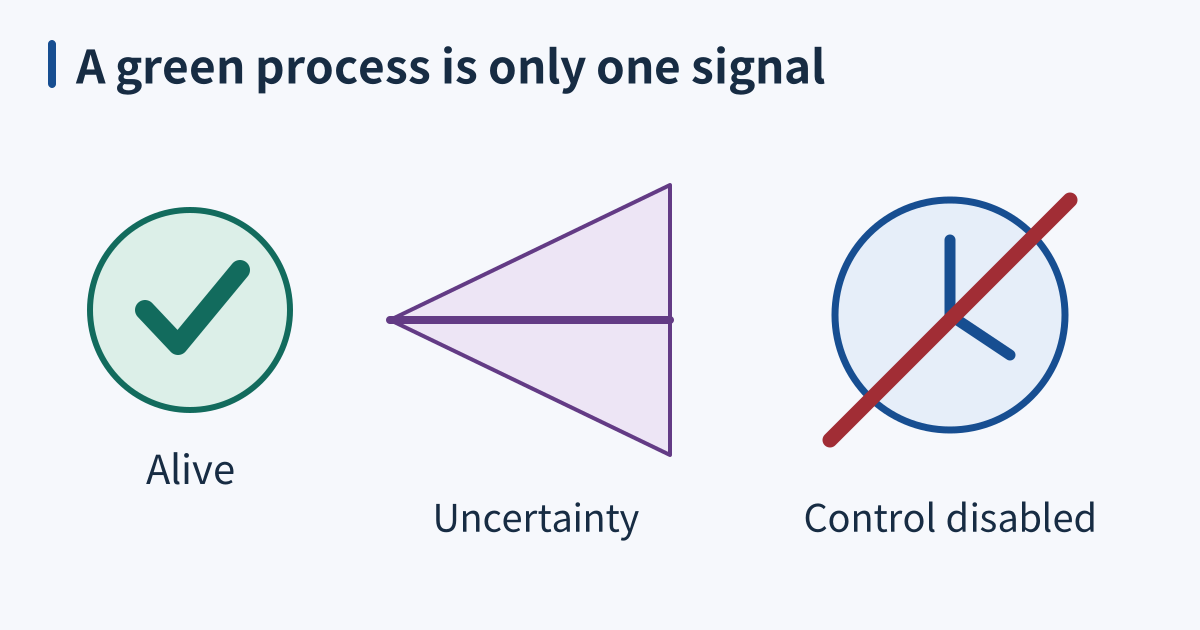
Three distinct symbols in the source counterexample: a live-process check, an uncertainty fan and a clock with control crossed out.

Servers need observable time discipline

A time daemon is useful only when its operating state supports the application’s time requirements. A running process can have no usable source, and a selected source can still be wrong or insufficiently measured. Treat time service health as an observable chain: source configuration, successful observations, selection, uncertainty, and permitted clock control. A green process indicator covers only the beginning. ...

September 2, 2026 · 6 min · XB Field Notes